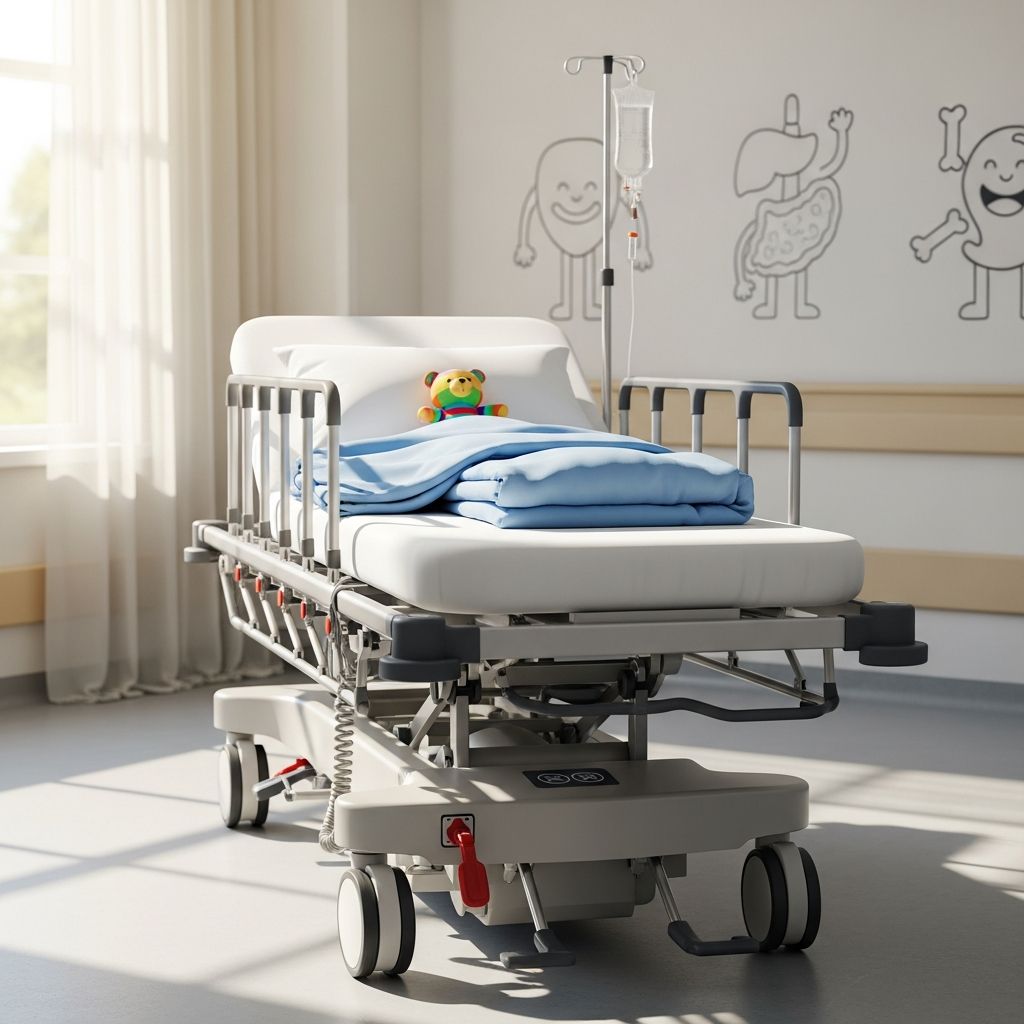
If you have ever watched a medical show or visited a hospital, you may have seen a long bed moving quickly down the hallway with someone lying on it. That rolling bed is called a gurney, and it is one of the most important tools for safely moving patients who cannot walk or sit up easily.
Basic Idea: A Bed That Moves
A gurney is a narrow, padded surface on a metal frame with wheels, designed to move people who need medical care from one place to another while lying down.
- It looks like a long bed, but it is usually narrower.
- It has wheels so medical workers can push it quickly and smoothly.
- It often comes with side rails and safety straps to keep the person from falling.
Gurney vs. Stretcher vs. Bed
People sometimes use the words gurney and stretcher to mean almost the same thing, but there are a few differences that can help make things clearer.
| Feature | Gurney | Stretcher (basic) | Hospital Bed |
|---|---|---|---|
| Has wheels? | Yes, designed to roll along floors. | Sometimes; some are carried by hand. | Yes, but usually kept in one room. |
| Where used most? | Emergency rooms, hallways, ambulances. | Outdoor rescues, tight spaces, sports fields. | Patient rooms for resting and long stays. |
| Position | Mainly for lying down, with adjustable head and leg sections. | Usually flat, not very adjustable. | Highly adjustable, more comfortable for long use. |
| How long used? | Short periods, during transport or procedures. | Short periods, mostly for moving from one place to another. | Long periods, for rest, sleep, and recovery. |
Where You Might See a Gurney
Gurneys appear in many medical settings, not just dramatic TV scenes. Understanding where they are used can make hospitals feel a little less mysterious.
- Hospitals: In emergency rooms, operating rooms, and hallways, gurneys help move patients between departments.
- Ambulances: Special collapsible gurneys slide in and out of the back of an ambulance to carry patients safely to and from the vehicle.
- Clinics and surgery centers: Short procedures, like minor surgeries, may use gurneys to move patients in and out of treatment rooms.
- Sports events or public places: Medical teams sometimes use gurneys at stadiums or large events to move injured people quickly.
Main Parts of a Gurney
Even though gurneys come in different styles, most share a few basic parts that work together to keep the ride safe and comfortable.
- Frame: A strong metal structure that holds everything together and supports the patient’s weight.
- Mattress or padding: A cushioned surface on top of the frame so the person is not lying on hard metal.
- Wheels (casters): Rotating wheels at the bottom that let the gurney roll smoothly around corners and through hallways.
- Side rails: Bars on the sides that can be raised or lowered to help prevent falls.
- Height controls: Levers, foot pedals, or electric buttons that make the gurney go up or down.
- Head and leg sections: Parts that tilt so the patient can sit up a bit or lie completely flat.
- Safety straps: Belts that gently secure the patient, especially during fast transport or ambulance rides.
- Accessory holders: Hooks, poles, or clamps for things like IV bags, oxygen tanks, or monitors.
Different Types of Gurneys
Not all gurneys are the same. Medical teams choose specific types based on the patient’s needs and where the transport will happen.
- Standard hospital gurney: A basic rolling bed used in many hospital departments for short moves.
- Ambulance gurney: A collapsible gurney that can change height and lock into the floor of an ambulance so it stays put during the ride.
- Bariatric gurney: A wider and stronger gurney built to safely carry heavier patients.
- Power-assisted gurney: A gurney with electric or battery-powered systems to help raise, lower, or move it with less physical effort from staff.
- Specialty gurneys: Some are designed for specific areas, such as imaging rooms, where the gurney must fit into certain machines.
How a Gurney Helps Patients
For someone who is hurt, ill, or recovering from surgery, even small movements can feel painful or risky. A gurney makes transportation safer and easier.
- It allows the person to stay lying down while moving between rooms or vehicles.
- It supports the entire body, which is especially important for back, neck, or leg injuries.
- It can be adjusted so the person is partly sitting up if breathing is difficult or if lying flat is uncomfortable.
- It reduces the risk of dropping or jarring the patient compared with trying to walk or use a regular chair.
How a Gurney Helps Medical Workers
Gurneys are not only helpful for patients. They also make work safer and more efficient for the doctors, nurses, and emergency medical technicians (EMTs) who use them.
- Wheels and adjustable height reduce how much lifting staff must do, helping protect their backs and joints.
- Locking systems and brakes keep the gurney steady during medical procedures or when transferring a patient to another surface.
- Built-in hooks and holders allow important equipment to travel with the patient, saving time in emergencies.
Safety Features You Might Notice
If you ever ride on a gurney, you may see or feel certain safety features. These are meant to protect you, not to trap you.
- Brakes: Foot pedals that lock the wheels so the gurney will not roll when it is not supposed to.
- Bumpers: Soft edges or rounded corners that help prevent damage if the gurney bumps into walls or doorways.
- Side rails and straps: Barriers and belts that keep you from sliding or falling off while the gurney is in motion.
- Clean surfaces: Disposable sheets and wiped-down pads help lower the chance of spreading germs between patients.
Step-by-Step: A Typical Gurney Trip
Wondering what actually happens when someone is moved on a gurney? Here is a simple walk-through of a common situation in a hospital.
- Preparation: A nurse or EMT checks that the gurney is clean, that the rails and straps work, and that the brakes hold firmly.
- Positioning: The gurney is placed close to the patient’s bed or the spot where the patient is lying, with brakes turned on.
- Transfer: Staff members carefully slide, lift, or roll the patient onto the gurney, using sheets or boards if needed to protect the spine.
- Securing: Side rails are raised, and gentle straps may be fastened across the chest, waist, or legs for safety.
- Transport: Brakes are released, and the gurney is pushed through hallways or into an elevator, usually with someone guiding the front and sometimes the back.
- Arrival: At the destination, brakes are set again, and the patient is moved from the gurney to a bed, exam table, or operating table.
- Cleaning: After use, sheets are removed and surfaces are cleaned so the gurney is ready for the next person.
How It Feels to Ride on a Gurney
Being on a gurney might feel strange or even a little scary if it is your first time, especially if there are bright lights and busy hallways around you. Knowing what to expect can make the experience less stressful.
- You will usually be lying flat or slightly raised at the head.
- Staff may talk to you as you move, explaining where you are going and checking if you are comfortable.
- You might feel the gurney roll over small bumps, door frames, or elevator gaps, but workers try to move smoothly.
- If you feel nervous, asking questions or telling the nurse or EMT how you feel can help them support you better.
Special Gurneys for Different Needs
Just like there are different kinds of shoes for running, hiking, or dancing, there are different gurneys for different medical situations.
- Imaging gurneys: These fit into machines such as scanners so patients can stay on the same surface during tests.
- Operating-room gurneys: Some are built to move right up to an operating table or even double as one for shorter procedures.
- Emergency transport gurneys: Designed for fast, frequent use, with strong frames, quick-adjust features, and powerful brakes.
Keeping Gurneys Clean and Ready
Because many different people may use the same gurney in a single day, hygiene is extremely important. Staff follow careful steps to keep things as germ-free as possible.
- Disposable sheets or covers are removed and thrown away after each patient.
- Surfaces are wiped down with disinfecting solutions to kill germs.
- Straps, rails, and handles are checked for damage and cleaned regularly.
- Mechanical parts and wheels are inspected so the gurney rolls safely and smoothly.
Why Gurneys Matter in Emergencies
During emergencies, every second counts. Gurneys help teams move quickly while still keeping patients safe and stable.
- They can be rolled rapidly through crowded hallways or tight turns.
- They allow medical workers to perform basic care, such as checking vital signs, while moving.
- They help keep injured areas as still as possible, which is especially important for suspected spine or head injuries.
Words and Phrases You Might Hear
When doctors, nurses, or EMTs talk about gurneys, they sometimes use special terms. Here are a few you may hear and what they usually mean in simple language.
- “Lock the wheels”: Turn on the brakes so the gurney will not move.
- “Raise the head”: Lift the top part so the patient is partly sitting up.
- “Lower the bed”: Bring the whole gurney closer to the floor, often to match the height of another bed or table.
- “Secure the patient”: Make sure straps and side rails are in place so the person is safe.
- “Transfer to bed”: Move the person slowly and carefully from the gurney to a regular bed.
Tips for Kids Who May Ride a Gurney
If you ever need to ride on a gurney, there are small things you can do to feel more comfortable and to help the medical staff take good care of you.
- Tell the nurse if something hurts when you move or if you feel dizzy.
- Ask questions like “Where are we going?” or “What happens next?” so you know what to expect.
- Try to keep your arms and legs inside the rails so nothing gets bumped.
- If you are allowed, you might bring a small comfort item, such as a stuffed animal, to hold during the ride.
Quick Facts About Gurneys
- They are designed for short-term use during transport, not for long-term sleeping.
- They can usually support a wide range of body sizes with the right type chosen.
- Some advanced models use electric power to help raise and lower the bed or assist with moving heavy loads.
- They play a key role in emergency medicine, surgery, and routine hospital care.
Frequently Asked Questions (FAQs)
Is a gurney the same as a hospital bed?
No. A gurney is mainly for moving patients from place to place, while a hospital bed is designed for long-term comfort, rest, and recovery in a patient room.
Why do some gurneys look different from others?
Gurneys are built for different jobs. Some are wider, some are taller, and some fold or collapse to fit into ambulances or tight spaces. The design depends on where and how they will be used.
Do gurneys hurt your back?
Gurneys have padding to make them as comfortable as possible, but they are not as soft as regular beds. If someone must stay on a gurney for a long time, staff usually try to move them to a proper bed once it is safe.
Why do they strap people to gurneys?
Straps are not a punishment. They are a safety tool that helps keep people from sliding or falling, especially when the gurney is going around corners, into elevators, or into an ambulance.
Can kids ride on a gurney?
Yes. When children need emergency care, tests, or surgery, they may be moved on gurneys just like adults, but staff adjust the equipment and padding to fit smaller bodies.
How do they get the gurney into an ambulance?
Ambulance gurneys have frames that raise and lower. When they reach the ambulance, the legs fold up or slide in as the top rolls into place and locks into a special track to keep it secure during the ride.
Who is in charge of the gurney?
Trained medical workers, such as EMTs, paramedics, nurses, or hospital transport staff, operate gurneys. They learn how to use the brakes, adjust the height, protect their own backs, and keep patients safe while moving.
Do gurneys have weight limits?
Yes. Each gurney is designed to hold up to a certain amount of weight. For heavier patients, special bariatric gurneys are used to provide extra safety and support.
Are gurneys only used in emergencies?
No. While they are very important in emergencies, gurneys also help during planned procedures, scans, and short trips between hospital departments when walking is not a good idea.
Final Thoughts
A gurney might just look like a rolling bed, but it is carefully designed to protect patients and support medical teams. Understanding what it is and how it works can make a trip to the hospital or a ride in an ambulance feel a little less scary and a lot more understandable.