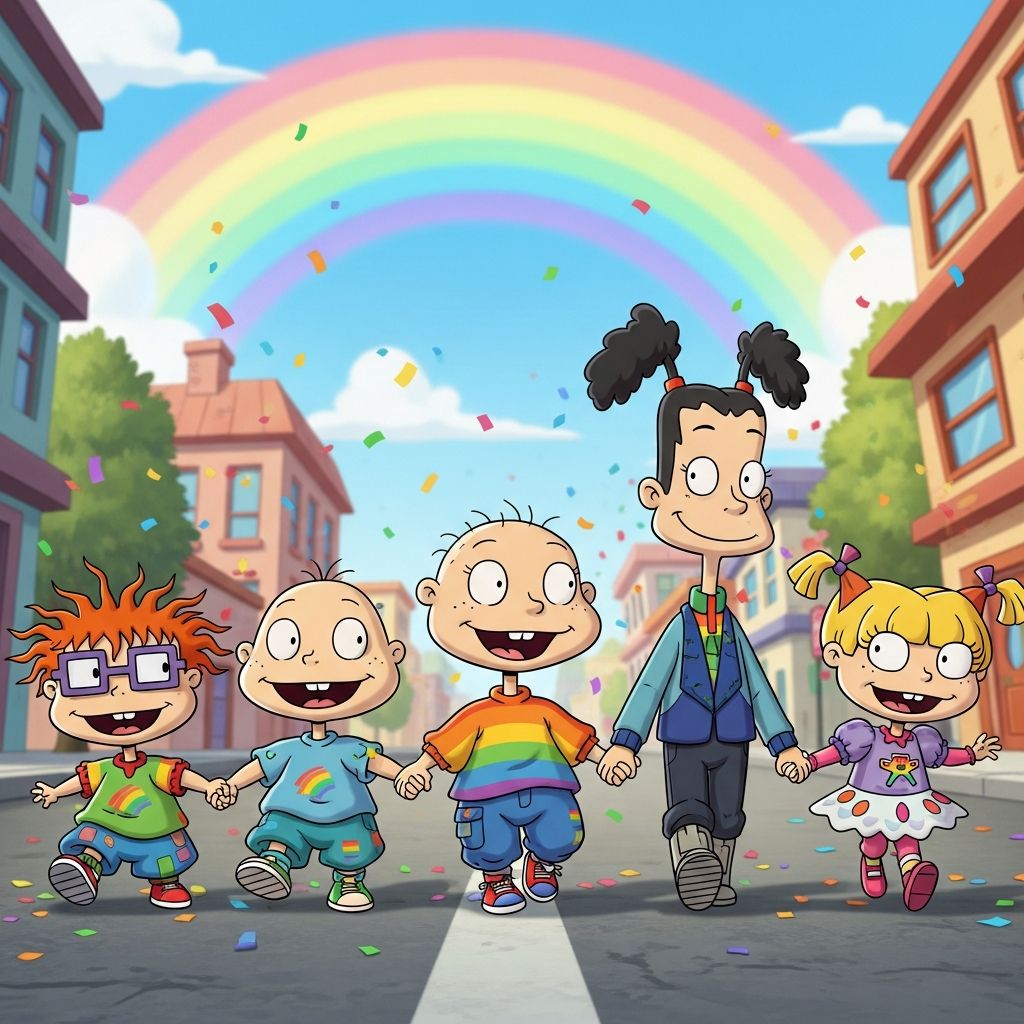
The beloved 90s Nickelodeon series Rugrats is returning with a fresh CGI makeover on Paramount+, bringing back Tommy, Chuckie, and the gang. What has fans buzzing most isn’t just the updated animation—it’s the confirmation that Betty DeVille, mom to chaotic twins Phil and Lil, will be openly gay in this revival. Voiced by queer actor Natalie Morales, this change highlights a push for authentic representation in kids’ programming, sparking joyful nostalgia and deeper conversations about the original show’s subtle queer undertones.
The Evolution of Children’s Animation
Children’s television has come a long way since the 1990s. Back then, shows like Rugrats pushed boundaries with imaginative adventures from a baby’s-eye view, but overt diversity was rare. The reboot arrives in an era where inclusivity is paramount, reflecting societal shifts toward visibility for LGBTQ+ families. This isn’t mere trend-chasing; it’s a response to demands for stories that mirror real-world diversity, helping young viewers see themselves on screen.
Paramount+ aims to blend nostalgia with modernity. The original aired from 1991 to 2004, captivating millennials with its humor and heart. Now, two decades later, the revival updates visuals while infusing progressive elements, making it a bridge between generations.
Betty DeVille: From Subtext to Spotlight
Betty DeVille was always a standout—athletic, outspoken, and unapologetically herself with her track suits and booming laugh. Fans long speculated about her queerness based on her tomboyish vibe and dynamic energy. Natalie Morales, known for roles in Parks and Recreation, confirmed Betty’s gay identity, noting, “anyone who watched the original show may have had an inkling Betty was a member of the alphabet mafia.”
In the reboot, Betty is portrayed as a single queer mom, adding layers to her character. This evolution positions her as a role model, showing queer parents as everyday heroes juggling family chaos. Morales’ involvement ensures authenticity, drawing from her own experiences to voice a character who resonates with queer audiences.
- Athletic Build and Style: Betty’s muscular frame and sporty attire coded her as non-conforming to traditional femininity.
- Personality Traits: Her bold confidence and no-nonsense attitude mirrored queer icons in pop culture.
- Family Dynamics: Raising twins with infectious enthusiasm, now explicitly as a queer parent.
Queer Coding in the Original Series
Long before the reboot, Rugrats characters were dissected by fans for queer subtext. The show’s playful disregard for rigid gender norms—babies swapping clothes, defying expectations—fueled internet theories. This ‘queer coding’ involved implicit traits that resonated with LGBTQ+ viewers, even if unintended by creators.
Tommy Pickles: The Fearless Leader
Tommy, the diaper-clad adventurer, embodies unfiltered curiosity. His leadership and boundary-pushing mirror coming-out journeys, challenging adult rules with pure audacity.
Chuckie Finster: The Anxious Ally
Chuckie’s glasses, red hair, and constant worry make him the relatable introvert in queer circles—nervous but loyal, always showing up for friends.
Phil and Lil DeVille: Gender Rebels
The twins’ identical dresses and rough-and-tumble play blurred gender lines, prefiguring fluid expressions embraced by younger generations.
Angelica Pickles and Cynthia: Sassy Divas
Angelica’s bossy flair positions her as a straight ally in fan lore—fierce, dramatic, and supportive in her way. Her doll Cynthia, with choppy hair, belt, and perpetual smirk, screams androgynous cool.
| Character | Queer Icon Traits | Fan Interpretation |
|---|---|---|
| Betty DeVille | Brawny, bold, sporty | Lesbian archetype |
| Tommy Pickles | Diaper fashion, brave | Non-binary explorer |
| Phil & Lil | Matching outfits, wild play | Genderfluid twins |
| Angelica | Sassy, demanding | Straight ally queen |
| Cynthia | Edgy style, aloof | Butch icon |
Cultural Impact and Fan Reactions
The reboot news ignited social media. Fans celebrated Betty’s outing as “about time,” with memes flooding platforms. This reflects a cultural shift where childhood favorites are reexamined through inclusive lenses, validating queer childhood experiences.
Critics praise the move for normalizing diverse families. In a landscape where only 10% of kids’ shows feature LGBTQ+ characters (per GLAAD reports), Rugrats stands out. It teaches empathy and acceptance subtly, through adventure rather than preachiness.
Why Representation Matters in Kids’ Media
Seeing queer parents like Betty helps children from those families feel normal. For others, it fosters understanding, reducing future bias. Studies from the Trevor Project show media visibility lowers suicide rates among queer youth by 20-30%.
Nickelodeon’s step aligns with peers like Arthur (gay wedding) and The Owl House (bisexual lead). Yet, challenges remain—balancing parent approval with bold storytelling.
Broader LGBTQ+ Themes in Animation History
Rugrats joins a lineage. From Steven Universe‘s fusions symbolizing relationships to She-Ra‘s explicit queerness, animation leads inclusivity. The original Rugrats subtly contributed via its ‘found family’ vibe, where differences strengthen bonds.
Looking Ahead: What to Expect
The Paramount+ reboot promises more episodes exploring modern family life. Will other characters get explicit arcs? Fans speculate on Kimi’s return with her punk edge. Expect humor intact, with added depth.
Frequently Asked Questions (FAQs)
What changes are coming to the Rugrats reboot?
The series switches to CGI animation and introduces Betty DeVille as openly gay, voiced by Natalie Morales.
Was Betty always intended to be gay in the original?
No official confirmation, but her traits led to widespread fan theories of queer coding.
How has the fan community reacted?
Overwhelmingly positive, with many calling the cast queer icons retroactively.
Where can I watch the reboot?
Exclusively on Paramount+.
Does this affect Phil and Lil’s storylines?
Not specified yet, but Betty’s queerness adds new family dynamics.
Challenges and Future of Inclusive Storytelling
While exciting, adding queer elements risks backlash in conservative circles. Creators must navigate this delicately. Success depends on authentic writing—avoiding stereotypes while celebrating joy.
Ultimately, Rugrats reboot reaffirms its core: adventure, friendship, courage. By including queer stories, it ensures every kid feels “a baby’s gotta do what a baby’s gotta do.”
References
- The Rugrats were always queer icons — Mic. 2021-06-01. https://www.mic.com/p/the-rugrats-were-always-queer-icons-81032187
- Queer Eye for Rugrats — LOOR.tv. 2021-05-01. https://blog.loor.tv/blog/rugrats-lgbt-reboot-phil-lil-mom-paramount-nickelodeon
- Rugrats Gets First LGBT Character in Reboot — CGMagazine. 2021-05-01. https://www.cgmagonline.com/news/rugrats-first-lgbt-character-reboot/
- Rugrats Voice Actor Confirms Phil & Lil’s Mom Is Gay In Reboot! — Screen Rant (via YouTube). 2021-05-01. https://www.youtube.com/watch?v=JbwVHVyRenE
- The new ‘Rugrats’ reboot will feature a gay parent — Mother.ly. 2021-05-01. https://www.mother.ly/life/rugrats-characters-gay/
- “Rugrats” Reboot Includes a Single Queer Mom — Mombian. 2021-05-28. https://mombian.com/2021/05/28/rugrats-reboot-includes-a-single-queer-mom/