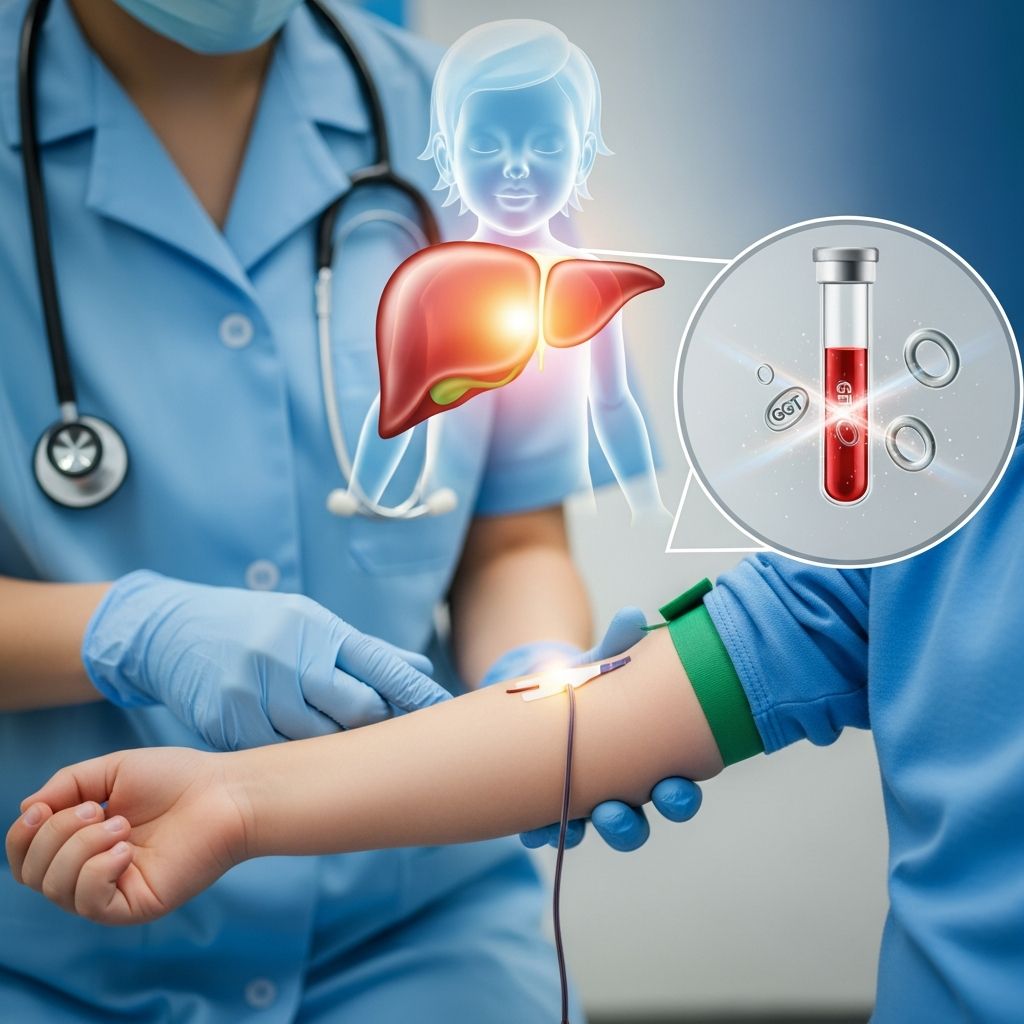
The gamma-glutamyl transferase (GGT) blood test serves as a vital tool in pediatric care for evaluating liver and bile duct function. Primarily located in the liver and bile canaliculi, this enzyme helps detect issues like obstruction or damage early in children.
Understanding the Role of GGT in Pediatric Liver Assessment
GGT, also known as gamma-glutamyl transpeptidase, is an enzyme abundant in the liver cells and bile ducts. In children, it plays a crucial role in identifying hepatobiliary disorders because it rises more reliably than other markers in response to biliary problems. Unlike alkaline phosphatase (ALP), which fluctuates with age in kids, GGT provides a steadier indication of liver stress, making it particularly useful from infancy through adolescence.
Medical professionals rely on GGT levels to differentiate between various liver conditions. For instance, elevated levels often signal biliary obstruction, while normal or low levels in cholestatic cases might point to specific intrahepatic issues. This test’s sensitivity positions it as a frontline diagnostic for conditions that could otherwise progress silently.
Common Reasons Pediatricians Order a GGT Test
Doctors recommend the GGT test when children exhibit symptoms suggestive of liver or bile duct dysfunction. Key indicators include jaundice, characterized by yellowing of the skin and eyes; dark urine; pale stools; abdominal discomfort; nausea; or vomiting.
- Jaundice investigation: Newborns and infants often need GGT to probe unexplained yellowing, distinguishing biliary atresia from other causes.
- Medication monitoring: Children on drugs that affect the liver, such as anticonvulsants, require regular GGT checks to prevent toxicity.
- Enzyme panel follow-up: Abnormal ALT, AST, or ALP prompts GGT to confirm hepatic origin over bone issues.
- Toxin exposure: Suspected ingestion of alcohol or drugs in children warrants GGT to assess impact.
- Post-transplant surveillance: In liver transplant recipients, GGT tracks rejection or biliary complications.
These scenarios highlight GGT’s versatility in both acute and chronic pediatric liver evaluations.
Preparing Your Child for the GGT Blood Draw
Preparation for a GGT test is straightforward, minimizing stress for young patients. Fasting is rarely required unless combined with other tests like bilirubin, but always confirm with the pediatrician.
Parents can ease anxiety by explaining the quick pinch of the needle and distracting with stories or toys. For infants, swaddling or breastfeeding post-draw helps soothe. Avoid discussing potential results beforehand to prevent unnecessary worry.
| Age Group | Preparation Tips | Potential Challenges |
|---|---|---|
| Infants (0-12 months) | Feed normally; hold securely during draw | Movement; brief crying |
| Toddlers (1-3 years) | Use age-appropriate explanations; bring comfort item | Fear of needles; distraction needed |
| School-age (4-12 years) | Discuss process honestly; practice deep breaths | Anxiety about pain; cooperation varies |
| Teens (13+) | Review test purpose; empower with questions | Embarrassment; minimal issues |
This table outlines tailored strategies to ensure a smooth experience.
Step-by-Step: What Happens During the Test
The procedure mirrors standard blood draws but focuses on serum collection. A phlebotomist cleans the arm, applies a tourniquet, and inserts a needle into a vein, typically in the inner elbow. Blood fills a tube (serum gel preferred), and pressure stops bleeding.
- Cleansing and tourniquet application (30 seconds).
- Needle insertion and blood collection (1-2 minutes).
- Bandage application; child rests briefly.
Labs use enzymatic colorimetric methods to quantify GGT activity, where the enzyme transfers a glutamyl group, producing a measurable color change. Results arrive within hours to days, depending on the facility.
Interpreting GGT Results in Kids: Normal Ranges and Variations
Normal GGT values vary by age, sex, and lab standards. Newborns show higher levels that decline by 5-7 months to adult-like ranges (e.g., 5-25 U/L females, 7-47 U/L males).
- Neonates: Elevated naturally, up to 150-200 U/L.
- Infants (1-6 months): Gradual drop to 10-50 U/L.
- Children: 5-30 U/L typically.
- Adolescents: Approaches adult norms.
Elevated GGT (>2x upper limit) suggests biliary obstruction, drug effects, or chronic liver disease like cirrhosis. Very high levels (5-30x) indicate severe cholestasis or cholangitis. Low GGT in cholestasis may signal rare progressive familial intrahepatic cholestasis (PFIC).
Contextualize with other tests: High ALP + high GGT = liver issue; high ALP + normal GGT = bone disease.
What Elevated GGT Levels Could Mean for Your Child
Raised GGT demands further investigation. Common pediatric causes include:
- Biliary atresia or extrahepatic obstruction.
- Drug-induced liver injury (e.g., phenytoin, acetaminophen overdose).
- Viral hepatitis, autoimmune disorders, or metabolic diseases.
- Post-transplant complications like rejection.
Drugs notoriously elevate GGT without damage, so medication history is key. Persistent highs may lead to imaging (ultrasound, MRI) or biopsy.
Rare Cases: Low GGT and Intrahepatic Cholestasis
Paradoxically low GGT amid cholestasis points to genetic conditions like PFIC types 1 or 2. Diagnosis involves genetic testing, biopsy, and ruling out other diseases. Early specialist referral improves outcomes in these progressive disorders.
Follow-Up Care After Abnormal Results
Abnormal GGT triggers a cascade: repeat tests, full liver panel (ALT, AST, ALP, bilirubin), ultrasound, and specialist consults (pediatric gastroenterologist). Track symptoms and adhere to follow-ups for timely intervention.
Frequently Asked Questions About GGT Testing in Children
Is fasting required for my child’s GGT test?
Usually not, but confirm if paired with other tests. Food minimally impacts GGT.
How accurate is GGT for diagnosing liver problems in kids?
Highly sensitive for biliary issues, outperforming ALP due to age-stable ranges.
Can medications falsely elevate GGT?
Yes, many drugs like anticonvulsants do so without harm; review history with your doctor.
What if my newborn’s GGT is high?
Normal in neonates; retest after months if persistent.
Does low GGT mean no liver issue?
Not always; low in some cholestasis types like PFIC.
Empowering Parents: Next Steps and Prevention Tips
Stay proactive: Monitor for jaundice, maintain vaccination schedules against hepatitis, avoid unsupervised medications, and report abdominal symptoms promptly. Routine check-ups catch elevations early.
This guide equips parents with knowledge to navigate GGT testing confidently, ensuring optimal liver health for their children.
References
- The diagnostic value of gamma glutamyl transpeptidase in children — Division of Pediatric Gastroenterology, Cincinnati Children’s Hospital Medical Center. 2019-11-01. https://pmc.ncbi.nlm.nih.gov/articles/PMC6858059/
- GGT (Gamma-Glutamyl Transferase): About Your Child’s Test — Alberta Health Services. Accessed 2026. https://myhealth.alberta.ca/Health/aftercareinformation/pages/conditions.aspx?hwid=aci2807
- Blood Test: Gamma-Glutamyl Transpeptidase (GGT) — Rady Children’s Hospital San Diego. Accessed 2026. https://www.rchsd.org/health-article/blood-test-gamma-glutamyl-transpeptidase-ggt/
- Gamma-Glutamyltransferase (GGT), Serum — Mayo Clinic Laboratories. Accessed 2026. https://pediatric.testcatalog.org/show/GGT
- Gamma-glutamyl transferase (GGT) blood test — UCSF Benioff Children’s Hospitals. Accessed 2026. https://www.ucsfbenioffchildrens.org/medical-tests/gamma-glutamyl-transferase-(ggt)-blood-test
- Gamma-Glutamyl Transpeptidase — UR Medicine. Accessed 2026. https://www.urmc.rochester.edu/encyclopedia/content?contenttypeid=167&contentid=gamma_glutamyl_transpeptidase