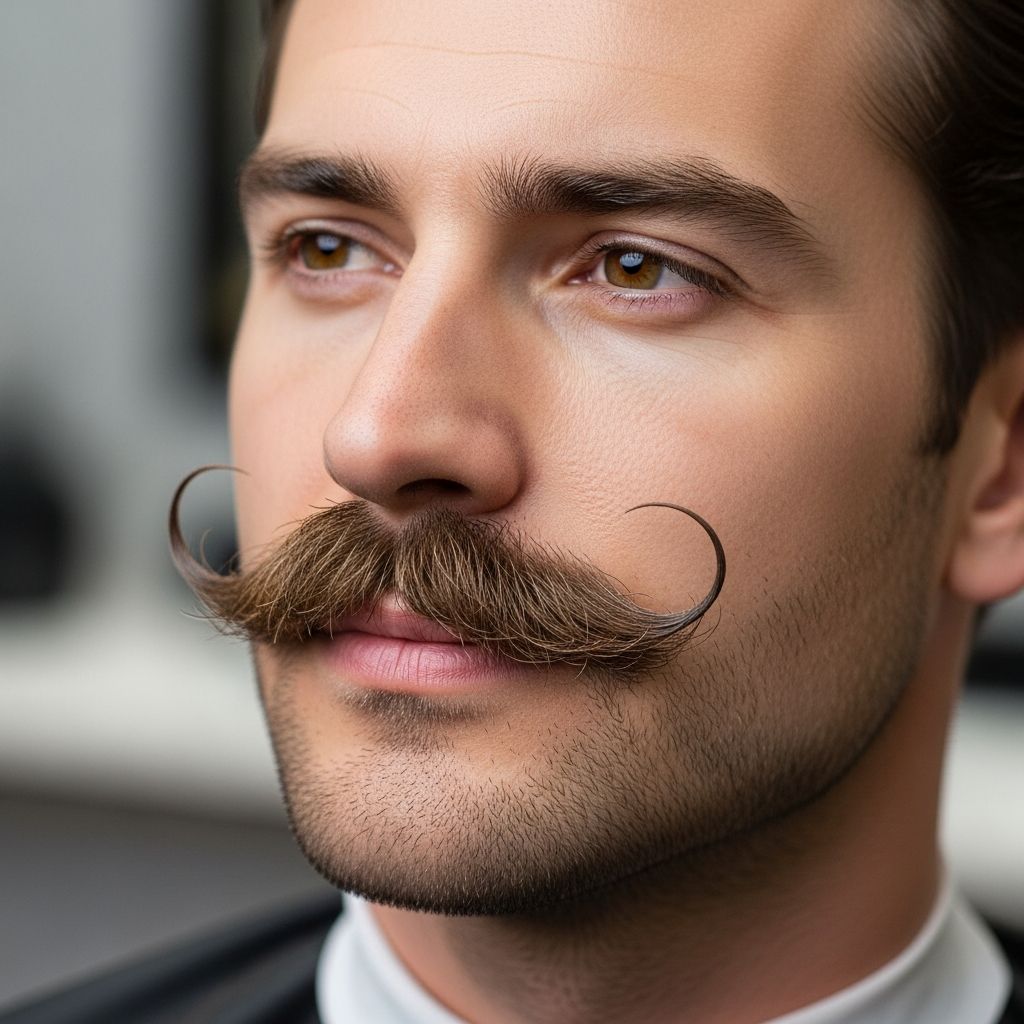
The thick, throwback mustache made famous in recent fighter-pilot cinema has gone from on-screen gag to a serious grooming trend, largely thanks to the swaggering look worn by Miles Teller’s pilot character and a wave of viral social-media thirst.
Instead of treating that mustache as a costume, this guide shows how to adapt the style to real life, from deciding whether it suits your face to growing, shaping, and maintaining it without looking like you are stuck in a theme party.
Why This Mustache Won Everyone Over
The “Maverick-era” mustache taps into nostalgia for 1970s and 1980s masculinity, echoing everything from aviators and flight suits to old-school TV heroes and retro sports icons.
On social platforms, the look exploded into its own mini-movement, with dedicated hashtags, montage videos, and copycat transformations that turned a once-mocked facial-hair shape into a mainstream flirting tool.
What Exactly Is a Maverick-Style Mustache?
At its core, this is a dense, dark, blocky mustache that sits squarely over the upper lip, with the bulk of the hair centered and not extending far past the corners of the mouth.
Barbers often group it with the classic “pornstache” or chevron family: thick, bold, and unapologetic, but trimmed clean enough to avoid sliding into full handlebar or horseshoe territory.
Key Visual Traits
- Heavy coverage across the upper lip with minimal gaps.
- Defined lower edge that almost kisses the lip, but is kept tidy.
- Slightly squared sides that stop around the mouth corners instead of dropping down the chin.
- Paired frequently with aviator sunglasses, casual shirts, and tousled hair for a laid-back pilot vibe.
Does This Mustache Suit Your Face?
Before reaching for the trimmer, think about how a bold mustache will interact with your natural features, because this is not a subtle style that hides in the background.
Face shape, hair density, and your personal wardrobe all affect whether the look enhances your presence or simply overwhelms it.
Face Shape and Mustache Matchup
| Face shape | Why the style can work | Tweaks to consider |
|---|---|---|
| Oval | Balanced proportions can handle a thicker mustache without distortion. | Keep the width classic, ending at the mouth corners for a clean, timeless look. |
| Square | Strong jaw pairs well with strong facial hair, creating a bold, structured frame. | Soften edges slightly and avoid making the mustache too blocky or high on the lip. |
| Round | A defined mustache can add vertical interest and a little edge to softer features. | Keep the bottom line neat and avoid excessive thickness that widens the face. |
| Long/rectangular | The horizontal line of the mustache can visually shorten the face. | Consider slightly fuller sides or pairing with light stubble to balance length. |
Prep Work: Skin and Hair Before the Grow-Out
A high-impact mustache needs a healthy base, so grooming experts emphasize cleansing, moisture, and good habits before worrying about shapes or styles.
Healthy skin supports thicker growth, while early-care routines help prevent flaking, ingrown hairs, and irritation that can undermine the whole look.
Pre-Growth Grooming Checklist
- Wash your face regularly with a gentle cleanser to keep follicles clear without stripping natural oils.
- Moisturize daily so skin stays supple as new hair pushes through.
- Exfoliate lightly once or twice a week around the upper lip to reduce ingrown hairs.
- Introduce a light beard oil or balm to the mustache area once stubble appears, improving texture and comfort.
How to Grow a Maverick Mustache Step by Step
Barbers point out that the most common growth mistake is committing to the mustache too early, shaving everything else before the central strip has enough length and weight.
Patience, paired with a staged approach, gives you time to assess thickness, fill in patchy sections, and experiment with variations before unveiling the final shape.
Step 1: Let Everything Grow
Start by growing all your facial hair for about two weeks, or longer if your hair is slow to develop, so the mustache can build density while surrounded by beard coverage.
This full-growth phase also lets you see natural growth patterns, cowlicks, and areas that may need extra length to compensate for patchiness.
Step 2: Carve Out the Mustache
Once the upper-lip section feels substantial, shave or clipper down the cheeks, jaw, and neck, leaving only the mustache intact or with very light surrounding stubble.
Trim the bottom edge of the mustache in small, controlled passes, starting from each outer corner and moving toward the center to maintain symmetry and avoid sudden gaps.
Step 3: Refine the Shape
- Set the width so the ends line up roughly with the corners of your mouth, unless your face is wider and needs extra extension.
- Use a precision trimmer or scissors to clean stray hairs above the main body, preserving the full, blocky silhouette.
- Check your profile in the mirror to ensure the thickness matches your nose, lip, and chin proportions.
Daily Maintenance: Keeping It Sharp, Not Shaggy
A mustache this visible demands regular upkeep, which is why barbers stress routine trimming and targeted products rather than a “set it and forget it” mindset.
Even small adjustments every few days can be the difference between “intentional vintage” and “unwashed throwback” in photos and real life.
Core Maintenance Habits
- Trim the overhang: Keep hair from spilling too far over your upper lip by clipping just the tips, following the natural curve of your mouth.
- Train the hairs: Use a small comb and, if needed, a touch of balm or wax to direct growth downward and slightly outward.
- Define boundaries: Clean up stray hairs on the cheeks and near the nostrils to keep the central block of hair the clear focal point.
- Stay hygienic: Rinse after meals and wash with mild cleanser to avoid trapped food and product buildup.
Product Playbook: Oils, Balms, and Tools
Professional groomers often recommend combining simple tools with a couple of key products rather than building an overcrowded bathroom shelf.
A thoughtful kit makes maintenance easier and encourages consistency, which shows in the overall texture and appearance of the mustache.
Helpful Tools and Products
- Precision trimmer: Ideal for shaping edges and tidying the border between mustache and clean-shaven skin.
- Small beard scissors: Useful for snipping single stray hairs and refining the bottom line.
- Beard oil: Softens coarse hair, reduces itch, and adds a subtle sheen without greasiness.
- Beard balm or light wax: Provides structure so the mustache holds its shape throughout the day.
- Fine-tooth comb: Helps distribute products and train hairs into a uniform direction.
Styling the Rest of Your Look Around the Mustache
A bold mustache shifts the visual balance of your face, so your hairstyle, eyewear, and outfits should support it rather than competing for attention.
Contemporary takes on the look often pair it with casual, slightly rugged pieces that nod to aviation and military heritage without sliding into full costume territory.
Style Pairings That Work
- Hair: Slightly tousled, medium-length styles or short, controlled cuts both complement the mustache; avoid overly intricate fades that visually fight with the facial hair.
- Eyewear: Aviator sunglasses echo the pilot inspiration, while minimalist wire frames keep the overall vibe modern.
- Clothes: Think simple T-shirts, open camp-collar shirts, denim, and bomber or flight jackets for an easygoing nod to the movie setting.
Social Media, Trends, and Confidence
Online, the mustache has become a kind of playful persona flip, with people documenting their transformation from clean-shaven to swagger-heavy in short videos and side-by-side comparisons.
This performative layer carries into real life, where wearing such a noticeable style often requires a sense of humor and confidence more than perfect symmetry or textbook grooming.
Mental Framing That Helps
- See the style as an experiment rather than a lifelong commitment, which makes it easier to own in the early, awkward days.
- Expect comments and jokes, and treat them as part of the fun instead of a critique of your grooming skills.
- Remember that trends move fast online; if you grow tired of the look, you can pivot to a different facial-hair shape quickly.
Common Mistakes to Avoid
Barbers repeatedly warn that impatience and over-trimming sabotage the look more often than genetics or hair density.
Dodging a few basic pitfalls makes the journey from first stubble to finished mustache far smoother.
Top Mustache Missteps
- Shaving everything too early, revealing a sparse mustache that needed another week or two to fill in.
- Thinning the center too aggressively, which removes the signature blocky power of the style.
- Neglecting skin care, leading to redness, flakes, or bumps that distract from the facial hair itself.
- Going fully costume with head-to-toe flight gear instead of blending the mustache into everyday outfits.
FAQs About the Maverick Mustache
How long does it take to grow a mustache like this?
Many people can reach a visible, stylable mustache within roughly two weeks of uninterrupted growth, though some will need closer to a month for full density depending on genetics and age.
The key is resisting the urge to over-groom during this period, focusing instead on gentle cleansing, moisture, and basic shape awareness.
What if my mustache grows in patchy?
Uneven density is common, and slightly longer length can help cover smaller gaps, especially near the corners of the mouth.
If patches remain noticeable after a few weeks, consider a softer, thinner style or pairing the mustache with light stubble to blend everything together.
Is this mustache office-appropriate?
Office acceptance depends heavily on your workplace culture, but a neatly trimmed, well-maintained mustache has become more normalized as the style spread through mainstream media.
Keeping the lines sharp, avoiding food residue, and pairing the look with polished clothing makes it appear intentional and professional rather than ironic.
Do I need specific products or can I go without?
While it is possible to wear a basic mustache product-free, a small amount of beard oil and, for some, a light balm makes a noticeable difference in softness, control, and overall neatness.
These products are especially helpful if your hair is coarse, wiry, or prone to sticking out in multiple directions.
How do I transition away from the look if I get bored?
Transitioning can be as simple as letting the rest of your facial hair grow in and reshaping into a beard, or shaving clean and starting from scratch with a different style.
Because hair above the lip grows back relatively quickly, experimenting with variations — like a thinner line or a short beard-and-mustache combo — is low risk.
Bringing the Look Back Down to Earth
The on-screen fighter-pilot mustache may have started as a character detail and retro joke, but its surge in popularity shows that bold, nostalgic grooming can translate into everyday life with the right adjustments.
By pairing patient growth, basic skin and hair care, mindful styling, and a sense of humor, you can take a cinematic facial-hair moment and turn it into a confident, wearable signature that fits your own orbit rather than someone else’s script.