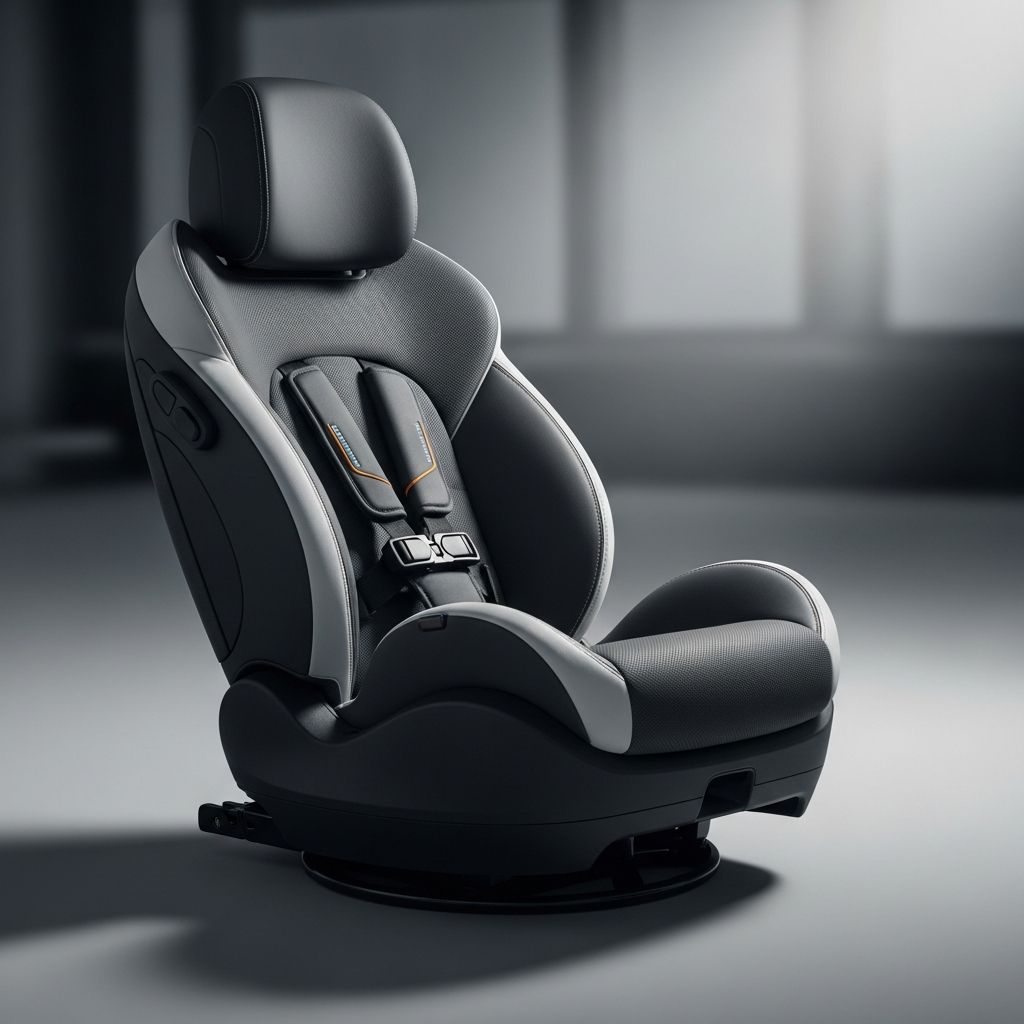
Modern parents face countless choices in child safety gear, and rotating car seats have surged in popularity as a potential game-changer for daily routines. These innovative seats swivel to face the caregiver, simplifying the process of securing young passengers. But with premium pricing and unique design quirks, are they truly superior to traditional models? This article dives deep into their features, performance, and real-world suitability to empower your decision-making.
Understanding the Mechanics of Swivel Seats
Rotating car seats, often called 360-degree or swivel models, feature a base that allows the seat shell to pivot fully or partially. This mechanism activates primarily in rear-facing mode, turning the child toward the door for effortless access. In forward-facing positions, rotation varies by model—some lock rigidly, while others offer limited swivel. The engineering relies on sturdy pivots and locking systems to ensure stability during travel, meeting rigorous federal standards when properly secured.
Key to their appeal is promoting prolonged rear-facing travel, the gold standard for infant protection. Organizations like the American Academy of Pediatrics advocate rear-facing until the maximum height or weight limit, as it better shields the head, neck, and spine in crashes. Swivel designs reduce the physical strain of leaning into the back seat, potentially encouraging compliance with these guidelines.
Top Advantages for Everyday Parenting
Swivel seats shine in practicality, transforming chaotic mornings into smoother departures. Here’s why many families swear by them:
- Effortless Buckling and Unbuckling: Rotate the seat toward you to easily position straps over shoulders and between legs, minimizing twists that strain the back. This is invaluable for caregivers recovering from surgery or managing chronic pain.
- Prolonged Rear-Facing Feasibility: The swivel eases the hassle of rear-facing toddlers, who often resist harnesses. Parents report keeping children rear-facing longer, aligning with safety data showing reduced injury risk.
- Family-Friendly Accessibility: Ideal for multi-caregiver households or those with mobility issues, the design accommodates shorter adults or those in vehicles with limited rear access.
- Time Savings: Faster loading cuts down on fussing, especially with wriggly kids or in tight parking spots.
Beyond convenience, some models incorporate extras like anti-rebound bases, which limit seat movement post-impact, and adjustable headrests for growing bodies.
Potential Shortcomings and Limitations
No product is flawless, and rotating seats carry trade-offs that could sway your choice:
- Premium Cost: Expect to pay 20-50% more than standard convertibles, with prices starting around $300 for basic models and climbing to $550 for all-in-ones.
- Tricky Installation: Unconventional belt paths and narrow lock-off slots demand precise setup. Misrouting risks instability, and some require two hands to swivel when loaded.
- Vehicle Fit Challenges: Bulkier bases complicate three-across setups in sedans or SUVs. Heavier weight (often 25-35 lbs) lowers LATCH limits, pushing seatbelt use.
- Usage Constraints: Lower rear-facing limits in some (e.g., 40 inches height) mean outgrowing sooner. Forward-facing rotation may be absent or partial.
Airplane compatibility is spotty, as not all fit standard seats or swivel reliably in-flight.
Comparing Popular Rotating Models
To illustrate differences, consider this table of standout 2025 options based on expert reviews:
| Model | Rear-Facing Limits | Forward-Facing Limits | Key Pros | Key Cons | MSRP |
|---|---|---|---|---|---|
| Evenflo Gold Revolve360 | 4-50 lbs, 17-48″ | 22-65 lbs, 28-49″ | Full 360° rotation, anti-rebound base | Heavy, installation fiddly | $370 |
| Cybex Sirona S | 4-50 lbs, up to 49″ | 22-65 lbs, up to 49″ | Easy tensioning, sensor-safe | Belt path confusion, no booster | $400 |
| Graco Turn2Me | 4-40 lbs, generous height | 22-65 lbs, booster option | SnugLock install, all-in-one | Cup holders snag, reinstall for FF | $300 |
| Chicco Fit360 | 4-35 lbs, 43″ max | 25-40 lbs, low harness | Affordable, padding | Quick outgrow, tippy loaded | $280 |
This comparison highlights how specs vary—prioritize based on your child’s size trajectory and vehicle.
Essential Installation and Safety Protocols
Proper setup is non-negotiable for any car seat. For rotators:
- Park on level ground and disable passenger airbags if needed.
- Select install method: LATCH for lighter loads, seatbelt for stability.
- Route belts per manual—double-check for twists.
- Recline to vehicle indicators, achieving <1 inch movement at belt path.
- Test swivel: It should lock firmly in travel positions.
- Harness snugly: Pinch test—no slack at shoulders/hips.
Annual checks ensure no wear on pivots. Transition modes only at limits, consulting pediatricians for timing.
Who Benefits Most from This Technology?
Not every family needs a swivel seat. They’re transformative for:
- Parents with back issues or post-partum recovery.
- Families committed to max rear-facing (up to 50 lbs in top models).
- Frequent travelers in compact cars craving efficiency.
Skip if budget-tight, needing three-across, or flying often—standard convertibles suffice there.
Cost-Benefit Analysis: Investment Worthy?
Weighing $350 against time saved and safety nudges, rotators often justify for convenience-focused parents. A study-linked consensus shows easier-use seats boost correct installation rates by 20-30%, indirectly enhancing protection. Longevity varies, but all-in-ones extend value to booster age.
Frequently Asked Questions
Are rotating car seats safer than regular ones?
They match standard safety when installed correctly, with rotation locked. The real edge is encouraging extended rear-facing, per AAP guidelines.
Can all models rotate both ways?
No—many swivel only rear-facing. Verify specs for forward use.
Do they fit airplanes?
Limited; check FAA approval and dimensions—swivel often disables airborne.
How heavy are they?
Typically 25-35 lbs, heavier than non-rotators, impacting portability.
What’s the best for tall kids?
Seek high height limits like 49-50 inches rear-facing.
Final Thoughts on Choosing Wisely
Rotating car seats blend innovation with practicality, easing parental burdens while upholding safety. Test in your vehicle, read manuals thoroughly, and align with your lifestyle. Prioritize fit over features for ultimate protection.
References
- 360 Car Seat: Pros, Cons, and Buying Tips — Blackcircles.com. 2024. https://www.blackcircles.com/news/360-car-seat-pros-cons-buying-tips
- Should You Buy A Rotating Car Seat? Is It Worth It? — Pi Baby Boutique. 2024. https://pibaby.com/blogs/blog/should-you-buy-a-rotating-car-seat-is-it-worth-it
- How to Shop for Rotating Car Seats: Your Ultimate 2025 Guide — Albee Baby. 2025. https://www.albeebaby.com/blogs/from-the-cradle/how-to-shop-for-rotating-car-seats
- Rotating Car Seats Comparison — The Car Seat Pros. 2025. https://www.thecarseatpros.com/blog/rotatingcarseatscomparison
- Car Seats and Booster Seats — National Highway Traffic Safety Administration (NHTSA). 2025-01-10. https://www.nhtsa.gov/equipment/car-seats-and-booster-seats
- Car Seats: Information for Families — American Academy of Pediatrics (AAP). 2024-11-15. https://www.aap.org/en/patient-care/car-seats/