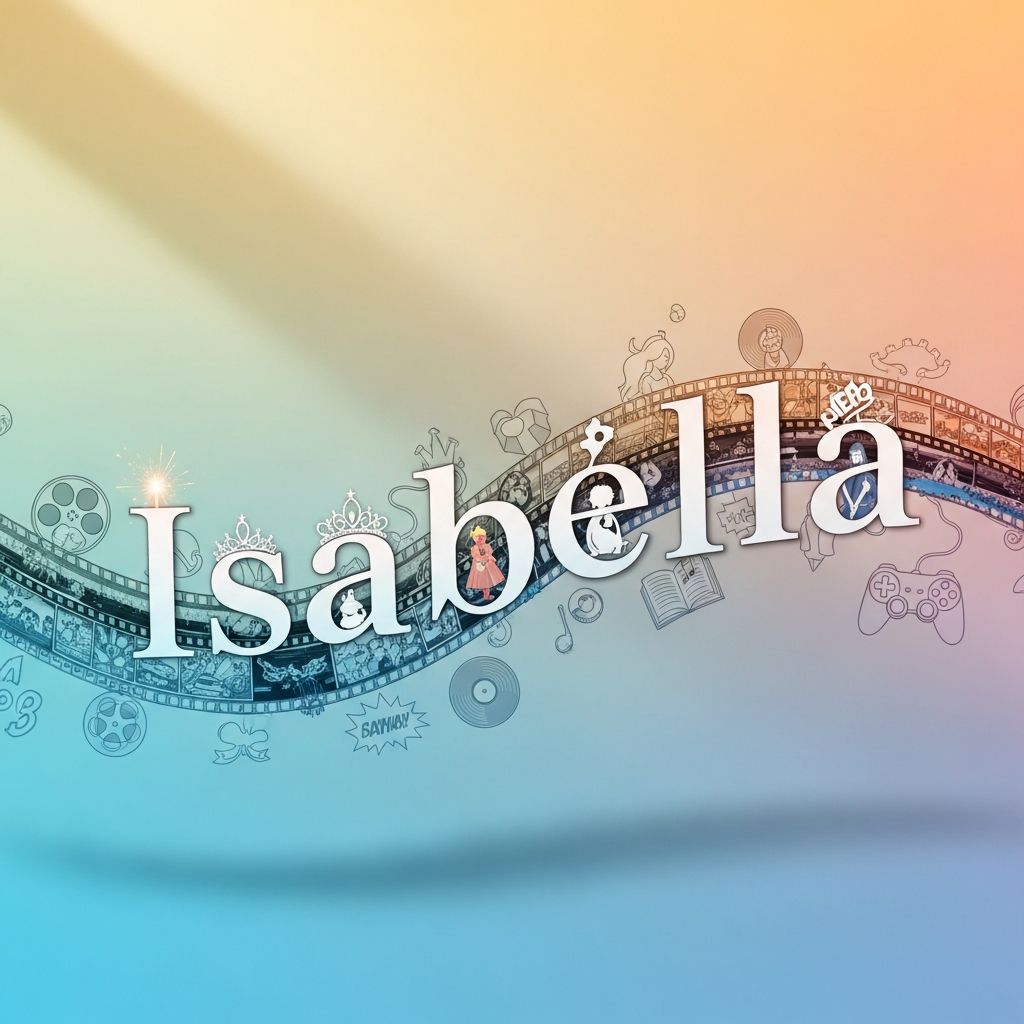
In just a few decades, Isabella went from a classic but relatively quiet name to one of the most dominant girl names in the United States. Parents who chose it were pulled by a mix of forces: timeless elegance, religious roots, royal history, and, undeniably, the cultural shockwave created by bestselling novels and blockbuster films.
This article unpacks how a single name could become such a phenomenon, why pop culture had so much power over naming decisions, and what the Isabella boom tells us about the way modern parents think about their children’s identities.
From Elisheva to Isabella: A Name with Deep Roots
Long before a certain fictional vampire romance, Isabella already carried centuries of meaning. The name traces back to the Hebrew Elisheva, related to Elizabeth, often translated as “my God is an oath” or “devoted to God.” In Romance languages, that root evolved into Isabel and Isabella, eventually spreading across Europe.
Over time, the name developed several overlapping associations:
- Religious heritage through its connection to biblical Elizabeth.
- European royalty, including queens such as Isabella I of Castile, who played major roles in political and religious history.
- Romantic languages, where “bella” evokes beauty and charm in Italian and related languages.
By the time modern parents encountered the name, Isabella already combined spirituality, royal gravitas, and lyrical softness—fertile ground for a trend waiting to happen.
Why Isabella Sounds So Appealing to Modern Parents
The sound of a name matters at least as much as its backstory. Isabella happens to align almost perfectly with contemporary preferences in girl names:
- Four syllables (I-sa-bel-la) give it a flowing, musical rhythm.
- Soft consonants and open vowels make it easy to pronounce across many languages.
- It offers multiple nickname options: Bella, Izzy, Isa, Belle, and more.
- It feels both familiar and slightly exotic, fitting with global naming tastes.
On top of that, Isabella borrows the popular “-bella” and “-ella” endings that also show up in names like Gabriella, Arabella, and Annabella. These endings have surged along with other soft, vowel-rich names such as Olivia, Amelia, and Sophia, which dominate recent baby name charts.
Data Check: How Popular Is Isabella, Really?
To understand just how big the Isabella wave has been, it helps to look at official baby name data. In the United States, the Social Security Administration (SSA) tracks and publishes the top baby names every year.
Recent SSA data show:
| Year (Example) | Isabella Rank (Girls) | Context |
|---|---|---|
| Peak 2010s* | Top 5 | Isabella reached the very top of the charts in the early 2010s. |
| Recent list | #7 in a current top-10 snapshot | Still among the top 10 girls’ names in the United States. |
*Exact yearly rank can be checked via the SSA’s baby name database.
Separate analyses using SSA data estimate that there are now well over 200,000 Americans named Isabella, with the name used overwhelmingly for girls. This level of saturation is a clear signal of more than just a quiet classic—it reflects a cultural wave.
The Pop Culture Spark: How Fiction Turned a Classic into a Craze
Names occasionally jump in popularity for reasons that can be traced to specific cultural events: a royal wedding, a hit song, a beloved TV character. With Isabella, the timing of its surge closely tracks with the global success of a certain young adult fantasy saga and its film adaptations. That series placed a character named Isabella—often called Bella—at the center of a love story that dominated teen and young adult culture for years.
Several factors made this fictional Isabella particularly influential:
- Massive reach: Bestselling books translated into many languages, followed by blockbuster films.
- Target demographic: Many devoted fans were teenagers and young adults—the age group that would be choosing baby names within a decade.
- Romanticization of the name: Repetition of “Bella” and “Isabella” in emotional, high-stakes scenes gave the name strong emotional associations.
- Visual reinforcement: Posters, trailers, and fan communities constantly linked the name to a specific face, aesthetic, and mood.
Pop culture research has documented how media can rapidly move names from rarity to familiarity. For example, scholars studying the “Katrina” name found a pronounced drop in usage after the devastating hurricane, highlighting how events can reshape name associations. In a more positive direction, major film and television franchises can fuel surges in previously modest names as they embed characters in the public imagination.
Isabella in a Changing Naming Landscape
Isabella’s success did not happen in isolation. It unfolded within larger trends in how parents choose names in the 21st century. Analyses of US baby name data show that, compared to previous generations, fewer babies now receive the top names, even as certain names maintain strong popularity.
Key trends that intersect with Isabella’s rise include:
- Desire for distinctiveness: Parents are less likely to choose the single most common name than in the mid-20th century.
- Preference for soft, vowel-heavy names: Names ending in -a for girls and with gentle consonants have risen sharply.
- Global and cross-cultural sounds: Names that work across languages—like Isabella—fit well in multilingual families and a globalized world.
- Media exposure: The internet, streaming, and social media amplify exposure to character names across borders.
Paradoxically, parents reach for names that feel special, yet many are drawing from the same pool of soft, lyrical, culture-rich names. Isabella sits perfectly at that intersection.
Why Parents Gravitate Toward Isabella
When parents explain why they chose Isabella, their reasons often fall into a few recurring themes:
- Romantic and elegant but not overly old-fashioned.
- Flexible nicknames allowing a child to shape her identity: Bella, Izzy, Isa, Belle, and more.
- Cross-cultural usability for families with Italian, Spanish, Portuguese, Latin American, or mixed heritage.
- Balancing faith and fashion: It offers subtle religious roots without sounding overtly biblical to most ears.
- Connection to beloved stories without using a name that is obviously invented or solely tied to one franchise.
In other words, Isabella solves several naming dilemmas at once: it feels meaningful, modern, romantic, and adaptable.
Isabella, Bella, or Something Else? Variants and Siblings
Part of Isabella’s appeal comes from its extended “name family.” Parents often consider related forms, either to stand out slightly or to coordinate sibling names.
| Variant | Language / Style | Impression |
|---|---|---|
| Isabella | Italian / Spanish / International | Romantic, classic, flowing. |
| Isabel | Spanish / Portuguese / English | Simpler and slightly more traditional. |
| Isabelle | French / International | Softer and chic, with a French flair. |
| Izabella | Central/Eastern European | Distinct spelling; modern edge. |
| Bella | Nickname turned given name | Short, sweet, and strongly linked to pop culture. |
For parents who love Isabella but want something less widely used, these alternatives offer subtle shifts in style while preserving the core sound and meaning.
How Likely Is Your Isabella to Meet Another Isabella?
One practical concern for parents is whether their child will constantly share her name in school, activities, or the workplace. Name uniqueness tools built on SSA data show that popular names today are still far less dominant than they were in previous generations.
For example:
- Only a small share of all babies now receive a top-10 name compared with 50 or even 25 years ago.
- Despite Isabella’s strong ranking, the probability that any random baby girl is named Isabella is much smaller than the probability that a baby in the 1980s was named Jennifer or Jessica.
- Estimates based on SSA data suggest that there are now hundreds of thousands of people named Isabella in the US—a large number overall but spread across many years and age groups.
So while your child may share her name with a few classmates, she is less likely to experience the overwhelming duplication that defined certain generations of top names.
Tips for Parents Considering Isabella Today
If you are debating whether to name your baby Isabella, it helps to balance emotional appeal with practical considerations. Here are some points to think through:
- Emotional connection: Does the name feel truly meaningful to you, or does it mainly reflect a passing fandom?
- Longevity: Isabella has centuries of history and religious and royal ties, making it more likely to age gracefully than a trend-only name.
- Nickname preferences: Decide ahead of time which nicknames you love or dislike. You may prefer Bella, Izzy, or the full form only.
- Sibling naming patterns: If you already have children, does Isabella harmonize with their names in terms of style and length?
- Cultural resonance: For families with ties to countries where Isabella, Isabel, or Isabelle are common, the name can honor heritage while fitting globally.
Ultimately, the strongest names are those that feel both personally significant and realistically wearable in everyday life.
Frequently Asked Questions About the Name Isabella
Q: What does the name Isabella mean?
Isabella is commonly understood as a Romance-language form of Elizabeth, derived from Hebrew roots meaning “my God is an oath” or “devoted to God.” Many parents also associate it with the Italian word bella, meaning “beautiful.”
Q: Is Isabella still a popular baby name?
Yes. Recent Social Security Administration data show Isabella ranked within the top 10 girls’ names in the United States, indicating it remains a highly favored choice.
Q: Is Isabella overused because of pop culture?
Isabella is undeniably common in many age groups, but official statistics indicate that even top-10 names now account for a smaller share of births than in past generations. That means your child is less likely to encounter as many exact namesakes as a Jennifer or Jessica did decades ago.
Q: What are some good nicknames for Isabella?
Popular nicknames include Bella, Izzy, Isa, Belle, and regional variants like Chabela in some Spanish-speaking communities. This flexibility is one reason many parents gravitate toward the name.
Q: How does Isabella compare to similar names like Sophia or Olivia?
Names such as Sophia, Olivia, and Amelia share Isabella’s vowel-rich, melodic style and have also ranked near the top of US girls’ name charts in recent years. Isabella stands out for its specific combination of religious heritage, royal history, and strong association with popular fiction.
References
- First Names ISABELLA National Statistics — MyNameStats. 2023-01-01. https://www.mynamestats.com/First-Names/I/IS/ISABELLA/index.html
- Isabella – Baby Name Meaning, Origin and Popularity — The Bump. 2024-01-01. https://www.thebump.com/b/isabella-baby-name
- Isabella Baby Name Meaning, Origin, Popularity Insights — Momcozy. 2023-11-15. https://momcozy.com/blogs/baby-names/isabella
- Baby Name Uniqueness Analyzer: Isabella — Data·yze. 2023-06-01. https://datayze.com/name-uniqueness-analyzer?name=isabella
- Popular Baby Names — U.S. Social Security Administration. 2024-05-12. https://www.ssa.gov/oact/babynames/index.html