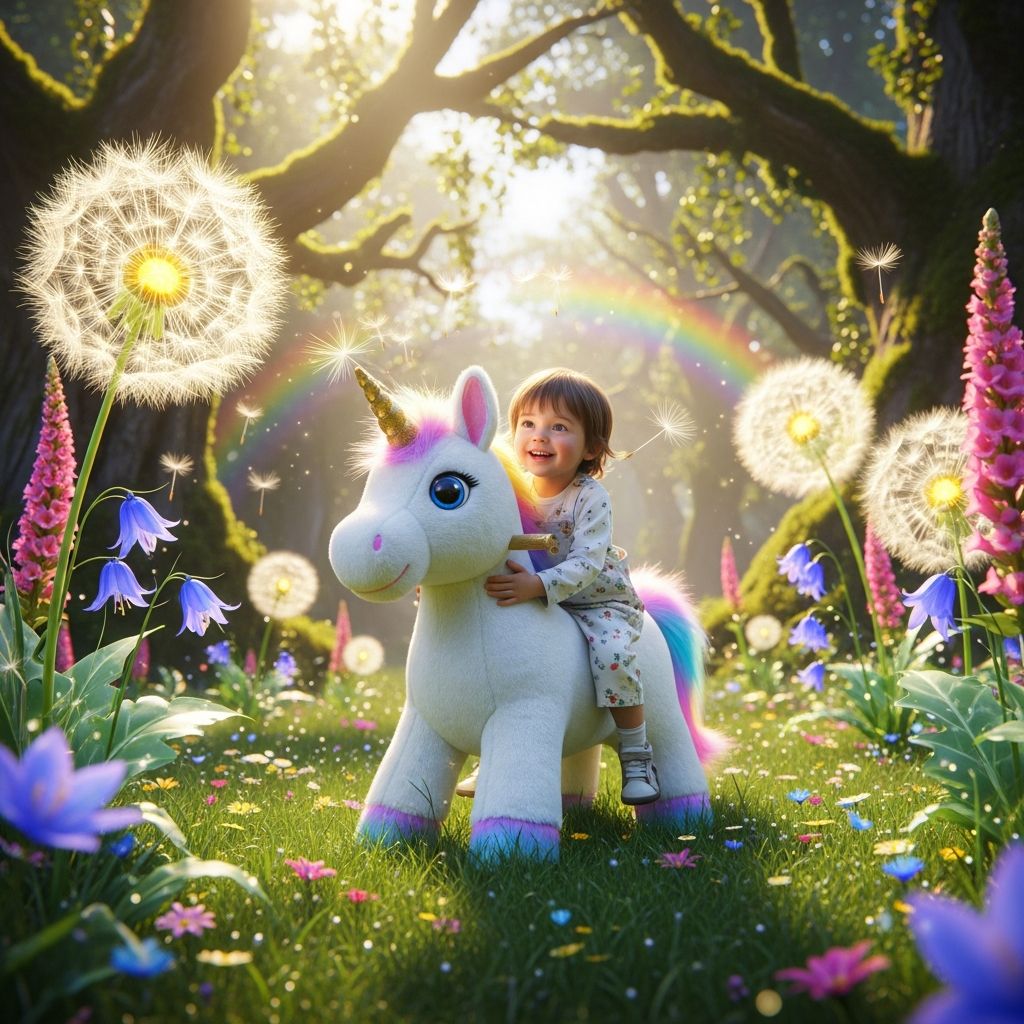
Ride-on unicorns sit at the perfect intersection of fantasy and function: they are toys kids can actually ride, but they also tap into the kind of magical storytelling that keeps children engaged for hours. Whether your child is obsessed with all things unicorn or you simply want a playful way to get them moving, understanding how these toys work—and how to pick the right one—can help you make a confident, long-lasting purchase.
Why Ride-On Unicorns Captivate Kids
Children love toys that let them step into a story, and a ride-on unicorn instantly turns a driveway, living room, or backyard into a make-believe kingdom. The simple motion of riding feels empowering, especially to toddlers who are still mastering balance, coordination, and spatial awareness. For slightly older kids, the unicorn becomes a character in elaborate adventures that stretch their imagination and narrative skills.
Unlike many battery-powered gadgets that encourage passive entertainment, a well-chosen ride-on unicorn invites kids to move their bodies, make decisions about direction and speed, and practice basic risk assessment in a low-stakes setting. The unicorn design adds a sense of wonder that a generic ride-on vehicle often lacks.
Types of Ride-On Unicorn Toys
Not all ride-on unicorns are built the same way, and understanding the main categories helps you match a toy to your child’s age, abilities, and space. Below are the most common styles you’ll see when you start shopping.
- Push or foot-to-floor unicorns: Low, lightweight designs that kids move by pushing with their feet; ideal for toddlers just learning to ride.
- Mechanical “galloping” unicorns: Kids push down on foot pedals and bounce up and down to make the unicorn glide forward, mimicking a riding motion.
- Battery-powered unicorn vehicles: Electric ride-ons with slow, controlled speeds and simple controls like a pedal or push-button.
- Plush ride-on unicorns: Soft, stuffed exteriors over a solid frame; often either mechanical or push-powered and especially appealing to kids who love stuffed animals.
Key Benefits for Growing Kids
Beyond the obvious fun factor, ride-on unicorns can quietly support your child’s development. Think of them as playful tools that encourage physical, emotional, and social growth, all wrapped in glitter and rainbows.
Physical Development
- Improves balance and coordination as kids learn to mount, dismount, steer, and maintain stability.
- Strengthens core, legs, and arms, especially on mechanical or foot-powered models that require active movement.
- Boosts gross motor skills as children navigate around furniture, corners, and outdoor obstacles.
Cognitive and Emotional Benefits
- Encourages imaginative play, which helps with language development and storytelling skills.
- Builds confidence as children master a new skill and feel more in control of their bodies.
- Teaches basic decision-making, such as choosing safe paths, adjusting speed, and practicing turn-taking with siblings.
Social and Family Connection
- Offers a shared activity for siblings and friends, promoting cooperation and patience.
- Creates easy bonding moments for parents and caregivers, who can join in the pretend play or set up simple obstacle courses.
- Can become the highlight of gatherings or birthday parties, encouraging group play instead of screen time.
Choosing the Right Ride-On Unicorn
Before adding a ride-on unicorn to your cart, it helps to think through how and where it will be used. A toy that fits your space, your child’s age, and your comfort level with supervision has a much better chance of becoming a long-term favorite instead of a novelty that sits in the closet.
Age, Size, and Weight Limits
- Toddlers (1–3 years): Look for stable, low-to-the-ground designs with wide bases and simple controls.
- Preschoolers (3–5 years): Can usually handle slightly taller models with gentle turning and, if you’re comfortable, slower battery-powered options.
- Early school-age kids (5–8 years or more): May prefer mechanical galloping unicorns that feel more like a real ride and support higher weight limits.
Always check the published weight capacity and seat height, then compare these numbers with your child’s current size as well as expected growth over the next year or two. A unicorn that is too small will quickly feel frustrating, while a model that is too big can be intimidating or unsafe.
Indoor vs. Outdoor Use
Some ride-on unicorns are clearly designed for indoor floors, while others work better outdoors on flat pavement or short grass. If you live in an apartment or have limited yard space, prioritize compact models with softer wheels that can glide quietly over hardwood or tile. For families with driveways or patios, a slightly larger unicorn with more robust wheels can provide more exciting rides.
It is also worth thinking about storage. A plush unicorn with a tall neck may not tuck easily into a small closet, while a more compact model may slide under a bed or into a corner when not in use.
Feature Comparison Snapshot
| Type | Best For | Typical Age Range | Main Advantages | Considerations |
|---|---|---|---|---|
| Push / foot-to-floor unicorn | Indoor play, beginners | 1–3 years | Simple, stable, easy to control | May be outgrown quickly as skills improve |
| Mechanical galloping unicorn | Active riders, imaginative adventures | 3–8 years (varies by model) | Great exercise, dynamic riding motion | Requires coordination and close supervision at first |
| Battery-powered unicorn vehicle | Outdoor driveways and patios | 2–6 years (varies by model) | Exciting powered ride, simple controls | Needs charging, limited to certain surfaces |
| Plush ride-on unicorn | Kids who love stuffed animals | 2–7 years (varies by model) | Soft, huggable, visually appealing | Fabric may require more careful cleaning |
Essential Safety Tips for Parents
Any ride-on toy, no matter how cute or slow, needs basic safety rules. Clear guidelines help your child feel more secure and allow you to relax a bit while they play. Safety habits built now will also transfer to bikes and other wheeled toys later.
- Always supervise young riders: Stay close enough to intervene, especially near driveways, stairs, or uneven surfaces.
- Use helmets when appropriate: For faster mechanical or battery-powered models, a properly fitted helmet offers extra protection.
- Limit riding areas: Define clear boundaries, such as “only on the patio” or “never near the street,” and repeat them consistently.
- Check before each ride: Make a quick habit of inspecting wheels, straps, pedals, and any moving parts for damage or looseness.
- Respect weight and age guidelines: Avoid letting larger siblings ride toys meant for much younger kids.
Features That Actually Matter
Marketing photos are often full of glitter, lights, and elaborate backgrounds. To cut through the noise, focus on the features that affect daily use, comfort, and longevity. These practical details make the difference between a toy that gets used daily and one that is forgotten after a week.
Comfort and Ergonomics
- Look for a well-padded or contoured seat that supports the child’s hips.
- Ensure that footrests or pedals are reachable without stretching; knees should stay slightly bent during use.
- Check that handles are easy to grip and positioned so your child doesn’t have to hunch forward.
Durability and Materials
- Sturdy frames (often metal or reinforced plastic) help the toy stand up to repeated mounting and adventurous riding.
- Quality wheels roll smoothly and are less likely to chip or crack over time.
- Fabric and plush surfaces should be securely stitched, with no loose threads or easily removable small parts.
Fun Extras
- Light-up horns or manes can add excitement, especially for evening indoor play.
- Sound effects or simple music features can make rides feel more immersive, though many parents appreciate volume controls.
- Small storage compartments allow kids to carry pretend snacks, tiny dolls, or grooming accessories for their unicorn.
Setup, Maintenance, and Storage
Assembly and care may not be the most magical part of owning a ride-on unicorn, but they are essential if you want the toy to last. Fortunately, with a bit of planning, most of the work is front-loaded during the initial setup, and ongoing maintenance becomes a quick routine.
Assembly Tips
- Unbox the toy in a clear area so you can easily locate all parts and hardware.
- Follow the manufacturer’s instructions step-by-step rather than guessing or skipping ahead.
- Tighten screws and bolts firmly, then recheck them after your child’s first few rides.
Cleaning and Care
- Wipe hard plastic and metal surfaces with a damp cloth and mild soap when dirty.
- For plush areas, spot-clean stains promptly and allow enough time to air-dry before the next ride.
- If your unicorn has electronic features, avoid soaking electrical areas and follow any specific care recommendations.
Smart Storage Ideas
- Designate a “parking spot,” such as a corner of the playroom or garage, so the unicorn doesn’t become a tripping hazard.
- Keep battery-powered models in a dry location and protect charging cords from damage.
- For seasonal use, consider covering the unicorn with a breathable fabric to reduce dust accumulation.
Ideas for Creative Unicorn Play
Once the novelty of simply riding wears off, the real magic begins. Kids naturally invent scenarios, but a few simple prompts from adults can help refresh their enthusiasm and turn the unicorn into a versatile play prop for years.
- Unicorn obstacle course: Arrange cushions, cones, or chalk-drawn paths and challenge your child to guide their unicorn through without “touching lava” or stepping out of bounds.
- Fantasy delivery service: Give your child small “parcels” or stuffed animals to deliver to different rooms or spots in the yard.
- Royal parade: Let kids decorate their unicorn with ribbons (that can be easily removed) and host a parade for family members or favorite toys.
- Storytime rides: Read a short fantasy tale and invite your child to act out key scenes while riding their unicorn.
Frequently Asked Questions
1. What age is a ride-on unicorn best for?
Ride-on unicorns are typically designed for toddlers through early elementary school ages, with many models starting around 1–2 years and extending up to about 7–8 years. Always check the specific age and weight guidelines for the model you are considering, since each manufacturer sets its own limits based on size and materials.
2. Are ride-on unicorns safe for indoor use?
Yes, many ride-on unicorns are intended for indoor floors as long as the surface is relatively smooth and free of hazards. To keep everyone safe, set clear rules about maximum speed, riding zones, and staying away from stairs, breakable objects, and pets that might dart underfoot.
3. Do kids need to wear a helmet on a ride-on unicorn?
For slower, low-to-the-ground models used on soft indoor surfaces, a helmet is often optional and left to parental judgment. For faster mechanical or battery-powered unicorns, especially when used outdoors, a properly fitted helmet is a smart precaution and helps kids form good safety habits early on.
4. How much space do we need?
The space you need depends on the size and style of the ride-on. A compact toddler unicorn can work even in small apartments if you can clear a path in the living room, while larger mechanical or powered unicorns are more comfortable with open stretches of hallway, driveway, or patio to allow for smoother turns and more extended rides.
5. How long will a ride-on unicorn stay interesting?
Kids may go through periods of intense use followed by quieter phases, but a well-chosen unicorn can remain appealing for several years, especially if you periodically introduce new games, decorate it for holidays, or involve siblings and friends in the play. Selecting a size and style that gives your child a little room to grow also helps extend the toy’s useful life.
6. What should parents prioritize when shopping?
Safety and fit should always come first: verify age and weight ratings, stability, and brake or wheel design if applicable. After that, consider how the unicorn will be used (indoors, outdoors, or both), how much assembly and maintenance you are comfortable with, and which features—such as lights, sounds, or plush materials—will genuinely delight your child instead of simply adding clutter.
Bringing the Magic Home
A thoughtfully chosen ride-on unicorn can be more than a trendy toy; it can become part of your child’s most cherished memories of early childhood. When you balance safety, durability, and imaginative potential, you invite your child into a world where everyday spaces transform into enchanted forests and royal courts with just a few gallops.
With a bit of planning and care, this magical creature can earn a permanent place in your home, your photos, and the stories your family tells for years to come.