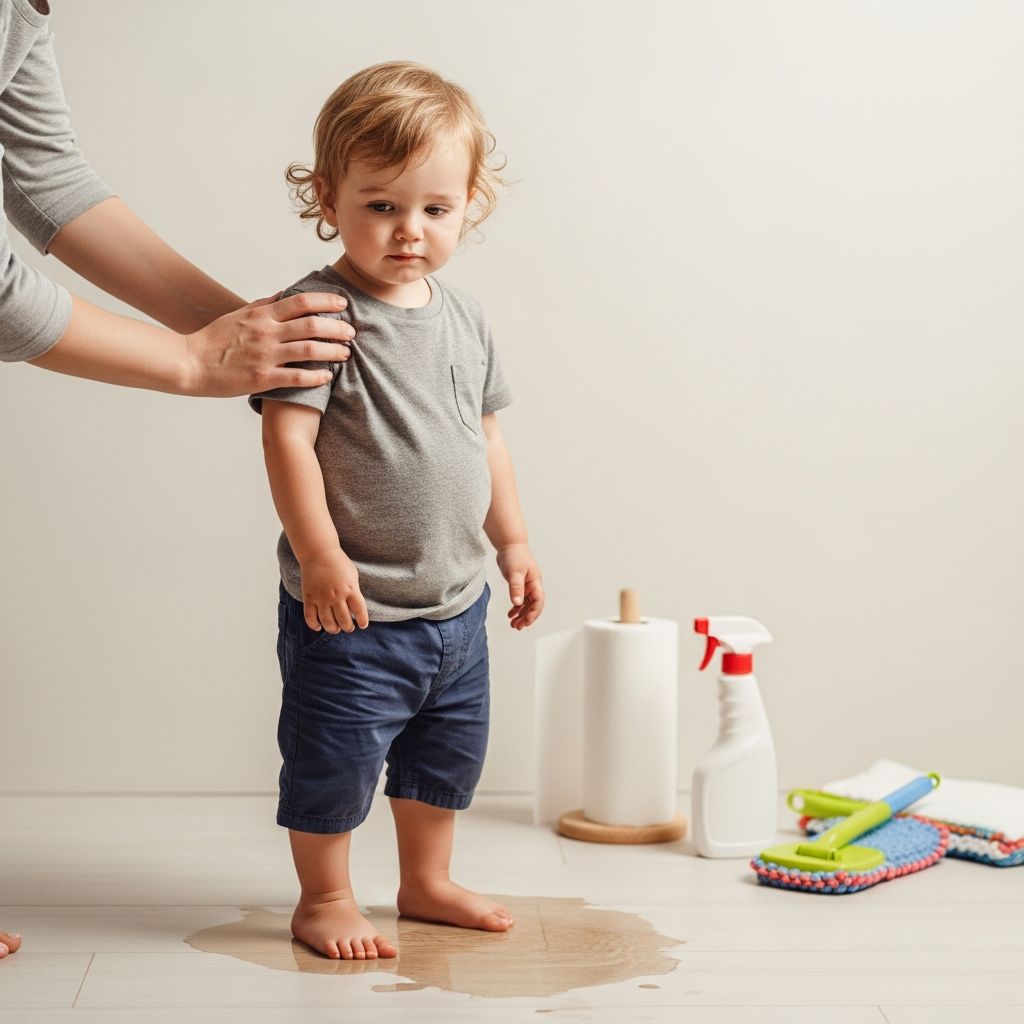
Potty training rarely follows a straight, accident-free path. Even when a toddler seems fully trained, wet pants or a poop accident can appear out of nowhere. Accidents are a normal part of learning bladder and bowel control, and how you respond in those moments can shape your child’s confidence, body awareness, and long-term success with the toilet.
This guide offers a clear, compassionate roadmap for handling potty training accidents at home, in public, and at daycare. You will learn how to stay calm, what to say, how to clean up, and how to prevent repeated mishaps—without shaming or confusing your child.
Why Potty Accidents Happen (Even When You Think You’re Done)
Understanding why accidents occur helps you respond with empathy instead of frustration. Research shows that accidents are common well into the toilet training process and even after daytime dryness is mostly established.
- Immature bladder and bowel control
Children develop the ability to recognize and respond to the urge to go at different ages. Bladder capacity, nervous system maturity, and muscle coordination all influence how long they can hold urine or stool. - Distraction and excitement
Play, screens, or new environments can make toddlers ignore early signals that they need to use the bathroom until it is too late. - Changes in routine
Starting daycare, a new sibling, travel, illness, or a move can temporarily disrupt learned toilet habits and increase accidents. - Emotional stress or anxiety
Stressful events can lead to more holding, rushing, or avoidance, which may trigger accidents or constipation-related issues. - Uncomfortable or scary toilets
Loud flushes, big seats, or unfamiliar bathrooms (especially in public places) may make some children avoid going until the last moment.
In most healthy children, occasional accidents are not a sign that potty training has “failed”; they are part of the learning curve. However, sudden frequent accidents after months of dryness may signal regression or a medical issue that needs attention.
The Golden Rule: No Punishment, No Shame
Visual mess and extra laundry can be stressful, but research and pediatric guidance strongly discourage punishing or scolding for accidents. Children who are shamed may begin to hold urine or stool, which raises the risk of urinary tract infections, constipation, and stool withholding behaviors.
- Avoid blame-filled language
Skip phrases like “Why did you do that?” or “You’re too big for this.” Instead, focus on facts and next steps: “Your pants are wet. Let’s get you clean.” - Use a neutral tone
Calm, matter-of-fact responses help your child see accidents as fixable, not catastrophic. - Protect their dignity
Offer privacy for clean-up and avoid talking about the accident negatively in front of others, including siblings.
When you separate the mess (which can be annoying) from the child (who is learning), you create a safer emotional space for them to keep trying.
Step-by-Step: What To Do Right After an Accident
When an accident happens, having a simple routine reduces stress for both you and your child.
- Pause and breathe
Take a second to calm yourself before you react. Your body language and facial expressions speak loudly, even if you say the right words. - State what happened simply
Use short, neutral sentences: “Your underwear is wet,” or “Poop came out in your pants.” Avoid labels like “bad” or “naughty.” - Escort them to the bathroom
If possible, walk together to the toilet. If there may still be urine or stool to pass, gently invite them to sit and “see if any more needs to come out.” - Clean up together
Help them remove wet clothes, wipe their body, and put soiled items in a hamper or bag. This is not a punishment; it is teaching practical skills and responsibility. - Offer brief reassurance
Say something like, “Accidents happen. You’re learning. Next time we’ll try to get to the potty sooner.”
Keeping this routine consistent teaches your child that accidents are manageable events, not emergencies.
Helping Your Child Learn From Accidents (Without Pressure)
After immediate clean-up, you can gently turn an accident into a learning opportunity.
| Goal | What to Say or Do |
|---|---|
| Build body awareness | Ask calmly, “Did your tummy or pee-pee area feel funny before the pee came out?” Help them connect early sensations with going to the toilet. |
| Encourage early trips | Explain, “When you feel that feeling, that’s your body whispering, ‘Time for the potty!’ We can go together when you feel it.” |
| Normalize mistakes | Offer reassurance: “You’re still learning. Even big kids have accidents sometimes.” |
| Reduce fear | If they seem embarrassed, say, “Your body is doing its job. We just need to help it get to the toilet in time.” |
Short, calm conversations are more effective than long lectures. Toddlers learn through repetition and experience, not explanations alone.
Preventing Frequent Accidents: Practical Strategies
Preventing accidents is not about hovering or nagging; it is about setting up routines and environments that support success. Evidence-based guidance highlights the value of timed potty visits and proactive habits rather than waiting for toddlers to remember on their own.
1. Use Regular Bathroom Breaks
- Offer the potty every 1.5–2 hours during the day, especially after drinks and meals.
- Keep it low-pressure: “Let’s try for a quick potty break,” rather than, “Do you have to go?” (Toddlers often say no even when they do.)
- Add a pre-transition routine: Before leaving the house, starting a long car ride, or beginning a movie, make a “potty stop” part of the routine.
2. Support Comfort and Posture
Good posture helps children fully empty their bladder and bowels. Clinical guidelines recommend child-sized potties or toilet inserts with a footstool so feet are supported and pelvic muscles can relax.
- Use a child-sized potty or an insert on the regular toilet.
- Add a step stool so their knees are slightly higher than their hips and feet are flat.
- For boys, if using the big toilet, teach them to hold the penis down so urine goes into the bowl.
3. Watch Fluids and Timing
- Encourage regular water intake during the day, but avoid very large drinks right before naps or long outings.
- Offer a potty trip 15–20 minutes after meals; this is when the body’s natural reflex can trigger bowel movements.
4. Make the Bathroom a Low-Stress Place
- Stay nearby and chat, read a short book, or sing while they sit to prevent boredom-resistance.
- Avoid forcing them to sit for long periods; 1–2 minutes is usually enough to “try.”
- If they resist, back off, and try again later instead of turning it into a power struggle.
Accidents in Public: Staying Prepared and Calm
Public accidents feel more intense because of time pressure, limited privacy, and worry about what others think. A little preparation can dramatically lower the stress.
- Pack a “potty kit”
- 1–2 extra pairs of underwear
- Spare pants or leggings
- Small pack of wipes
- Plastic or wet bag for soiled clothes
- Foldable travel potty or disposable seat covers (if helpful)
- Schedule a “just in case” potty stop before leaving home and shortly after arriving somewhere new.
- Scout the restroom early in unfamiliar places so you are not searching while your child is desperate.
If an accident happens in public, respond as you would at home: calm words, quick clean-up, and reassurance. You might say quietly, “Your pants got wet. Let’s change you and then we’ll go back.” Most adults understand that toddlers have accidents; your child’s emotional safety matters more than strangers’ opinions.
Daycare and Preschool: Reducing Accidents as a Team
Many children who are dry at home still have more accidents in group care settings. New routines, distractions, and shyness about unfamiliar bathrooms can play a role.
Collaboration with caregivers is key:
- Share your home routine: Let staff know how often you offer the potty and any cues your child shows when they need to go.
- Agree on neutral language: Ensure teachers also avoid shaming comments and instead use calm, matter-of-fact responses.
- Use gentle reminders: Some prompting is necessary, but constant nagging or taking them every 10–15 minutes can increase resistance.
- Send plenty of spare clothes: Extra underwear, pants, and socks reduce stress for both staff and your child.
If your child has frequent accidents only at daycare but stays dry at home, it can help to:
- Observe whether accidents happen at specific times (during outdoor play, transitions, etc.).
- Encourage potty breaks just before those times.
- Ask staff to keep a simple log of accidents and potty times for a week to spot patterns.
Recognizing Potty Training Regression
Regression is when a child who has been mostly dry for a while starts having more frequent accidents again. Pediatric experts note this is common, especially during big life changes or stress.
- Possible triggers
- New baby in the family
- Starting daycare or preschool
- Moving homes
- Illness or hospitalization
- Family stress, such as divorce or conflict
- What it looks like
- More daytime accidents after weeks or months of dryness
- Refusing to sit on the potty or toilet
- Asking for diapers again, especially for poop
The American Academy of Pediatrics advises responding to regression by staying calm, keeping routines consistent, and avoiding punishment or harsh reactions. It is usually better not to return fully to diapers if your child is otherwise healthy and has already learned the basic skills; instead, gently reinforce the toilet habit again.
When to Talk to a Pediatrician
Most accidents are harmless and improve with time, patience, and routine. However, sometimes frequent accidents signal a medical or developmental concern. Seek medical advice if you notice any of the following:
- Sudden increase in accidents after a period of complete dryness, especially if your child seems very thirsty or unusually tired.
- Pain, burning, or crying while peeing (possible urinary tract infection).
- Frequent constipation, very hard stools, or soiling underwear with small smears of stool (could indicate stool withholding or encopresis).
- Leaking urine constantly or dribbling without awareness.
- Regression that persists for many weeks with no clear improvement despite consistent routines.
Early evaluation can address treatable problems, reduce discomfort, and prevent accidents from becoming a long-term struggle.
Supporting Your Own Emotions Through the Process
Potty training accidents do not only affect toddlers. Parents often feel:
- Embarrassed in public or around relatives
- Overwhelmed by extra cleaning and laundry
- Worried that they have “messed up” training
Remind yourself:
- Accidents are part of normal development, not a parenting failure.
- Staying calm now saves time later by preventing power struggles and fear.
- You are allowed to be frustrated; you just do not need to act out that frustration in front of your child.
If you feel stuck, consider talking with your child’s pediatrician, a trusted parent friend, or a pediatric continence or behavioral specialist for tailored guidance.
Frequently Asked Questions (FAQs)
How many accidents are “normal” during potty training?
Researchers often consider toilet training “completed” when children have fewer than four urine accidents per week and two or fewer fecal accidents per month, but this is an average guideline, not a strict rule. Many children have occasional accidents for months after they are mostly trained.
Should I put my child back in diapers after multiple accidents?
If your child has already learned how to use the toilet, experts generally recommend staying consistent with training rather than going back to full-time diapers, especially during temporary regression. However, talk with your pediatrician if accidents are frequent and distressing or tied to medical concerns.
What if my child refuses to sit on the potty after an accident?
Avoid forcing them to sit, which can increase fear or resistance. Keep your tone calm, clean up together, and offer another chance later with a low-pressure invitation, such as reading a short book while they sit for a minute or two.
Are nighttime accidents handled the same way as daytime accidents?
Nighttime dryness often develops later than daytime control and depends on biological readiness more than training. Respond with the same calm, shame-free attitude, use waterproof mattress covers, and consult your pediatrician if bedwetting continues well into the school years or is accompanied by other symptoms.
My child is scared of public toilets. What can I do?
Visit public restrooms when they do not urgently need to go, just to look around and flush together. Let them cover their ears if the flush is loud, and consider bringing a portable seat to make the toilet feel more familiar. Gradual exposure and reassurance can lessen fear over time.
References
- Potty training problems and solutions: An evidence-based guide — Gwen Dewar, PhD, Parenting Science. 2023-03-10. https://parentingscience.com/potty-training-problems-prevention/
- Five do’s and don’ts of potty training your toddler — UC Davis Health. 2022-06-07. https://health.ucdavis.edu/children/patient-education/potty-training-children
- Toilet Training Regression — HealthyChildren.org (American Academy of Pediatrics). 2020-10-21. https://www.healthychildren.org/English/ages-stages/toddler/toilet-training/Pages/Regression.aspx
- Potty training regression: Why it happens and how to handle it — Huckleberry. 2022-05-12. https://huckleberrycare.com/blog/potty-training-regression-why-it-happens-and-how-to-handle-it
- How to help a toddler at daycare with pee accidents — Oh Crap Potty Training. 2021-08-03. https://www.ohcrappottytrainingmetoyou.com/post/how-to-help-a-toddler-at-daycare-with-pee-accidents