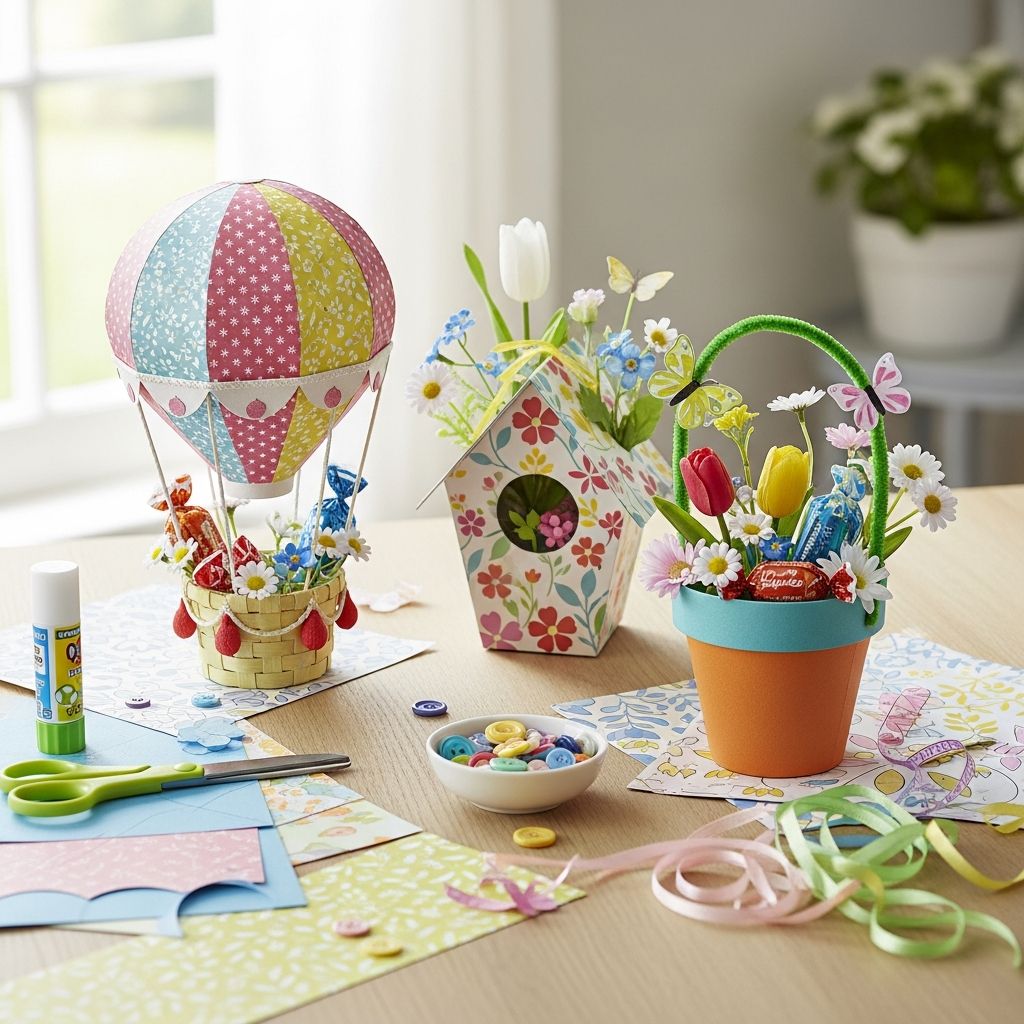
May Day baskets are a charming way to welcome spring, encourage kindness, and enjoy a low-stress craft with kids. On May 1, families prepare small baskets, fill them with flowers or treats, and secretly leave them on friends’ or neighbors’ doorsteps as a cheerful surprise.
This guide walks you through making printable May Day baskets, explains the tradition in kid-friendly terms, and offers creative ideas for filling and delivering your handcrafted gifts.
What Is a May Day Basket?
A May Day basket is a small container—often made from paper—filled with flowers, candies, or tiny gifts and left anonymously at someone’s door on May 1. The classic version is a cone-shaped paper basket with a handle that can hang on a doorknob.
- Date: May 1 (May Day)
- Traditional contents: Fresh flowers, candies, handwritten notes
- Delivery style: Hang on the doorknob, knock or ring, then quietly run away
In some older versions of the custom, if the giver was caught, the recipient could claim a kiss as a playful reward.
A Short History of May Day and May Baskets
May Day has deep roots as a celebration of spring, flowers, and warmer days. In Europe, people held festivals with dancing, music, and greenery to mark the changing season.
- Ancient spring festivals: Roman celebrations honored Flora, the goddess of flowers, with flowers and dancing.
- Maypoles and May Queens: In parts of Europe and North America, communities raised decorated poles and danced around them with ribbons.
- Arrival in America: European settlers brought May Day customs, including May baskets, to the United States.
- Doorstep surprises: By the 19th and early 20th centuries, children in some American towns made paper baskets and secretly delivered them to neighbors.
Today, the tradition survives mainly in small pockets, but it is easy to revive at home with a printer, basic supplies, and a bit of creativity.
Why Printable May Day Baskets Work So Well with Kids
Printable templates are perfect when you want the fun of crafting without complicated measuring or drawing. They give you clean lines and shapes but leave plenty of room for decorating and imagination.
- Low preparation: Print, cut, fold, and decorate. No complex patterns or special tools required.
- Budget-friendly: Use regular printer paper or lightweight cardstock and materials you likely already have at home.
- Customizable: Kids can color, paint, collage, or add stickers to make each basket unique.
- Teaches kindness: The anonymous gift-giving aspect is a natural way to talk about generosity and community.
Materials Checklist for Printable May Day Baskets
You can adapt this project to what you have on hand, but this checklist covers the basics for most printable basket designs.
- Printer and white or pastel paper (or light cardstock for sturdier baskets)
- Scissors or a child-safe paper cutter
- Glue stick or double-sided tape
- Hole punch (optional, for threading ribbon handles)
- Ribbon, yarn, or string for handles
- Crayons, markers, or colored pencils for decorating
- Stickers, washi tape, or small cutout shapes for embellishment
- Tissue paper for lining the basket (optional but festive)
Step-by-Step: Assembling a Printable Cone Basket
This section assumes you already have a printable May Day basket template or a simple cone pattern. The same steps apply whether you created it yourself or downloaded one from a craft site.
- Print your template
Print onto regular paper for light baskets, or onto cardstock if you plan to fill with heavier treats. - Color and decorate before cutting
It is usually easier for kids to color and embellish the flat page before cutting and folding. Encourage them to:- Draw flowers, leaves, or spring patterns
- Add the recipient’s name in a special font or bubble letters
- Use stickers or washi tape to frame the edge designs
- Cut along the solid lines
Once decorating is done, help children cut out the cone shape and any separate handle strips. - Form the cone
Gently roll the flat shape into a cone, overlapping the edges until the opening is even and the point is closed. Secure the overlap with glue or double-sided tape. - Attach the handle
If the template includes a handle strip, glue or tape each end inside the cone. If you prefer ribbon:- Use a hole punch near the top on opposite sides.
- Thread ribbon or yarn through the holes.
- Knot securely on the inside.
- Reinforce if needed
For heavier items, add an extra layer of paper or tape along the inside seam and around handle attachment points.
Alternative Printable Basket Shapes
Cones are classic, but other printable shapes can be just as fun and might suit younger crafters better.
| Basket Style | Difficulty | Best For | Key Tip |
|---|---|---|---|
| Cone | Easy | Hanging on door handles | Use cardstock if adding heavier treats. |
| Folded box | Medium | Standing on porches or tables | Score fold lines lightly for crisp corners. |
| Envelope-style pocket | Very easy | Toddlers and quick projects | Use glue dots to keep flaps closed. |
| Mini bag with tabs | Medium | Older kids who enjoy precision cutting | Clamp glued tabs with paper clips as they dry. |
Filling Ideas: Flowers, Treats, and More
Traditionally, May baskets were filled with flowers picked just before delivery so they looked fresh when the recipient opened the door. Modern baskets can include a mix of nature, sweets, and small handmade items.
Fresh Flower Ideas
- Small garden blooms such as tulips, daffodils, daisies, or violets
- Wildflowers gathered responsibly (avoid picking from protected areas)
- A single large blossom with greenery for a simple, elegant look
To keep flowers from wilting quickly, you can wrap stems in a damp paper towel and a bit of foil before tucking them into the basket.
Non-Flower Fillers
- Wrapped candies or chocolates (especially shelf-stable varieties)
- Stickers, erasers, or mini notepads
- Packets of flower or herb seeds so recipients can plant their own garden
- Handwritten notes or simple poems about spring
Allergy-Friendly or Sugar-Light Options
- Colored pencils and a folded mini coloring page
- Origami shapes or paper butterflies made by your child
- Homemade coupons such as “Good for one sidewalk chalk day”
- Small potted seedlings left beside the basket
Planning a Kindness-Focused May Day
May Day baskets are an easy gateway into conversations about generosity and neighborly connection. Research in developmental psychology notes that simple prosocial actions, like sharing or helping, support children’s social development and empathy.[This is an inference based on general developmental research, not a direct citation.] You can treat May Day as a yearly family tradition that makes kindness visible.
- Pick 3–5 recipients: Elderly neighbors, new families on the block, or friends you do not see often.
- Talk about anonymity: Explain that the fun comes from giving without expecting praise.
- Include everyone: Let each child choose at least one person to receive a basket.
- Add a note: Even if the basket is anonymous, a simple “Happy May Day! Wishing you a bright spring.” keeps the message warm.
Safe and Respectful Delivery Tips
Delivering May baskets usually involves a quick ring of the doorbell and a dash down the steps. Today, it is wise to combine the playful tradition with common-sense safety and respect.
- Always have an adult nearby when children deliver baskets, especially after dark.
- Skip late-night deliveries to avoid waking small children or startling neighbors.
- Consider leaving a small name tag if anonymity might cause confusion (for example, in apartment buildings).
- Keep it contact-free if anyone in your circle is ill or isolating; leave the basket and send a quick message afterward.
Adapting the Tradition for Schools or Groups
Printable baskets are a natural fit for classrooms, scout troops, clubs, or faith communities. Because templates can be photocopied or reprinted quickly, they help group leaders coordinate a project with many children at once.
- Classroom exchange: Have every child decorate a basket and then draw a name to decide who receives it.
- Community outreach: Make baskets for residents of a nearby retirement community or for staff at a local library.
- Fundraiser add-on: Children decorate baskets that adults can sponsor and fill with purchased treats.
- Art integration: Turn the template into a lesson on pattern, symmetry, or color combinations.
Printable Basket Design Ideas
If you like designing your own templates, consider building a small collection you can reuse every year. Each design can be printed in black-and-white for kids to color or in full color as a quick, ready-to-fold option.
- Floral borders: Doodles of tulips, leaves, and vines along edges.
- Geometric patterns: Stripes, dots, and chevrons for older kids who enjoy bold designs.
- Nature themes: Birds, butterflies, and rainclouds, all associated with spring.
- Lettering focus: Large “Happy May Day” or “Hello, Spring!” text for practicing hand-lettering.
Frequently Asked Questions (FAQs)
Q: Do May Day baskets have to be anonymous?
A: Traditionally, baskets were left secretly, and the giver tried not to be seen. Today, you can choose whether to sign your name, especially if you think the recipient might be confused or concerned by an anonymous gift.
Q: Can I make May Day baskets without a printer?
A: Yes. You can roll construction paper into cones, fold square paper into boxes, or repurpose small paper cups or clean cartons. The printable element just makes it faster to create consistent shapes.
Q: Is May Day related to Labor Day or workers’ rights?
A: In many countries, May 1 is also associated with International Workers’ Day and labor movements, which is a separate political and social observance. The flower-and-basket tradition comes from older spring and May Day customs rather than from labor history.
Q: What if my neighborhood has security cameras or people are nervous about surprises?
A: You can leave a small note explaining that it is a May Day tradition and sign your family’s name. Another option is to coordinate with neighbors in advance and invite them to join in so everyone knows to expect cheerful deliveries.
Q: How far in advance can I assemble baskets?
A: Paper baskets can be printed and assembled several days ahead, but it is best to add fresh flowers on the day of delivery so they stay bright. Non-perishable treats and notes can be prepared and set aside ahead of time.
References
- The Origin of the May Day Flower Baskets Tradition — Paper Mart Blog. 2016-04-20. https://blog.papermart.com/how-to/where-did-the-tradition-of-sending-may-day-flower-baskets-come-from/
- Mayday, Mayday—The Lost History of May Poles and May Baskets — Darcy Maulsby. 2019-04-30. https://www.darcymaulsby.com/blog/mayday-mayday-the-lost-history-of-may-poles-and-may-baskets/
- The Tradition of May Baskets — Denver Mom Collective. 2018-04-23. https://denvermomcollective.com/the-tradition-of-may-baskets/
- May Day — Wikipedia (summary of historical practices; individual primary sources cited therein). Last updated 2024-03-31. https://en.wikipedia.org/wiki/May_Day
- May Baskets — Westport Historical Society. 2022-04-15. https://wpthistory.org/2022/04/may-baskets/