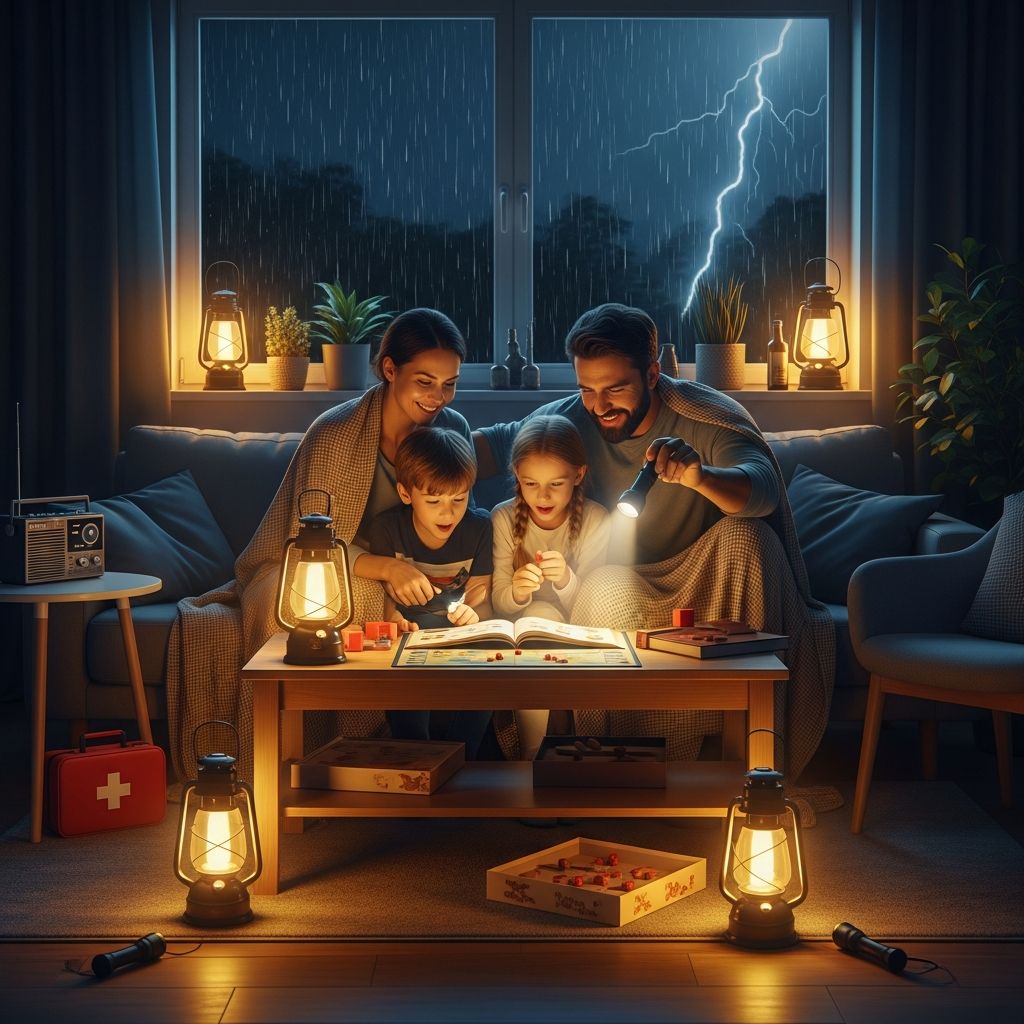
Power outages disrupt daily life, especially for households with children, pets, or medical needs. This guide equips you with proactive preparation, real-time responses, and recovery tactics drawn from authoritative sources to minimize stress and maximize safety.
Building Your Family Emergency Kit Before the Lights Go Out
Proactive planning transforms a potential crisis into a manageable event. Assemble a dedicated kit accessible to all family members, stored in a cool, dry location like a hallway closet.
- Illumination essentials: Multiple LED flashlights, headlamps, and extra batteries. Avoid candles to prevent fire risks.
- Power backups: Fully charged portable power banks, solar chargers, and car adapters for devices.
- Hydration and nutrition: Bottled water (1 gallon per person per day for 3 days) and non-perishable foods like energy bars, canned goods, and baby formula.
- Comfort items: Blankets, sleeping bags, extra clothing layers, and manual can openers.
- Communication tools: Battery-powered or hand-crank radio for weather updates, walkie-talkies for family coordination, and printed contact lists.
- Medical supplies: First-aid kit, prescription medications (extra 7-day supply), and backups for power-dependent devices like CPAP machines.
For families, include child-specific items: favorite toys, board games, glow sticks, and comfort items to ease anxiety. Test all batteries and devices monthly.
Anticipating Outages: Weather Alerts and Utility Checks
Storms, high winds, or grid overloads often precede blackouts. Monitor forecasts via apps or radio, and sign up for utility alerts.
- Charge all devices fully 24 hours before predicted events.
- Fill gas tanks—pumps require electricity.
- Freeze water bottles or buy ice to extend fridge life up to 48 hours.
- Locate your garage door’s manual release lever.
In deregulated areas, distinguish between your energy retailer and the transmission utility for outage reporting.
First Moments: Immediate Safety Steps When Power Fails
Stay calm to lead your family effectively. Prioritize these actions within the first 5 minutes.
- Assess and report: Confirm if neighbors are affected. Call your utility’s outage line immediately—early reports speed response.
- Unplug appliances: Prevent surges damaging electronics like TVs, computers, and refrigerators. Use surge protectors year-round.
- Secure lighting: Distribute flashlights; one per room. Teach kids a ‘buddy system’ for movement.
- Check on vulnerable members: Elderly, infants, or those with medical devices first.
Leave one light on to signal restoration. Never touch downed lines—stay 35 feet away and call 911.
Maintaining Temperature Control in Extreme Weather
| Scenario | Strategies | Family Tips |
|---|---|---|
| Hot Weather | Stay low in home; lightweight clothes; hydrate frequently. Seek cooling centers if prolonged. | Freeze wet bandanas for necks; play water games with stored ice. |
| Cold Weather | Layer clothing; huddle together; avoid indoor fuel burning. Relocate if needed. | Hot water bottles from boiled kettle water; storytelling in blanket forts. |
Insulate windows with towels; conserve body heat by grouping in one room.
Food Preservation and Simple Meal Ideas
Fridges stay cold 4 hours, freezers 48 if unopened. Minimize openings.
- Use coolers with ice blocks for high-priority items like medications or baby food.
- Prepare no-cook meals: Peanut butter sandwiches, fruit, cheese, crackers.
- Picnic-style: Tailgate from car if safe, using sterno cans for hot water (outdoors only).
- Discard perishables above 40°F for 2+ hours post-restoration.
For kids, turn meals into games—’campfire’ stories with flashlights.
Device Management: Staying Connected Without Draining Batteries
Phones are lifelines for alerts and check-ins. Enable low-power mode, close apps, use airplane mode when possible.
- Charge via laptop batteries or car USB (engine on, garage open).
- Text over calls to save power; designate a check-in schedule.
- DIY lantern: Headlamp on water jug for area light.
Hand-crank chargers provide indefinite power.
Entertainment and Mental Well-Being for Children
Boredom amplifies stress. Stock analog fun:
- Board games, card decks, puzzles.
- Storytelling circles, shadow puppets with flashlights.
- Indoor camping: Tents from sheets, ‘fort’ adventures.
- Singing, charades, or memory games.
Explain the situation age-appropriately: ‘Adventure time until lights return!’ Maintain routines like bedtime stories.
Advanced Hacks for Extended Blackouts
Beyond basics:
- Water hacks: Ice in washing machine drum for cooling; seal doors with damp towels.
- Hygiene: Wet wipes, no-rinse shampoo; bucket toilets if needed.
- Car as hub: Radio for news, charge devices (never idle in closed space).
- Neighborhood network: Share resources, watch for each other.
Generators: Use outdoors, away from windows; professional installation recommended.
Post-Outage Recovery: Inspection and Cleanup
Power return risks surges and spoilage.
- Reconnect appliances gradually.
- Inspect food: Smell/test before consuming.
- Check smoke detectors, carbon monoxide alarms.
- Professional electrician for flood-damaged wiring.
Debrief family: What worked? Update kit accordingly.
Frequently Asked Questions (FAQs)
Can I use my oven or grill indoors for heat during a winter outage?
No, this risks carbon monoxide poisoning. Use layers and safe alternatives.
How long can food stay safe in a full freezer?
Up to 48 hours if doors remain closed.
Is it safe to run my car in the garage to charge phones?
Absolutely not—exhaust fumes are deadly. Open garage or go outside.
What if I rely on electric medical equipment?
Have backups like batteries; know shelter locations with generators.
Should I open fridge doors during an outage?
Only if absolutely necessary, and no more than 5 minutes.
References
- 10 clever hacks to get through a power outage — AccuWeather. 2017-07-12. https://www.accuweather.com/en/weather-news/10-clever-hacks-to-get-through-a-power-outage-2/433649
- What To Do When the Power Goes Out — Ready PA (Pennsylvania Emergency Management Agency). 2024-01-15. https://www.pa.gov/agencies/ready/get-prepared/power-outages
- What to Do When the Power Goes Out — Constellation Energy. 2023-11-20. https://www.constellation.com/energy-101/weather-preparedness/what-to-do-when-power-goes-out.html
- 12 tips to prepare for a power cut — National Grid. 2024-03-10. https://www.nationalgrid.com/power-cuts/tips-prepare-for-power-cut
- Power Outage Safety — American Red Cross. 2025-02-14. https://www.redcross.org/get-help/how-to-prepare-for-emergencies/types-of-emergencies/power-outage.html
- 9 power outage life hacks — Energy Harbor. 2023-08-05. https://energyharbor.com/energy-resources/moving-center/9-power-outage-life-hacks