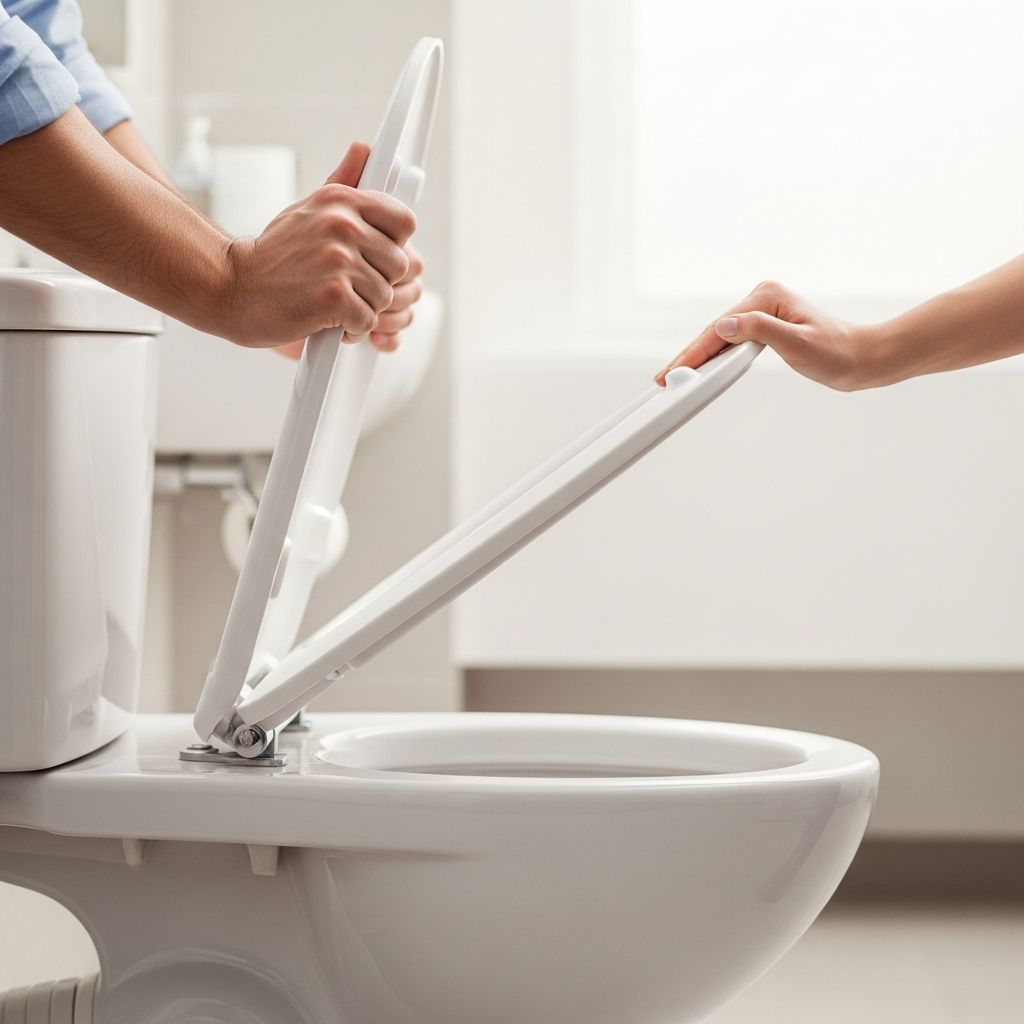
The question of whether to leave the toilet seat up or down has sparked countless arguments in homes worldwide. This ongoing debate pits convenience against courtesy, hygiene against habit, and individual preferences against shared living. While seemingly trivial, it touches on deeper issues of respect, safety, and practicality in communal spaces.
Understanding the Core Conflict
At its heart, the disagreement arises from anatomical differences and usage patterns. Men often lift the seat for standing urination to avoid splashing, while women and children typically sit, requiring the seat down. Forgetting to return it to the down position leads to frustration, especially late at night or in haste. Surveys reveal a strong preference for down: one poll showed 81% favoring it for hygiene and politeness reasons. Yet, 19% support leaving it up, citing minor inconveniences like touching a potentially unclean surface.
Hygiene Realities: What Science Says
Flush-induced aerosols spread bacteria like E. coli, salmonella, and even flu viruses up to six feet, contaminating nearby surfaces regardless of seat position. Closing the lid before flushing traps most particles inside, reducing airborne spread by up to 99% according to lab tests. However, everyday germs are ubiquitous—on doorknobs, phones, and remotes—so the seat alone isn’t a major vector. Still, down position minimizes direct exposure and fly attraction in non-ventilated spaces.
- Aerosol plumes: Flushing with lid up disperses microbes onto toothbrushes and towels.
- Bacterial transfer: Touching the seat exposes hands minimally compared to lid-open flushes.
- Public restrooms exception: In vault toilets, experts recommend lid up for ventilation to direct odors outside via pipes.
Safety Concerns for Families
Households with young children face unique risks. Open seats invite toddlers to drop toys, leading to clogs or drowning hazards. Falling seats can pinch fingers, prompting popularity of soft-close models. Keeping it down prevents these accidents and signals a child-safe environment. Parents report fewer “suspicious silences” followed by plumbing emergencies when lids stay closed.
| Risk Factor | Seat Up | Seat Down |
|---|---|---|
| Child Falls/Toys | High risk | Low risk |
| Finger Pinches | Possible | Prevented |
| Pet Access | Increased | Blocked |
Efficiency and Economics of Usage
An economist’s model from Michigan State University calculated optimal strategies: leave the seat as found to minimize total lifts/drops over time. In mixed households, this balances efforts—men find it up, women down. However, real-world friction often overrides math, as habits form emotional battlegrounds.
Cultural and Social Perspectives
Beyond homes, etiquette varies. Professional cleaners advocate down for tidiness. Feminist critiques frame up seats as inconsiderate, forcing women to touch unclean surfaces unnecessarily. Conversely, some view down demands as petty control. Globally, norms differ: many cultures prioritize lid-down for aesthetics and guest courtesy.
Practical Compromises for Peace
No universal rule fits all, but hybrids work:
- Always close the lid: Best for hygiene—flush contained, seat sanitized easily.
- Seat as found: Efficient for dual users, requires communication.
- Designate rules: Family meetings set policies, like down after 8 PM.
- Upgrades: Slow-close hinges reduce slams; quick-release seats ease cleaning.
Posters or apps track compliance humorously, turning tension into team efforts.
Special Cases: Public and Outdoor Facilities
In vault toilets, manufacturers like Romtec advise lid up for airflow: air enters via riser, exits vent pipe, reducing internal odors. BLM counters with down to curb flies, highlighting conflicts. Key rules: no trash, tampons, or thefts—stick to human waste.
Enhancing Bathroom Harmony Long-Term
Invest in decor: stylish seats showcase design when down. Routine cleans with disinfectants sideline germ debates. Mindfulness training—pause to consider next user—fosters empathy. Couples therapy sometimes addresses it as a proxy for bigger respect issues.
Ultimately, solutions blend compromise, tech, and dialogue. Track progress: fewer arguments mean success.
Frequently Asked Questions
What is the most hygienic position?
Close the lid before flushing to contain aerosols; seat down follows for surface protection.
Is leaving it up disrespectful?
It can feel inconsiderate to sitters, but intent matters—discuss openly.
How to convince standers?
Highlight child safety and efficiency math; demo flush plumes.
Best for shared homes?
Leave as found or always lid closed—test what sticks.
Public toilet tips?
Lid up aids ventilation; avoid extras like wipes.
References
- Seat up? Or seat down? Vault toilet etiquette a point of debate — Albuquerque Journal. 2022-08-15. https://www.abqjournal.com/lifestyle/seat-up-or-seat-down-vault-toilet-etiquette-a-point-of-debate/628893
- Toilet Seats: Should You Leave Them Up or Down? — Plumbworld Blog. 2023-05-10. https://www.plumbworld.co.uk/blog/should-you-leave-toilet-seat-up-or-down
- Toilet Seat Up Or Down? | Earth Science — YouTube (Horizon Transcript). 2015-11-20. https://www.youtube.com/watch?v=T0Cgt3sWrQ8
- Patriarchy, Toilet Seats, and Feminism — Kate Northrup Blog. 2016-12-05. https://katenorthrup.com/patriarchy-toilet-seats-and-feminism/