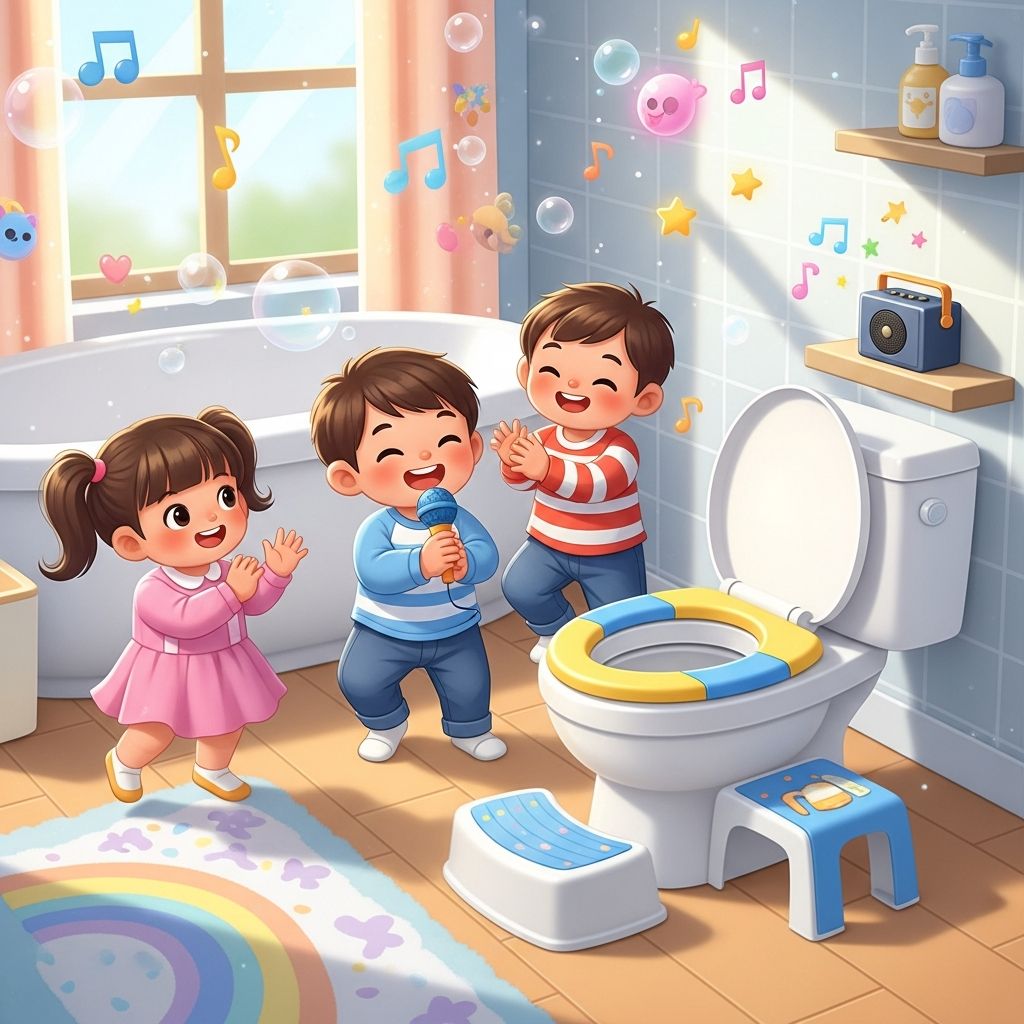
Potty training marks a pivotal milestone in a child’s development, often blending excitement with frustration for parents. Integrating music into this process offers a playful, effective way to encourage toddlers toward independence. Research highlights music’s role in enhancing memory, habit formation, and emotional regulation during early learning. This article delves into proven musical strategies, popular songs, scientific backing, and practical tips to make toilet training a harmonious adventure.
Why Music Revolutionizes Potty Training
Music engages multiple brain areas, aiding toddlers in recognizing bodily cues and forming routines. Repetitive melodies create neural pathways for automatic responses, turning abstract concepts like ‘go potty’ into instinctive actions. Developmental experts note that young children process information through rhythm and movement before verbal understanding solidifies.
Songs reduce resistance by associating bathroom time with positivity. Instead of battles over the potty, families sing along, fostering a stress-free environment. Studies on wetting alarms with musical cues demonstrate up to 51.9% success rates in daycare settings, far surpassing controls at 8.3%. This principle extends to songs, where auditory triggers prompt timely bathroom visits.
Top Songs Boosting Toddler Confidence
Selecting age-appropriate, upbeat tracks is key. Here are standout options inspired by popular children’s media:
- CoComelon’s ‘I Can Do It On My Own!’: Features JJ overcoming hesitation with friends Nina and Cody. Peer modeling shows quick potty breaks don’t end playtime, building self-assurance through triumphant choruses.
- ‘The Potty Dance Song’: A rhythmic ditty mimicking the wiggle of needing to go, helping kids identify sensations early.
- ‘Superhero Potty Time’: Empowers children as ‘heroes’ for using the toilet, with verses celebrating independence.
- ‘Hooray for Pee and Poo’: Normalizes bodily functions with joyful refrains, easing embarrassment.
- ‘Potty Party Anthem’: Turns routines into celebrations, ideal for group settings like preschools.
These tracks, often 2-3 minutes long, match attention spans while reinforcing steps: pull down pants, sit, go, wipe, flush, wash hands.
Science Behind Melodic Toilet Mastery
Peer-reviewed studies validate music’s efficacy. A randomized trial in Neurourology and Urodynamics tested musical diaper alarms on 18-30-month-olds. After three weeks, the intervention group achieved independent bladder control 51.9% of the time, compared to 8.3% in placebo controls. Alarms distracted from activities, heightened awareness, and prompted immediate caregiver response.
Home-based research pitted alarms against timed sits, with alarms yielding superior progress after one month. Educational psychology supports this: songs activate memory centers, making potty cues memorable. For children with developmental delays, structured musical programs accelerate training, as seen in ABA therapies.
| Method | Success Rate | Setting | Duration |
|---|---|---|---|
| Musical Alarm Diaper | 51.9% | Daycare | 3 weeks |
| Placebo Control | 8.3% | Daycare | 3 weeks |
| Alarm vs. Timed Sits | Superior Progress | Home | 1 month |
This table summarizes key trial outcomes, underscoring music’s edge over traditional methods.
Overcoming Common Hurdles with Rhythm
Toddlers often fear missing play or feel anxious. Songs counter this by depicting brief, rewarding breaks. CoComelon’s track shows characters resuming games post-potty, alleviating FOMO. High-anxiety kids benefit from relaxed bathroom vibes: play tunes while reading books.
Resistance to pooping? Use silly poop-themed lyrics to destigmatize. For regressions, revert to favorite songs as cues. Consistency across home, daycare, and travel maintains momentum—streamable tracks ensure portability.
Step-by-Step Musical Training Guide
Implement songs systematically for optimal results:
- Assess Readiness: Look for staying dry 2+ hours, interest in bathroom habits.
- Introduce Songs Daily: Sing during diaper changes to link music with cues.
- Routine Integration: Morning, pre-nap, bedtime—pair with potty sits.
- Celebrate Wins: Dance and repeat victory choruses post-success.
- Track Progress: Use a sticker chart synced to song plays.
- Adapt for Challenges: Slow tempos for calm, fast beats for energy.
Parent testimonials affirm: “The song routine cut our struggles in half—now it’s our go-to hack.” For special needs, ABA combines songs with positive reinforcement.
Creating Custom Potty Playlists
Personalize with free tools: compile YouTube kids’ channels, Spotify toddler lists. Add family originals—record parents singing steps. Volume matters: soft for shy kids, lively for outgoing ones. Rotate tracks to prevent boredom, introducing one weekly.
In group care, communal sing-alongs build peer support, mirroring successful daycare alarms. Tech twist: apps with potty timers synced to melodies.
Long-Term Gains from Musical Habits
Beyond toilets, these methods foster resilience. Confidence anthems like CoComelon’s transfer to dressing, feeding selves. Early success predicts smoother milestones, per developmental scales. Parents report stronger bonds through shared singing, turning chores into connections.
Michigan Medicine advises low-pressure spaces with songs to minimize stress. Programs like Toddlers’ Daily Toilet Training shorten urination control timelines via playful strategies.
Frequently Asked Questions
When should I start using potty songs?
Begin at 18-24 months when showing readiness signs like dry diapers and curiosity, aligning with research timelines.
Do songs work for stubborn toddlers?
Yes, by normalizing fears and celebrating efforts; combine with alarms for 50%+ success boosts.
What’s better: songs or alarms?
Songs build habits proactively; alarms react to accidents—use together for comprehensive training.
Can music help children with delays?
Absolutely; ABA integrates tunes for structured mastery, even in schools.
How long until results?
3-4 weeks with consistency, per trials; celebrate small wins to sustain motivation.
Enhancing Family Bonding Through Song
Potty training thrives on positivity. Group sing-alongs create memories, easing transitions. Dads joining refrains model behavior, vital for holistic development. Track apps log successes tied to plays, gamifying progress.
For poo reluctance, invent goofy tunes about ‘brave poop adventures.’ Nighttime? Lullaby variants signal bedtime potty. Cultural adaptations ensure inclusivity, drawing from global nursery rhymes.
Expert Tips for Musical Success
- Match tempo to child’s energy: upbeat for AM, mellow for PM.
- Visuals amplify: pair with potty videos showing diverse kids.
- Avoid pressure: if resistant, pause and retry later.
- Combine methods: songs + rewards + alarms for 360° approach.
- Monitor health: consult pediatricians for constipation issues.
Scales like the Toilet Training Readiness assess fit, factoring social cues.
References
- CoComelon’s Musical Approach to Potty Training Success — Mom the Mag. 2023. https://momthemag.com/cocomelons-musical-approach-to-potty-training-success-how-songs-build-toddler-confidence/
- Musical Diaper Alarm Can Help With Toilet Training Children — ScienceDaily (Wiley-Blackwell). 2009-06-04. https://www.sciencedaily.com/releases/2009/06/090603180934.htm
- The diaper alarm: An effective tool for toilet training? — Parenting Science (Gwen Dewar, Ph.D.). 2017. https://parentingscience.com/diaper-alarm/
- The Trials of Toilet Training — Michigan Medicine. Recent. https://www.michiganmedicine.org/health-lab-podcast/trials-toilet-training
- Effect of Toddlers’ Daily Toilet Training Program — NMJ (Goums.ac.ir). Recent. https://nmj.goums.ac.ir/browse.php?a_id=1268&sid=1&slc_lang=en&html=1
- Toilet Training Readiness Scale for 0–5-Year-Old Children — PMC (NCBI). 2024. https://pmc.ncbi.nlm.nih.gov/articles/PMC11429537/
- How ABA Therapy Helps with Toilet Training — Yellow Bus ABA. Recent. https://www.yellowbusaba.com/post/how-aba-therapy-helps-with-toilet-training