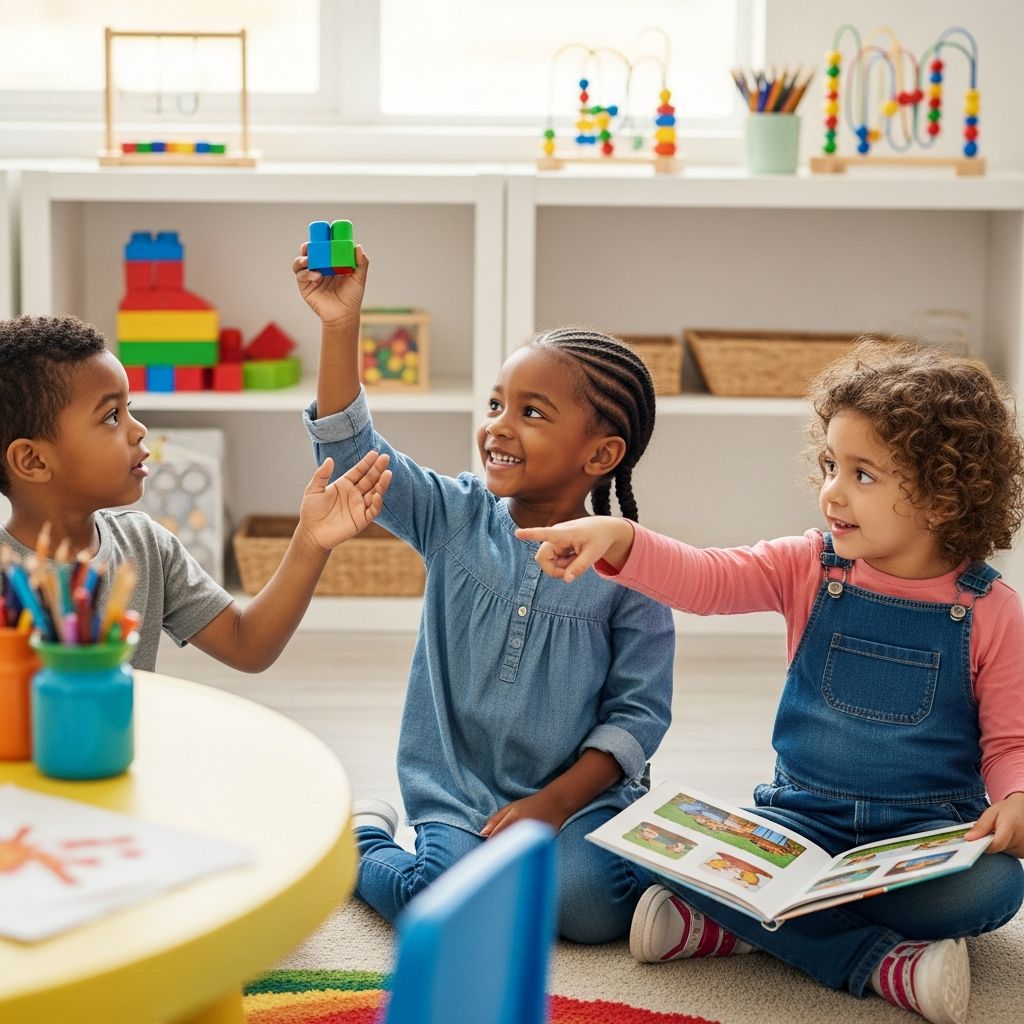
Understanding Communication Development During the Preschool Years
The preschool years represent a pivotal period in a child’s communicative journey, characterized by rapid expansion of vocabulary, increasing sentence complexity, and growing social interaction skills. Between ages three and five, children transition from simple word combinations to sophisticated narrative abilities, laying the groundwork for academic success and meaningful social relationships. During this developmental window, children’s receptive language—their ability to understand spoken language—becomes increasingly refined, allowing them to comprehend abstract concepts, follow multi-step instructions, and recognize subtle distinctions in meaning. Simultaneously, expressive language capabilities flourish as children learn to articulate their thoughts, feelings, and ideas with greater precision and grammatical accuracy.
The transformation that occurs during the preschool years is substantial and multifaceted. Children who enter this phase with emerging two-word combinations typically exit with the ability to construct complex sentences containing eight or more words. They progress from understanding only concrete, immediate concepts to grasping abstract ideas about time, space, and relationships. This evolution reflects significant neurological development and expanding cognitive abilities that extend far beyond mere vocabulary acquisition.
Foundation Skills: Building Blocks for Preschool Communication
Successful communication development in preschool relies on several foundational skills that should be emerging by age three. These competencies create the scaffold upon which more advanced language abilities are constructed. Understanding what constitutes typical development at the outset of the preschool period helps parents and educators identify children who may benefit from additional support or enrichment opportunities.
Comprehension and Following Directions
At the beginning of the preschool years, children typically demonstrate understanding of simple, familiar concepts and can follow one-step directions presented with visual cues or gestures. By age three, most children can interpret action words such as “clap,” “sit,” and “jump,” and they begin recognizing common body parts when asked. This receptive language foundation is critical because children generally understand language well before they can produce it independently. A child may understand a two-step direction long before they can execute it accurately, and recognizing this distinction helps caregivers appropriately calibrate their expectations and teaching strategies.
Vocabulary Expansion and Word Use
Children entering the preschool phase typically possess a working vocabulary of 200 to 500 words, though there is considerable variation depending on individual development and environmental factors. These words are not randomly selected but tend to follow patterns reflecting a child’s interests, daily experiences, and social interactions. Young preschoolers often demonstrate word understanding in context better than they can retrieve and produce those same words in isolation, revealing the important distinction between receptive and expressive vocabulary that characterizes early language development.
Social Communication Foundations
The ability to engage in simple back-and-forth interactions forms the bedrock of all communication development. Young preschoolers should demonstrate emerging interest in peer interactions, beginning attempts at turn-taking in conversations, and growing awareness of the communicative value of language. While these social communication skills may seem incidental to language development, they are fundamentally important because motivation to communicate drives vocabulary acquisition and grammatical learning.
Communication Goals for Three-Year-Old Learners
By age three, children enter a phase of dramatic language expansion sometimes referred to as a “vocabulary explosion.” During this year, communicative abilities expand significantly across multiple dimensions, and establishing age-appropriate goals helps ensure developmental progress and identifies areas requiring additional attention.
Expressive Language Objectives
Three-year-olds should be combining words into short sentences, typically containing two to four words, and producing at least 300 intelligible words in everyday contexts. These sentences follow increasingly predictable grammatical patterns, though they rarely adhere to adult grammatical standards. Goals for this age include encouraging the use of pronouns such as “I,” “you,” and “me,” though children often use these incorrectly initially. Additionally, children benefit from exposure to and practice with verb forms, particularly present and past tense verbs, even though accurate production lags behind understanding. Three-year-olds should be attempting to ask simple questions, often using rising intonation rather than inverted word order to indicate interrogative intent.
Receptive Language Targets
Understanding becomes increasingly sophisticated during the preschool years. Three-year-olds typically demonstrate comprehension of spatial concepts such as “in” and “on,” can identify several body parts when named, and understand the meaning of common action verbs. They can follow two-step directions when both steps are related and contextually appropriate, though performance improves as children approach age four. Receptive vocabulary at this stage generally exceeds expressive vocabulary by a factor of three to five times, meaning a child may understand hundreds more words than they can produce independently.
Narrative and Storytelling Beginnings
Three-year-olds begin showing interest in stories and demonstrate emerging narrative skills by recounting simple events from their day, though narratives at this age are often fragmented and require adult support for coherence. Children should be developing interest in rhyming activities and beginning to recognize familiar rhyming patterns, though they may not yet produce rhyming words independently.
Development Progression for Four-Year-Old Children
The fourth year of life represents a period of refinement and expansion, with most children making steady progress across all communicative domains. Four-year-olds demonstrate markedly improved speech clarity, with most intelligible words produced accurately enough for unfamiliar listeners to understand conversation.
Advanced Sentence Construction
By age four, children typically construct sentences containing four or more words and begin using compound and complex sentence structures with increasing frequency. They demonstrate emerging use of irregular past tense verbs and show greater awareness of verb tenses generally. Conversations become more reciprocal, with four-year-olds more consistently maintaining topics and contributing relevant information to ongoing discussions. They begin telling simple stories with a beginning, middle, and end, though narratives may lack some causal connections that would make them fully coherent to adult listeners.
Comprehension of Abstract Concepts
Four-year-olds move beyond concrete concepts to begin understanding more abstract spatial relationships such as “behind” and “next to.” They can answer “why” questions, though their answers reflect their current cognitive understanding and may differ from adult logic. This age group can follow three-step directions and understand increasingly complex questions. They demonstrate understanding of categorical relationships, grouping items by function or semantic category.
Literacy Foundations
During the fourth year, children typically show growing interest in written language and begin demonstrating phonological awareness skills such as rhyme recognition and beginning sound awareness. These foundational literacy skills develop alongside oral language and reflect the emerging connection between spoken and written language systems.
Enhanced Communication Skills for Five-Year-Old Children
Children approaching kindergarten entry demonstrate communication skills that, while not yet fully mature, provide a solid foundation for academic learning and peer interaction. Five-year-olds typically possess receptive and expressive vocabularies numbering in the thousands and demonstrate sophisticated understanding of language rules and conventions.
Sophisticated Sentence Structure and Grammar
Five-year-olds produce sentences containing eight or more words and use complex sentence structures with relative clauses and coordinating conjunctions with increasing accuracy. While pronunciation may still present challenges with multisyllabic or unfamiliar words, speech is generally intelligible to listeners unfamiliar with the child. They demonstrate understanding and increasingly accurate production of irregular grammatical forms and demonstrate emerging metalinguistic awareness—the ability to think about and discuss language itself.
Conversational Competence
By age five, children engage in genuine conversations with multiple exchanges, maintain topics appropriately, and demonstrate emerging ability to adjust communication style based on listener characteristics. They answer complex questions requiring inference and explanation, and they initiate interactions with peers and adults for social and informational purposes. Descriptive language becomes richer, with children using adjectives and adverbs to convey subtle distinctions in meaning.
Narrative and Literacy Skills
Five-year-olds tell connected stories with multiple events, describe cause-and-effect relationships, and demonstrate understanding of temporal sequencing. They recognize and produce rhyming words, identify beginning sounds in words, and show emerging interest in written language. These skills position children well for the academic demands of formal schooling.
Practical Strategies for Supporting Communication Development
While children’s innate developmental drives propel much language learning, intentional environmental structuring and consistent interaction practices significantly enhance communication growth. Parents and early educators can implement evidence-based strategies that make language learning engaging and natural.
Environmental Scaffolding
- Language-rich environments: Surrounding children with varied vocabulary through conversation, reading, and narration of daily activities exposes them to rich language models and demonstrates the communicative functions of language.
- Responsive interaction: Responding quickly and meaningfully to children’s communicative attempts reinforces the value of communication and motivates continued language use.
- Peer interaction opportunities: Structured and unstructured opportunities for peer interaction provide motivation for communication and exposure to varied speech patterns from multiple speakers.
- Visual supports: Pictures, signs, and other visual representations help children connect concrete objects with abstract symbols and support comprehension of language.
Interactive Communication Techniques
- Expansion and extension: When children produce short or incomplete utterances, adults can expand them into complete sentences and extend the topic, providing models of more sophisticated language without direct correction.
- Open-ended questions: Questions requiring more than yes-or-no answers encourage elaboration and provide opportunities for children to practice sentence construction.
- Narrative scaffolding: Adults can support emerging storytelling by asking questions about sequences, encouraging children to elaborate on events, and providing models of organized narration.
- Collaborative book reading: Interactive reading experiences that encourage prediction, questioning, and discussion develop both vocabulary and comprehension skills.
Identifying Children Requiring Additional Support
While there is considerable variation in the timeline of language development, certain patterns warrant professional evaluation. Children who demonstrate significant delays in either receptive or expressive language, those whose speech is largely unintelligible to unfamiliar listeners, children with severe difficulties following directions, or those showing minimal interest in communication may benefit from evaluation by a speech-language pathologist. Early identification and intervention can prevent secondary difficulties and optimize outcomes.
Communication Skills Comparison Table
| Age Group | Expressive Language Goals | Receptive Language Goals | Social Communication Goals |
|---|---|---|---|
| Age 3 | 2-4 word sentences; 300+ words; Uses simple pronouns | Follows 2-step directions; Understands spatial concepts; Identifies body parts | Shows interest in peers; Attempts turn-taking; Asks simple questions |
| Age 4 | 4+ word sentences; Compound sentences emerging; Improved articulation | Understands abstract concepts; Follows 3-step directions; Answers “why” questions | Engages in conversations; Uses language for storytelling; Shows emerging narrative skills |
| Age 5 | 8+ word sentences; Complex grammar; Sophisticated vocabulary | Understands temporal sequencing; Comprehends complex questions; Recognizes rhyming | Maintains conversations; Adjusts communication style; Tells connected stories |
Frequently Asked Questions About Preschool Communication Development
At what age should children use complete sentences?A: Children typically begin combining words into simple two-to-three-word sentences around age two, with increasingly complete sentences developing through the preschool years. By age five, most children produce complex sentences with multiple clauses. However, significant variation exists, and sentence complexity develops gradually rather than appearing suddenly.
Q: How much speech delay is concerning in a preschooler?
While variation in development timing is normal, children whose expressive vocabulary falls significantly below peers, whose speech remains largely unintelligible to unfamiliar listeners, or who show minimal interest in communication warrant professional evaluation. Generally, a delay of 6-12 months or greater, or significant gaps between receptive and expressive abilities, may indicate the need for specialist assessment.
Can bilingual exposure delay language development?
No. While bilingual children may take slightly longer to reach vocabulary milestones in each individual language, their total conceptual vocabulary typically matches or exceeds monolingual peers. Bilingualism provides cognitive and social advantages and does not impede language development when children receive adequate exposure to both languages.
What role does play have in language development?
Play is fundamental to language development. Through pretend play, children practice language in varied contexts, experiment with new vocabulary, and learn the social functions of communication. Peer play specifically provides essential opportunities for negotiating meaning, taking turns, and adjusting communication for different listeners.
Should parents correct grammar errors in preschoolers?
Direct correction is generally less effective than modeling correct forms through expansion and extension of children’s utterances. When a child says “I goed,” responding with “Yes, you went to the park!” provides a correct model without drawing attention to the error, supporting more natural language learning.
How much screen time is appropriate for language development?
Interactive screen experiences where adults engage with children around content may support learning, but passive viewing provides minimal language benefit. Quality over quantity matters, and screen time should not replace interactive communication with caregivers and peers, which remain optimal for language development.
References
- A Guide to Language Development Milestones — Brightwheel. 2024. https://mybrightwheel.com/blog/language-development-milestones
- Age-Appropriate Speech and Language Milestones — Children’s Hospital of Philadelphia (CHOP). 2024. https://www.chop.edu/health-resources/age-appropriate-speech-and-language-milestones
- Speech and Language Milestones by Age: A Guide for Parents — TPI Therapy. 2024. https://tpitherapy.com/preschool-speech-language-milestones/
- Speech and Language Milestones — American Academy of Pediatric Dentistry (AAPD). https://www.aapd.org/globalassets/media/policies_guidelines/r_speechmilestones.pdf
- Speech and Language Milestones, Ages 3 to 5 Years — Alberta Health Services. 2024. https://myhealth.alberta.ca/Health/pages/conditions.aspx?hwid=ue5083
- Communication Milestones: Age Ranges — American Speech-Language-Hearing Association (ASHA). 2024. https://www.asha.org/public/developmental-milestones/communication-milestones/
- Speech and Language Developmental Milestones — National Institute on Deafness and Other Communication Disorders (NIDCD), National Institutes of Health. 2024. https://www.nidcd.nih.gov/health/speech-and-language