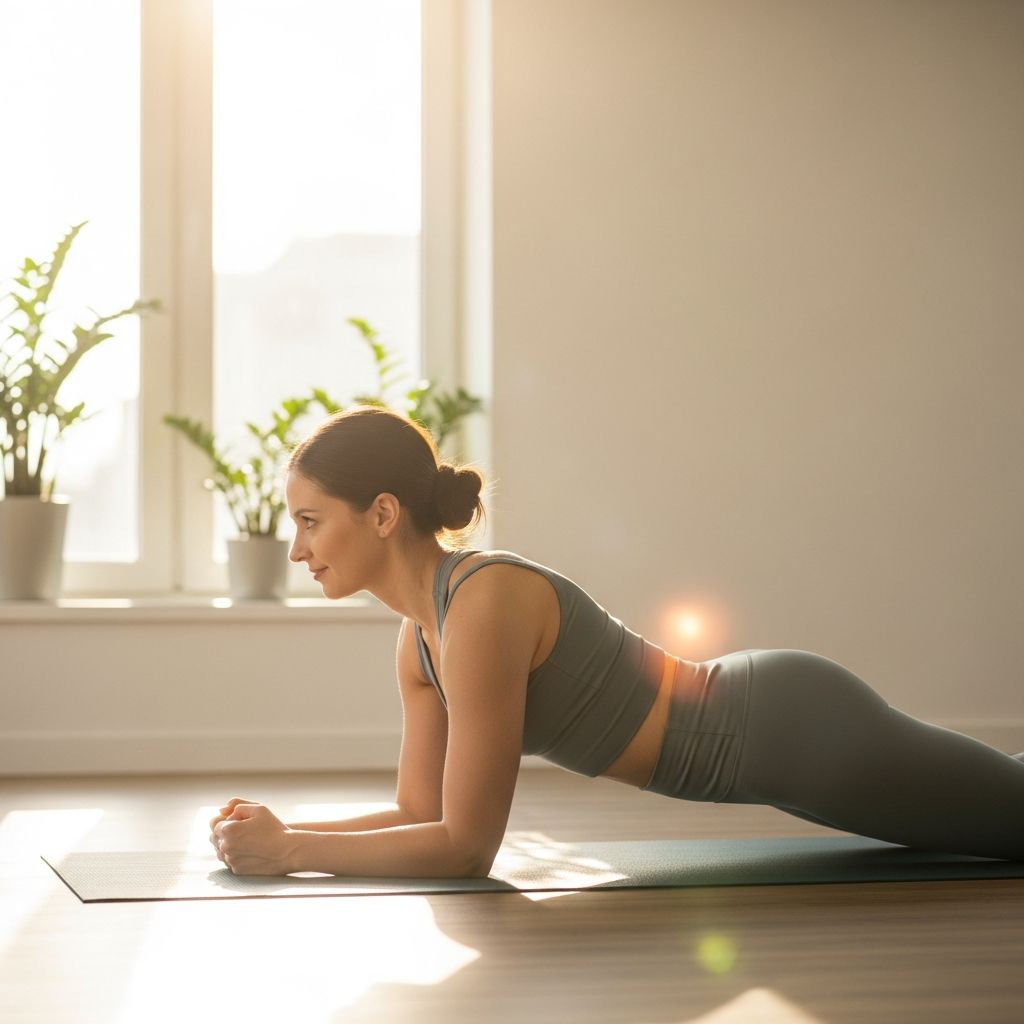
After giving birth, many new mothers seek ways to gently restore their abdominal muscles and pelvic stability. Yoga provides a low-impact method to achieve this, focusing on breathwork, alignment, and mindful movement to support healing without strain.
Understanding Postpartum Core Challenges
The postpartum period brings significant changes to the body, particularly the core and pelvic region. Pregnancy stretches the abdominal wall, often leading to diastasis recti, a separation of the rectus abdominis muscles. Childbirth can weaken the pelvic floor, causing instability, incontinence, or discomfort. Yoga addresses these by promoting transverse abdominis activation, pelvic floor engagement, and overall postural realignment.
Key benefits include enhanced circulation, reduced tension, and improved body awareness. Start only after medical clearance, typically 6-10 weeks postpartum, or longer post-cesarean. Always prioritize breath over force to avoid doming or coning in the abdomen.
Essential Principles for Safe Practice
- Breath Coordination: Use exhales to engage the core and pelvic floor, drawing the navel toward the spine.
- Alignment Focus: Stack ribs over pelvis, distribute weight evenly, and avoid overarching the lower back.
- Modifications: Use props like pillows, blocks, or walls for support, especially in early recovery.
- Progression: Begin with restorative holds, advancing to dynamic movements as strength builds.
- Listen to Your Body: Stop if you feel bulging in the midline or pain; consult a specialist for severe diastasis.
Foundational Yoga Poses for Pelvic Floor
Strengthening the pelvic floor forms the base of core recovery. These poses gently engage muscles strained during birth.
Reclined Bound Angle Variation
Lie on your back with soles of feet together, knees apart, supported by pillows under thighs. Place hands on lower belly. Inhale to expand, exhale to gently lift pelvic floor and draw navel in. Hold 2-5 minutes, breathing deeply. This opens hips, improves circulation, and teaches subtle engagement.
Seated Thunderbolt Pose
Kneel with buttocks on heels, toes pointed back. Sit tall, hands on thighs. Inhale to lengthen spine; exhale to engage pelvic floor. Hold 1-3 minutes. Enhances blood flow to pelvis and builds endurance in floor muscles.
Core Activation Poses for Abdominal Healing
These target the deep core layers, aiding diastasis recti closure by loading the linea alba safely.
Sphinx Preparation
Lie prone, forearms on mat, elbows under shoulders. Gently press forearms down, lifting chest while keeping hips grounded. Exhale to pulse abs and pelvic floor inward. Hold 30-60 seconds, 3-5 rounds. Strengthens back extensors and supports anterior core without pressure.
Bridge with Core Compression
Lie on back, knees bent, feet hip-width. Press feet and arms down to lift hips. Clasp hands under pelvis. Exhale to lengthen tailbone, pulse abs up and in. Hold 20-30 seconds, repeat 5 times. Realigns pelvis and activates glutes with core.
| Pose | Hold Time | Key Engagement | Modifications |
|---|---|---|---|
| Reclined Bound Angle | 2-5 min | Pelvic floor lift | Pillows under knees |
| Thunderbolt | 1-3 min | Spine elongation | Blanket under knees |
| Sphinx Prep | 30-60 sec | Abdominal pulse | Forearms on block |
| Core Bridge | 20-30 sec | Tailbone lift | One foot at a time |
Advanced Stability Poses for Full Core Integration
Once foundational strength returns, incorporate these for dynamic stability.
Cow Face Seated Stretch
Sit crossing one shin over the other, stacking knees. Extend arms overhead, bend one behind back to bind. Exhale to engage core, hold 1 minute per side. Releases hip tension, improves pelvic flexibility.
Extended Bird Dog
On all fours, extend opposite arm and leg, keeping hips level. Exhale to draw navel in, hold 10-20 seconds per side, 3 rounds. Builds anti-rotation strength across core and pelvic floor.
Standing Prayer Balance
Stand feet together, hands in prayer at chest. Engage thighs back, tuck chin slightly. Hold 1-2 minutes, focusing on even weight distribution. Promotes pelvic alignment and relaxation.
Dynamic Flow Sequences for Daily Practice
Combine poses into a 15-20 minute routine. Start supine, progress to seated, end standing.
- Reclined Bound Angle: 3 min
- Core Bridge: 5 reps
- Sphinx Prep: 3 rounds
- Thunderbolt to Cow Face: 2 min each side
- Bird Dog: 3 per side
- Standing Prayer: 2 min
End with legs up the wall for 5 minutes to drain fatigue and calm the nervous system.
Addressing Diastasis Recti Specifically
Diastasis recti affects up to 60% of postpartum women. Yoga heals by knitting connective tissue through isometric holds and transverse activation, avoiding crunches.
- Check gap: Lie down, lift head slightly; measure finger-width separation above navel.
- Avoid: Planks if doming occurs; opt for supported versions.
- Progress: From bridges to bird dogs as gap closes below 2 fingers.
Integrate with pelvic tilts: On back, exhale to flatten lower back without gripping.
Breathwork and Mindfulness Integration
Yoga’s power lies in pranayama. Practice Ujjayi breath: Inhale nose, exhale throat-softly. Pair with core cues for deeper engagement. Mindfulness reduces stress, which exacerbates core weakness.
Common Mistakes and How to Avoid Them
- Over-Engaging: Strain shows as neck tension; keep jaw soft.
- Pelvic Tucking: Neutral pelvis prevents compensation.
- Rushing: Healing takes 6-12 months; consistency over intensity.
Frequently Asked Questions
When can I start postpartum yoga?
After 6 weeks postpartum (10 post-C-section) with doctor approval. Begin gently if cleared earlier for walking.
Will yoga fix diastasis recti completely?
It significantly aids healing, but severe cases may need physical therapy. Consistency yields results in 3-6 months.
How often should I practice?
3-5 days weekly, 15-30 minutes. Rest days allow recovery.
Can I do these with pelvic floor dysfunction?
Yes, these gentle poses strengthen without overload. Consult a specialist for prolapse.
Are props necessary?
Not always, but pillows/blocks make poses accessible and safe for beginners.
Sample Weekly Routine Table
| Day | Focus | Poses | Duration |
|---|---|---|---|
| Mon/Wed/Fri | Pelvic Floor | Reclined Bound, Thunderbolt, Bridge | 20 min |
| Tue/Thu | Core Activation | Sphinx, Bird Dog, Standing Prayer | 25 min |
| Sat | Full Flow | All poses sequenced | 30 min |
| Sun | Rest | Breathwork only | 10 min |
Incorporate these practices mindfully to reclaim strength. Track progress weekly via diastasis checks and comfort levels. Yoga empowers a sustainable postpartum journey.
References
- 5 Postnatal Yoga Poses to Improve Pelvic Stability — The Yoga Institute. Accessed 2026. https://theyogainstitute.org/5-postnatal-yoga-poses-to-improve-pelvic-stability
- Yoga for Postpartum Recovery — My Tiny Traveler. Accessed 2026. https://mytinytraveler.com/blogs/news/yoga-for-postpartum-recovery
- Postpartum Yoga Exercises for Diastasis Recti — Every Mother. Accessed 2026. https://every-mother.com/empower/diastasis-recti-exercises-postpartum-yoga
- Postpartum Yoga and 9 Poses to Do — ISSA Yoga. Accessed 2026. https://yoga.issaonline.com/blog/post/postpartum-yoga-and-9-poses-to-do
- Postnatal Yoga and Diastasis Recti — Prenatal Yoga Center. Accessed 2026. https://prenatalyogacenter.com/postnatal-yoga-and-diastasis-recti/
- 20min Post birth yoga recovery | heal abdominal separation — YouTube (Yogini Melbourne). 2022-02-13. https://www.youtube.com/watch?v=8YH9Crd5pWA