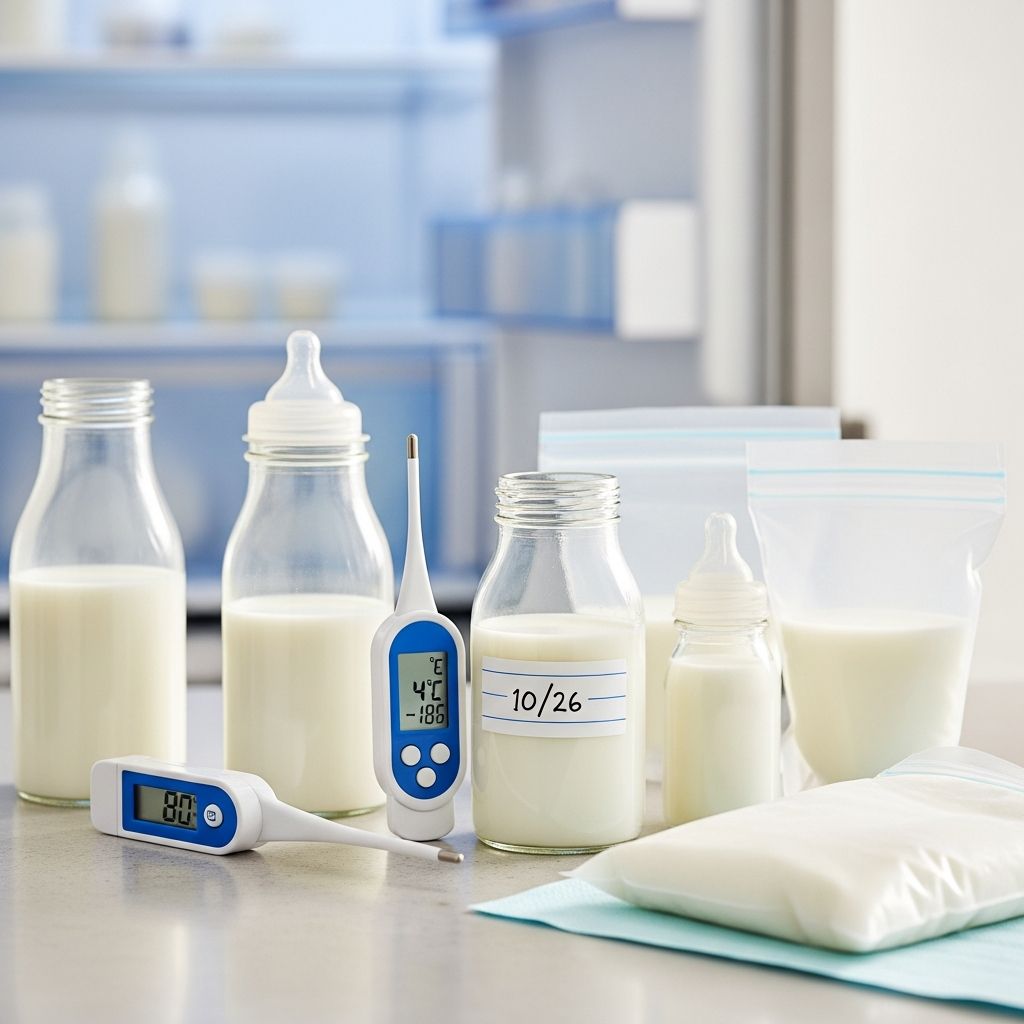
Breast milk is a precious resource packed with nutrients and antibodies that support infant health. However, when milk remains after a feeding or pumping session, proper handling is crucial to prevent bacterial growth and maintain its quality. New parents often face questions about what to do with these leftovers, balancing the desire to avoid waste with the need to protect their baby from potential contamination. This guide draws from established health authorities to provide clear, actionable advice on storage durations, safe reuse practices, and smart strategies to reduce excess milk.
Understanding Sources of Leftover Breast Milk
Leftover breast milk typically arises in two main scenarios: portions not consumed during bottle feedings and surplus from pumping sessions. During feedings, babies may not finish every offering, especially if they are distracted or full. Pumping, meanwhile, allows working mothers or those building a supply to express milk ahead of time, but oversupply can lead to extras. Each type requires specific handling due to varying exposure risks. Freshly pumped milk starts pristine, while bottle-fed remnants may contain saliva-introduced bacteria, altering safety timelines dramatically.
Recognizing these differences empowers parents to make informed decisions. For instance, milk left in a bottle after nursing touches the baby’s mouth, introducing oral bacteria that multiply quickly in the nutrient-rich environment of breast milk. Pumped milk, if collected hygienically, remains sterile longer until stored properly. Awareness of these origins forms the foundation for effective management.
Core Storage Guidelines for Fresh Breast Milk
Health experts provide precise timelines for storing freshly expressed breast milk based on temperature, ensuring it retains immunological benefits. These recommendations prioritize bacterial safety, as breast milk supports microbial growth if mishandled.
| Storage Location | Temperature | Duration | Key Notes |
|---|---|---|---|
| Room Temperature | Up to 77°F (25°C) | Up to 4 hours | Keep covered and cool; discard after 2 hours if baby fed from it. |
| Refrigerator | 40°F (4°C) or below | Up to 4 days | Store in back for stability; label with date. |
| Freezer (Freezer Compartment) | 0°F (-18°C) or colder | Up to 6 months (best); 12 months acceptable | Back of freezer; small portions ideal. |
| Deep Freezer | -4°F (-20°C) or colder | Up to 12 months | Optimal for long-term quality. |
These durations apply to healthy, full-term infants. Always use the oldest milk first to prevent expiration. Covering containers at room temperature with a clean towel helps maintain cooler conditions.
Handling Milk After Baby Feeds
The most straightforward rule for milk left in a bottle post-feeding is caution. Once a baby drinks from a bottle, their saliva contaminates the milk, promoting bacterial proliferation. Official guidance states that leftovers are safe for reuse only within 2 hours after the feeding ends. Beyond that, discard entirely to avoid risks like gastrointestinal upset.
- If the feeding lasted under 1 hour with minimal sips, some scenarios allow brief extension, but experts urge erring on the side of safety.
- Avoid refrigerating or refreezing post-feeding remnants, as bacteria thrive even in cold conditions.
- To minimize waste, offer smaller volumes initially, gauging baby’s intake patterns.
This 2-hour window stems from rigorous testing showing bacterial stability up to that point, after which counts rise sharply.
Best Practices for Pumped Milk Surplus
Pumped milk offers more flexibility if managed immediately. Transfer to storage containers right away, chilling or freezing to halt degradation.
- Combine Wisely: Mix milks from the same day only if both are refrigerated first; avoid adding warm milk to cold.
- Labeling: Note date, time, and quantity on each container for FIFO rotation.
- Portion Sizes: Freeze in 2-4 ounce amounts matching typical feeds to reduce thawing waste.
Leave headspace in containers for expansion during freezing, and tighten lids only post-freeze. Hygienic pumping—clean hands, sterilized parts—preserves initial quality.
Choosing Appropriate Storage Containers
Selecting the right vessels prevents contamination and chemical leaching. Opt for FDA-approved options designed for breast milk.
| Container Type | Pros | Cons | Recommendations |
|---|---|---|---|
| Breast Milk Storage Bags | Space-saving, freezer-friendly | Potential microplastic concerns | BPA-free; double-bag for integrity. |
| Glass Bottles | No chemical leaching, reusable | Heavy, breakable | Food-grade with tight lids. |
| Hard Plastic Bottles | Durable, lightweight | Avoid recycle #7 (BPA risk) | BPA-free only. |
Steer clear of standard plastic bags or liners, which may harbor contaminants. For transport, insulated coolers with ice packs extend viability up to 24 hours.
Thawing and Warming Leftover Milk
Once frozen, thawed milk demands prompt use. Thaw in the refrigerator overnight or under cool water; never microwave, as it destroys nutrients and creates hot spots.
- Room temperature thawed milk: 1-2 hours max.
- Refrigerated thawed: Up to 24 hours; do not refreeze.
- Warm gently in lukewarm water, swirling to even temperature.
A study on milk stability confirmed that refrigerated thawed portions maintain bacteriological integrity for at least 6 days, though guidelines cap at 24 hours for caution.
Signs of Spoiled Breast Milk
Even within guidelines, inspect before use. Fresh milk smells sweet or soapy; thawed may be slightly off but acceptable unless rancid.
- Visual: Yellowish tint, clumps, or separation (shake to check).
- Odor: Sour, foul, or unpleasant.
- Taste: Bitter or soapy beyond norm (high lipase enzyme).
Discard if any red flags appear, prioritizing safety over salvage.
Strategies to Minimize Waste
Proactive steps cut down on leftovers, easing parental stress.
- Track baby’s intake to predict needs accurately.
- Pump just enough during sessions, adjusting based on supply-demand.
- Donate excess to milk banks after screening, if eligible.
- Use milk creatively: mix into cereals (fresh only) or skin care, but never ingest spoiled.
Efficient pumps aid precise expression, supporting supply without overflow.
Special Considerations for Premature or Ill Babies
For preterm infants or those with health issues, stricter rules apply—often 24-48 hour fridge limits. Consult pediatricians or use fortified storage protocols.
Frequently Asked Questions
Can I refrigerate milk left after a feeding?
No, discard within 2 hours post-feeding to prevent bacterial growth from saliva.
How long does frozen breast milk last?
Up to 6 months in a standard freezer, 12 months in a deep freezer for best quality.
Is it safe to combine fresh and refrigerated milk?
Yes, if the fresh is chilled first to match temperatures.
What if thawed milk smells sour?
High lipase is common and safe if baby accepts; true spoilage warrants discard.
Can I use breast milk storage bags in the fridge?
Yes, but transfer to bottles for feeding to avoid leaks.
Empowering Your Breastfeeding Journey
Mastering leftover milk management boosts confidence, sustains supply, and nourishes your baby optimally. Adhering to these evidence-based practices ensures safety while honoring breast milk’s value. Consult lactation specialists for personalized advice, and celebrate each step in your parenting path.
References
- Breast Milk Storage Questions and Answers — Centers for Disease Control and Prevention (CDC). 2023. https://www.cdc.gov/breastfeeding/php/guidelines-recommendations/faqs.html
- Pumping and storing breastmilk — Office on Women’s Health, U.S. Department of Health and Human Services. 2023-10-01. https://www.womenshealth.gov/breastfeeding/pumping-and-storing-breastmilk
- Is It Safe to Reuse Breast Milk — WebMD. 2024. https://www.webmd.com/baby/is-it-safe-to-reuse-breast-milk
- Storage of Unfed and Leftover Mothers’ Own Milk — PubMed (Academy of Breastfeeding Medicine). 2017-12-13. https://pubmed.ncbi.nlm.nih.gov/29235902/
- Milk Storage Guidelines — American Academy of Pediatrics (AAP). 2024. https://www.aap.org/en/patient-care/breastfeeding/milk-storage-guidelines/