Supporting a child in youth sports requires more than just showing up to games. Parents play a pivotal role in shaping their child’s experience, from ensuring physical and emotional safety to nurturing lifelong values like resilience and teamwork. This comprehensive guide draws on expert recommendations to help you navigate the complexities of being a sports parent effectively.
Prioritizing Safety in Youth Sports Environments
The foundation of a positive sports experience begins with safety. Every interaction between coaches and young athletes must adhere to strict guidelines to prevent harm. For instance, one-on-one meetings should always occur in observable and interruptible locations, allowing parents or other adults to monitor without intrusion.
Parental consent is non-negotiable for activities like private training, medical treatments, or travel arrangements. Programs following best practices ensure parents can observe individual sessions, promoting transparency. Similarly, during athletic treatments such as massages, a second adult must be present, and the child should remain appropriately clothed to protect privacy.
- Verify that all private coaching sessions are visible to onlookers.
- Insist on written consent forms for any off-site or specialized activities.
- Confirm electronic communications include parents or designated adults.
According to the U.S. Center for SafeSport, these policies mitigate risks in power-imbalanced relationships common in coaching. Implementing bystander intervention training further empowers children and adults to address unsafe situations promptly.
Building a Supportive Relationship with Coaches
A strong coach-parent partnership enhances a child’s development. Open, calm communication is key—approach coaches privately with concerns rather than during games or practices. Respect their expertise in balancing team needs while sharing insights about your child’s unique strengths and challenges.
Parents should model respect by reinforcing team rules, demonstrating sportsmanship, and avoiding interference in drills or decisions. Coaches, in turn, benefit from proactive feedback sessions scheduled outside of high-pressure moments.
| Parent Role | Coach Role | Benefit to Child |
|---|---|---|
| Provide consistent emotional support | Set age-appropriate expectations | Boosts confidence and performance |
| Communicate calmly about issues | Prioritize well-being over wins | Fosters emotional safety |
| Model positive behavior | Encourage bystander intervention | Teaches accountability |
This collaborative dynamic moderates power imbalances and improves overall team harmony.
Focusing on Holistic Development Over Victories
Youth sports should emphasize growth, not just scoreboards. Celebrate improvements in skills, effort, and character rather than outcomes alone. Parents can reinforce this by highlighting personal bests post-game, even in defeats.
Understand your child’s natural inclinations—aggressive, patient, or energetic—and guide sport choices accordingly without forcing unfit roles. Unconditional support builds resilience, teaching that failure is part of progress.
Physical talent in young kids often overshadows deeper qualities like commitment and humility, which parents nurture at home.
Ensure basic needs like hydration and rest are met, intervening if coaches overlook them. This holistic approach cultivates athletes who value integrity and perseverance.
Modeling Exemplary Behavior Sideline
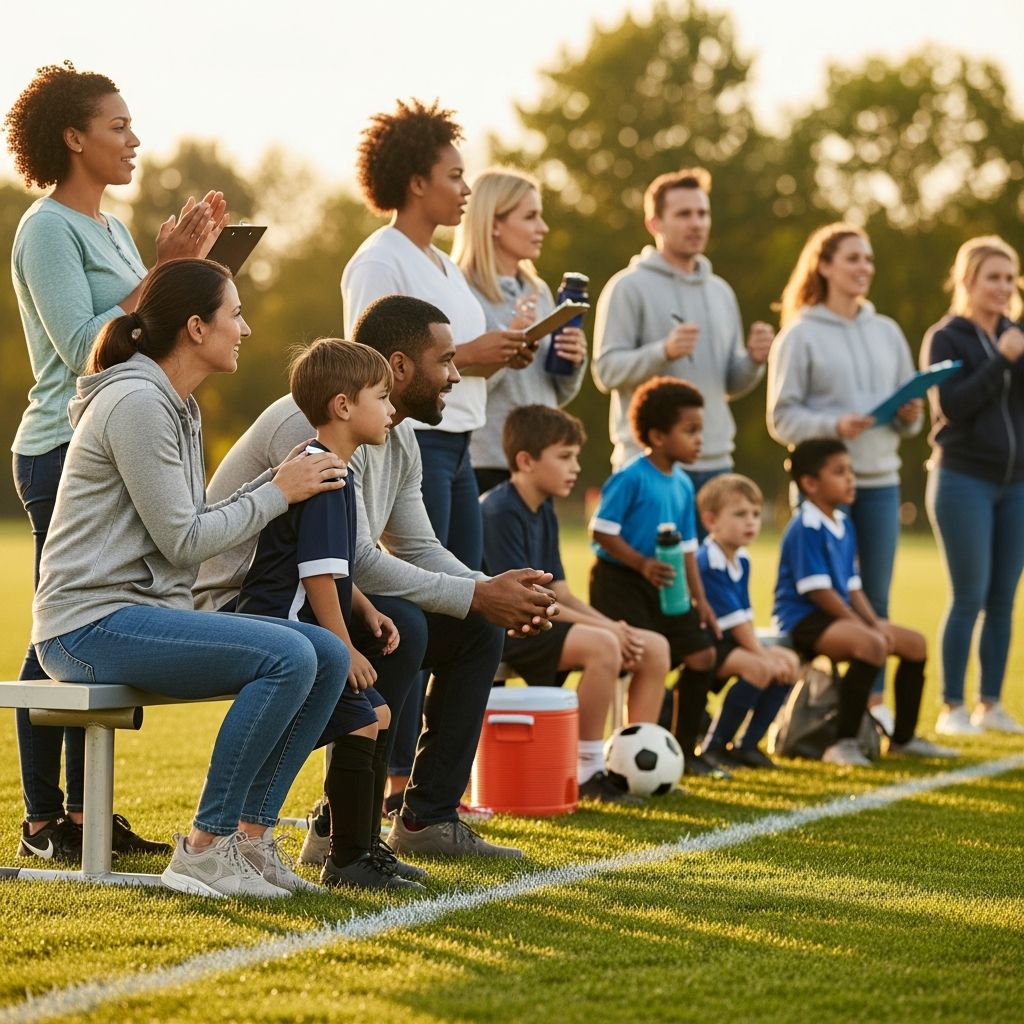
Children mirror parental actions more than words. Stay silent post-game to let coaches provide feedback first, avoiding added pressure. Refrain from yelling instructions, criticizing officials, or over-celebrating at others’ expense.
| Do | Don’t |
|---|---|
| Cheer positively for all players | Interrupt practices or yell at refs |
| Discuss concerns privately | Compare your child to teammates |
| Encourage effort and fun | Push beyond the child’s interest level |
By embodying humility and respect, parents set a tone that permeates the team. Coaches should enforce boundaries consistently, such as asking disruptive parents to leave, to maintain focus.
Recognizing Signs of Burnout and Promoting Balance
Not all children thrive in intense competition. Watch for disinterest, chronic fatigue, or anxiety, and respect their ‘no’ to uncomfortable situations. Balance sports with school, family, and hobbies to prevent resentment.
Assess honestly: if a sport doesn’t align with their wiring, explore alternatives. Parental passion shouldn’t eclipse the child’s—step back if you’re more invested. This prevents exploitation of power dynamics and supports long-term well-being.
Encouraging Bystander Intervention and Empowerment
Teach children to trust instincts and intervene safely in misconduct, starting with adult modeling. Strategies include direct confrontation, distraction, or delegating to authorities.
Parents empower by listening without judgment, validating feelings, and reinforcing that safety trumps silence. Programs with clear behavior codes for all parties create accountable environments.
Frequently Asked Questions
What should I do if I suspect unsafe coaching practices?
Report concerns to program administrators or organizations like the U.S. Center for SafeSport immediately, providing specifics for investigation.
How can I support my child after a loss?
Focus on effort and learning: ‘I loved seeing your hustle today!’ Avoid questioning decisions to preserve their processing time.
Is it okay to coach from the sidelines?
No—let official coaches handle instruction to avoid confusion and maintain authority.
How involved should I be in team selection?
Trust coaches’ judgment while advocating for fair play; discuss privately if patterns of exclusion appear.
What if my child wants to quit?
Honor their feelings after a cooling-off period; quitting teaches boundaries and self-advocacy.
Long-Term Benefits of Positive Sports Parenting
Investing in these practices yields athletes with strong character, better mental health, and sustained interest in fitness. Research from sports psychology underscores how supportive parenting correlates with higher self-esteem and lower dropout rates. By focusing on the child over the trophy, parents equip them for life’s challenges beyond the field.
In summary, effective sports parenting blends vigilance, encouragement, and restraint. Align with coaches, safeguard welfare, and celebrate the journey—your influence shapes more than just games.
References
- Best Practices to Protect Your Child in Sport — Parents Press. 2023. https://parentspress.com/best-practices-to-protect-your-child-in-sport/
- Parent and Guardian’s Handbook for Safer Sport — U.S. Center for SafeSport. 2020-05-01. https://uscenterforsafesport.org/wp-content/uploads/2020/05/Parent-Toolkit_Complete-1.pdf
- Sports Parenting: 4 Tips for Parents of Athletes — Minno Kids. 2023. https://gominno.com/blog/4-tips-for-parents-of-athletes/
- Sports Parenting – The Key to Sporting Success — New Sport Future. 2023. https://newsportfuture.com/sports-parenting/
- Youth Sports Part 1: Getting Bad Sports Parents to Behave Better — TrainHeroic. 2023. https://www.trainheroic.com/blog/youth-sports-part-1-getting-bad-sports-parents-to-behave-better/
- 17 Ways to Be a Better Sports Parent in 2024 — MOJO Sports. 2023. https://mojo.sport/coachs-corner/sports-parent-resolutions/