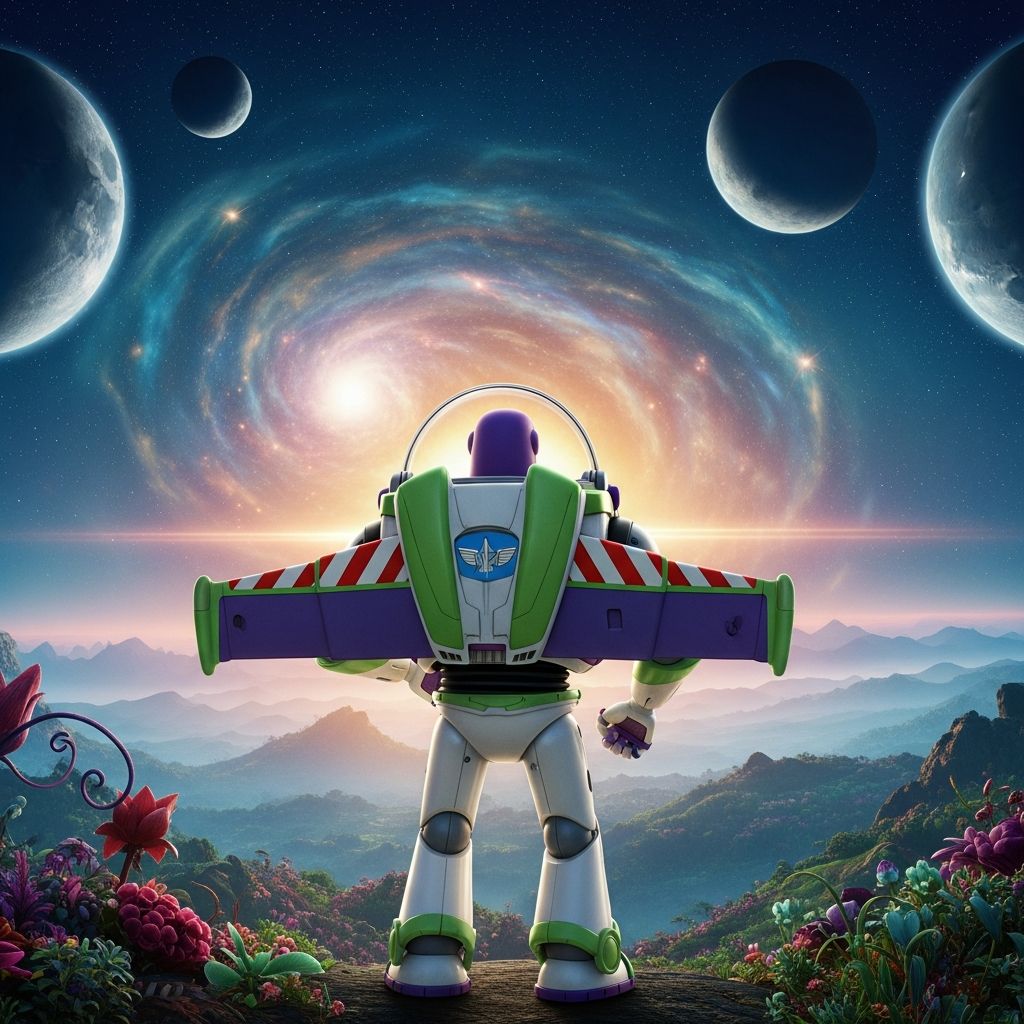
Pixar’s Lightyear arrived with a bold promise: to tell the definitive origin story of Buzz Lightyear, not as a toy, but as the “real” space ranger who inspired the plastic hero from Toy Story. Yet instead of simple excitement, the film triggered confusion, debate, and a surprising amount of backlash from some longtime fans.
This article unpacks what Lightyear is trying to do, how it actually connects to the Toy Story universe, why marketing and expectations clashed, and what the movie says about the way modern studios handle beloved franchises.
What Lightyear Actually Is in the Toy Story World
The first thing Lightyear does is answer the question everyone had: “How does this relate to Toy Story?” The movie opens with on-screen text explaining that in 1995, a boy named Andy got a Buzz Lightyear toy based on his favorite movie — and this is that movie.
In other words, Lightyear is a fictional sci-fi film that exists inside the Toy Story universe. Andy saw it, loved it, and wanted the Buzz toy the same way kids in our world begged for Star Wars action figures.
- Buzz in Toy Story: A plastic action figure who believes he is a space ranger.
- Buzz in Lightyear: A human character in an in-universe blockbuster movie Andy watched.
- Relationship: The film is to Andy what Star Wars or Ghostbusters are to us: a piece of pop culture that spawned toys, lunchboxes, and T-shirts.
This framing means Lightyear is neither a direct prequel nor a sequel to Toy Story but a kind of meta spin-off: a movie about the movie that made the toy.
Buzz Lightyear: Toy Icon vs. In-Movie Hero
One major source of confusion was that audiences already had a clear image of Buzz Lightyear: Tim Allen’s boisterous space ranger toy, whose crisis of identity powered the original Toy Story. Lightyear replaces that version with a more grounded human protagonist voiced by Chris Evans.
| Aspect | Toy Story Buzz (Toy) | Lightyear Buzz (Human) |
|---|---|---|
| Nature | Sentient toy who thinks he is a space ranger | Test pilot and space ranger in a fictional film |
| Voice | Tim Allen | Chris Evans |
| Universe | Part of Andy’s real world in Toy Story | Exists as media inside that world |
| Story Focus | Identity, friendship, accepting being a toy | Duty, failure, time, and learning to rely on others |
| Villain | Emperor Zurg toy; comic riff on sci-fi tropes | Zurg as a future version of Buzz, reshaping his origin |
Pixar’s creative team emphasized that Tim Allen remains the definitive voice of the toy Buzz, while Evans plays a different character: the fictional hero that toy is based on. Producers argued that using Allen again would blur the line between toy and movie hero and confuse audiences about the concept.
How Lightyear Rewires Toy Story Lore
Though Lightyear stands alone as a sci-fi adventure, it is carefully wired to echo details fans know from Toy Story — sometimes faithfully, sometimes in ways that deliberately break expectations.
Familiar Connections
- Catchphrases and visuals: Buzz’s iconic suit, helmet, color scheme, and his “To infinity and beyond!” line all appear, reframed as in-universe traits rather than toy marketing copy.
- The Star Wars parallel: Creators have compared Lightyear to the Star Wars of Andy’s world — a big, effects-heavy space saga that spawns tons of merch.
- Zurg’s presence: Emperor Zurg returns as Buzz’s nemesis, but in a much more serious, character-driven way than his jokey toy incarnation in Toy Story 2.
Deliberate Changes
Not every connection is straightforward fan service. Lightyear takes some bold liberties:
- Zurg’s new identity: Instead of being a parody “father” figure as in Toy Story 2, Zurg is reimagined as a future version of Buzz himself, turning the villain into a literal embodiment of Buzz’s worst impulses.
- No toy logic answers: Questions like “Why does Buzz freeze around people?” or “How exactly do toys come to life?” are never addressed, because those belong to the magical rules of Toy Story, not the realistic sci-fi frame of Lightyear.
- Separate canon: Robots, starships, and alien worlds are central to Lightyear, whereas the Toy Story films keep the focus tightly on human suburbs and bedroom floors.
Marketing vs. Expectation: Why So Many Viewers Felt Lost
Part of the backlash around Lightyear came from a mismatch between what the film is and how many people assumed it would work. For years, Buzz was tightly associated with Toy Story’s tone, characters, and Tim Allen’s vocal performance. Shifting all three at once created friction.
Key sources of confusion included:
- The “real Buzz” phrase: Early promotional comments that this was the story of the “real Buzz Lightyear” were widely misinterpreted as implying that the Toy Story Buzz was somehow less canonical.
- Marketing shorthand: Trailers leaned heavily on nostalgia — the suit, the logo, the catchphrase — but did not clearly foreground the meta concept that this was a movie Andy watched.
- Voice change backlash: Some fans and commentators, including Tim Allen himself in later interviews, questioned why the original Buzz voice actor was replaced for a movie so closely tied to his character.
These issues don’t erase the film’s creative aims, but they do help explain why family audiences, who expected another warm Toy Story reunion, instead met a cooler, more introspective sci-fi film about failure and time dilation.
Lightyear as a Standalone Sci-Fi Story
Once separated from franchise expectations, Lightyear reads less like a direct Toy Story offshoot and more like Pixar attempting a classic, slightly retro space adventure packed with visual spectacle and emotional lessons.
The Emotional Core
Underneath the laser blasts and hyperspeed experiments, the film explores themes that Pixar often gravitates toward:
- Living with regret: Buzz is haunted by a mistake that stranded his crew, and much of the narrative is about confronting rather than erasing that failure.
- Time and loss: A recurring device involves Buzz traveling through time faster than his friends, watching their lives move on without him — a clear metaphor for how work, obsession, or duty can make us miss everyday life.
- Dependence on others: The Buzz we meet is fiercely self-reliant; the Buzz who emerges at the end has learned to trust a team made up of imperfect, funny sidekicks.
For Kids in Andy’s World (and Ours)
In the logic of the Toy Story universe, Andy watched Lightyear on a screen, loved the hero, and then begged for the toy. That mirrors the real-world way children connect to media: a movie becomes a shared cultural event, and the toys allow them to bring that world into their bedrooms.
From a media studies angle, this is a neat commentary on how brands seed narratives across films, shows, and merchandise — something companies like Disney and Pixar have openly embraced as part of an interconnected storytelling and business model.
Franchise Spin-Offs and the Risk of Over-Explaining
Lightyear also sits within a broader trend: studios mining side characters, fictional texts, and alternate timelines to keep blockbuster franchises alive. Sometimes this produces unexpectedly rich stories; other times it strains the original magic.
Common patterns in modern spin-offs include:
- Origin story framing: Taking a beloved character and rewinding the clock to explain how they got their gear, catchphrases, or enemies.
- Meta-fiction: Treating in-universe cartoons, books, or movies as real works we can now watch, as Lightyear does by becoming Andy’s favorite film.
- Tonal shifts: Moving from comedic or child-focused worlds into more serious genres like sci-fi, superhero grit, or even horror, which can alienate part of the original audience.
Scholars who study media franchises note that these expansions can deepen a fictional universe but also risk what’s sometimes called “continuity fatigue,” where trying to reconcile timelines and canons becomes more work than fun for casual viewers.
Did Lightyear Need to Be Connected to Toy Story at All?
One lingering question is whether Lightyear would have been better received as an entirely original property: a Pixar space adventure without Buzz’s name or design. On one hand, tying it to Toy Story guaranteed attention and emotional investment. On the other, it locked the film into a comparison it could never truly win.
Some arguments that it did benefit from the connection:
- The brand recognition immediately told families this was a kid-friendly Pixar adventure.
- The visual callbacks and catchphrases add a meta layer that fans of the original films can appreciate.
- The idea that this is the movie that shaped Andy’s childhood grounds it in a specific cultural moment of 90s kids watching space operas on VHS.
And some arguments that it might have worked better disconnected:
- Viewers would approach the story on its own terms instead of asking why Woody and the gang are missing.
- It would avoid debates over recasting Tim Allen and changing Zurg’s backstory.
- Marketing could have focused squarely on the sci-fi premise rather than juggling nostalgia and novelty.
Practical Takeaways for Parents and Fans
For many families, the core question about Lightyear is simple: “Should we watch this if my kids love Toy Story?” While each family’s tastes differ, a few practical points can help frame expectations.
- Tone: Lightyear is more serious and action-driven than the Toy Story films. It is closer to a PG rated space adventure than to a toy-room comedy.
- Connections: Don’t expect Woody, Rex, or the other toys. The connections are thematic and visual, not character crossovers.
- Age fit: School-age kids who already enjoy sci-fi, Star Wars-style adventures, or space exploration stories are the most likely to engage with it.
- Conversation starter: The movie’s focus on regret, time, and teamwork offers easy starting points for talking with kids about mistakes, second chances, and asking for help.
Frequently Asked Questions (FAQs)
Q: Is Lightyear canon in the Toy Story timeline?
Yes, but not as a direct prequel. Lightyear is canon as a fictional movie that exists inside the Toy Story universe — the film Andy watched before getting his Buzz toy.
Q: Why doesn’t Tim Allen voice Buzz in Lightyear?
Tim Allen is the voice of the toy Buzz. Pixar chose Chris Evans for the human Buzz in Lightyear to clearly separate the character as a different in-universe person, not the same figure we see in Andy’s room.
Q: Is Lightyear a good starting point if I’ve never seen Toy Story?
You can watch Lightyear without any Toy Story knowledge. The film explains its world on its own; Toy Story references function as Easter eggs rather than essential plot points.
Q: Does Lightyear change Buzz’s backstory from Toy Story?
It doesn’t rewrite the toy’s history but instead imagines the movie that toy was based on. The changes, such as Zurg’s new identity, affect the in-universe film character, not the original Toy Story plot.
Q: Is Lightyear more for kids or adults?
The movie targets families, but its structure and themes lean more toward classic sci-fi adventure. Kids can enjoy the action and humor, while adults may connect more with its ideas about time, regret, and responsibility.
References
- Explained: Is Lightyear Connected to Toy Story? — MovieWeb. 2022-09-11. https://movieweb.com/lightyear-toy-story-connection-explained/
- How is Lightyear connected to Toy Story? — Radio Times. 2022-06-17. https://www.radiotimes.com/movies/lightyear-connected-toy-story/
- How Lightyear connects to the Toy Story universe, explained — Digital Spy. 2022-06-16. https://www.digitalspy.com/movies/a40282178/lightyear-toy-story-connection-explained/
- Tim Allen Says He Wishes ‘Lightyear’ Had A Better Connection to ‘Toy Story’ Films — The Hollywood Reporter (via YouTube). 2022-07-01. https://www.youtube.com/watch?v=6093ApxK9E8