Designing a nursery is one of the most joyful (and overwhelming) parts of preparing for a new baby. Between paint swatches, crib choices, and endless inspiration photos, it can be hard to know where to begin. This guide breaks the process into simple, practical steps so you can create a space that feels calm, cozy, and personal—without needing a design degree.
Instead of chasing perfection, the goal is a room that supports sleep, makes everyday care easier, and grows along with your child. Below, you will find guidance on layout, color, furniture, storage, decor, and safety, plus a short FAQ at the end.
Start With a Purpose, Not a Paint Color
Before choosing colors or buying furniture, get clear on how the room will be used in daily life. A thoughtful plan prevents impulse purchases that do not fit or function well later. Ask yourself a few questions:
- Will this room be used only for sleep, or also for play and changing?
- Is the space large or small, bright or dim, quiet or near a busy area?
- Do you prefer to rock and feed the baby in this room or in another part of the home?
- How long do you hope this setup will last before you change to a “big kid” room?
Answering these questions first helps you prioritize what matters most: a comfortable chair, blackout curtains, extra toy storage, or maybe all of the above.
Map the Room: Zones That Make Life Easier
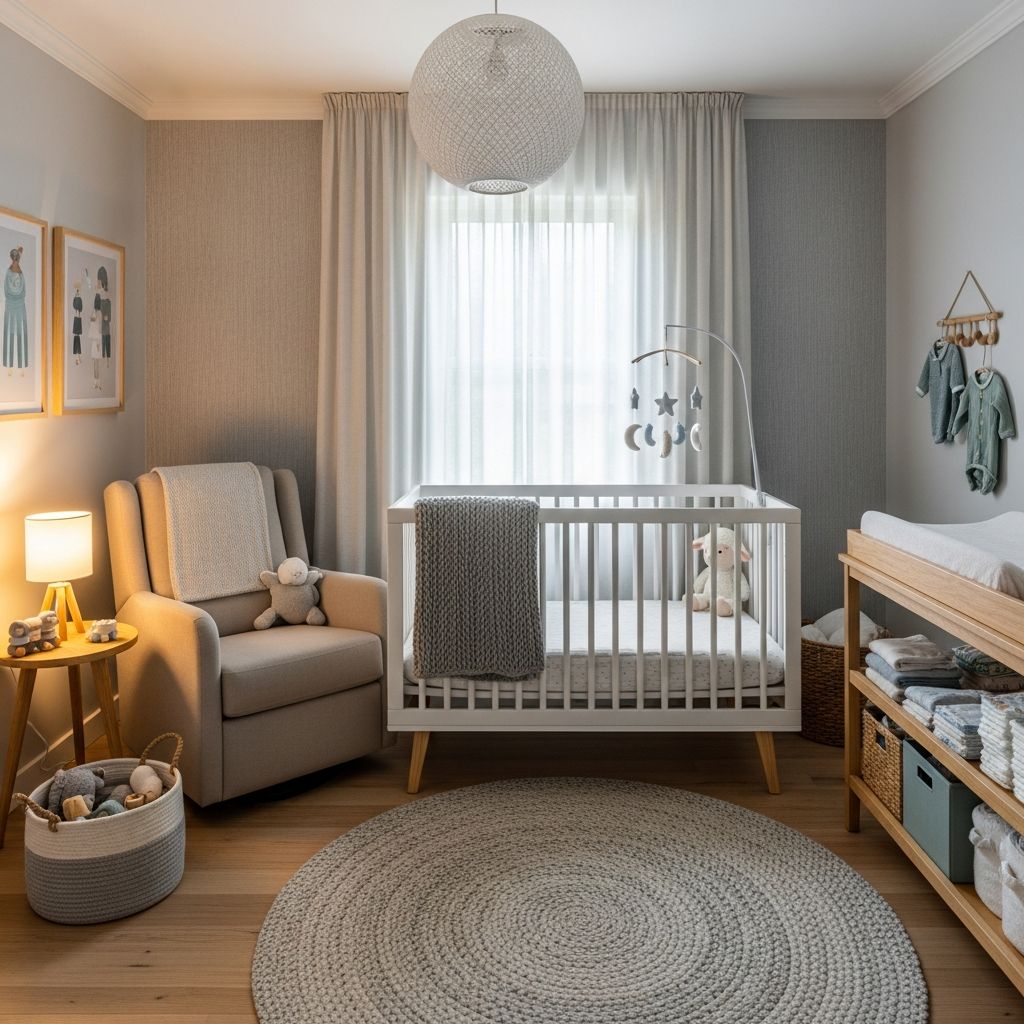
Thinking in “zones” helps a nursery feel organized and easy to use, even at 3 a.m. when you are half awake. In most nurseries, four basic zones are enough:
- Sleep zone: crib or bassinet, monitor, nearby night-light.
- Changing zone: changing table or dresser, diapers, wipes, creams, laundry hamper.
- Feeding/soothing zone: chair or glider, small table, soft lighting.
- Play and storage zone: low shelves, baskets, small rug, a few toys and books.
| Zone | Main Purpose | Helpful Items |
|---|---|---|
| Sleep | Safe, dark, and quiet rest | Crib, firm mattress, fitted sheet, monitor, blackout curtains |
| Changing | Quick, hygienic diaper changes | Changing pad, diapers, wipes, creams, covered trash or pail |
| Feeding | Comfortable nursing or bottle-feeding | Chair, pillow, side table, water bottle, burp cloths |
| Play & Storage | Safe exploration and easy cleanup | Low shelves, baskets, small rug, a few age-appropriate toys |
Once you know which zones you need, sketch a rough layout. Place the crib on a wall away from windows and cords, put the changing area close to storage, and make sure your chair has a clear path for nighttime walks with a sleepy baby.
Choose a Color Story That Calms You
The room should soothe you as much as it does the baby, because you will spend a lot of time there. Instead of focusing on “boy” or “girl” colors, think about mood. Start with one of these approaches:
- Soft and serene: light grays, creams, muted greens, gentle blues.
- Warm and cozy: warm white, camel, terracotta, dusty peach.
- Playful but calm: a neutral base with a single accent color like mustard, coral, or forest green.
Pick one main color (usually the wall color), one secondary color (for textiles or furniture), and one or two accent colors for small details. This keeps the room from feeling busy, even if you add patterned art or bedding later.
Big Pieces First: Crib, Dresser, and Chair
Large furniture shapes the feel of the room and should usually be chosen before small decor. When possible, invest in pieces that can grow with your child rather than single-purpose items that you will quickly outgrow.
- Crib: Look for a simple, sturdy crib with a firm mattress and adjustable mattress height. Convertible cribs that turn into toddler or full-size beds can be cost-effective over time.
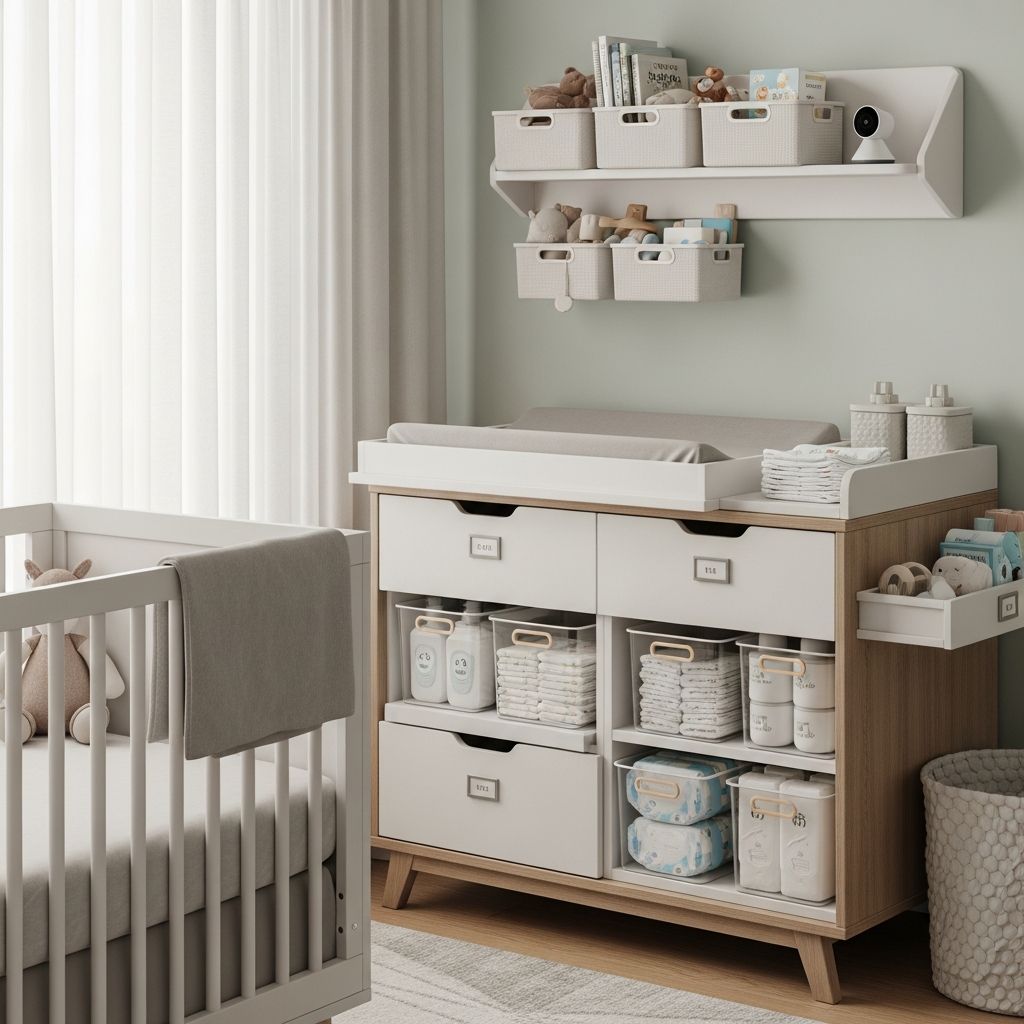
- Dresser/changing station: A low dresser with a changing pad on top functions as both storage and a changing area. Use a non-slip pad or straps to keep the changing pad secure.
- Chair or glider: Choose something you can sit in for long stretches. Check the seat depth, back support, and whether your feet rest comfortably on the floor.
Measure your doorways and the room itself before buying or assembling furniture. It sounds obvious, but returning an oversized dresser or crib can be far more stressful late in pregnancy or early postpartum.
Storage Solutions for Tiny Clothes and Endless Gear
Babies come with a surprising amount of stuff. Smart storage reduces clutter and makes it easier to find what you need quickly. Think in layers of access:
- Daily essentials at arm’s reach near the changing area.
- Backstock items (diaper boxes, extra wipes, seasonal clothes) higher or deeper in the closet.
- Toys and books at child height so little hands can reach them later.
Helpful storage ideas include drawer dividers for tiny onesies, door-mounted racks for small items, and fabric bins for toys and blankets. Labeling bins and drawers makes it easier for partners and caregivers to help with cleanup and laundry.
Lighting: Soft, Layered, and Sleep-Friendly
Lighting is often an afterthought, but it strongly affects mood and sleep. Plan for multiple light sources instead of relying only on a single bright ceiling fixture.
- Overhead light: Use a dimmable bulb if possible, or choose a soft white bulb instead of harsh cool white.
- Task lighting: A small lamp or wall sconce near the chair is helpful for feeding and reading.
- Night-light: A very low-level light near the door or changing area helps with nighttime checks and diaper changes without fully waking the baby.
Blackout curtains or shades can be useful for daytime naps, especially in bright rooms. Pair them with a sheer layer if you still want natural light when the baby is awake.
Decor That’s Beautiful and Practical
Once the basics are in place, it is time to add personality. Try to select decor that looks nice but also serves a purpose, such as storage, comfort, or visual stimulation for the baby.
- Framed art or prints in simple frames rather than heavy glass and metal.
- A soft rug that is easy to clean and large enough for floor play.
- Cozy textiles like throw blankets and pillows for the chair (kept out of the crib for safety).
- A few meaningful items such as a handmade blanket, heirloom toy, or family photo.
Keep shelves and surfaces lightly styled. Open space is visually calming and gives you room to add new treasures over time without making the room feel crowded.
Creating a Gentle Visual Focus
Instead of decorating every wall, choose one area to be the visual “anchor” of the room. This could be the wall behind the crib, a reading corner, or the changing station. A focused design moment creates impact without overwhelming the space.
- Paint a single accent wall in a deeper version of your main color.
- Use removable wall decals for simple shapes, stars, leaves, or clouds.
- Hang three or four framed prints in a grid or row for a mini gallery.
Removable elements are especially helpful if you are renting or expect your child’s interests to change quickly. They allow you to update the look later with minimal effort.
Gender-Neutral and Flexible Themes
Themes do not have to be literal or cartoon-like. A subtle theme built around colors, textures, and a few recurring motifs usually feels more timeless and easier to adapt as your child grows. Consider gentle ideas like:
- Nature-inspired: greens, wood tones, botanical prints, animal artwork.
- Sky and space: soft blues, stars, clouds, moon mobiles.
- Storytime: a focus on books, cozy reading nook, favorite characters used sparingly.
Use the theme as a loose guide so you can add or swap decor later without needing to redo the entire room. If another baby eventually shares or inherits the space, a flexible theme makes the transition smoother.
Safety Basics You Should Not Skip
Style matters, but safety matters more. Before your baby sleeps regularly in the room, take a slow look around from a baby’s perspective and make a few essential checks.
- Use a firm mattress with a tightly fitted sheet and keep the crib free of blankets, pillows, and stuffed animals.
- Secure tall furniture, including dressers and bookshelves, to the wall with anchors.
- Keep cords from blinds, lamps, and monitors out of reach and away from the crib.
- Use outlet covers where small fingers may explore once your baby is mobile.
Check that the room does not overheat during the day and that air flows freely around the crib. A simple room thermometer can be reassuring while you are still learning what feels comfortable for your baby.
Designing for Growth: From Newborn to Toddler
Babies quickly become active toddlers, and a nursery can either adapt gracefully or require a complete overhaul. A few smart choices now can save time and money later.
- Choose neutral, long-lasting furniture and change out decor rather than large pieces.
- Leave enough open floor space for crawling and later, for toy cars, blocks, or pretend play.
- Use storage that toddlers can safely access so they can practice cleaning up.
When your child is ready for a toddler bed, you can often keep the same color palette and many of the same textiles, simply updating art, bedding, and a few accessories to match new interests.
Simple Ways to Make the Room Feel Personal
The most special nurseries are rarely the most expensive. They feel warm because they reflect the family that lives in them. You can add that feeling with just a few personal touches.
- A framed photo of you during pregnancy or a family picture.
- A print or small object from a place that matters to you, such as your hometown or favorite travel spot.
- A handmade item: a knitted blanket, cross-stitch, painted canvas, or simple DIY mobile.
These details tell a quiet story about your family, and your child will likely notice and ask about them as they grow.
Budget-Friendly Nursery Tips
It is possible to create a beautiful, functional nursery without spending a fortune. Focus on safety for new items and be strategic about what you buy secondhand.
- Consider pre-loved dressers, bookcases, and rocking chairs, giving them new life with paint or updated hardware.
- Buy new for items that affect safety, like the crib mattress and car seat.
- Use removable wallpaper or decals for impact instead of full-room professional painting.
- Prioritize a comfortable chair and blackout window solutions; they are used constantly.
Creating a registry for larger items can also help friends and family contribute in ways that are truly useful, rather than ending up with duplicate small gifts.
Nursery FAQ
When should nursery planning start?
Many parents begin gathering ideas during the second trimester and aim to have the basics in place about a month before the due date. There is no perfect timeline, but finishing large projects like painting early gives paint fumes time to clear and leaves room for unexpected delays.
Do I need a separate changing table?
A dedicated changing table is optional. A sturdy dresser with a changing pad on top works just as well and continues to be useful when the diaper years are over. The most important thing is a comfortable height and having diapers, wipes, and creams within safe reach.
How much decor is too much?
If surfaces feel crowded and there is little empty wall space, the room may begin to feel visually noisy and harder to clean. Aim for a balance: a few meaningful and beautiful items, with breathing room around them. You can always add more later if the room still feels sparse.
Is a theme necessary?
No theme is required. Some families enjoy choosing a theme, while others simply pick a color palette and a few favorite motifs. A loose, flexible approach often makes it easier to update the room as your child’s preferences change.
What if I have very little space?
In small rooms or shared spaces, think vertically and choose multi-purpose pieces: wall shelves instead of bulky bookcases, under-crib storage bins, and a compact chair. A clear layout and careful editing of items usually matter more than square footage when it comes to comfort.