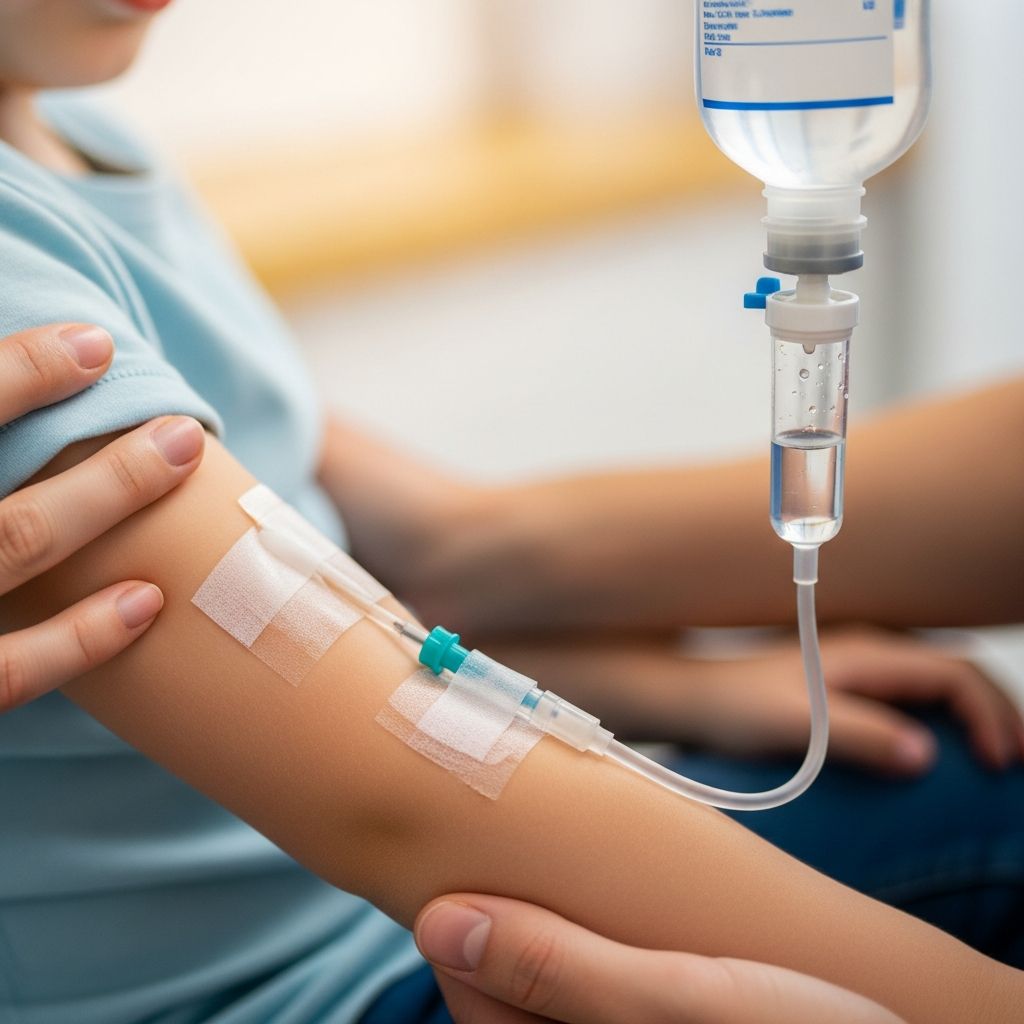
When a child is in the hospital, one of the first things parents may notice is a thin plastic tube going into a vein, often in the hand or arm. This is an intravenous (IV) catheter, and the liquids going through it are called IV fluids. Understanding what these are and why they are used can make hospital care less frightening and more understandable for families.
1. The Basics: What “IV” Really Means
The term intravenous simply means “inside a vein.” A vein is a blood vessel that carries blood back toward the heart. An IV allows doctors and nurses to give fluids and medicines straight into the bloodstream so they work quickly and accurately.
- IV catheter: a soft, flexible plastic tube that sits in a vein.
- IV line or tubing: the long plastic tube that connects the catheter to a fluid bag or pump.
- IV fluids: sterile liquids (like special saltwater and sugar solutions) that run through the IV line into the child’s vein.
Because IVs give direct access to the bloodstream, they are especially helpful when a child is too sick to drink, needs fast treatment, or needs very precise doses of medicine.
2. What Is an IV Catheter?
An IV catheter is a tiny tube made of soft plastic that sits inside a blood vessel, usually in the hand, arm, or sometimes the foot or scalp in very young babies.
2.1 Parts of a typical IV setup
- Catheter hub: the small plastic piece on the skin surface where the tubing connects.
- Transparent bandage: a clear dressing that covers and protects the site from germs.
- Medical tape or soft boards: used to keep the IV from moving or bending.
- Fluid bag and pump: the bag holds the IV fluid; an electronic pump often controls the speed.
2.2 Where IV catheters are commonly placed
- Hand or forearm: common for school-age kids and teens.
- Foot or ankle: often used in babies or toddlers whose hand veins are small.
- Scalp veins: sometimes used in newborns because those veins can be easier to see and access.
The choice of location depends on your child’s age, size, and medical needs, as well as which veins are easiest and safest to use.
3. Why Children Need an IV
Doctors use IV access whenever they need fast, reliable entry to the bloodstream. In children, some of the most common reasons include:
- Treating dehydration: vomiting, diarrhea, or high fever can cause kids to lose water and salts. IV fluids replace them when drinking is not enough or not possible.
- Giving medicines: antibiotics, anti-seizure drugs, pain medicines, or medications for blood pressure may need to go directly into the vein.
- Surgery and procedures: anesthesia and many operating-room medicines are given through an IV.
- Nutrition support: if a child cannot eat or absorb food normally for a period of time, specially made IV fluids can provide calories and nutrients.
- Blood products: IVs are used to give blood transfusions and certain blood components.
Because IV access can be used for several different treatments, it often prevents the need for repeated needle sticks.
4. Understanding IV Fluids
IV fluids are sterile liquid solutions that closely match the body’s natural water and salt balance. They are carefully chosen based on a child’s age, weight, illness, and lab results.
4.1 Main types of IV fluids
| Type of IV Fluid | What It Contains | Why It May Be Used |
|---|---|---|
| Crystalloids (e.g., normal saline) | Water with salts (electrolytes) like sodium and chloride | Rehydrate kids, maintain fluid balance, support blood pressure |
| Dextrose solutions | Water, salts, and a type of sugar called dextrose | Provide quick energy and prevent low blood sugar, especially in infants |
| Balanced solutions | Water, salts, and other electrolytes that more closely match blood | Used in surgery or serious illness to support circulation and organ function |
| Parenteral nutrition | Concentrated nutrients: sugar, protein, fats, vitamins, and minerals | Used when the gut cannot be used for feeding for a longer time |
Doctors adjust the type and amount of fluid frequently, guided by your child’s weight, urine output, and blood tests.
5. How an IV Is Placed in a Child
Watching an IV being started can be stressful for parents, but understanding the steps can help. Hospital teams follow strict safety and cleanliness procedures to lower the risk of infection and other problems.
5.1 Step-by-step overview
- Choosing a vein: The nurse or doctor looks and feels for a suitable vein. In babies, a warm pack or gentle tapping may help the vein show better.
- Cleaning the skin: The skin is scrubbed with a special antiseptic solution to remove germs and allowed to dry.
- Pain relief when possible: For many children, numbing cream, cold spray, sugar water for infants, or comfort holds are used to ease discomfort.
- Inserting the catheter: A small needle with a soft plastic catheter around it is gently slid into the vein at a shallow angle. Once blood is seen, the needle is removed, leaving only the soft catheter in place.
- Securing the IV: A clear dressing covers the spot, and tape or a small board may be used to keep it from moving.
- Testing the line: The IV is flushed with a small amount of sterile saline to make sure fluid flows in easily and does not cause swelling or pain.
In very young or very sick children, placing an IV can take several tries even for skilled staff because their veins are tiny and delicate.
6. Safety, Monitoring, and Common Issues
Once the IV is in place, the care team checks it regularly to keep your child safe and comfortable.
6.1 How staff monitor an IV
- Checking that the fluid is dripping or the pump is running correctly.
- Looking at the skin around the IV for redness, swelling, or leaking fluid.
- Asking your child about pain, burning, or pressure at the IV site.
- Reviewing vital signs and lab tests that relate to fluid balance and medicine levels.
6.2 Possible minor problems
Most IV issues are common and easily managed, but it helps to know the terms you might hear:
- Infiltration: IV fluid accidentally leaks into the tissue around the vein, causing puffiness, coolness, or discomfort. The IV is usually removed and restarted elsewhere.
- Phlebitis: irritation or inflammation of the vein, which can cause redness, warmth, or tenderness. Staff may move the IV to a different location.
- Dislodgement: the IV partially or fully slips out, often when a child wiggles. Taping and soft boards help prevent this, but a new IV may be needed.
Serious complications are rare, especially when hospitals follow good hygiene and monitoring practices.
7. How Parents Can Help Their Child During IV Therapy
Parents and caregivers play a powerful role in making IV treatment easier for children.
7.1 Before and during IV placement
- Be honest but gentle: describe the procedure briefly. For example, “You will feel a quick pinch, then it will be over.”
- Offer comfort items: a favorite toy, blanket, or music can distract and soothe children of all ages.
- Use calming techniques: deep breathing, storytelling, or looking at a book or screen can shift attention away from the needle.
- Hold your child if allowed: many hospitals use “comfort holds” where a parent holds or sits with the child while staff access the vein.
7.2 After the IV is in place
- Remind your child gently to keep the IV arm or leg as still as possible during certain activities.
- Watch the site and tell staff if you notice redness, swelling, or if your child says it hurts.
- Ask before your child gets out of bed or walks around, to avoid pulling on the tubing.
Do not hesitate to speak up if something worries you. The care team expects and welcomes questions.
8. Frequently Used IV-Related Terms Explained
Doctors and nurses may use unfamiliar language when talking about IV care. Here are some plain-language explanations.
- Peripheral IV: an IV placed in a small vein in the hand, arm, foot, or scalp. This is the most common type in children for short-term use.
- Central line: a longer catheter placed into a large vein in the chest, neck, or groin, usually for very sick children or long-term treatments like chemotherapy.
- IV bolus: a larger amount of fluid or medicine given quickly through the IV to act fast, for example in dehydration or allergic reactions.
- Maintenance fluids: IV fluids given steadily over time to replace what a child normally loses through breathing, sweating, and urinating when they cannot drink enough.
- Flush: a small amount of sterile saline pushed through the IV to keep it from clotting or to clear medicine from the tubing.
9. Questions Parents Often Ask
Q1: Will the IV hurt my child the whole time it is in?
Most of the discomfort comes from the initial needle stick when the IV is started. After that, only the soft plastic catheter remains. Many children say they barely notice it once it is in place, although some may feel mild soreness or stiffness, especially if the IV is near a joint. If your child feels ongoing pain or burning, tell the nurse right away so the site can be checked.
Q2: How long can an IV stay in?
The length of time depends on the child’s veins, the type of fluid or medicine, and hospital policies. Many peripheral IVs last a couple of days, but they may be changed sooner if they stop working well, become uncomfortable, or show signs of irritation. For longer treatments, doctors may discuss other options like a central line.
Q3: Is it safe for my child to move or play with an IV?
Light movement is usually safe and even encouraged, as long as the site is protected and the tubing is secured. Nurses will guide which activities are okay based on your child’s condition. Young children should be supervised so they do not pull on the tubing or tug at the dressing.
Q4: Can my child shower or bathe while they have an IV?
In the hospital, staff often provide sponge baths or help your child bathe while keeping the IV site and dressing dry. If a full shower is allowed, the IV is usually covered with waterproof materials. Always follow the hospital’s instructions to protect the site from moisture, which can raise the risk of infection.
Q5: What should I watch for once we go home after having an IV?
Most children go home without a peripheral IV in place. There may be a small bruise or mark where the IV was removed. Call your child’s doctor if you notice increasing redness, warmth, swelling, or if your child complains of significant pain at the former IV site, as these can be signs of infection or irritation that need checking.
10. Key Takeaways for Families
- An IV catheter is a small plastic tube in a vein that allows doctors to give fluids, medicines, and blood products directly into the bloodstream.
- IV fluids are carefully chosen solutions that help keep a child hydrated, support blood pressure, and deliver nutrients or medications.
- Hospital teams follow strict steps for cleaning, inserting, and monitoring IVs to keep them as safe and comfortable as possible.
- Parents can support their child by providing comfort, asking questions, and reporting any changes at the IV site.
Understanding how IV catheters and fluids work can give parents more confidence during a stressful time and help them partner with the medical team in caring for their child.
References
- How to Insert a Peripheral Intravenous Catheter — Merck Manual Professional Edition. 2023-05-01. https://www.merckmanuals.com/professional/critical-care-medicine/how-to-do-peripheral-vascular-procedures/how-to-insert-a-peripheral-intravenous-catheter
- Peripheral intravenous (IV) catheter insertion for neonates — Safer Care Victoria. 2022-03-15. https://www.safercare.vic.gov.au/best-practice-improvement/clinical-guidance/neonatal/peripheral-intravenous-iv-catheter-insertion-for-neonates
- Clinical Practice Guidelines: Intravenous Access – Peripheral — The Royal Children’s Hospital Melbourne. 2021-11-10. https://www.rch.org.au/clinicalguide/guideline_index/intravenous_access_peripheral/
- Pediatric Intravenous Insertion and Phlebotomy Tips — Children’s Hospital of Eastern Ontario (CHEO). 2020-06-01. https://outreach.cheo.on.ca/document/769
- Procedural competency for ultrasound-guided peripheral intravenous catheter insertion in children — Journal of Vascular Access. 2020-06-30. https://pubmed.ncbi.nlm.nih.gov/32597357/