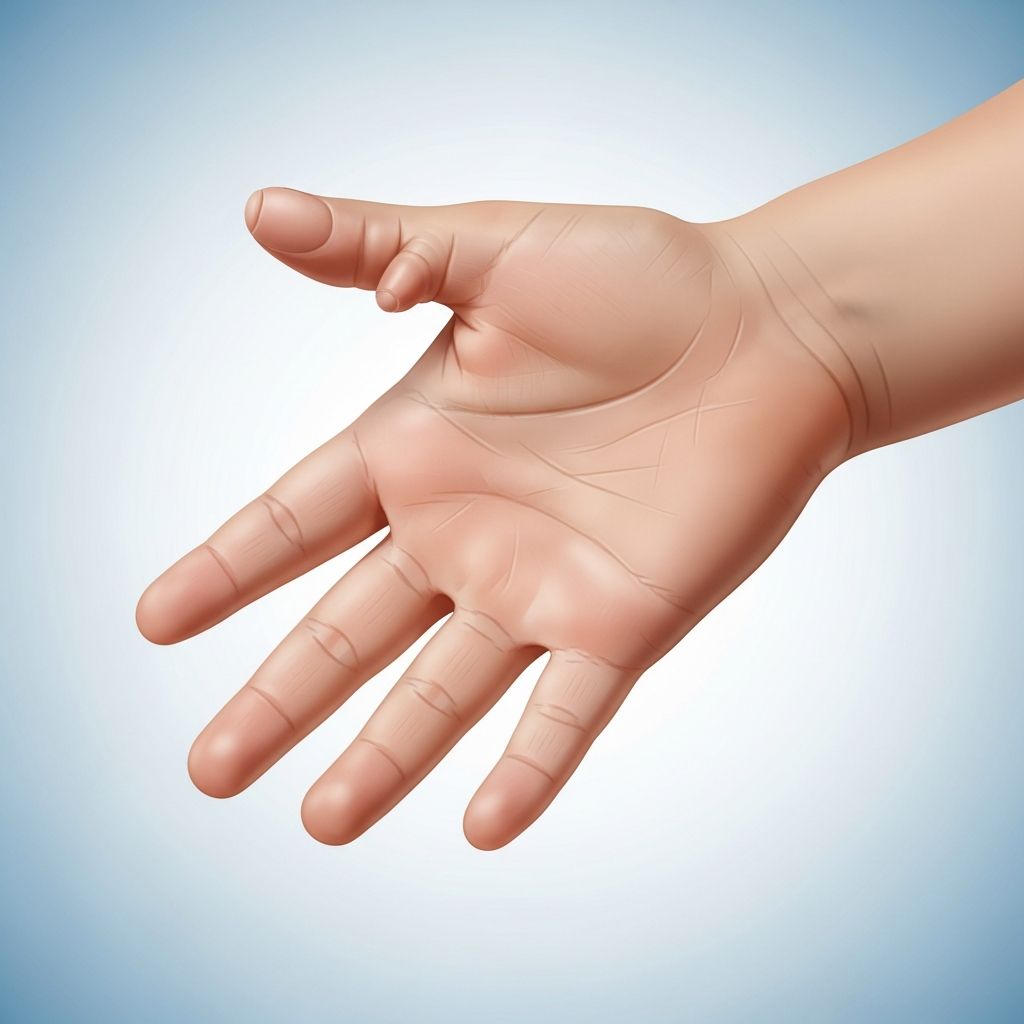
Polydactyly represents one of the most prevalent congenital anomalies observed in newborns, where infants are born with supernumerary digits on their hands or feet. This condition arises during embryonic development due to disruptions in genetic instructions governing limb formation, leading to the emergence of additional fingers or toes that may vary widely in structure and function.
Defining Polydactyly and Its Prevalence
Medically termed polydactyly, this birth defect manifests as more than the standard five digits per limb. The extra appendages can appear as rudimentary skin tags or fully articulated structures equipped with bones, joints, tendons, and nerves. It affects approximately 1 in every 500 to 1,000 live births, making it a relatively common variation rather than a rarity.
Parents often notice these extras immediately at birth, prompting questions about health implications and management. While isolated polydactyly rarely impacts overall development, its presence can signal broader genetic patterns within families or associations with syndromes.
Genetic and Developmental Origins
The root cause lies in genetic mutations occurring early in fetal limb bud formation, around weeks 4-8 of gestation. Specific genes regulating digit count and spacing fail to suppress excess growth, resulting in polydactyly. Familial patterns are evident, with inheritance often following autosomal dominant traits, meaning a 50% chance of transmission from an affected parent.
Environmental influences, such as maternal exposures during pregnancy, may contribute alongside genetics, though evidence remains correlative rather than causative. Certain populations exhibit higher incidences; for instance, postaxial polydactyly (near the pinky) is more frequent in African descent, while preaxial types (near the thumb) prevail in Caucasian and Asian groups.
Classification of Extra Digits by Position and Form
Polydactyly categorizes primarily by location and complexity, aiding precise diagnosis and intervention planning.
- Preaxial Polydactyly: Extra digit on the thumb (radial) or big toe (tibial) side. Often more developed, these may duplicate the thumb fully, impacting grip if untreated.
- Postaxial Polydactyly: Additional digit adjacent to the pinky (ulnar) or smallest toe (fibular). Typically simpler, appearing as pendulous nubbins in many cases.
- Central/Mesaxial Polydactyly: Rare extras between central fingers or toes, usually requiring intricate surgical correction due to involvement with primary digits.
Form-wise, digits range from Type A (fully functional with phalanges) to Type B (skin-covered nubbins without bone). This spectrum influences treatment urgency and method.
Recognizing Signs in Newborns
The hallmark symptom is visibly extra digits at birth, unilateral or bilateral. Rudimentary forms present as soft, fleshy protrusions swaying by a thin pedicle, while advanced ones mimic normal digits in mobility and sensation.
Accompanying features may include syndactyly (fused digits) or, rarely, broader anomalies like shortened limbs. Isolated cases show no functional deficits, but parents should monitor for grasping delays or gait irregularities in older infants if untreated.
| Type | Location | Common Appearance | Functional Impact |
|---|---|---|---|
| Preaxial | Thumb/Big Toe Side | Often well-formed duplicate | May affect pinch grip |
| Postaxial | Pinky/Small Toe Side | Fleshy nubbin or full digit | Minimal if rudimentary |
| Central | Middle Hand/Foot | Variable, often fused | Potential hand deformity |
Diagnostic Approaches for Parents and Providers
Diagnosis begins with physical examination at birth, where pediatricians assess digit composition via palpation and mobility tests. X-rays confirm bony elements, vascular supply, and attachments, essential for surgical planning.
Prenatal ultrasound can detect polydactyly from 12 weeks, allowing preparatory discussions. If syndromic features appear—such as distinctive facial traits or organ involvement—genetic testing like chromosomal microarray or targeted sequencing follows.
Family history review is crucial, as recurrence risks guide counseling. Multidisciplinary teams, including geneticists and orthopedists, evaluate complex presentations.
Non-Surgical Management for Simple Cases
For Type B postaxial nubbins lacking bone, vascular ligation offers a clinic-based solution. A sterile clip or suture encircles the base, occluding blood flow; the digit necroses and sloughs off within 1-2 weeks, akin to umbilical cord separation.
Post-procedure care involves bandaging and monitoring for infection. This outpatient method boasts high success with negligible scarring, ideal for neonates.
Surgical Interventions for Developed Digits
Functional extras necessitate operative removal, timed around 6-12 months when anesthesia risks diminish and healing optimizes. Procedures under general anesthesia excise the digit, reconstructing tendons, nerves, and skin for aesthetic and mechanical normalcy.
- Simple Excision: Removes isolated digits with minimal reconstruction.
- Reconstruction: For duplicates, involves ablation of one and augmentation of the primary via tissue transfer.
- Complex Cases: Pins, casts, and extended therapy for central or syndromic polydactyly.
Recovery spans 2-6 weeks, with splinting preventing contractures. Complications like stiffness or neuroma (painful nerve nodules) are rare (<5%), resolving with therapy.
Potential Complications and Long-Term Outlook
Untreated polydactyly poses cosmetic concerns and minor functional hurdles, like cluttered hand use. Post-treatment, most children achieve full dexterity, with outcomes superior in early intervention.
Risks include infection, scarring, or imbalance from over-resection. Longitudinally, no cognitive or systemic effects manifest in isolated cases; growth proceeds normally.
Family Planning and Genetic Counseling
Given heritability, affected families benefit from counseling. Risk stratification—50% for dominant traits—empowers informed reproduction decisions. Prenatal screening via amniocentesis detects associated trisomies like Trisomy 13.
Syndromes linked include Ellis-van Creveld (chondrodysplasia with cardiac issues) and Bardet-Biedl (obesity, vision loss).
Living with Polydactyly: Daily Realities
Many embrace polydactyly culturally, viewing extras as unique traits. Functionally, rudimentary digits rarely hinder milestones; adaptive tools aid if needed. Parental support groups foster shared experiences.
Frequently Asked Questions (FAQs)
Is polydactyly painful for my baby?
No, extra digits are typically asymptomatic at birth and do not cause discomfort unless complicated by other conditions.
Can polydactyly resolve without treatment?
Rudimentary nubbins may auto-amputate rarely, but medical intervention ensures safety and cosmesis.
Will my child need therapy after surgery?
Yes, occupational therapy often follows to restore fine motor skills, especially in hand cases.
Does polydactyly affect intelligence?
Isolated polydactyly does not; cognitive development remains unaffected.
How hereditary is this condition?
Often autosomal dominant, with variable penetrance; consult a geneticist for personalized risks.
Empowering Parents: Next Steps
Upon discovery, seek pediatric orthopedic evaluation promptly. Document family history and pursue imaging/genetics as recommended. Early action yields optimal cosmetic and functional results, allowing children to thrive unhindered.
(Word count: 1678)
References
- Polydactyly – Slocum Center for Orthopedics & Sports Medicine — Slocum Center. Accessed 2026. https://slocumcenter.com/conditions/polydactyly/
- Polydactyly – Seattle Children’s Hospital — Seattle Children’s. Accessed 2026. https://www.seattlechildrens.org/conditions/polydactyly/
- Polydactyly (Extra Fingers or Toes): What It Is & Causes — Cleveland Clinic. 2023-10-24. https://my.clevelandclinic.org/health/diseases/24302-polydactyly-extra-digits
- Polydactyly: MedlinePlus Medical Encyclopedia — MedlinePlus (U.S. National Library of Medicine). Accessed 2026. https://medlineplus.gov/ency/article/003176.htm
- Polydactyly – Nationwide Children’s Hospital — Nationwide Children’s. Accessed 2026. https://www.nationwidechildrens.org/conditions/polydactyly
- Supernumerary Digit – StatPearls — NCBI Bookshelf (NIH). 2023-05-01. https://www.ncbi.nlm.nih.gov/books/NBK564405/