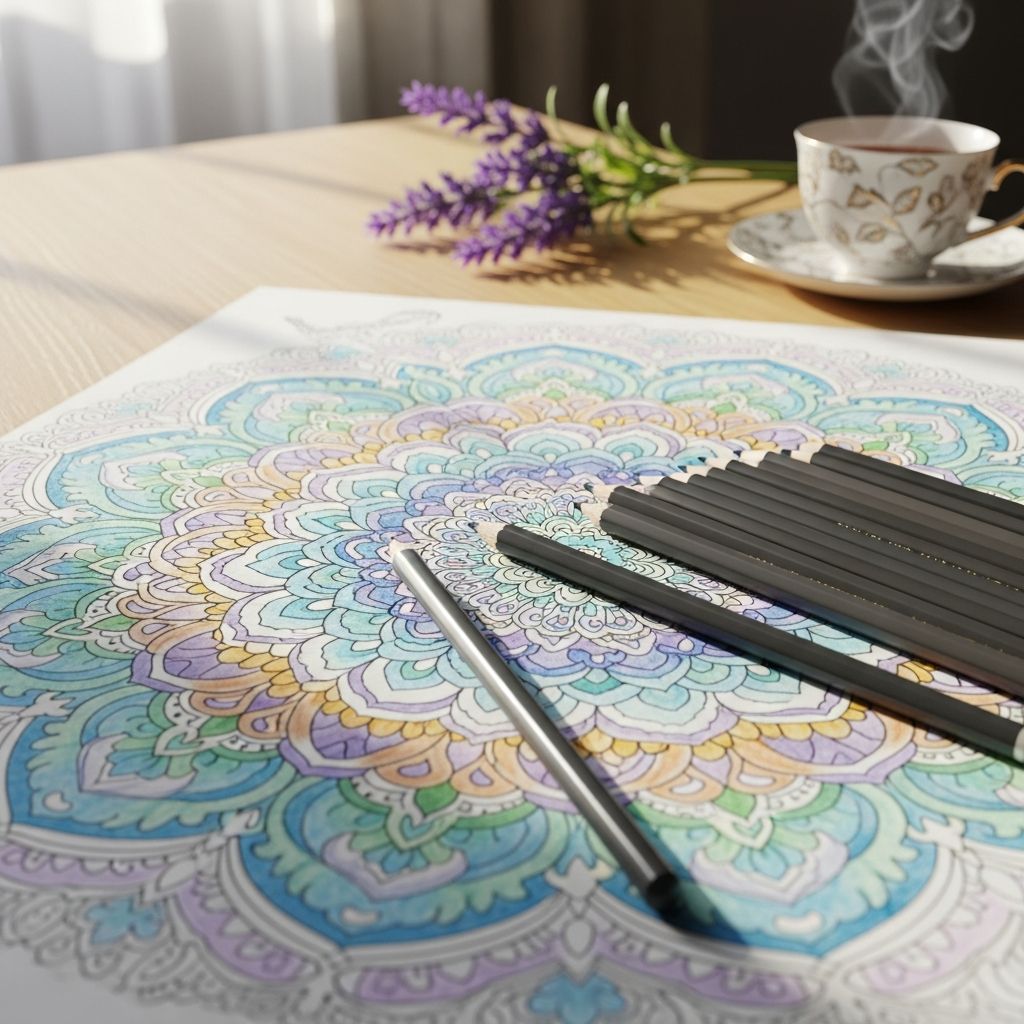
Mandala coloring pages have moved from niche art therapy tools to everyday favorites for families, teachers, and anyone craving a quiet, creative break. Their circular designs invite you to slow down, focus on color and pattern, and gently let the rest of the world fade into the background.
This guide explains what mandala coloring pages are, why they feel so calming, and how to use them with kids, teens, and adults as a simple, screen-free way to relax and reconnect.
What Exactly Is a Mandala?
The word “mandala” is often used to describe any circular design with repeating shapes that radiate from a central point. Traditionally, mandalas appear in spiritual and cultural art from around the world, symbolizing balance, wholeness, and unity.
For home use, mandala coloring pages usually include:
- A round or rounded shape with a clear center
- Symmetrical segments, like slices of a pie or petals of a flower
- Repeating patterns—dots, leaves, geometric shapes, or swirls
- Lines that form small, enclosed spaces perfect for coloring
You don’t need to know anything about their deeper symbolism to enjoy them. The simple act of filling in their patterns can be soothing all by itself.
Why Mandala Coloring Feels So Calming
Many people notice that coloring mandalas feels different from coloring a simple cartoon. The circular structure and repeated shapes gently guide your attention, making it easier to get into a relaxed, almost meditative state.
Several elements work together to create this effect:
- Focused attention: Tiny spaces and repeating patterns naturally pull your mind away from worries and toward the present moment.
- Predictable rhythm: Repeating shapes create a rhythm—color, repeat, color, repeat—that can feel as steadying as a deep breath.
- Balanced layout: Symmetry and circular designs offer a sense of order that can feel grounding when life feels chaotic.
Think of mandala coloring as “active rest”—your hands and eyes are busy, but your nervous system is slowly being invited to settle.
Benefits for Kids, Teens, and Adults
Mandala coloring pages are popular because they fit almost any age or personality. The benefits may look slightly different, but the underlying calming effect is the same.
| Age Group | Main Benefits | Best Types of Designs |
|---|---|---|
| Young children (4–7) | Improves focus, hand-eye coordination, color recognition, and patience. | Large, simple mandalas with big sections and bold outlines. |
| Older kids (8–12) | Builds persistence, confidence, fine motor skills, and quiet time habits. | Medium-detail designs with fun themes like stars, flowers, or animals. |
| Teens | Offers stress relief, emotional expression, and a healthy break from screens. | Intricate patterns, modern motifs, and pages that take multiple sessions. |
| Adults | Provides relaxation, mental reset, gentle mindfulness, and creative play. | Highly detailed, layered mandalas with lots of tiny spaces to color. |
| Seniors | Supports dexterity, concentration, and a soothing daily routine. | Clear lines, moderate detail, and designs easy to see and complete. |
Choosing the Right Mandala Coloring Pages
Not every mandala coloring page will feel relaxing. The “right” design depends on age, mood, and how much time and focus you have that day.
Consider Skill Level and Patience
If a page is too detailed, kids may get frustrated or give up quickly. If it’s too simple, older children and adults may get bored before they feel any calming effect.
To match designs to skill level:
- Start with larger shapes for beginners or young children.
- Choose moderate detail for most school-age kids and casual adult colorers.
- Save extremely intricate mandalas for older teens or adults who enjoy long projects.
Think About Themes and Interests
Many mandala coloring pages blend the circular pattern with familiar motifs. This can make the designs more engaging, especially for kids.
Fun themed ideas include:
- Nature-inspired mandalas with leaves, flowers, or butterflies
- Seasonal mandalas featuring snowflakes, pumpkins, or sunbursts
- Animal mandalas where pets or wild creatures form circular patterns
- Space-themed circles with stars, planets, and galaxies
Materials: What You Really Need (and Don’t)
Part of the charm of mandala coloring pages is how simple it is to get started. You do not need an art studio or expensive tools.
Basic Supplies
Gather a few basics and you are ready to go:
- Paper: Regular printer paper is fine; heavier paper works better with markers.
- Colored pencils: Great for shading and tiny spaces. They are forgiving and easy for kids to control.
- Fine-tip markers or pens: Ideal for crisp, bright colors. Use a spare sheet underneath to prevent bleed-through.
- Crayons: Perfect for younger children or for a softer, textured look.
Nice-to-Have Extras
If you want to take things up a notch, you can add:
- Gel pens for metallic, neon, or glittery effects
- Blending tools or colorless blenders for smooth shading
- A simple clipboard or lap desk for coloring on the couch or outdoors
Remember that the point is relaxation, not perfection. Use what you have and upgrade only if it adds to your enjoyment.
How to Turn Coloring into Mindful Self-Care
Simply picking up a coloring page can feel therapeutic, but a few small habits can deepen the calming effect and turn it into a true self-care ritual.
Set the Scene
You don’t need candles and meditation music (unless you enjoy them), but a small amount of preparation helps your brain understand that it is time to slow down.
Try:
- Clearing a small spot at the table or on your desk
- Silencing notifications for 15–30 minutes
- Adding a cup of tea or water nearby so you don’t have to jump up
- Choosing soft background music or quiet, depending on what feels relaxing
Use Your Breath as a Guide
Coloring and breathing can work together. Before starting, take two or three slow, deep breaths, letting your shoulders release tension.
As you color:
- Notice the way your hand moves with each stroke.
- Match your coloring pace to a calm, steady breath.
- If your mind wanders to worries, gently bring it back to the colors and shapes in front of you.
Let Go of “Perfect”
Perfectionism can sneak into something as simple as coloring. Uneven lines and unexpected color choices are not mistakes; they are part of the process.
Give yourself permission to:
- Experiment with odd color combinations just to see what happens
- Leave a page unfinished and come back later—or not at all
- Start a new page if the old one feels too busy or overwhelming
Family-Friendly Ways to Use Mandala Coloring Pages
Mandala coloring is naturally quiet and introspective, but it can still be a warm, shared family activity. With a few tweaks, it can fit into bedtime routines, weekend mornings, or rainy afternoons.
Mandala Mornings or Evenings
Consider setting aside a regular “mandala moment” at a time when everyone typically feels stressed or restless. For some families, this might be right after school; for others, just before bed.
During this time:
- Put all devices away or in another room.
- Offer a basket with various printed mandalas and coloring tools.
- Allow everyone to choose their own page and work quietly side-by-side.
Conversation Starters for Older Kids
Coloring can make it easier for kids and teens to open up. Because your hands and eyes are busy, difficult topics often feel less intense to discuss.
While you color together, gently ask:
- “What part of your day felt most challenging?”
- “Is there something you’re looking forward to this week?”
- “Which colors match your mood today?”
Keep the focus on listening rather than fixing. The shared activity itself already offers comfort.
Creative Ways to Use Finished Mandalas
Finished mandala coloring pages do not have to live in a drawer. Turning them into simple crafts can stretch the value of each page and give kids a sense of pride.
- Wall gallery: Frame a few favorites or hang them with clips on a string for an ever-changing art display.
- DIY cards: Cut or fold colored mandalas into greeting cards for birthdays, holidays, or thank-you notes.
- Bookmarks: Slice a page into strips, laminate if possible, and punch a hole for ribbon.
- Journaling prompts: Glue a mandala into a notebook and invite kids to write a few sentences about the colors they chose or how they felt while coloring.
- Mindful reminders: Tape a small mandala to a mirror or computer as a visual cue to pause and breathe.
Tips for Using Mandala Coloring Pages in the Classroom
Teachers and homeschool parents often turn to mandala coloring to smooth transitions and create pockets of calm in busy days. The structured designs work well in both individual and group settings.
Helpful classroom uses include:
- Quiet start: Offer coloring pages as students arrive to ease the rush of the morning.
- Brain breaks: Use short coloring sessions between subjects to reset focus.
- Cool-down corner: Keep a folder of mandalas in a calm area where students can go when they feel overwhelmed.
- Early finisher activity: Provide mandala pages as an option for students who complete work ahead of others.
Common Mistakes to Avoid
Mandala coloring should feel gentle and inviting, but a few missteps can turn it into one more task on a long list. Keeping these pitfalls in mind can help preserve the joy.
- Making it a competition: Avoid comparing pages or praising only the “prettiest” results. Focus on the experience, not the outcome.
- Insisting kids finish: Forcing a child to complete a complex mandala can create stress rather than relieve it.
- Overloading the schedule: Coloring is most helpful when it feels optional and flexible, not like one more obligation.
- Ignoring comfort: If lighting is harsh, chairs are uncomfortable, or supplies are constantly missing, it’s harder to relax.
Frequently Asked Questions About Mandala Coloring Pages
Are mandala coloring pages only for adults?
No. Mandala coloring pages can be adapted for almost any age. Younger children may prefer large, simple patterns, while teens and adults often gravitate toward more detailed designs. Adjusting complexity and tools makes this activity accessible for the whole family.
How long should a coloring session last to be helpful?
There is no strict rule. Many people find that even 10–15 minutes can provide a noticeable sense of calm, especially during a stressful day. Longer sessions can be wonderfully immersive, but consistency—small, regular moments of coloring—often matters more than total time.
What if I’m not artistic at all?
Artistic skill is not required. The outlines are already in place, so your main “job” is to choose colors and fill in the spaces at your own pace. Treat it as a playful experiment rather than an art project that needs to impress anyone.
Can mandala coloring replace professional mental health support?
Mandala coloring is a helpful self-care tool, but it is not a substitute for therapy, medical care, or other professional support. It can complement these services by offering an easy way to practice relaxation and mindfulness at home, but any serious emotional or physical concerns still deserve expert attention.
Is there a “right” way to color a mandala?
There is no single correct approach. Some people like to work from the center outward, others from the outside in. You can stick to a limited color palette for harmony or use every color you own. The best method is the one that feels most calming and enjoyable to you.
How many pages should my child color at once?
Quality matters more than quantity. One partially colored mandala that feels peaceful and satisfying is worth more than several rushed pages. Let your child set the pace; they may enjoy revisiting the same design over several days.
Bringing Mandalas into Your Everyday Routine
Mandala coloring pages offer a rare combination: they are simple, inexpensive, and flexible, yet powerful enough to shift the tone of a hectic day. Whether you use them for a solo wind-down at night or as a quiet family ritual, they can help create pockets of calm in an often noisy world.
You do not need to commit to hours of coloring or complete any particular number of pages. Start with a single printed mandala, a handful of crayons or pencils, and an open mind. Let the circular patterns guide you toward a slower, steadier rhythm—one small patch of color at a time.