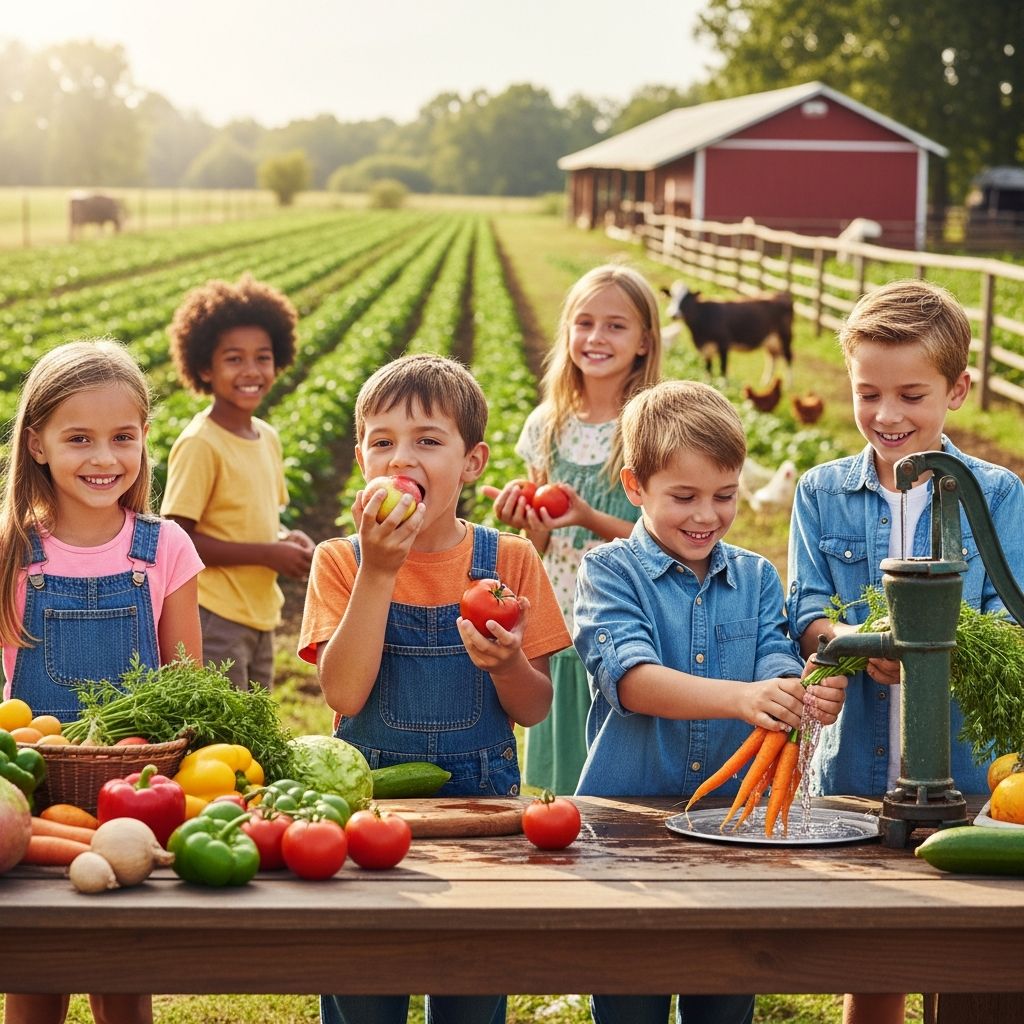
Farm-to-school programs bridge the gap between local agriculture and educational settings by integrating fresh, regionally sourced foods into school meals while incorporating interactive learning experiences. These initiatives promote healthier eating habits among children, bolster local economies, and cultivate environmental awareness.
Understanding the Core of Farm-to-School Initiatives
At their essence, farm-to-school efforts involve schools partnering with nearby producers to supply fruits, vegetables, grains, meats, dairy, and seafood for child nutrition programs. Beyond procurement, these programs emphasize educational components like school gardens, farm visits, taste tests, and curriculum integration on topics such as nutrition, food systems, and sustainability.
Originating in the late 1990s, these programs have expanded dramatically, with over 65% of U.S. school food authorities participating by the 2018-19 school year according to USDA data. They empower schools with flexibility to feature seasonal, locally grown items, adapting menus to what’s fresh and available regionally.
Transforming Student Health and Eating Habits
One of the most compelling advantages for students is the boost in fruit and vegetable intake. Programs encourage children to experiment with new foods through taste tests and garden activities, leading to greater willingness to try unfamiliar produce.
- **Higher Consumption Rates:** Schools report increased daily servings of fruits and veggies, with some studies noting up to 9% rises in meal participation.
- **Better Choices Beyond School:** Kids often carry these preferences home, influencing family diets positively.
- **Physical and Academic Gains:** Enhanced nutrition correlates with more physical activity, improved test scores, and better behavior.
Evidence from various implementations shows reduced plate waste and stronger adherence to wellness policies, creating a ripple effect on overall child well-being.
Economic Boost for Farmers and Local Producers
Local farmers gain stable markets and diversified revenue streams through direct sales to schools. Even modest initial sales provide outlets for imperfect produce and build community ties.
| Benefit | Impact Example |
|---|---|
| Increased Income | Average 5% rise for participating producers |
| Market Opportunities | Up to 50% of seasonal produce sourced locally |
| Economic Multiplier | $1 spent generates $0.60-$2.16 locally |
These partnerships create jobs—each school purchasing role spawns 1.67 more—and enhance food security while reducing reliance on distant supply chains.
Enhancing School Operations and Staff Engagement
Schools benefit from higher meal participation, which offsets costs and improves operations. Foodservice teams experiment with seasonal recipes, boosting morale and skills.
- Increased revenue from 3-16% more students eating school meals.
- Positive shifts in educator lifestyles and wellness policy compliance.
- Hands-on learning opportunities like composting and culinary classes.
Staff report greater job satisfaction, and administrators note stronger parent and community support.
Building Community Resilience and Sustainability
Farm-to-school fosters broader connections, linking urban and rural areas. It stimulates local economies, cuts food waste, and lowers emissions by shortening supply chains.
Families experience dietary improvements, with parents adopting healthier habits inspired by their children. Programs also promote environmental stewardship through education on seasonality and farming practices.
Practical Steps for Launching a Farm-to-School Program
Starting small is key. Schools can begin with farm visits or garden plots, then scale to procurement.
- Assess local producers and school needs.
- Secure grants or USDA technical assistance.
- Integrate into curriculum with nutrition and ag lessons.
- Host taste tests to build excitement.
- Track progress via participation metrics.
Challenges like seasonal mismatches or logistics can be addressed through cooperatives or processing hubs.
Real-World Success Stories and Data Insights
In Minnesota, $1 million in farmer sales generated $1.6 million regionally. Nationally, programs yield up to $2.16 in local activity per dollar invested.
K-12 sites see operational upgrades, including new waste policies and diverse menus, while early care programs mirror these gains on smaller scales.
Overcoming Common Hurdles in Implementation
Barriers include procurement regulations, pricing, and delivery logistics. Solutions involve policy advocacy, bulk buying groups, and value-added processing.
Training ensures food safety compliance, and phased rollouts manage costs effectively.
Frequently Asked Questions (FAQs)
Q: What exactly counts as a farm-to-school activity?
A: Activities include local food purchasing, school gardens, farm trips, taste tests, and classroom lessons on food systems and nutrition.
Q: Do these programs really improve kids’ eating habits?
A: Yes, they increase fruit/veggie consumption, trial of new foods, and healthier choices at school and home.
Q: How do schools afford local foods?
A: Higher meal participation generates revenue; grants and efficiencies lower net costs.
Q: Can small farms participate?
A: Absolutely—programs diversify markets, even for imperfect produce, providing steady income.
Q: What about early childhood or preschool settings?
A: Farm-to-early-care adaptations yield similar benefits like better nutrition and learning.
Long-Term Vision for Farm-to-School Growth
With USDA support via grants and research, these programs promise scalable impacts. Future expansions could include more seafood and grains, deeper equity focus, and tech for supply tracking.
By prioritizing local sourcing and education, farm-to-school not only feeds bodies but minds, economies, and ecosystems for generations.
References
- Benefits of Farm to School and Early Care and Education — SDSU Extension. 2022-03-03. https://extension.sdstate.edu/benefits-farm-school-and-early-care-and-education
- I’m New to Farm to School — USDA Food and Nutrition Service. Accessed 2026. https://www.fns.usda.gov/f2s/im-new-farm-school
- Benefits of Farm to School — University of Wisconsin Extension. 2023-06. https://foodsystems.extension.wisc.edu/files/2023/06/farm2-benefits-of-farm-to-school.pdf
- Do Farm-to-School Programs Create Local Economic Impacts? — Choices Magazine. Accessed 2026. https://www.choicesmagazine.org/choices-magazine/theme-articles/transformations-in-the-food-system-nutritional-and-economic-impacts/do-farm-to-school-programs-create-local-economic-impacts
- Farm to School Basics — Minnesota Department of Health. Accessed 2026. https://www.health.state.mn.us/communities/farmtoschool/ftsbasics.html
- Farm to School Programs — County Health Rankings & Roadmaps. Accessed 2026. https://www.countyhealthrankings.org/strategies-and-solutions/what-works-for-health/strategies/farm-to-school-programs
- Impacts of Farm to School — Washington State Department of Agriculture. Accessed 2026. https://agr.wa.gov/departments/business-and-marketing-support/farm-to-school/about-farm-to-school/impacts-of-farm-to-school