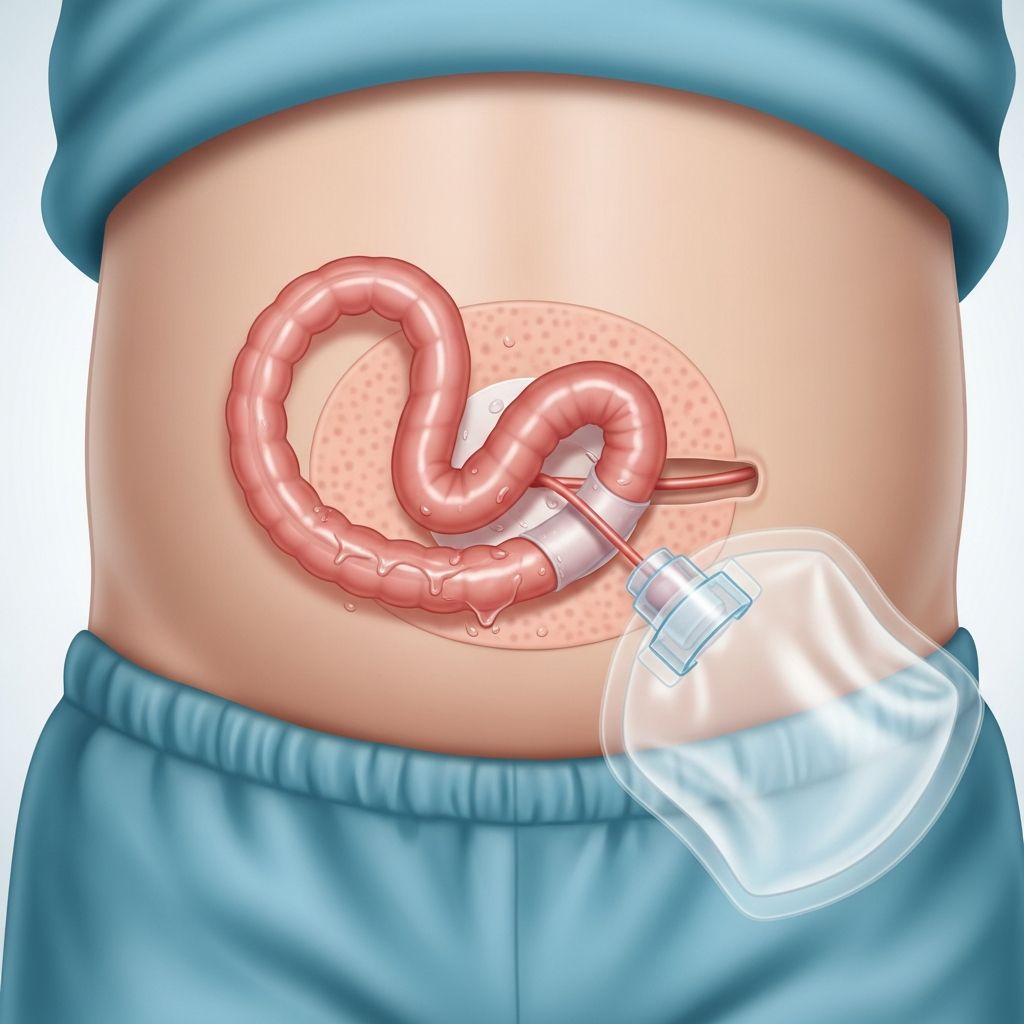
Loop ostomies represent a vital surgical option for children facing bowel issues, allowing the lower digestive tract to heal while managing waste output through a temporary stoma. This procedure, often reversible, supports recovery from conditions like blockages, injuries, or inflammation, helping kids return to normal function.
Why Children Might Need a Loop Ostomy
Pediatric loop ostomies are typically recommended when a child’s colon requires protection and rest. Common scenarios include severe infections, traumatic injuries, congenital defects, or complications from prior surgeries. For instance, if there’s a blockage or perforation, surgeons create a diversion to prevent further damage, enabling healing without the pressure of normal stool passage.
In kids, conditions such as Hirschsprung’s disease, inflammatory bowel disease flares, or post-operative anastomotic protection often necessitate this intervention. The loop design is favored for its reversibility, making it ideal for temporary needs lasting weeks to months.
- Blockages or obstructions: Relieves pressure downstream.
- Infections or inflammation: Allows bowel rest.
- Surgical healing: Protects new bowel connections.
- Trauma: Manages output during recovery.
The Surgical Process Explained
Loop ostomy surgery for children is performed under general anesthesia, either laparoscopically or via open incision, depending on urgency and complexity. Laparoscopic approaches use small ports and a camera for minimal invasion, reducing recovery time.
The surgeon selects a stoma site on the abdomen, often marked preoperatively with input from the child and family for optimal placement. A loop of colon (or ileum in ileostomies) is brought through the abdominal wall, opened partially, and secured to the skin, forming two openings: the proximal for stool and the distal for mucus.
A temporary rod may support the loop initially, removed after a few days. The procedure typically lasts 1-2 hours, with hospital stays varying from days to a week.
| Aspect | Laparoscopic | Open Surgery |
|---|---|---|
| Invasiveness | Small incisions, camera-guided | Large abdominal cut |
| Recovery Time | Faster, less pain | Longer hospital stay |
| Best For | Elective, stable cases | Emergencies, complex anatomy |
Immediate Post-Operative Care
After surgery, children are monitored in recovery for anesthesia effects, pain, and stoma function. Output begins within 24-48 hours, initially liquid, requiring an ostomy pouch.
Parents learn hands-on care from wound-ostomy-continence (WOC) nurses: pouch changing, skin protection, and hygiene. Pain management includes medications, and mobility is encouraged early to prevent complications.
- Monitor stoma color (should be pink/red, not black/blue).
- Empty pouch when 1/3 full.
- Avoid tugging the stoma.
Managing Daily Life with a Loop Ostomy
Adapting to a loop ostomy involves routine stoma care, diet tweaks, and activity guidelines. Pouches collect semi-formed stool from the proximal opening and mucus from the distal, changed 4-6 times daily initially.
Diet Tips: Start with clear liquids, progress to soft foods. High-fiber later may thicken output; hydrate well to prevent dehydration. Consult dietitians for child-friendly plans.
School and play: Secure pouches for active kids; teach peers sensitively. Bathing is fine with pouch off briefly; swimming possible with ostomy covers.
Potential Challenges and Solutions
| Challenge | Solution |
|---|---|
| Skin irritation | Barrier creams, proper sizing |
| Odor/Ballooning | Filters, venting; diet adjustments |
| Prolapse | Support belts; contact specialist |
Signs Parents Should Watch For
Vigilance prevents issues. Contact providers if noting no output >6 hours, severe pain, fever, stoma darkening, or excessive bleeding.
- Dehydration: Dry mouth, reduced urine.
- Infection: Pus, swelling.
- Blockage: Cramping, no stool.
Reversing the Loop Ostomy
Once healing is confirmed via imaging or scopes, reversal surgery reconnects the bowel. For loop types, this is straightforward: excise the stoma, join ends, and close the site.
Timing: 8-12 weeks post-original surgery, outpatient possible. Post-reversal, temporary ileus managed with diet advancement.
Emotional and Family Support
A loop ostomy impacts the whole family. Kids may feel self-conscious; counseling helps body image. Parental education reduces anxiety; support groups connect families.
Age-specific tips: Toddlers need supervision; school-age kids benefit from peer education; teens desire independence in care.
Long-Term Outlook and Prevention
Most children thrive post-reversal, resuming normal activities. Regular follow-ups monitor bowel function. Early intervention prevents chronic issues.
Frequently Asked Questions (FAQs)
Is a loop ostomy painful for my child?
Discomfort is managed with meds; kids adapt quickly with support.
How long does a loop ostomy last?
Temporary, often 2-6 months, based on healing.
Can my child play sports?
Yes, with secure appliances and doctor approval.
What if the stoma changes color?
Notify doctor immediately; could indicate circulation issues.
Does insurance cover supplies?
Typically yes; check policies for ostomy products.
This guide empowers parents with knowledge for confident care. Consult healthcare teams for personalized advice.
References
- Loop Colostomy: Procedure, Recovery, Risks & Benefits — Cleveland Clinic. 2023-05-15. https://my.clevelandclinic.org/health/treatments/24589-loop-colostomy
- Loop Colostomy: What You Should Know — Healthline. 2023-08-22. https://www.healthline.com/health/colostomy-loop
- Closure of loop ileostomy — Healthdirect (Australian Government). 2024-01-10. https://www.healthdirect.gov.au/surgery/closure-of-loop-ileostomy
- For parents: What’s a Loop Ostomy? — Akron Children’s Hospital. 2023-11-05. https://www.akronchildrens.org/kidshealth/en/parents/loop-ostomy.html
- Ileostomy — StatPearls, NCBI Bookshelf (NIH). 2024-07-20. https://www.ncbi.nlm.nih.gov/books/NBK519003/
- Ostomy Expanded Information — American Society of Colon and Rectal Surgeons. 2023-09-12. https://fascrs.org/Web/Web/Patients/Diseases-and-Conditions/A-Z/Ostomy-Expanded-Information.aspx
- Colostomy Types — American Cancer Society. 2024-02-28. https://www.cancer.org/cancer/supportive-care/ostomies/colostomy/types-of-colostomies.html