Ultraviolet (UV) radiation from the sun poses significant risks to children’s health, with the UV index serving as a critical tool for gauging daily exposure levels and guiding protective measures. Experts emphasize that early intervention during childhood can prevent lifelong issues like skin cancer and premature aging, as young skin is particularly vulnerable due to its thinner structure and immature barrier function.
Decoding the UV Index: What Every Parent Needs to Know
The UV index is a standardized scale from 0 to 11+ that forecasts the intensity of UV radiation at a specific time and location, helping families plan outdoor activities safely. Developed by organizations like the World Health Organization and the U.S. Environmental Protection Agency, it accounts for factors such as time of day, altitude, cloud cover, and ozone levels to predict skin-burning potential.
Low readings (0-2) indicate minimal risk, suitable for extended outdoor play without extra precautions. Moderate levels (3-5) call for awareness, especially during peak hours, while high (6-7), very high (8-10), and extreme (11+) demand strict protection like clothing and shade. Children receive 40-50% of their lifetime UV dose by age 20, making consistent monitoring essential.
| UV Index | Risk Level | Recommended Actions for Kids |
|---|---|---|
| 0-2 | Low | Normal activities; sunscreen optional for fair skin. |
| 3-5 | Moderate | Seek shade midday; apply SPF 30+ sunscreen. |
| 6-7 | High | Limit sun 10am-4pm; wear hats, clothing, sunglasses. |
| 8-10 | Very High | Minimal exposure; full coverage essential. |
| 11+ | Extreme | Avoid outdoors if possible; reschedule activities. |
This table summarizes action thresholds, underscoring why parents should check apps or weather reports daily—higher indices amplify damage on delicate pediatric skin.
Why Children’s Skin is Uniquely Susceptible to UV Damage
Infants and young children have thinner skin with less melanin, the pigment that absorbs UV rays, leading to quicker burns and deeper penetration. Their skin barrier matures slowly, allowing rapid actinic damage from even brief exposures. Epidemiological data shows children accumulate higher relative UV doses through play, with studies noting 3-4 hours daily summer exposure in various regions.
- Immature epidermis: Reduces natural filtration, increasing DNA damage in melanocytes.
- Higher activity levels: More time outdoors means amplified cumulative exposure.
- Long latency effects: Childhood UV initiates cancers manifesting decades later, as older adults face competing mortality risks.
Photoaging begins early, with elastin degradation visible via skin microtopography in sun-exposed kids, far exceeding indoor peers. Naevus (mole) counts rise significantly with early exposure, a melanoma precursor.
Immediate and Lifelong Health Consequences of UV Overexposure
Short-term effects include sunburn (erythema), photokeratitis (eye ‘sunburn’), and immune suppression, weakening skin defenses. One blistering sunburn in childhood doubles melanoma risk later, with rates rising even among youth.
Long-term, UV causes nonmelanoma cancers, melanoma (most lethal), cataracts, and retinal damage. Adolescents in high-UV areas show elevated naevi on sun-exposed sites like faces and arms. UV-B rays specifically suppress immunity, promoting carcinogenesis.
Eye risks are pronounced under age 10: clear lenses permit deeper UV penetration, heightening cataract and macular degeneration odds. Protection from infancy slashes these trajectories.
Proven Strategies for Everyday Sun Protection in Families
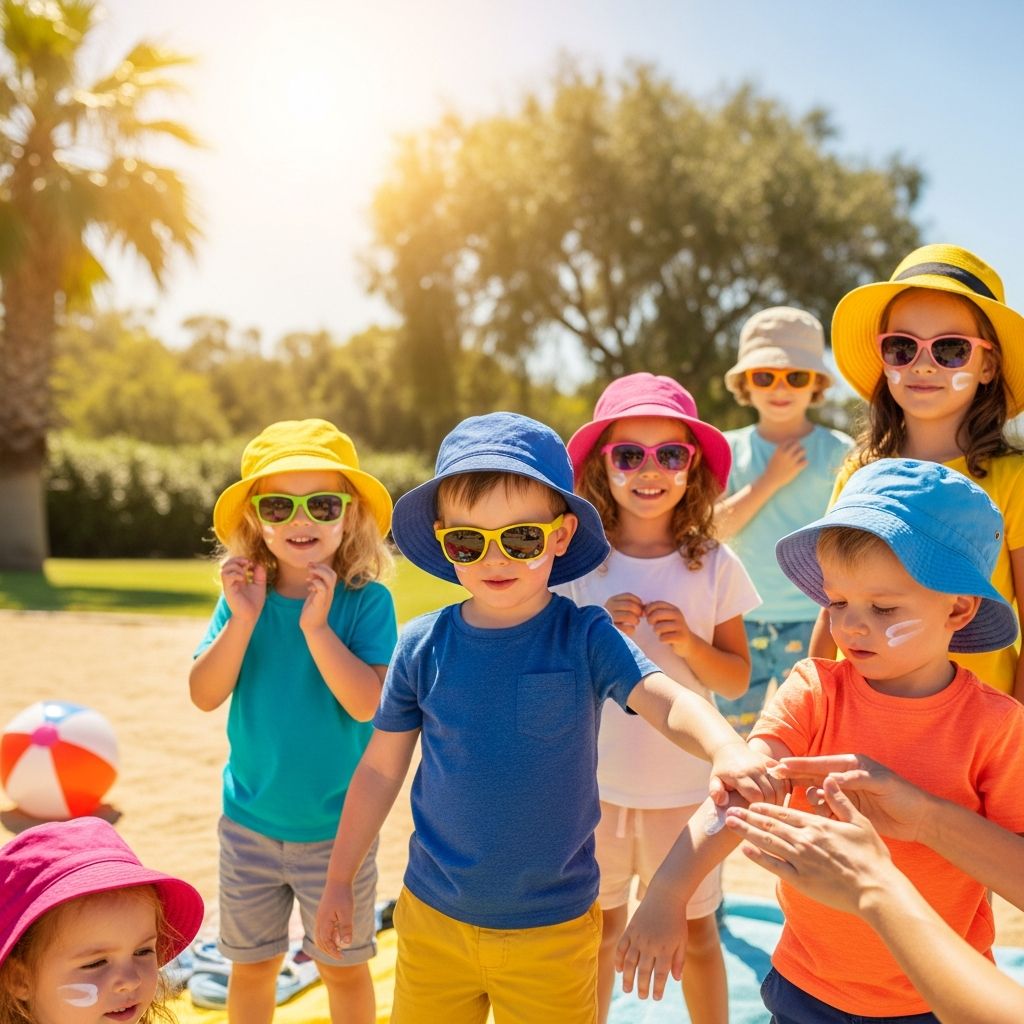
Pediatric guidelines prioritize ‘slip, slop, slap, seek, slide’: slip on clothing, slop on sunscreen, slap on hats, seek shade, slide on sunglasses.
- Timing: Schedule play before 10am or after 4pm when UV peaks.
- Coverage: Use UPF 50+ clothing, wide-brim hats blocking 97%+ rays, and wraparound sunglasses with 100% UVA/UVB block.
- Sunscreen: Broad-spectrum SPF 30+ reapplied every 2 hours; for kids over 6 months.
- Shade: Trees, umbrellas, or play structures during high index.
Avoid tanning beds entirely—they emit carcinogenic UV. For babies under 6 months, zero direct sun; keep shaded and covered.
UV Index in Action: Real-World Scenarios for Parents
At a UV 3 playground visit, apply sunscreen and hats. UV 8 beach day? Full rash guards, noontime shade tents. High-altitude trips amplify indices by 10-12% per 1,000m, demanding extra vigilance.
Parental modeling boosts compliance—kids mimic habits. Schools integrating UV education reduce burns by 50% in trials.
Overcoming Common Barriers to Consistent Sun Safety
Many parents underestimate risks, prioritizing fun over forecasts. Cost barriers? Affordable UPF options abound. Resistance from kids? Fun prints on gear help. Track via free apps for habit-building.
For fair-skinned or family-history kids, dermatologist consults aid tailored plans.
Frequently Asked Questions About UV Safety for Children
At what age should I start using sunscreen on my baby?
For infants over 6 months; under that, prioritize shade and clothing. Consult pediatricians for neonates.
Does cloudy weather mean low UV risk?
No—up to 80% UV penetrates clouds. Always check index.
Can one sunburn really impact lifelong cancer risk?
Yes, a single severe childhood sunburn doubles melanoma odds.
Are sunglasses necessary for kids?
Absolutely, from 6 months, to shield delicate eye areas and prevent cumulative damage.
How does altitude affect UV exposure?
Every 1,000m elevation boosts UV 10-12%; plan accordingly.
Building a Sun-Safe Future: Empowering the Next Generation
Integrating UV awareness fosters lifelong habits. Community programs, policy advocacy for shade in parks, and pediatric counseling amplify impact. By decoding the UV index and acting decisively, parents safeguard skin health, preserving play without peril.
References
- Childhood exposure to ultraviolet radiation and harmful skin effects — Oliveria SA et al. 2012-07-13. https://pmc.ncbi.nlm.nih.gov/articles/PMC3409870/
- Children and Ultraviolet Radiation — Wollenberg A et al. 2022-04-20. https://pmc.ncbi.nlm.nih.gov/articles/PMC9028979/
- Sun Safety for Children and Babies — UCSF Benioff Children’s Hospitals. 2023. https://www.ucsfbenioffchildrens.org/education/sun-safety-for-children-and-babies
- Ultraviolet Radiation Exposure — American Academy of Pediatrics (AAP). 2024-01-15. https://www.aap.org/en/patient-care/environmental-health/promoting-healthy-environments-for-children/ultraviolet-radiation/
- Understanding Ultraviolet Light Safety: A Guide for Parents — Kidsville Pediatrics. 2023-06-10. https://www.kidsvillepeds.com/blog/1343626-understanding-ultraviolet-light-safety-a-guide-for-parents/
- Ultraviolet Radiation — Centers for Disease Control and Prevention (CDC). 2025-05-22. https://www.cdc.gov/radiation-health/features/uv-radiation.html