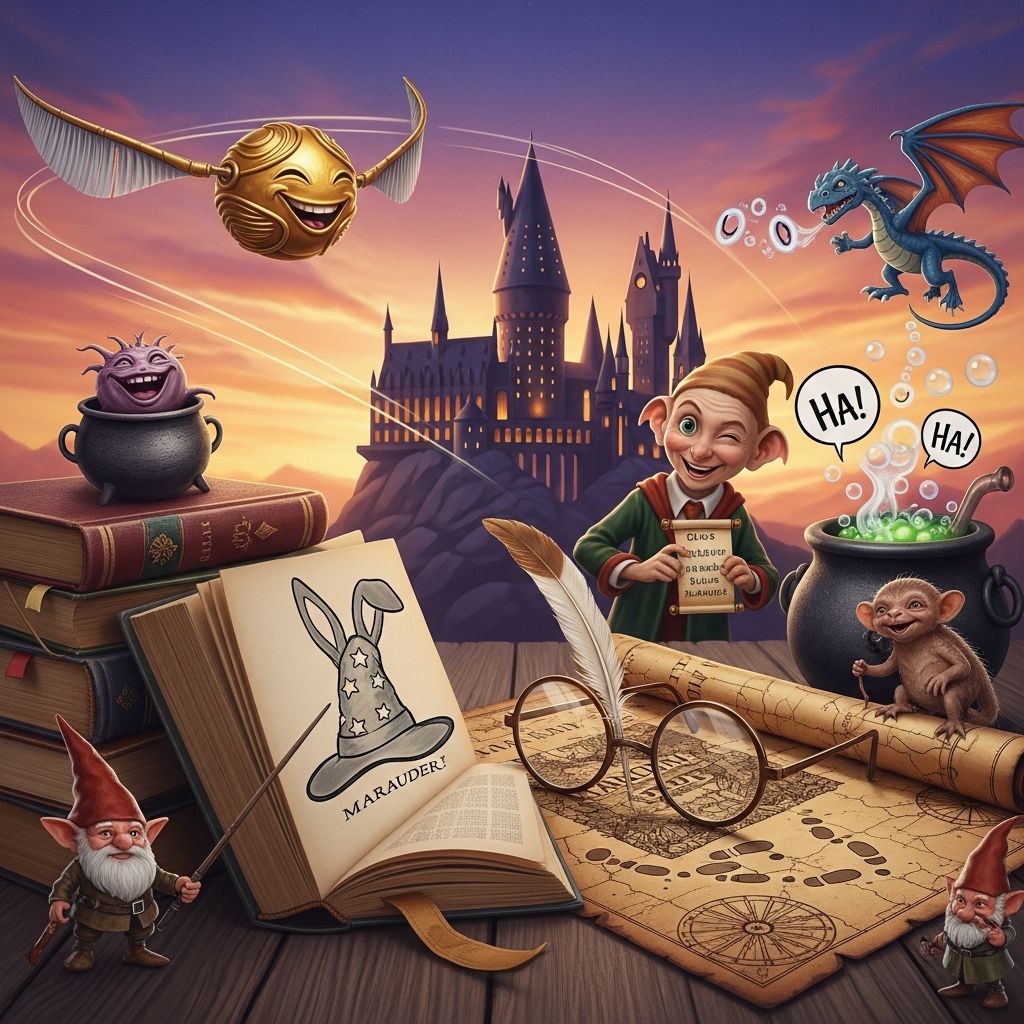
Harry Potter stories are packed with danger, friendship, and big emotions, but they are also quietly hilarious when fans start playing with the magical world through jokes and puns. Turning Hogwarts lore into laughter is a simple way for families and friends to share the series with younger kids or deepen the fun for lifelong fans.
Why Wizarding Jokes Hit Different
Jokes that draw on the Harry Potter universe feel satisfying because they reward people for remembering details about houses, spells, and characters. When someone laughs at a wizarding pun, they are not just amused; they are also pleased to recognize a bit of shared fandom knowledge.
- They turn trivia about owls, ghosts, and spells into punchlines instead of test questions.
- They give shy fans a low-pressure way to show they know the difference between a Horcrux and a Hippogriff.
- They help adults bridge the gap between generations by using a world that many kids already love.
Core Ingredients of a Great Harry Potter Joke
Strong Harry Potter jokes usually mix wordplay with clear, recognizable elements from the books or films, such as house names, magical creatures, or school subjects. The key is to keep the reference obvious enough that casual fans still feel included while deep fans enjoy a subtle extra layer.
- Familiar names: Hogwarts, Quidditch, chocolate frogs, and talking portraits are all fertile ground.
- Twisted expectations: Jokes often work by turning a serious magical rule into something completely ordinary, like homework or chores.
- Gentle tone: Because children love this universe, successful jokes stay away from cruel or mean-spirited targets.
House-Themed Humor: Laughs by Sorting Hat
One of the easiest ways to create wizarding jokes is to play with the distinct personalities of the four Hogwarts houses. Fans already associate each house with certain traits, so a tiny exaggeration can quickly feel funny and familiar.
Gryffindor Giggles
Gryffindors are known for bravery, boldness, and the occasional tendency to act first and plan later. Jokes focusing on their love of heroic stunts and dramatic timing can land especially well with kids who enjoy adventures.
- Play on the idea that a Gryffindor will volunteer before even hearing the full instructions.
- Use over-the-top heroic language for everyday situations, like cleaning a room or walking the dog.
Ravenclaw Riddles
Ravenclaws prize wit, logic, and curiosity, which naturally lends itself to clever wordplay and layered jokes. Their reputation for overthinking can become a humorous lens for everyday decisions, such as picking a snack or choosing a TV show.
- Build jokes around exam questions, brainteasers, and odd facts about magical artifacts.
- Tease the idea that Ravenclaws write essays just to choose their favorite dessert.
Hufflepuff Humor
Hufflepuffs are associated with kindness, loyalty, and patience, so their jokes often shine when they highlight underappreciated tasks or gentle absurdity. The house’s connection to food, plants, and cozy spaces also creates plenty of playful material.
- Imagine a Hufflepuff club devoted entirely to rescuing overcooked cauldron cakes.
- Turn boring chores into noble acts of loyalty for friends and roommates.
Slytherin Snickers
Slytherins are ambitious, strategic, and sometimes misunderstood, which makes them ripe for smart, slightly mischievous humor. Many fans enjoy flipping stereotypes by showing Slytherins doing surprisingly wholesome things with cunning efficiency.
- Joke about ultra-organized study schedules that feel like carefully plotted heists.
- Imagine Slytherins running wildly effective bake sales with the same energy they might use for secret schemes.
Kid-Friendly Wizarding Wordplay
When crafting jokes for kids, the goal is simple structures, clear setups, and punchlines that lean on familiar school or family situations. References to magical creatures, potions, and flying broomsticks keep younger listeners engaged even if they do not remember every plot twist.
- Keep questions short so kids can repeat them easily to friends.
- Use everyday themes like lunch, bedtime, and homework, then layer a magical twist on top.
- Avoid inside references that only hardcore fans would know, such as obscure minor characters.
Table of Joke Styles in the Wizarding World
| Joke Style | Core Idea | Best Audience | Fandom Depth Needed |
|---|---|---|---|
| Puns on spells | Replace real-world words with similar-sounding charms or curses for comic effect. | Kids and casual fans | Low; just basic spell name recognition. |
| Character quips | Exaggerate canon personalities like strict teachers or prank-loving twins. | Families who know the films | Medium; some familiarity with character traits. |
| House stereotypes | Play with bravery, brains, kindness, and ambition as running gags. | Older kids and teens | Low to medium; house basics are enough. |
| Deep-cut references | Use details like exam names, magical laws, and minor creatures as punchlines. | Dedicated Potterheads | High; assumes repeated reading or watching. |
Turning Jokes into Party Magic
Harry Potter jokes become even more fun when they are woven into celebrations like birthdays, movie marathons, or themed sleepovers. Building small humor-based activities around house colors, wands, and magical snacks helps shy kids join in without feeling put on the spot.
- Entrance riddles: Guests must answer a lighthearted Hogwarts-themed question before stepping into the “Great Hall.”
- Joke jars: Fill glass jars with folded slips of wizarding puns and ask each guest to read one out loud before getting dessert.
- Spell misfires: Have kids invent funny consequences for pretend spells that go slightly wrong in harmless ways.
How to Invent Your Own Hogwarts Jokes
Creating original Harry Potter jokes works best when fans think in layers: choose a magical topic, pair it with a real-world situation, then twist the connection. This process keeps the humor fresh while avoiding overused punchlines that every fan has already heard.
- Pick a magical element: Examples include Quidditch equipment, a common spell, a class like Potions, or a Hogwarts location.
- Find a normal-life match: Connect it to school tests, chores, sports practice, or sibling rivalries.
- Flip expectations: Ask what would happen if the magical item behaved like the everyday object, or vice versa.
- Trim and test: Simplify the wording and say the joke out loud to check that the setup clearly leads to the punchline.
Guidelines for Family-Safe Wizarding Humor
Because the Harry Potter fanbase spans generations, it is especially important to keep jokes kind, inclusive, and age-appropriate. Families can use simple boundaries to make sure laughs never come at the expense of younger listeners or more sensitive fans.
- Avoid jokes that mock appearances, backgrounds, or deeply personal traits of characters or fans.
- Steer clear of spoilers when joking around new readers, especially about character fates and final battles.
- Lean into physical comedy, misunderstandings, and exaggerated house qualities instead of harsh teasing.
Using Humor to Revisit the Series
Jokes can act as gentle invitations for kids and adults to return to the books or films together, especially after some time away. A well-timed pun about a magical class or creature can spark curiosity about scenes that younger viewers missed the first time.
- Parents can ask children to rate each joke and then suggest watching or rereading the scenes that inspired the biggest laughs.
- Older fans can build trivia-and-joke nights where every correct answer earns the chance to deliver a pun.
Frequently Asked Questions About Harry Potter Jokes
Are Harry Potter jokes suitable for very young children?
Most simple house-based or spell-based jokes are safe for young kids as long as adults avoid darker story elements like curses and major battles. Keeping the focus on school life, magical pets, and silly potions helps maintain an upbeat, comforting mood.
Do you need to know every book to enjoy the jokes?
Casual fans can still enjoy many wizarding jokes as long as they recognize Hogwarts, a few main characters, and the basic idea of magic classes. Deeper references work best for long-time readers, but broad humor about houses, brooms, and enchanted candy usually lands with almost anyone who has seen at least one film.
Can Harry Potter jokes work in classrooms?
Light, respectful Harry Potter jokes can be effective in classrooms as icebreakers or rewards, especially where many students already like the series. Teachers sometimes tie puns to reading assignments or vocabulary lessons, turning canon terms into memorable learning tools.
How can adults avoid overexplaining references?
One of the easiest strategies is to stick to characters, items, and places that kids already recognize, such as the houses or common spells. If a joke does not land, adults can simply invite kids to discover the related scene later without forcing a long explanation that drains the humor.
What if someone in the group is not a fan?
If a friend or family member does not enjoy Harry Potter, hosts can balance wizarding jokes with more general humor and activities. Giving non-fans roles such as “official judge” of the funniest pun lets them join the fun without needing to know every detail of the story.
Enchanting Everyday Life with Laughter
Harry Potter jokes work best when they serve as a bridge rather than a barrier, inviting people into a shared imaginative space. By grounding wizarding wordplay in warmth, kindness, and creativity, families and friends can transform ordinary days into something just a bit more magical.