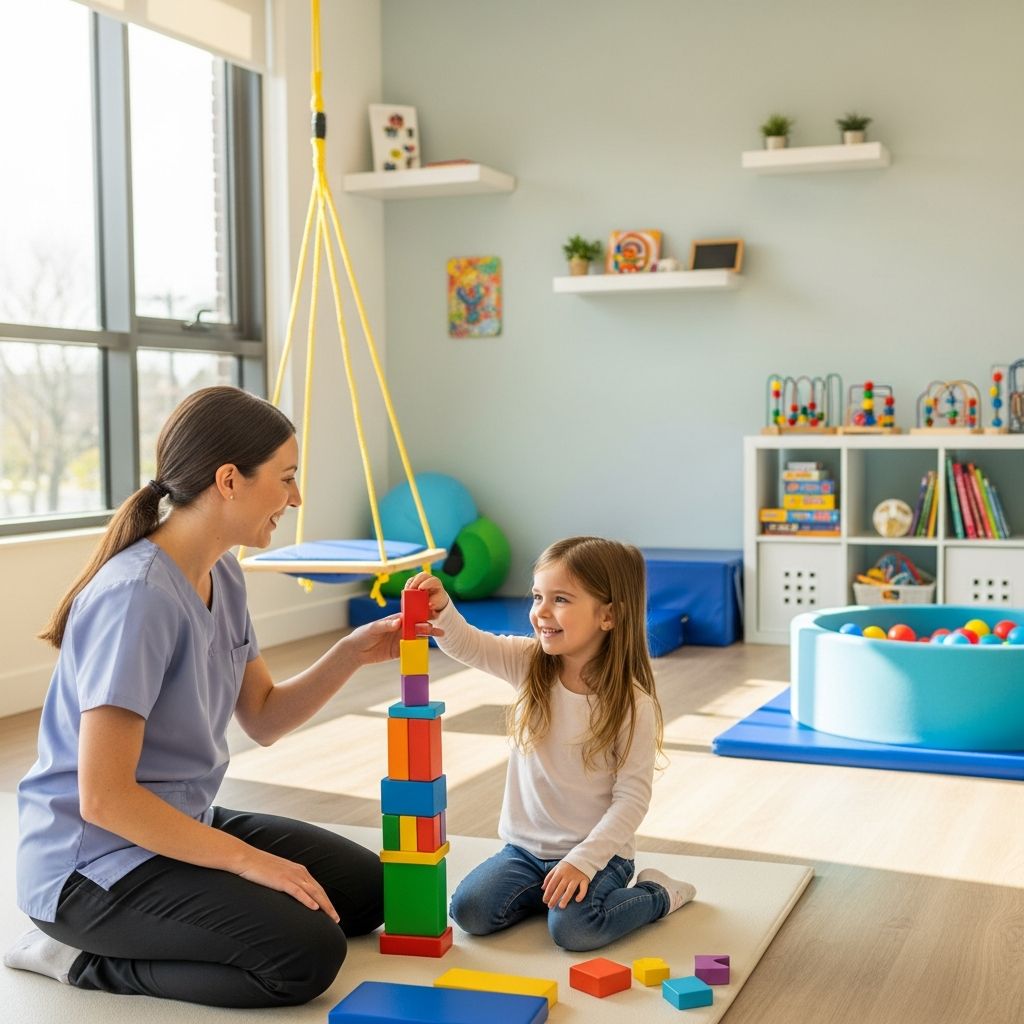
Occupational therapy (OT) serves as a vital resource for children facing developmental hurdles, enabling them to navigate daily life more effectively. By focusing on practical skills through engaging activities, pediatric OT supports young ones in achieving milestones that promote independence and joy.
Understanding Pediatric Occupational Therapy
Pediatric occupational therapy involves tailored interventions designed to help children participate fully in age-appropriate activities, such as playing, learning, and self-care. Therapists assess a child’s abilities in motor functions, sensory responses, and cognitive processes to create customized plans that address specific needs. Unlike general play, OT uses structured exercises to target weaknesses while building on strengths, ensuring progress in real-world settings like home or school.
For instance, therapists observe how a child grips a crayon or reacts to classroom noise, then introduce tools like textured toys or balance boards to foster improvement. This holistic approach not only aids the child but also equips parents with strategies to support ongoing development.
Core Benefits of OT for Young Minds
OT delivers multifaceted advantages that extend beyond immediate skill-building, influencing a child’s overall well-being and future opportunities. Key gains include enhanced physical capabilities, better emotional regulation, and increased self-reliance.
- Fine Motor Development: Children practice pinching, grasping, and manipulating objects, crucial for tasks like writing or dressing.
- Gross Motor Coordination: Activities improve balance, running, and climbing, aiding playground participation.
- Sensory Integration: Helps manage sensitivities to light, sound, or touch for calmer daily routines.
- Social-Emotional Growth: Builds interaction skills through group play and role scenarios.
- Cognitive Enhancement: Strengthens planning, attention, and problem-solving for academic success.
Mastering Fine and Gross Motor Skills
Fine motor skills involve small muscle movements in hands and fingers, essential for buttoning shirts, using utensils, or typing on keyboards—skills increasingly vital in modern education. OT employs fun exercises like threading beads, squeezing therapy putty, or cutting with adaptive scissors to build dexterity and strength.
Gross motor skills encompass larger movements, such as jumping or balancing, which support physical play and coordination. Therapists use obstacle courses, swings, or ball games to refine these abilities, helping children like those with coordination delays join peers confidently. A table below compares typical challenges and OT strategies:
| Skill Area | Common Challenge | OT Intervention |
|---|---|---|
| Fine Motor | Poor pencil grip | Clay modeling, bead stringing |
| Gross Motor | Difficulty balancing | Balance beams, hopping games |
| Hand-Eye Coordination | Missing catches | Ball tossing, target practice |
These targeted practices yield measurable improvements, often within weeks, boosting a child’s participation in school crafts or sports.
Navigating Sensory Processing Challenges
Sensory processing refers to how children interpret stimuli from their environment. Some become overwhelmed by tags on clothes or crowded rooms, leading to meltdowns, while others seek intense input like crashing into furniture. OT’s sensory integration techniques, such as brushing protocols, weighted vests, or sensory swings, recalibrate these responses.
Through gradual exposure in a controlled setting, children learn to tolerate or seek appropriate sensory input, improving focus during lessons or family meals. For example, a child hypersensitive to noise might use noise-canceling headphones paired with calming deep-pressure activities. Long-term, this reduces anxiety and enhances learning readiness.
Fostering Social Skills and Emotional Resilience
Social competence is foundational for friendships and classroom harmony. OT facilitates this via role-playing turn-taking, emotion charades, or cooperative games that teach cues like eye contact and sharing. Children with conditions like autism or ADHD particularly benefit, gaining tools for frustration management and peer engagement.
Emotional regulation—controlling impulses or calming anger—is practiced through mindfulness exercises or visual emotion charts. These build self-esteem as kids succeed in group settings, translating to real-life scenarios like birthday parties. Parents report stronger family dynamics as children handle routines independently.
Promoting Independence in Daily Routines
Self-care tasks like toothbrushing, dressing, or packing bags build autonomy. OT breaks these into steps with visual schedules or adaptive tools, such as loop scissors or button hooks. For feeding challenges, therapists introduce textured foods progressively to expand diets safely.
This empowerment extends to school, where OT aids handwriting fluency or desk organization, reducing frustration and homework battles. Ultimately, independent kids experience higher confidence and fewer parental interventions.
Signs Your Child Might Need OT Support
Early detection maximizes OT’s impact. Watch for persistent difficulties:
- Avoiding crayons or struggling with zippers past age 5.
- Frequent clumsiness or toe-walking.
- Overreactions to sounds/textures or under-responsiveness.
- Trouble making friends or following multi-step directions[10].
- Challenges with self-feeding or transitions.
If several signs align with developmental norms unmet, consult a pediatrician for OT referral.
Practical OT Techniques Parents Can Try
Complement therapy at home with simple activities:
- Motor Play: Finger painting or playdough for grip strength.
- Sensory Bins: Rice or water tubs for tactile exploration.
- Social Games: Board games teaching rules and patience.
- Routine Charts: Pictures sequencing morning tasks.
Consistency reinforces therapy gains, creating a supportive home environment.
The School Environment and OT Integration
In schools, OTs collaborate with teachers to adapt classrooms—using fidget tools for focus or slanted boards for writing. This inclusion ensures kids with diverse needs access education equally, improving grades and social bonds. Programs often qualify under IDEA for free services.
Real-Life Transformations Through OT
Consider a child overwhelmed by cafeteria noise who, post-OT, uses coping strategies to eat lunch happily. Or one unable to hold scissors now crafting independently. These stories highlight OT’s profound, lasting effects.
Frequently Asked Questions (FAQs)
How long does pediatric OT typically last?
Sessions vary from 30-60 minutes weekly, spanning months to a year based on progress.
Is OT covered by insurance?
Most plans cover pediatric OT with a doctor’s referral; check specifics.
Can OT help with handwriting issues?
Yes, through grip exercises and letter formation drills.
What age groups benefit most?
From infants to teens, targeting developmental stages.
How do I find a qualified OT?
Seek NBCOT-certified therapists via pediatric clinics or school districts.
References
- Benefits of Occupational Therapy for Kids — H2 Health. 2023. https://www.h2health.com/benefits-of-occupational-therapy-for-kids/
- Nurturing Bright Futures: How Occupational Therapy Helps Children Thrive — St. Mary’s Health Care System. 2023. https://www.stmaryshealthcaresystem.org/newsroom/blog-articles/nurturing-bright-futures-how-occupational-therapy-helps-children-thrive
- 6 Signs Your Child Could Benefit From Occupational Therapy — Little Feet Therapy. 2023. https://littlefeettherapy.com/6-signs-your-child-could-benefit-from-occupational-therapy/
- Occupational Therapy — Nemours KidsHealth. 2023. https://kidshealth.org/en/parents/occupational-therapy.html
- Occupational Therapy and Children: Benefits of Having OTs in Schools — Husson University. 2025-03. https://www.husson.edu/online/blog/2025/03/occupational-therapy-in-schools
- Can Children and Adults Benefit From Occupational Therapy? — Wooster Hospital. 2023. https://www.woosterhospital.org/can-children-and-adults-benefit-from-occupational-therapy/
- How Occupational Therapy for Kids Benefits the Whole Family — Creighton University. 2023. https://www.creighton.edu/blog/how-occupational-therapy-kids-benefits-whole-family
- What Is Pediatric Occupational Therapy? — Cleveland Clinic. 2023. https://my.clevelandclinic.org/health/treatments/25094-pediatric-occupational-therapy