Understanding the Foundation of Parental Love
Parenting stands as one of life’s most transformative experiences, yet it rarely comes with a comprehensive instruction manual. Parents navigate complex emotions, developmental milestones, and countless daily decisions that shape their children’s futures. Throughout history, educators, psychologists, and experienced parents have distilled their understanding into memorable phrases that resonate across generations. These reflections serve not as rigid rules but as touchstones—reminders that guide parents through both ordinary moments and extraordinary challenges.
The essence of effective parenting often begins with understanding that unconditional affection forms the bedrock upon which children develop confidence and emotional security. When children know they are loved for their inherent worth rather than their accomplishments or behaviors, they develop a sense of safety that allows them to explore the world, take calculated risks, and learn from failures without shame.
The Power of Presence in Shaping Memories
One of the most significant realizations parents encounter is that physical proximity and emotional availability matter far more than grand gestures or elaborate plans. Children do not measure parental devotion by expensive outings or perfectly curated experiences. Instead, they remember the quiet moments—breakfast together, listening to their concerns without interruption, or simply being present while they navigate a challenge.
The quality of attention parents provide determines how children internalize their value within the family system. When a parent sets aside distractions to engage with their child, that child receives a powerful message: you matter enough to command my full attention. This principle applies whether the child is a toddler learning to walk or a teenager wrestling with identity questions. The simple act of being fully present creates neural pathways of connection that strengthen family bonds across decades.
Modeling as the Primary Teaching Tool
Children possess remarkable observational abilities that often surpass parental expectations. Before children develop the cognitive capacity to understand abstract instructions, they absorb behavioral patterns through observation. A parent who lectures about honesty while making dishonest excuses teaches a contradictory lesson. Conversely, a parent who admits mistakes, apologizes sincerely, and demonstrates problem-solving teaches resilience and accountability through lived example.
This modeling extends across all dimensions of human experience. The patience parents demonstrate during frustration, the kindness shown to strangers, the perseverance displayed when facing setbacks—all of these become internalized as children’s templates for navigating their own lives. Parents essentially become mirrors in which children see possibilities for who they might become.
Embracing Imperfection as a Path to Growth
A significant source of parental stress originates from unrealistic expectations of perfection. The pursuit of flawless parenting paradoxically undermines the very goals parents seek to achieve. Children benefit from witnessing parental imperfection because it normalizes the human experience of making mistakes, experiencing consequences, and continuing forward with dignity and commitment to improvement.
When parents acknowledge their limitations, apologize for harsh words spoken in frustration, and demonstrate how to recover from failure, they teach children that mistakes are not character flaws but opportunities for growth. This perspective transforms the parent-child relationship from one of authoritarian hierarchy into one of mutual humanity. Children who see their parents as fallible yet committed adults develop greater resilience because they understand that failure does not define worth.
The Language We Use Becomes Our Children’s Inner Voice
The words parents choose during daily interactions create lasting psychological impressions. A child repeatedly told “You’re so smart” develops different neural patterns and beliefs than a child told “You worked so hard on that problem.” The first statement creates dependence on external validation of innate qualities, while the second builds agency and resilience through attributing success to effort.
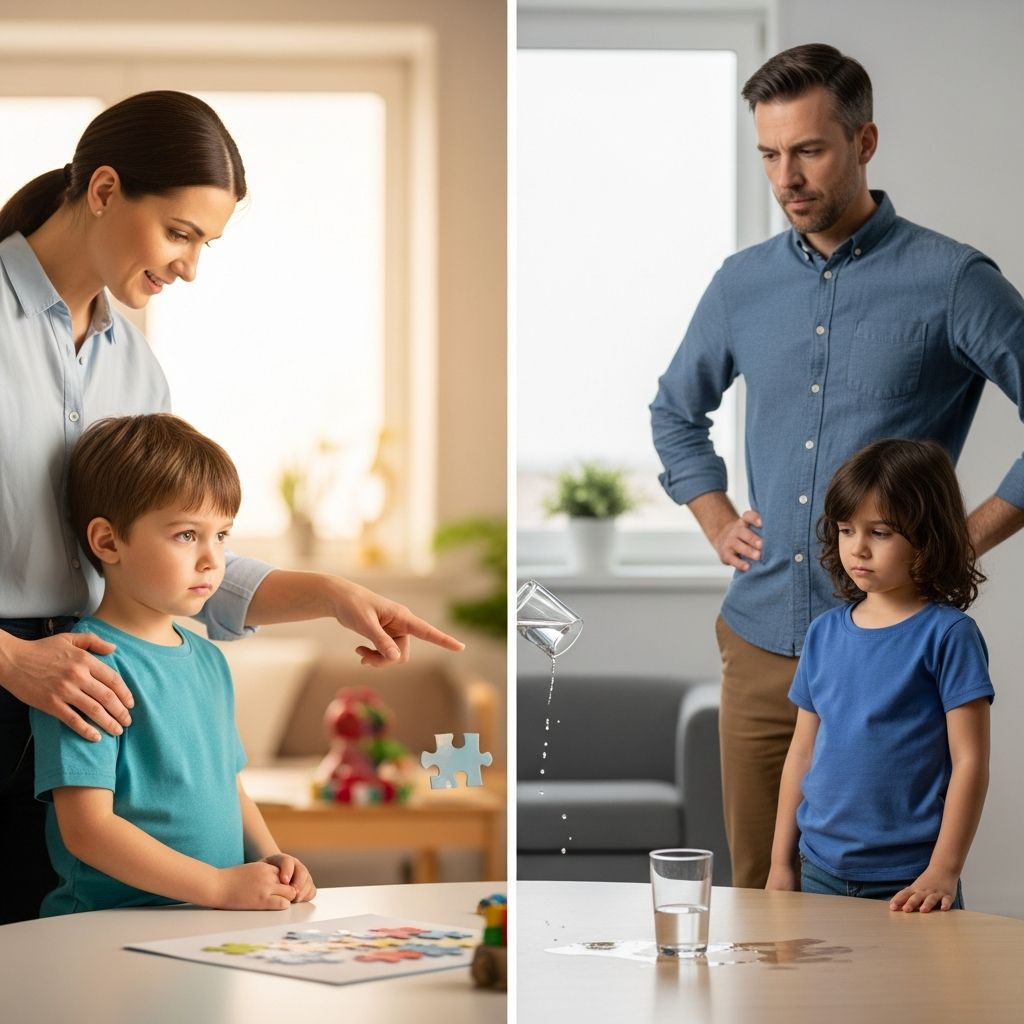
Equally important is how parents speak to children during moments of frustration or discipline. Harsh language creates shame and defensive reactions, whereas calm correction with explanation teaches problem-solving. Over time, children internalize the tone and style of parental communication as their internal dialogue. A child whose parent says “I notice you’re struggling with this. Let’s figure it out together” develops an internal voice that approaches challenges with curiosity rather than defeat.
Building Emotional Intelligence Through Acknowledgment
Children arrive in the world with the full spectrum of human emotions but lack the vocabulary and frameworks to understand their experiences. Parents who label emotions—”You seem frustrated,” “That made you angry”—provide children with essential tools for emotional regulation. When children can name their feelings, they begin to gain agency over them rather than being overwhelmed by their intensity.
Validating emotions does not mean permitting harmful behaviors. A parent might say, “I see you’re very angry, and anger is a valid feeling. We don’t hit, but we can punch this pillow or tell me about what upset you.” This approach honors the child’s emotional experience while establishing behavioral boundaries. Over time, children develop the capacity to experience intense emotions without being controlled by them—a skill that benefits them throughout their lives.
The Responsibility of Planting Seeds
Parenting resembles gardening in fundamental ways. A gardener prepares soil, plants seeds, provides water and sunlight, and removes obstacles to growth—but the gardener does not force the seed to grow. Similarly, parents create conditions conducive to their children’s development but cannot control the specific directions that development takes.
This distinction brings both relief and responsibility. Parents are not responsible for engineering their children into predetermined outcomes, yet they remain accountable for providing nourishment, safety, and appropriate boundaries. The goal is not to create a miniature version of the parent but to help children develop into their fullest, most authentic selves—even when those selves surprise or diverge from parental expectations.
Celebrating Growth in Both Parent and Child
The parenting relationship is fundamentally reciprocal. Children learn from parents, but parents also undergo profound transformation through the parenting experience. A parent might discover patience they didn’t know they possessed, or confront patterns inherited from their own childhood that they choose not to perpetuate.
Recognizing parental growth alongside child development creates a healthier dynamic. Parents who view themselves as works in progress rather than finished products model continuous learning and adaptation. This mutual growth transforms parenting from a performance where parents must be perfect into a shared journey where both parent and child develop new capacities and understanding.
The Intersection of Love and Limits
Effective parenting requires balancing unconditional love with consistent boundaries. Boundaries protect children by establishing clear expectations and consequences. When parents enforce limits inconsistently or harshly, children experience confusion rather than security. Conversely, when parents offer love without any structure or expectations, children lack the guidance necessary for healthy development.
The integration occurs when parents communicate: “I love you completely and unconditionally. Because I love you, I will not permit behaviors that harm you or others. My boundaries exist because you matter to me.” This message teaches children that love and accountability coexist, preparing them for relationships and societies that also require both.
Teaching Children to Value Effort Over Outcome
In achievement-focused societies, parents often inadvertently emphasize results over process. A child who scores well on a test receives praise, while a child who studies diligently but scores lower receives disappointment. This emphasis creates children who fear failure and avoid challenges that might reveal limitations.
Reframing success to include effort, persistence, and growth regardless of outcome protects children’s intrinsic motivation. Praising a child’s process—”I noticed you tried three different strategies before solving that problem”—builds confidence and resilience. Children learn that effort matters more than innate ability, which paradoxically enables them to achieve more because they persist through difficulty.
Creating Space for Children’s Autonomy
One of parenting’s central paradoxes is that the goal is to make oneself progressively less necessary. Parents who recognize this paradox create increasing opportunities for children to make decisions, experience natural consequences, and develop competence. A young child might choose their outfit despite fashion clashing. A teenager might decide how to spend free time within safety parameters. These choices, however small, build the decision-making capacity children need as adults.
The gift of allowing children to navigate life on their own terms, within appropriate boundaries, is that they develop genuine self-confidence. They understand themselves as capable agents rather than people who succeed only because parents orchestrate their lives.
Frequently Asked Questions About Parenting Guidance
Q: How can parents balance unconditional love with necessary discipline?
A: Unconditional love means loving the child as a person while clearly disapproving of harmful behaviors. Parents can separate the child from the behavior by saying, “I love you, and this behavior isn’t acceptable because…” This maintains the relationship while establishing necessary boundaries.
Q: What should parents do when they make mistakes?
A: Acknowledging mistakes and apologizing sincerely teaches children that imperfection is human and that repair is always possible. A simple statement like, “I was wrong to speak to you that way. I’m sorry, and here’s how I’ll handle it differently next time” demonstrates accountability and resilience.
Q: How does parental presence impact long-term child development?
A: Consistent, attentive presence during childhood creates secure attachment patterns that influence children’s ability to form healthy relationships, manage stress, and develop resilience. The quality and consistency of parental engagement matters more than the quantity of structured activities.
Q: Can parents repair negative patterns they recognize in themselves?
A: Yes. Parents who recognize inherited patterns and consciously choose different approaches model growth and accountability. Children benefit from seeing parents acknowledge, “This is how I was raised, and I’m choosing something different for our family.”
Q: What role does celebrating small victories play in parenting?
A: Recognizing effort, progress, and growth—regardless of whether they result in significant achievements—builds children’s intrinsic motivation and self-confidence. These celebrations need not be elaborate; acknowledging a child’s persistence during difficulty matters profoundly.
Integrating Wisdom Into Daily Parenting
The wisdom accumulated across parenting literature and lived experience of millions of parents offers direction without demanding rigid adherence. Parents work best when they reflect on principles that resonate with their values, adapt them to their family’s unique circumstances, and implement them with flexibility rather than perfectionism.
Reading, discussing, and contemplating parenting wisdom creates space for parents to clarify their values and approach challenges with intention rather than impulse. When difficult moments arise—and they inevitably will—parents who have previously considered their principles can return to them as anchors during turbulent times.
The Lasting Legacy Parents Create
The influence parents exert extends far beyond childhood. Adult children carry forward the emotional patterns, communication styles, and approaches to problem-solving they learned at home. Parents who invested in presence, modeled growth, and offered unconditional love create ripples that affect generations, influencing not only their children but also how those children parent their own families.
Understanding parenting as a legacy-creating endeavor rather than a task to complete brings both humility and empowerment. Parents cannot control all outcomes, but they can intentionally shape the emotional and relational environment in which their children develop. This realization transforms parenting from an anxiety-producing performance into a meaningful contribution to the world.
References
- The Whole-Brain Child: 12 Revolutionary Strategies to Nurture Your Child’s Developing Mind — Daniel J. Siegel and Tina Payne Bryson. Bantam Dell, 2011. https://www.drsiegel.com/books/whole-brain-child/
- The Book of Parenting Wisdom: Classic and Timeless Advice — Editors of Parenting Magazine. Hyperion, 2002. https://www.parentingmagazine.com
- Unconditional Parenting: Moving from Rewards and Punishments to Love and Logic — Alfie Kohn. Atria Books, 2005. https://www.alfiekohn.org
- The Conscious Parent: Transforming Ourselves, Empowering Our Children — Shefali Tsabary. Bantam, 2010. https://www.drshefali.com
- Emotional Intelligence in Children: Guidelines for Parents and Teachers — American Psychological Association. https://www.apa.org/science/about/psa/emotional-intelligence