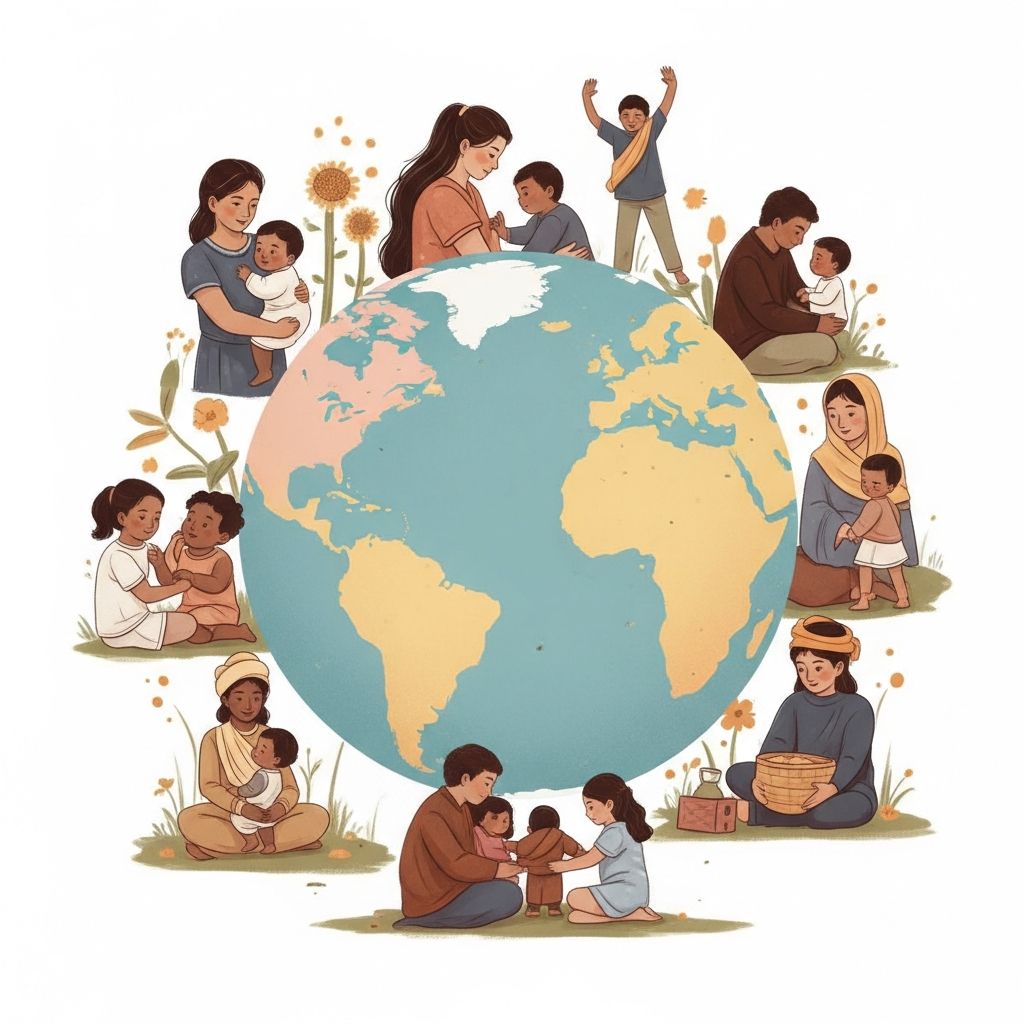
Across the world, families share a common goal: to raise children who are healthy, kind, and capable. Yet the ways parents try to reach that goal can look dramatically different from one culture to another. What seems unusual or even controversial in one place may be completely ordinary somewhere else.
This article explores a range of parenting traditions from different cultures—not as curiosities to copy blindly, but as thoughtful practices shaped by history, environment, and deeply held values. By looking beyond our own backyard, parents can gain fresh ideas, challenge assumptions, and build a more flexible and compassionate approach to raising children.
Why Parenting Looks So Different Around the World
Parenting traditions do not arise by accident. They grow out of what each society believes children need to become successful adults, and from the realities of daily life—work patterns, housing, safety, climate, and access to extended family.
- Values drive practices: Cultures that emphasize individual achievement often focus on independence and personal choice, while those that center on community may highlight obedience, respect, and interdependence.
- Environments shape routines: Weather, urban versus rural living, and economic conditions all influence sleep arrangements, play, and how much freedom children have.
- Traditions preserve identity: Many parenting habits—songs, celebrations, caregiving roles—carry stories from older generations and help children feel rooted in a cultural narrative.
There is no single “correct” way to parent. Around the globe, very different approaches can still produce emotionally secure and competent children when they are consistent with a family’s values and community norms.
Shared Sleep and Nighttime Closeness
In many societies, it is common for babies and young children to sleep in close proximity to their parents, sometimes in the same bed, sometimes on a shared mat or in a sidecar crib. The main goal is often emotional and physical closeness rather than strict adherence to independent sleep.
Parents who practice shared sleep usually describe benefits such as:
- Easier nighttime feeding, especially for breastfeeding mothers.
- A stronger sense of security for the child, who can quickly seek comfort after a bad dream or sudden wake-up.
- More flexible use of limited space in homes where several family members share one room.
At the same time, concerns about safety and sleep quality matter. Families who are interested in closer sleep arrangements often adapt them by creating separate but nearby spaces, following safe-sleep guidelines, and adjusting as children grow older and seek more privacy.
Community Care: When the Whole Village Parents
In some cultures, parenting is seen not as the sole responsibility of two adults but as a shared task involving grandparents, aunts, uncles, older siblings, and neighbors. Children may move fluidly between homes, spend long stretches with extended family, or view multiple adults as caregivers and authority figures.
Key features of community-based care include:
- Multiple attachment figures: Children form close bonds with several adults, which can create a broad support system.
- Early social responsibility: Older children often help watch or entertain younger ones, building empathy and leadership skills.
- Embedded cultural learning: Stories, songs, rituals, and customs are passed down naturally through frequent contact with elders.
In contrast, many modern urban families describe feeling isolated, with only two adults carrying most of the emotional and practical load. Intentionally building “chosen villages” through friends, relatives, and community programs can bring some of these benefits into contemporary life.
Encouraging Independence from an Early Age
While some parents prioritize constant supervision, others give children more room to explore the world with modest oversight. In certain cultures, it is normal for school-age children to walk to school with peers, use public transportation, or run small errands alone.
This early independence is rarely reckless. It usually rests on:
- Well-established community norms about looking out for children in public spaces.
- Clear rules set by parents—such as known routes, check-in times, and safe adults to approach if needed.
- Gradual skill-building, starting with small tasks and expanding as the child demonstrates readiness.
Parents who want to nurture confidence and self-reliance can borrow the spirit, if not the exact form, of these practices: allowing kids to make age-appropriate choices, take manageable risks, and contribute meaningfully to family life.
Family Time and Flexible Schedules
Not all cultures insist on early bedtimes and tightly structured evenings. In some places, children routinely join adults for late family meals, social gatherings, and neighborhood events. The priority is shared time and connection, even if it means adjusting sleep schedules.
For these families, late evenings can offer:
- Regular opportunities for extended family to bond, especially when adults work during the day.
- Inclusion of children in meaningful conversations and rituals rather than sending them away to bed.
- A sense of belonging in community spaces that remain lively after dark.
Parents who prefer earlier bedtimes can still take inspiration from this emphasis on shared rituals. Weekly game nights, family dinners without screens, or weekend gatherings with friends can recreate some of that feeling of togetherness without sacrificing sleep routines that work for their household.
Discipline, Respect, and Warmth
Across cultures, parents all need ways to guide children’s behavior and set boundaries. However, what counts as “firm” or “gentle” discipline differs widely. Some parenting traditions emphasize obedience and respect for elders; others focus on negotiation, explanation, and collaboration.
| Primary Focus | Typical Parent Behaviors | Possible Child Outcomes |
|---|---|---|
| Obedience and hierarchy | Clear rules, strong adult authority, emphasis on manners and deference. | Children may show high respect for elders and strong self-control, but sometimes share less openly about emotions. |
| Negotiation and autonomy | Two-way discussions, explanations for rules, involvement in decision-making. | Children may become comfortable voicing opinions and asking questions, though rules can feel less absolute. |
| Community reputation | Appeals to family honor, social expectations, and community feedback. | Children often develop a strong sense of responsibility toward the group and concern for how actions affect others. |
Even when styles differ, many parents across cultures balance structure with warmth. Affection can be expressed through hugs, shared meals, educational support, storytelling, or acts of service rather than through words alone. The critical ingredient is that children feel both loved and guided.
Chores, Contribution, and Responsibility
In numerous communities, children are expected to contribute to household work from an early age. Tasks might include helping in the fields, caring for younger siblings, assisting with cooking, or managing simple errands. Rather than being treated as punishment, these duties are seen as preparation for adulthood and an affirmation that the child is capable.
Parents who embrace this approach tend to:
- Assign real, meaningful tasks rather than token jobs that do not matter.
- Avoid paying for every chore, framing contribution as part of belonging to a family.
- Offer guidance at the beginning, then gradually step back as the child becomes more competent.
In families where chores have become a source of conflict, reframing them as opportunities for skill-building and teamwork—not just obligations—can improve cooperation and pride.
Play, Exploration, and Outdoor Life
Some parenting traditions strongly emphasize outdoor play and physical exploration, even in cold or rainy weather. Children may nap outside in prams, play in forests, or attend nature-based preschools designed around open-air activities.
Common features of these approaches include:
- Trust that fresh air and active play support health and resilience.
- A belief that “there is no bad weather, only unsuitable clothing,” leading to investments in layers, boots, and rain gear.
- Valuing unstructured play as essential for creativity and problem-solving, not a luxury to be squeezed in around academic work.
Families living in dense cities or hot climates may not be able to copy these models directly, but can still carve out regular time for parks, walks, and free exploration that suits their environment.
Food, Mealtimes, and Teaching Taste
Different cultures use food and mealtimes as a powerful parenting tool. Some families encourage children to eat the same dishes as adults from an early age, introducing a wide variety of flavors and textures. Others maintain strong rules about table manners, participation in family meals, or finishing certain portions of food.
These practices commonly aim to:
- Help children develop flexible and adventurous eating habits.
- Turn mealtimes into daily rituals of connection, conversation, and storytelling.
- Pass down traditional recipes and culinary techniques as symbols of cultural identity.
Parents who struggle with picky eating can draw on these ideas by serving family-style meals, involving kids in cooking, and treating new foods as curiosities to explore rather than battles to win.
Education, Achievement, and Pressure
Approaches to academic success vary enormously. In some settings, parents pour energy into tutoring, extra classes, and structured study time from a young age. In others, play and social development are given more room in early childhood, with formal academics introduced later.
Different educational emphases can lead to:
- Strong discipline and persistence when school performance is central to family hopes.
- Reduced stress and more balanced development when play and downtime are protected.
- Hybrid models that mix high expectations with emotional support and realistic limits.
For modern parents, the key question is not whether to care about education—most do—but how to support learning without sacrificing mental health, creativity, or family relationships.
Blending Traditions in Multicultural Families
Many families today span more than one culture, whether through migration, intermarriage, or adoption of new ideas. Parents may find themselves navigating conflicting expectations about sleep, discipline, language, or schooling. This can be stressful, but it also opens the door to rich, blended traditions.
Helpful strategies for multicultural parenting include:
- Discussing which values are most important—such as kindness, resilience, or respect—and choosing practices that support those priorities.
- Creating new family rituals that draw from each background, like combining holiday customs or rotating storytelling traditions.
- Talking openly with children about their mixed heritage so they understand and feel proud of all parts of their identity.
When parents treat cultural differences as a resource to explore rather than a problem to solve, children often gain a broader, more flexible worldview.
How to Respectfully Learn from Other Cultures
Exploring global parenting traditions can spark fresh thinking, but it also calls for humility. What works well in one cultural context may feel out of place or lose its meaning when transplanted without understanding. Respectful learning involves more than simply collecting techniques.
Consider these guidelines:
- Seek understanding before imitation: Learn the history, values, and community structures that support a practice before trying to adapt it.
- Avoid stereotypes: No culture is monolithic; families within any society parent in diverse ways.
- Adapt thoughtfully: Use other traditions as inspiration to revise your own routines, rather than as standards you must meet exactly.
Ultimately, the goal is not to collect exotic habits, but to widen the range of tools and perspectives available as you navigate your own family’s needs.
Practical Ideas You Can Try at Home
Drawing inspiration from global traditions, here are small, concrete experiments parents can consider. The right mix will look different for every household.
- Introduce one shared family meal each day, free from screens, where everyone—adults and children—talks about their day.
- Assign one recurring household responsibility to each child that genuinely helps the family, such as setting the table, watering plants, or sorting laundry.
- Schedule weekly outdoor time, regardless of perfect weather, for unstructured play, exploring, or simple walks together.
- Create a “village” by trading occasional childcare with trusted friends or neighbors, or inviting grandparents into weekly routines via visits or video calls.
- Offer age-appropriate independence, such as letting older children navigate a familiar route while you follow at a distance, or handle small purchases at a shop.
Small changes, practiced consistently, can shift the tone of family life and give children a stronger sense of belonging, capability, and connection.
FAQs About Parenting Traditions from Different Cultures
Is it safe to adopt parenting practices from other cultures?
Safety and child well-being must always come first. If a practice raises questions about health, emotional harm, or local laws, it is important to consult trusted professionals and consider your specific environment. Focus on adapting underlying principles—such as connection, responsibility, or independence—rather than copying every detail.
How can parents avoid disrespecting other cultures when borrowing ideas?
Respect begins with learning. When a tradition interests you, look for voices from that culture explaining its meaning and context. Acknowledge where the idea came from, avoid making jokes or stereotypes, and be open to adjusting your approach if members of that culture share concerns.
What if my family disagrees about which traditions to follow?
Disagreement is common, especially in multicultural households or when grandparents are very involved. Instead of arguing about single rules, try discussing the values behind them—safety, respect, academic success, or emotional openness. Once you agree on what matters most, it becomes easier to design practical routines you can all support.
Can very different parenting styles still raise healthy children?
Research suggests that children can thrive under a wide range of parenting styles when three ingredients are present: consistent care, emotional warmth, and reasonably predictable boundaries. Even when specific practices differ, these core elements create a sense of security that supports healthy development.
How do I know if a new practice is working for my child?
Look beyond short-term resistance. Children often protest changes to routines at first. Over time, ask yourself: Is my child sleeping, eating, and playing reasonably well? Do they seem generally secure and connected? Am I able to sustain this practice without constant stress? Honest reflection, and sometimes guidance from experts, can help you decide what fits your family.