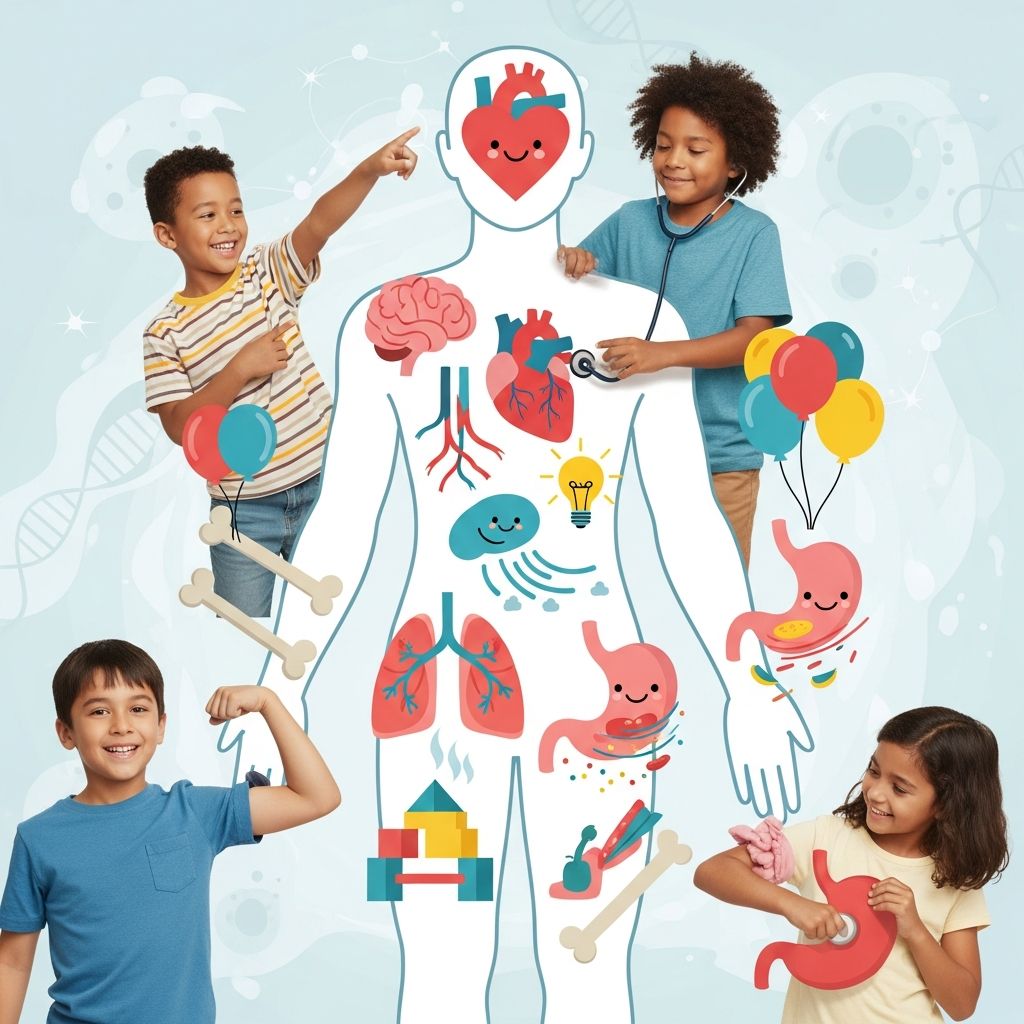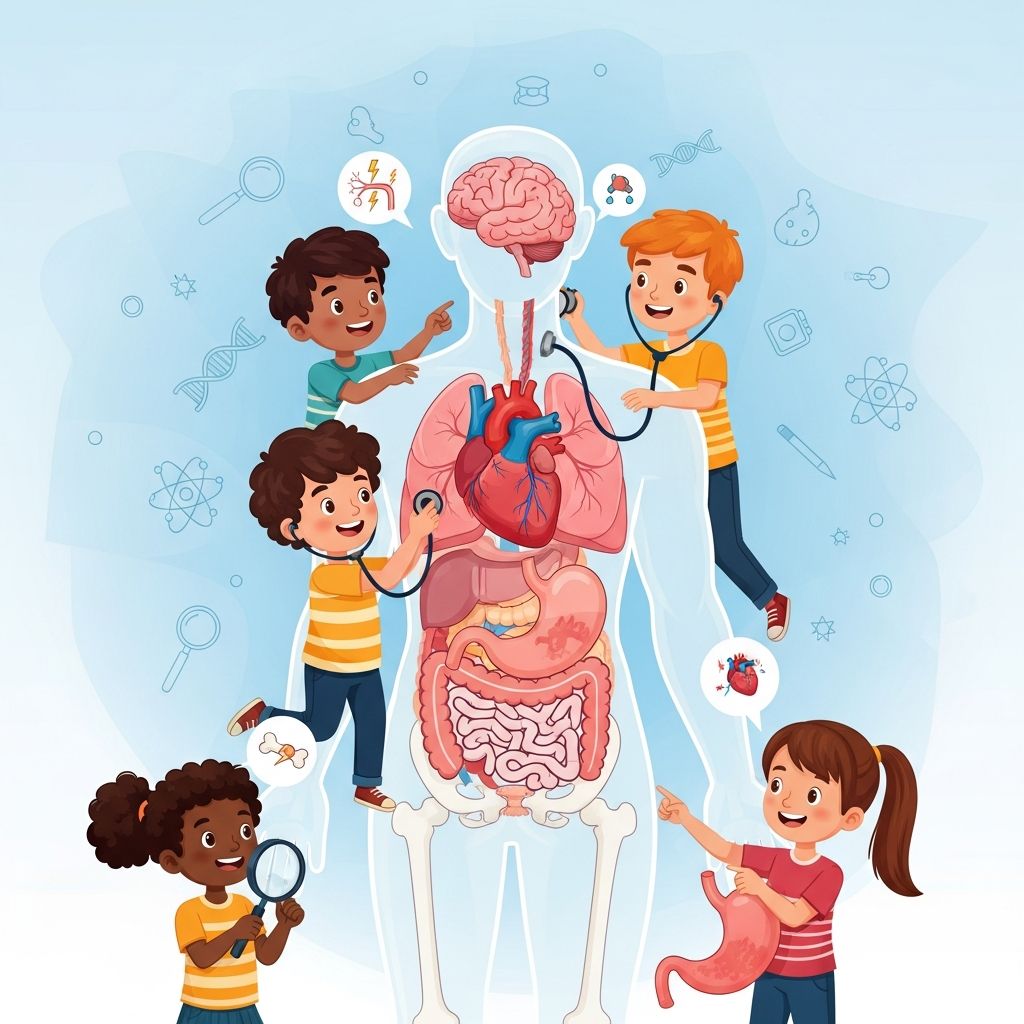
Your body is like a busy city that never sleeps. Every second, tiny parts are working together so you can breathe, think, move, play, learn, and grow. You do not have to tell them what to do—they just know!
Meet the Body: A Living Team
Think of your body as a giant team made of parts that each have special jobs. When every part does its job well, you feel strong, energetic, and ready for fun.
- Cells are the smallest workers. They are like tiny building blocks that make up everything in your body.
- Tissues are groups of similar cells working together, like a team of builders working on one part of a house.
- Organs are big body parts made of different tissues, such as your heart, lungs, and stomach.
- Systems are groups of organs that work together to do big jobs, such as breathing or moving.
All of these levels—cells, tissues, organs, and systems—connect to keep you alive and active.
From Tiny Cells to Full-Body Systems
It is hard to imagine, but your body holds trillions of cells. Each kind of cell has a shape and job that fits what it needs to do. Muscle cells help you move, while nerve cells help you sense the world and send messages.
| Level | What It Is | Easy Example |
|---|---|---|
| Cell | Smallest living part of the body | One brick in a wall |
| Tissue | Group of similar cells | Many bricks forming part of the wall |
| Organ | Body part made of several tissues | The wall itself, built from many parts |
| System | Group of organs doing a big job | The whole house that you can live in |
Once you understand these levels, it is easier to learn how big body systems work together like departments in a busy city.
Your Protective Shell: Skin, Hair, and Nails
The outside of your body is not just for looks. Your skin, hair, and nails form a protective layer that keeps your insides safe from germs, dirt, and sudden changes in temperature.
- Skin works like a flexible shield that keeps germs out and helps you feel touch, heat, cold, and pain.
- Hair helps protect your scalp from the sun and keeps tiny bits of dust out of your nose and eyes.
- Nails guard the tips of your fingers and toes so you can pick things up, scratch, and perform delicate tasks.
When you wash, dry, and protect your skin, you are taking care of one of the largest organs you have.
The Body’s Framework: Bones and Joints
Under your skin is a powerful frame made of bones called the skeleton. Without bones, you would not be able to stand, sit, or even hold up your head.
- Your skull keeps your brain safe.
- Your rib cage surrounds your heart and lungs like a strong cage.
- Your spine helps you stand straight and protects your spinal cord.
Joints are where two or more bones meet and allow movement. Some joints bend like a door hinge, while others roll or twist for smoother motion.
Move It, Move It: Muscles in Action
More than 600 muscles are attached to your bones, helping you run, jump, smile, and even blink. Muscles work by tightening and relaxing, which pulls on your bones to create motion.
- Skeletal muscles connect to bones and help you move on purpose, like when you wave or kick a ball.
- Heart muscle works nonstop to pump blood.
- Smooth muscles are found in places like your stomach and blood vessels, quietly doing their jobs without you noticing.
Muscles get stronger when you use them, which is why regular play and exercise are so important.
The Control Center: Brain and Nerves
Your nervous system is your body’s communication network. It helps you react quickly when something happens, like pulling your hand away from something hot.
- The brain is the boss. It stores memories, makes decisions, and controls thoughts, movements, and feelings.
- The spinal cord is a thick bundle of nerves that carries messages between your brain and the rest of your body.
- Nerves spread out everywhere like tiny wires, sending signals in fractions of a second.
Every time you speak, catch a ball, or solve a puzzle, your nervous system is working hard behind the scenes.
Breathing Power: Lungs and the Respiratory System
Breathing may feel simple, but it is one of the most important things you do. Every breath brings oxygen into your body and removes carbon dioxide, a gas your body does not need.
- Air enters through your nose or mouth, passes down your windpipe, and travels into your lungs.
- Inside the lungs are millions of tiny air sacs where oxygen moves into your blood.
- When you breathe out, your body gets rid of carbon dioxide and other gases.
Deep breathing during exercise helps deliver more oxygen to your muscles so you can play longer without getting as tired.
On the Road: Heart, Blood, and Blood Vessels
Your circulatory system is like a highway system made of blood vessels, with your heart as the powerful pump at the center. Blood carries oxygen, nutrients, and other important substances to every part of your body.
- The heart squeezes and relaxes, sending blood out to your body and then pulling it back in again.
- Arteries carry blood away from the heart, full of oxygen.
- Veins bring blood back to the heart after the oxygen has been used.
- Capillaries are tiny vessels where oxygen and nutrients move into cells.
Every beat of your heart keeps this travel system running so your cells stay fed and clean.
Food to Fuel: Your Digestive Journey
Whenever you eat, your digestive system turns food into energy and building materials your body can use. This journey is long and busy, even though you rarely notice it happening.
- Food enters your mouth, where your teeth break it into pieces and saliva starts to soften it.
- It then moves down your esophagus, a tube that pushes food into your stomach.
- In the stomach, strong juices and squeezing muscles turn food into a thick liquid.
- The small intestine absorbs most of the nutrients into your blood.
- The large intestine takes out water and forms solid waste, which eventually leaves your body.
Organs like the liver and pancreas also join in by making special juices that help break food down even more.
Cleaning Crew: Waste and Water Balance
Your body has to remove waste so you stay healthy. The systems that do this are like a cleaning crew that works all day and night.
- Your kidneys filter your blood and remove extra water and wastes, which leave the body as urine.
- Your skin helps by making sweat, which cools you down and carries out some waste.
- Your lungs get rid of carbon dioxide every time you breathe out.
Drinking enough water helps these body systems do their jobs well.
Body Guards: How Your Immune System Protects You
Germs are tiny living things that can make you sick, but you have a powerful defender: your immune system. It helps you fight off invaders and remember them for next time.
- White blood cells search for germs and attack them.
- Lymph nodes are small filters that trap germs and help immune cells gather.
- Organs like the spleen and tonsils also help find and fight germs.
Healthy habits, like washing your hands and getting enough sleep, help your immune system stay ready for action.
Growing, Changing, and Staying in Balance
Your body is always changing. The endocrine system, which includes glands that make hormones, helps control growth, energy, and many other processes.
- Hormones are chemical messengers that travel through your blood and tell organs what to do.
- Some hormones help you grow taller, while others manage how you use the food you eat.
- Many hormones help your body stay in balance, keeping temperature, sugar levels, and water amounts just right.
As you get older, hormone levels change, which is one reason your body shape and feelings can change too.
How Body Systems Work Together
No system in your body works alone. They are all connected and depend on each other every minute.
| Activity | Systems Involved | What They Do |
|---|---|---|
| Running in a race | Muscular, skeletal, circulatory, respiratory, nervous | Muscles pull on bones, heart and lungs deliver oxygen, nerves coordinate movement. |
| Eating lunch | Digestive, circulatory, muscular, nervous | Digestive system breaks food down, blood carries nutrients, muscles chew and swallow, nerves control actions. |
| Fighting a cold | Immune, circulatory, respiratory | Immune cells attack germs, blood moves them around, lungs clear out mucus and germs. |
When you care for one system, you often help several others at the same time.
Easy Habits to Keep Your Body Strong
You can do many simple things every day to help your body systems stay strong and healthy. Healthy choices make it easier for your body to do all its jobs.
- Eat a variety of foods: Include fruits, vegetables, grains, and proteins to give your body a mix of nutrients.
- Drink water: Your cells, blood, and kidneys all need water to work well.
- Move your body: Active play, sports, and walking help your heart, lungs, and muscles.
- Sleep enough: Your brain and body repair and grow while you sleep.
- Keep clean: Washing hands, bathing, and brushing teeth protect your skin, mouth, and immune system.
- Stay safe: Wearing helmets, seat belts, and protective gear keeps your bones, brain, and skin safer.
Small daily habits add up, helping you feel better now and as you grow older.
Frequently Asked Questions About the Human Body
Why does my heart beat faster when I exercise? When you run or play, your muscles use more energy and need more oxygen. Your heart beats faster to send extra oxygen-rich blood to your working muscles so they can keep moving. How many bones do kids have? Kids usually have more than 200 bones. As you grow, some of these bones slowly fuse together, so adults end up with fewer bones than children do. Why do I breathe harder after running? Your body needs more oxygen during exercise and has extra carbon dioxide to get rid of. Breathing faster and deeper brings in more oxygen and helps your body release more carbon dioxide. What happens to food after I swallow it? After you swallow, muscles push food down into your stomach, where it is mixed and broken into smaller pieces. Then it moves through your intestines, where nutrients are absorbed into your blood and wastes are removed. How can I help my immune system? You can help your immune system by washing your hands often, eating a variety of healthy foods, sleeping enough, staying active, and avoiding touching your face with unwashed hands.
Appreciating Your One-and-Only Body
Your body works hard for you every moment you are alive. Even when you are resting or sleeping, your heart pumps, your lungs breathe, and your brain keeps track of everything.
Learning how your body works helps you understand why healthy choices matter. The more you care for your amazing body now, the more it can support you in everything you want to do.