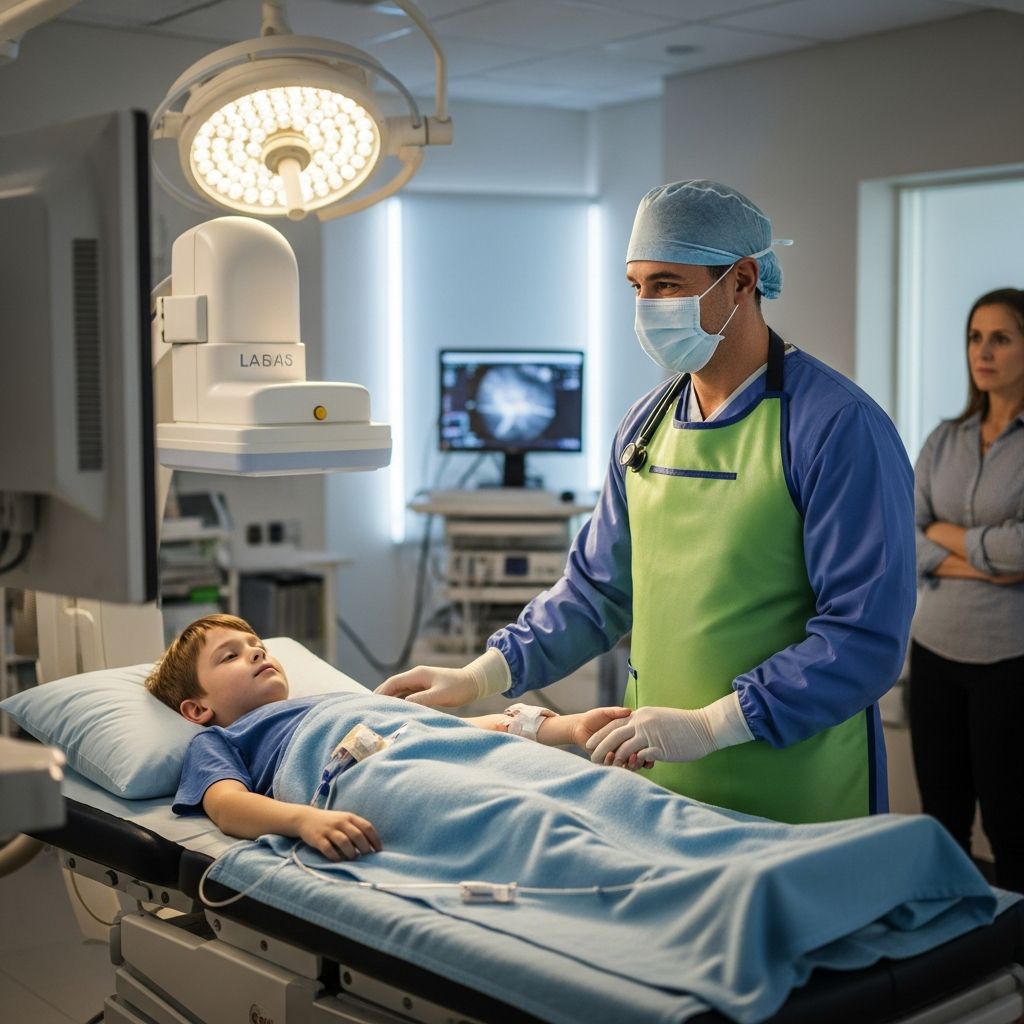
When a child needs a medical procedure, every parent wants the safest, least painful option. Interventional radiology offers many children exactly that: targeted treatments using small instruments and live imaging instead of large incisions and traditional surgery.
What Is Interventional Radiology in Children?
Interventional radiology (IR) is a medical specialty where doctors use imaging tools, such as ultrasound, X-ray, CT, or MRI, to guide tiny instruments inside the body to diagnose or treat health problems. Instead of opening an area with a large cut, the doctor usually works through a pin-sized opening in the skin.
In children, these image-guided procedures are carefully adapted to smaller bodies and growing organs. The goal is to solve or improve a medical problem while reducing pain, scarring, and recovery time.
- “Interventional” refers to doing something active, such as treating a blood vessel or draining an infection.
- “Radiology” refers to using imaging to see inside the body and safely guide the treatment.
How Interventional Radiology Differs from Traditional Surgery
For many conditions, interventional radiology offers an alternative to open surgery. The choice depends on your child’s diagnosis, overall health, and the options available at your hospital.
| Feature | Interventional Radiology | Traditional Surgery |
|---|---|---|
| Incision size | Tiny skin opening, often just a needle puncture | Larger cut to directly expose organs or tissues |
| Imaging | Real-time imaging guides tools inside the body | Surgeon sees organs directly in the operating room |
| Pain and discomfort | Often less pain and soreness after the procedure | Usually more soreness because of larger incision |
| Hospital stay | Many procedures done same-day or with brief stay | May require a longer hospital stay for recovery |
| Scarring | Small mark or no easily visible scar | More noticeable scar at the incision site |
Who Is Involved in Your Child’s Care?
Pediatric interventional radiology is a team effort. Knowing who is caring for your child helps you feel more confident and prepared.
- Pediatric interventional radiologist: The physician who plans and performs the procedure using imaging guidance.
- Anesthesiologist or sedation specialist: The doctor or advanced practitioner who keeps your child comfortable and safe during the procedure.
- Nurses: They check vital signs, provide medications, explain each step, and support your child before, during, and after the procedure.
- Technologists: Staff who operate the imaging equipment and help position your child for accurate, safe images.
- Child life specialists (if available): Professionals who use play, explanations, and distraction to reduce fear and help children cope.
Common Reasons a Child May Need Interventional Radiology
Interventional radiology is used to manage many different conditions in infants, children, and teenagers. Some procedures are performed as part of a planned treatment, while others are done urgently.
- Placing tubes or lines for medications, nutrition, or blood draws.
- Draining abscesses or fluid collections caused by infection, injury, or surgery.
- Treating certain blood vessel problems, such as abnormal connections or areas of bleeding.
- Taking tissue samples (biopsies) to help diagnose cancers or other diseases.
- Opening blocked ducts or vessels, sometimes using balloons or tiny stents.
Your child’s doctor will explain exactly why an interventional radiology procedure is being recommended instead of, or in addition to, other treatments.
Examples of Pediatric Interventional Radiology Procedures
Not every child will need the same type of procedure. The following examples show how image-guided techniques are used in everyday pediatric care.
- Central line placement: A thin tube is guided into a large vein for long-term medications, such as chemotherapy, or for repeated blood draws.
- Feeding tube placement: A tube may be placed through the skin into the stomach or small intestine to provide nutrition when a child cannot eat enough by mouth.
- Drainage of abscess or fluid: Using ultrasound or CT, the doctor places a small tube into a pocket of infected fluid so it can drain out over several days.
- Embolization: Tiny particles or coils are used to block a blood vessel that is causing bleeding or feeding an abnormal growth.
- Balloon angioplasty or stent placement: A balloon is used to widen a narrowed blood vessel; in some cases, a small metal mesh tube (stent) stays in place to keep it open.
- Targeted tumor therapies: For certain cancers, treatment can be delivered directly into the blood vessels feeding a tumor, which may limit side effects to the rest of the body.
Imaging Tools Used During Procedures
To guide instruments safely, the interventional radiologist uses imaging during the entire procedure. Different tools are chosen based on what part of the body is being treated and your child’s specific needs.
- Ultrasound: Uses sound waves, not radiation, to create moving images. Commonly used to guide needles and catheters in the abdomen, neck, or soft tissues.
- X-ray and fluoroscopy: Provide live images of bones, certain organs, and contrast dye moving through blood vessels or tubes.
- CT scan: Produces detailed cross-sectional images that are helpful for deep structures or complex anatomy.
- MRI: Uses magnets and radio waves; in some centers, MRI guidance is used for specialized procedures where radiation avoidance is especially important.
The team carefully balances image quality with the lowest possible radiation exposure, especially for babies and younger children.
Benefits of Interventional Radiology for Children
Parents often focus first on the potential risks, but there are many advantages to using an image-guided approach when it is appropriate.
- Smaller incisions typically mean less pain and faster recovery.
- Shorter hospital stays may help children return to school and routines sooner.
- Real-time imaging helps doctors target the problem area precisely, which can protect healthy tissues.
- Some conditions that once required major surgery can now be managed through tiny openings in the skin.
- In certain cases, interventional radiology provides options when traditional surgery might be too risky.
Understanding Risks and Possible Complications
Like any medical procedure, interventional radiology has risks. These depend on the type of procedure, your child’s age, and overall health. Your child’s doctor will discuss specific concerns during the consent process.
Potential issues may include:
- Bleeding or bruising at the entry site.
- Infection where the skin was punctured or where a tube or line is placed.
- Allergic reactions to contrast dye or medications.
- Damage to surrounding structures, such as nearby vessels or organs, although this is uncommon.
- Problems related to sedation or anesthesia, such as breathing or heart-rate changes, which are closely monitored.
Most children undergo these procedures without major complications, but it is important to ask all your questions beforehand so you feel prepared.
How Sedation and Anesthesia Keep Children Comfortable
Children may be anxious or unable to stay perfectly still during a procedure, so sedation or anesthesia is often used. The type chosen depends on how long the procedure will last and how complex it is.
- Mild or moderate sedation: Your child is drowsy and relaxed but may still respond to voices or gentle touch.
- Deep sedation: Your child will sleep through the procedure but can breathe on their own with close monitoring.
- General anesthesia: Your child is fully asleep and does not feel or remember the procedure; this is chosen for some longer or more complex treatments.
Before the procedure, the team will review your child’s medical history, allergies, and previous reactions to anesthesia. Vital signs are monitored continuously to keep your child safe.
Preparing Your Child for the Procedure
Good preparation helps reduce fear and lowers the chances of delays or cancellations. Your hospital will provide instructions tailored to your child’s age and the type of procedure.
Medical and Practical Steps
- Follow food and drink (fasting) instructions exactly, including when your child must stop eating solid foods and drinking clear liquids.
- Tell the staff about all medications, vitamins, and herbal products your child takes; some may need to be paused.
- Bring a list of allergies, past surgeries, and any problems with anesthesia in your child or close family members.
- Pack comfort items, such as a favorite blanket, stuffed animal, or small toy.
- Arrange for transportation home, since your child may be sleepy and should not travel alone after sedation.
Emotional Preparation by Age
- Toddlers and preschoolers: Use simple, honest words. Explain that doctors will help fix a problem inside and that you will be nearby.
- School-age children: Give more detail about what to expect, such as special pictures, a tiny straw-like tube, and a “sleepy medicine” if needed.
- Teenagers: Involve them in discussions about risks, benefits, and alternatives. Encourage them to ask questions directly to the medical team.
What Happens on the Day of the Procedure?
While every hospital has its own routine, most visits follow a similar pattern. Knowing the general flow can ease some of your stress.
- Check-in: You arrive at the hospital or outpatient center, complete paperwork, and verify fasting times and medications.
- Pre-procedure area: Nurses check your child’s weight, temperature, pulse, and blood pressure. You may meet the interventional radiologist and anesthesia team, who will review the plan and answer questions.
- Consent: You sign forms indicating that you understand the procedure, its risks, and alternatives.
- Moving to the procedure room: Younger children can often bring a comfort item. You may be able to stay until your child is asleep, depending on hospital policy.
- During the procedure: The team continuously monitors your child. You may wait in a nearby room or family lounge.
- Recovery: After the procedure, your child goes to a recovery area where nurses watch vital signs and comfort level as the sedation wears off.
After the Procedure: Recovery and Home Care
Recovery time depends on the type of procedure and the kind of sedation or anesthesia used. Many children go home the same day, while others may stay overnight for observation.
- Your child may feel sleepy, dizzy, or slightly nauseated as the sedation wears off.
- Mild soreness or bruising around the entry site is common; pain medication may be recommended.
- You will receive instructions about bath time, activity limits, school return, and how to care for any tubes, dressings, or lines.
- Watch for signs of trouble, such as fever, increased redness, swelling, drainage, very bad pain, or difficulty breathing, and call the medical team if any of these appear.
Your child’s doctor might schedule a follow-up visit or imaging study to check that the treatment is working as planned.
Questions to Ask Your Child’s Care Team
Good communication helps you feel confident in your child’s care. Consider writing down questions ahead of time, especially if you are dealing with a new or complex diagnosis.
- Why is this specific interventional radiology procedure recommended for my child?
- What are the expected benefits and how will we know if it works?
- What are the main risks and how often do serious problems occur?
- Will my child be awake, sleepy, or completely asleep during the procedure?
- How long will the procedure and recovery take?
- Are there any alternatives, such as medication alone or traditional surgery?
- How should we prepare at home the day before and the morning of the procedure?
- Who should we call if there are concerns after we return home?
Supporting Your Child Emotionally
Medical procedures can be frightening, even when they are brief and minimally invasive. Your calm presence and honest explanations play a big role in how your child copes.
- Stay honest but reassuring; avoid saying “it won’t hurt at all” if there might be brief discomfort.
- Use books, videos, or play medical kits to help younger kids practice what will happen.
- Encourage your child to bring questions to the team and to choose coping strategies, such as deep breathing, music, or a favorite story.
- Plan something comforting for after the procedure, like extra snuggle time or a low-key activity at home.
Frequently Asked Questions (FAQs)
Is interventional radiology safe for children?
Yes, these procedures are designed with children in mind, using child-sized equipment and careful monitoring. Teams that specialize in pediatric care focus on minimizing risks and using the lowest radiation doses needed to get clear images.
Will my child feel pain?
Most children receive local numbing medicine and some level of sedation or anesthesia, so they should not feel pain during the procedure. Some soreness or discomfort afterward is possible, but the team will discuss pain-control options with you.
How long will my child be in the hospital?
Many procedures are done on an outpatient basis, so your child may go home the same day. More complex treatments or serious health conditions can require an overnight or longer stay for monitoring.
What about radiation exposure?
When X-ray or CT is used, the team follows strict safety guidelines to keep doses as low as reasonably achievable. Whenever possible, ultrasound or MRI, which do not use ionizing radiation, may be chosen instead.
Can I stay with my child?
Policies vary, but many hospitals allow a parent or caregiver to stay during preparation and recovery, and sometimes up to the point when sedation begins. Ask the staff ahead of time so you know what to expect.
What if my child has special needs?
If your child has developmental, behavioral, or medical needs, tell the team early so that extra supports can be arranged. This might include additional time for preparation, specific communication tools, or specialized equipment.
Interventional radiology gives many children access to effective, less invasive treatments that once required major surgery. By learning how these procedures work and how to prepare as a family, you can partner with your child’s medical team to create the safest, most comfortable experience possible.