Social intelligence is the set of skills that helps children understand other people, navigate relationships, and respond wisely in social situations. It draws on both emotional intelligence (awareness of feelings) and interpersonal skills (communication, cooperation, empathy). Research links strong social-emotional skills in childhood with better mental health, academic outcomes, and long-term wellbeing.
This guide offers practical, respectful ways to weave social learning into daily life with your child, from infancy through the school years.
What Social Intelligence Really Means for Kids
Psychologists describe social intelligence as the ability to understand others and to behave effectively in social situations. For children, this looks less like polished manners and more like:
- Recognizing their own feelings and naming them.
- Noticing how other people might feel.
- Communicating needs clearly and respectfully.
- Taking turns, sharing space, and cooperating in play.
- Working through conflicts without hurting others.
| Aspect | What It Looks Like in Everyday Life |
|---|---|
| Self-awareness | A child can say “I’m mad” or “I feel left out” instead of only acting out. |
| Self-regulation | They learn to pause, ask for help, or use a coping strategy instead of hitting or yelling. |
| Empathy | They notice someone is sad and offer comfort or check in. |
| Communication | They use words, eye contact, and listening to express and receive messages. |
| Relationship skills | They can join play, take turns, repair after conflict, and maintain friendships. |
These skills unfold gradually. Large-scale research shows that social-emotional competence in early elementary school predicts higher education and employment rates in adulthood, as well as lower rates of crime and substance use.
Why Connection Comes Before Social Skills
Children learn best when they feel safe, loved, and understood. Supportive relationships help regulate a child’s stress response, making it easier for them to think clearly, cooperate, and practice new skills.
Key foundations you can provide:
- Warm, responsive parenting – Notice your child’s cues, respond consistently, and offer comfort when they are upset.
- Predictable routines – Knowing what to expect lowers anxiety so your child can focus on learning and relating.
- Respectful communication – Speaking to children as worthy partners models the tone you eventually want from them.
When children feel securely attached and emotionally safe, they are more willing to step into new social situations and recover from inevitable bumps in relationships.
Talking With Children So Social Skills Can Grow
The way you speak with your child every day shapes their social understanding. Your language becomes their inner voice and their template for talking to others.
Use Two-Way, Respectful Communication
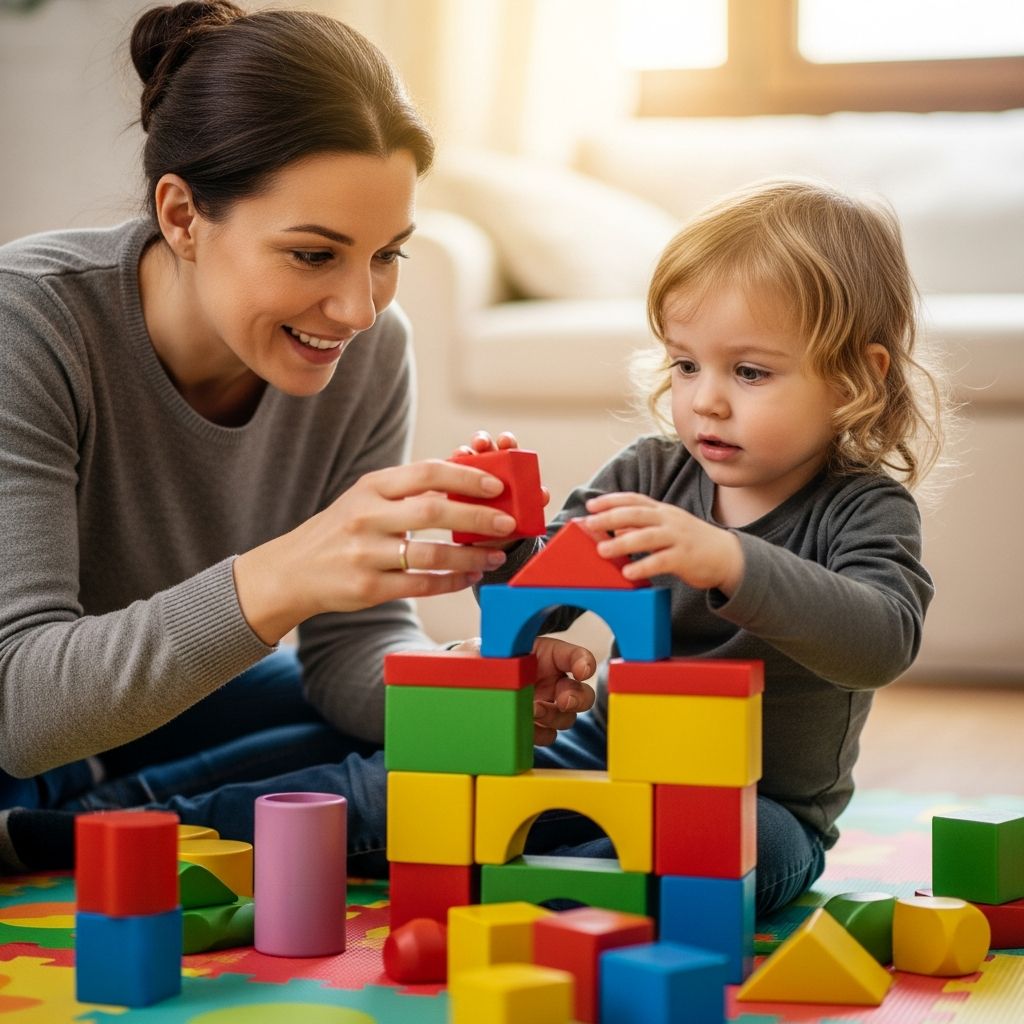
Even babies benefit from back-and-forth interactions. Infants as young as a few months respond differently when adults use contingent, turn-taking talk compared to flat or one-sided speech. Over time, this helps build both language and social awareness.
- Pause for responses – Ask simple questions and wait, even with toddlers: “Ready for your coat?”
- Describe the moment – Narrate what is happening: “You’re reaching for the ball; you really want it.”
- Invite participation – Ask for cooperation instead of ordering: “Can you hold this while I zip?”
Help Them Name Feelings Without Telling Them What They Feel
Emotion vocabulary is strongly associated with better emotion regulation and social problem-solving in young children. You can support this without putting words in your child’s mouth.
- Use tentative language: “You look disappointed. Is that right?”
- Offer choices: “Are you more mad, or more sad?”
- Reflect what you see: “Your fists are tight and your face is scrunched.”
This approach respects your child as the expert on their own inner world while expanding their emotional vocabulary.
Modeling the Social Skills You Want to See
Children are keen observers. They learn far more from what adults do than from what adults say. Studies of family interaction consistently show that parental behavior predicts children’s social strategies with peers.
Show Healthy Ways to Handle Conflict
Disagreements between adults are not automatically harmful; how they are handled matters. When children see caregivers repair after conflict—apologizing, listening, finding compromise—they gain a live demonstration of social problem-solving.
- Use calm, direct language instead of sarcasm or blame.
- Take responsibility for your part: “I spoke sharply; I’m sorry.”
- Verbalize repair: “We were upset, we talked, and now we both feel better.”
Make Empathy Visible
Empathy is partly learned by watching others respond to distress. When parents consistently acknowledge and validate feelings, children become more likely to do the same with peers.
- Notice and name others’ feelings in real life and stories.
- Show concern: “She fell; let’s check if she’s okay.”
- Include your own emotions: “I feel worried when I hear sirens.”
Balancing Authenticity and Kindness
Some discipline methods—such as manipulating with rewards, shaming, or pretending not to be upset—can unintentionally teach children that conflict must be avoided or hidden rather than handled openly. Approaches that emphasize honesty and respect tend to support better long-term social outcomes.
Instead of teaching children to please adults at any cost, you can teach them to be both authentic and considerate:
- Encourage truthful expression: “It’s okay to say you’re angry; it’s not okay to hurt.”
- Allow disagreement as long as it’s respectful.
- Avoid labeling the child (“rude,” “selfish”) and focus on behavior.
Giving Children Real Chances to Practice Social Skills
Like any complex ability, social intelligence develops through repeated practice. Children need many low-stakes opportunities to interact, make mistakes, and try again.
Everyday Situations as Practice Fields
Common settings can become rich learning labs:
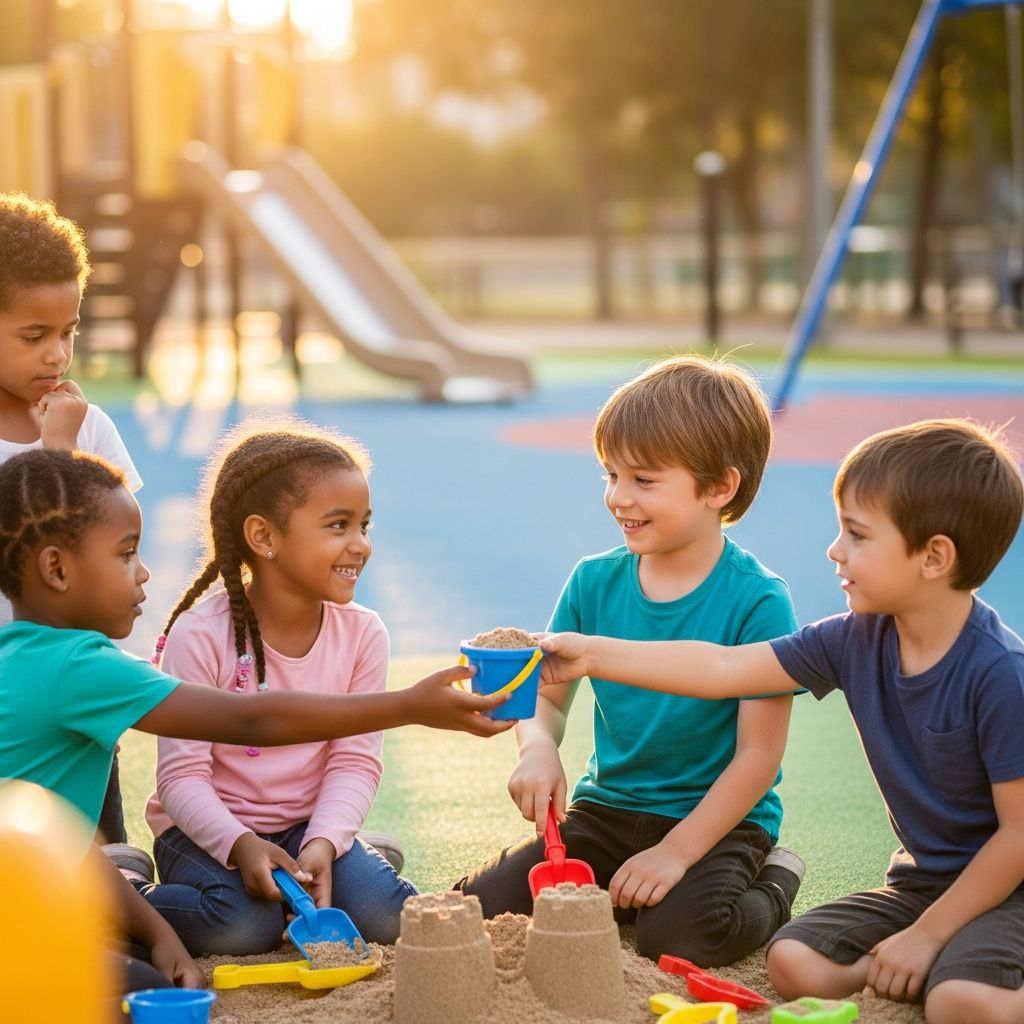
- Playdates and playgrounds – Joining play, negotiating turn-taking, resolving toy disputes.
- Family gatherings – Greeting relatives, handling different personalities and expectations.
- Errands and outings – Ordering food, thanking staff, waiting in line, coping with boredom.
Before new situations, preview what might happen and brainstorm how your child could respond. Afterward, debrief briefly: what went well, what was hard, what they might try next time.
When (and How) to Step In
Adults sometimes intervene too quickly in children’s conflicts, which can prevent kids from experimenting with their own solutions. Observational research suggests that when adults stay nearby but do not immediately solve problems, children often negotiate, trade, or walk away on their own.
A balanced approach:
- Stay close enough to prevent harm and support safety.
- Block hurtful behavior calmly: “I won’t let you hit.”
- Describe the situation instead of judging: “You both want the same truck.”
- Invite solutions: “What can we do so everyone is okay?”
Teaching Core Social Skills Explicitly
While much social learning is informal, some skills benefit from direct teaching and practice. This is particularly helpful for children who are shy, impulsive, or neurodivergent.
Foundational Skills to Practice
- Starting interactions – Saying “Hi,” using the person’s name, asking to join a game.
- Taking turns – Using timers, verbal cues (“my turn, your turn”), and games that require turn-taking.
- Listening – Looking toward the speaker, not interrupting, reflecting back (“So you mean…”).
- Asking for help – Using words when overwhelmed: “I need a break,” “Please help me.”
- Apologizing and repairing – Saying “I’m sorry I grabbed” and offering to make it right.
Using Stories and Role-Play
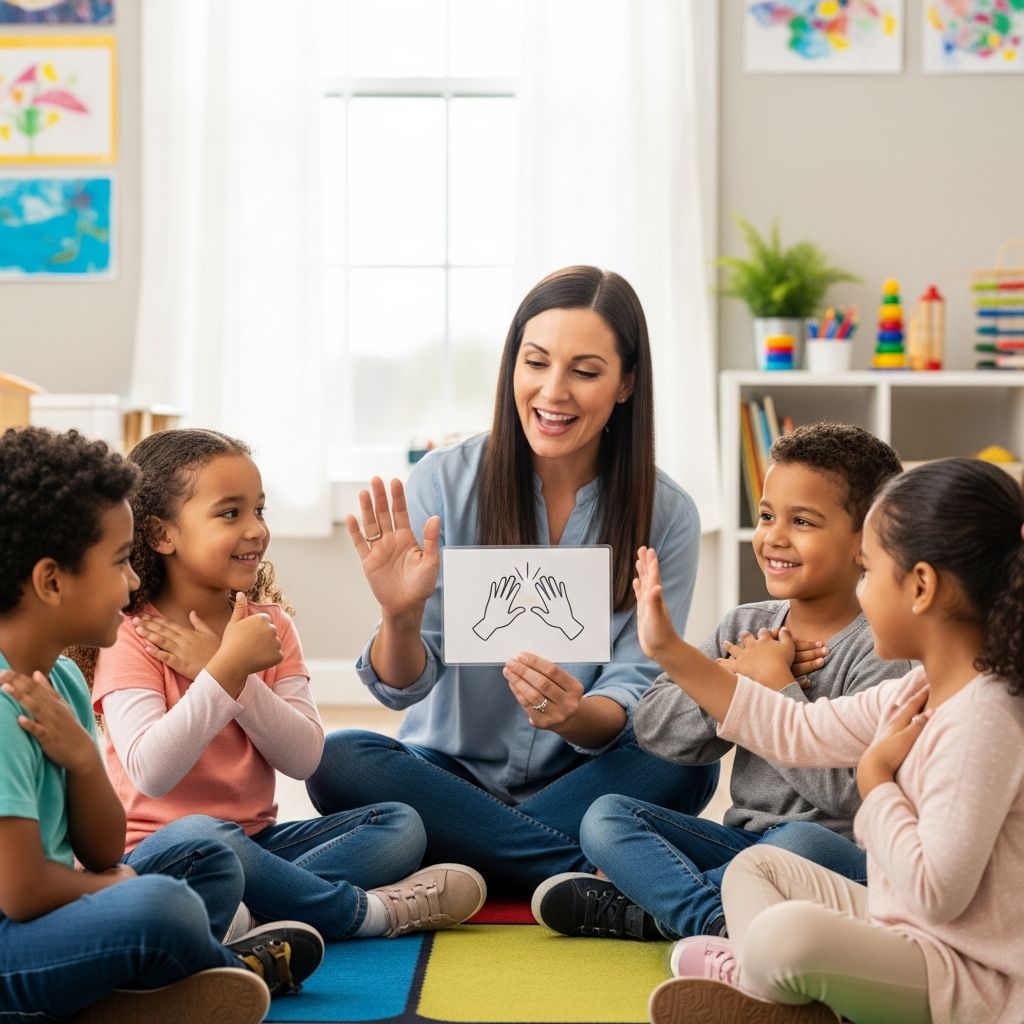
Role-playing and stories allow children to explore social situations safely. School-based social-emotional learning programs often use scenarios and practice conversations, and have been shown to improve both behavior and academic performance.
- Act out common challenges (being left out, losing a game, taking turns).
- Pause during books or shows to ask, “What could they say now?”
- Switch roles so your child gets to be both the one who is upset and the one who helps.
Supporting Empathy and Perspective-Taking
Empathy involves sensing another person’s feelings and, when appropriate, offering care. It develops gradually from infancy through adolescence, and is influenced by both temperament and environment.
Build Empathy in Simple, Concrete Ways
- Talk about feelings often – yours, your child’s, and others’, including characters in stories.
- Ask curiosity questions – “How do you think he felt when that happened?”
- Connect actions to impact – “When you yelled, your brother looked scared.”
- Invite caring actions – “Would you like to bring her some water?”
Physical affection can also support children’s sense of safety and connection. Studies on interpersonal touch suggest that warm, wanted touch—such as hugs—can reduce stress responses and increase feelings of security.
Handling Hard Moments as Social Learning Opportunities
Children’s most challenging behaviors often appear when they feel overwhelmed, rejected, or misunderstood. These hard times can still be powerful teaching moments if adults respond with a mix of boundaries and empathy.
Normalize Struggles
When a child faces conflict, exclusion, or embarrassment, they may conclude that something is “wrong” with them. Adults can normalize these experiences by explaining that all people sometimes feel “awkward”, lonely, or upset.
- Share age-appropriate stories from your own life.
- Explain that friendships change and skills improve with practice.
- Emphasize effort and growth, not perfection.
Balance Validation With Hope
Validation means fully acknowledging your child’s feelings without immediately trying to fix or minimize them. Research on resilience highlights that this kind of empathic attunement from caregivers supports children’s ability to bounce back from stress.
- First, reflect: “You’re really hurt that they didn’t pick you.”
- Then, gently widen the lens: “You also have friends who enjoy playing with you.”
- Finally, look forward: “Let’s think together about what might help next time.”
Adapting to Temperament and Individual Needs
Not all children approach social life in the same way. Some are naturally outgoing; others are slow to warm up or highly sensitive. Temperament research shows that a good fit between parenting style and a child’s traits predicts better adjustment and fewer behavioral problems.
- For shy or anxious children – Provide gentle warm-up time, preview new situations, and avoid forcing participation.
- For highly active children – Build in movement breaks and active social outlets like sports or outdoor play.
- For very sensitive children – Limit overwhelming environments and debrief after intense social events.
For children with developmental differences or social communication challenges, additional support—from school counselors, psychologists, or therapists—can help tailor strategies. Evidence-based interventions often use structured practice in small groups to build specific skills.
Quick FAQ on Raising Socially Intelligent Kids
Q1: At what age should I start working on my child’s social intelligence?
Social learning begins in infancy through eye contact, turn-taking sounds, and caregiver responsiveness. You do not need formal lessons; simply responding warmly, talking with your baby, and allowing safe interactions with others lays the groundwork.
Q2: My child is very shy. Does that mean they are not socially intelligent?
Shyness is a temperament trait, not a lack of social ability. Many shy children are very observant and thoughtful. They may need extra time to warm up and gentle coaching in starting interactions, but they can build strong, deep relationships.
Q3: How much should I step in during my child’s conflicts with peers?
Stay close enough to ensure safety, but try to give children a chance to solve minor disputes themselves. Step in firmly if there is risk of harm or persistent bullying, and use calm narration and questions to guide problem-solving rather than taking over completely.
Q4: Do screens and digital communication harm social intelligence?
Research is still evolving, but most experts stress that how technology is used matters. Moderate, supervised use that does not replace face-to-face interactions is less concerning than heavy, unsupervised use that crowds out sleep, play, and in-person relationships.
Q5: What if I was not taught healthy social skills growing up?
Adults can learn alongside their children. Reading, therapy, and conscious reflection on your own reactions can help you model the skills you wish you had learned earlier. Children benefit from seeing that learning social intelligence is a lifelong process.
References
- 4 Best Ways to Raise Children With Social Intelligence — Janet Lansbury. 2012-01-11. https://www.janetlansbury.com/2012/01/4-ways-to-raise-children-with-social-intelligence/
- Raising Socially Intelligent Children: Advice for Parents — InCtrl / National Association for Media Literacy Education. 2020-07-01. https://teachinctrl.org/socially-intelligent-children/
- Social Success: 10 Tips for Your Child — Skill Point Therapy. 2021-05-10. https://skillpointtherapy.com/social-success-10-tips-for-your-child/
- How to Raise a Gifted Child — Davidson Institute. 2022-03-15. https://www.davidsongifted.org/gifted-blog/how-to-raise-a-gifted-child/
- Parents Who Raise Resilient, Socially Intelligent Kids Do These 5 Things — Roni Cohen-Sandler, CNBC / Child Mind Institute. 2022-09-05. https://www.chconline.org/resourcelibrary/parents-who-raise-resilient-socially-intelligent-kids-do-these-5-things/