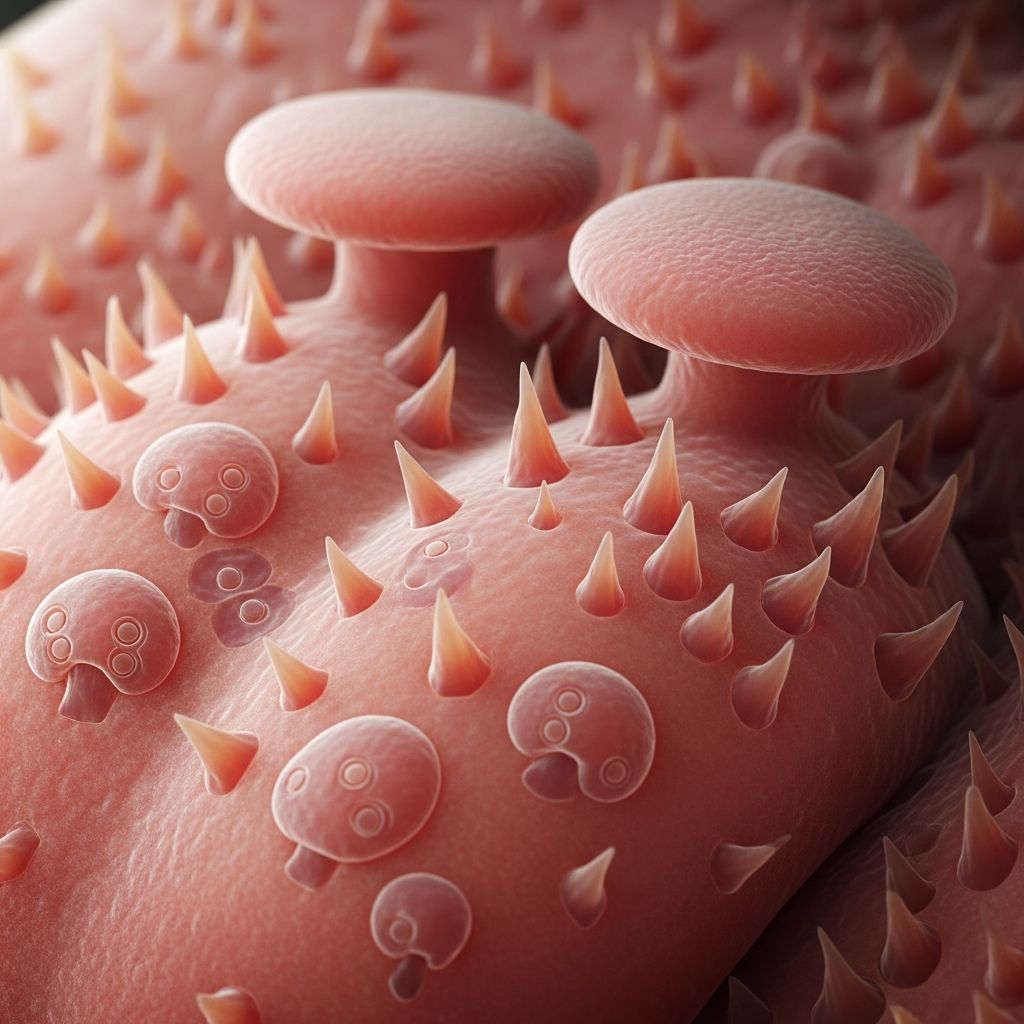
Every time a favorite snack touches the tongue, a busy team of tiny bumps called papillae helps grip, move, and taste the food. These little structures make eating, speaking, and enjoying flavors possible.
Meet the Papillae: Your Tongue’s Mini Helpers
The word papillae refers to the small, raised bumps that cover most of the top surface of the tongue. Each bump looks like a tiny hill when seen up close, and together they give the tongue its rough texture.
Many papillae contain taste buds, which are special sensory cells that react to flavors such as sweet, sour, salty, bitter, and savory. Even the papillae that do not hold taste buds still help by giving the tongue grip and structure.
- Papillae are tiny bumps that make the tongue feel rough instead of smooth.
- Some papillae hold taste buds, while others mainly help with texture and movement.
- Together, papillae and taste buds help the brain understand what food feels and tastes like.
Where Papillae Live on the Tongue
The top and sides of the tongue are covered in different kinds of papillae, each in its own region. The front, middle, and back of the tongue all share the work of sensing taste and texture.
The underside of the tongue is smoother and does not have the same kind of papillae, which is why it feels different when touched.
| Region of the Tongue | What You Usually Feel | How Papillae Help |
|---|---|---|
| Front (tip) | Very sensitive to touch and temperature | Helps sense small crumbs, move food, and begin tasting |
| Middle | Rough surface that presses food against the roof of the mouth | Helps grind food and mix it with saliva |
| Sides | Good at picking up certain flavors | Holds many taste buds that send signals to the brain |
| Back | Feels thicker and less flexible | Helps swallow food and detect strong tastes before they go down |
Different Types of Papillae and What They Do
Not all papillae are exactly alike. Some are long and thin, others are more rounded, and some are grouped in special rows. Even though they look different, they work together as a team.
Here is a simple way to think about the main roles of papillae on the tongue:
- Grip helpers: Some papillae act like tiny brushes that keep food from slipping away while chewing.
- Taste partners: Many papillae hold taste buds inside small pockets, allowing flavors to reach them easily.
- Texture testers: Papillae help sense whether food is smooth, crunchy, creamy, or rough.
Each group of papillae supports one or more of these jobs, which is why the tongue can notice such a wide range of sensations.
How Papillae and Taste Buds Work Together
Taste buds are tiny clusters of specialized cells tucked inside many papillae. When food or drink dissolves in saliva, flavor molecules reach these cells and trigger signals that travel along nerves to the brain.
Papillae protect these delicate taste buds and help direct saliva and food particles into the areas where taste buds can sense them. Without the shape and structure of papillae, taste buds would not work as well.
Main Taste Sensations
The tongue can detect several major categories of taste. Every taste bud is capable of sensing more than one category, so the entire tongue shares the work of tasting.
- Sweet: Often linked with energy-rich foods such as fruits and desserts.
- Sour: Connected with acidic foods like citrus fruits and some candies.
- Salty: Noticed in snack foods, soups, and many seasonings.
- Bitter: Found in some leafy vegetables, cocoa, and certain medicines.
- Savory (umami): A rich, deep taste present in cheese, broth, meats, and some sauces.
Instead of one part of the tongue handling a single flavor, many areas can sense all of these tastes, thanks to the wide spread of papillae containing taste buds.
Papillae and the Texture of Food
Taste is not the only thing that matters when eating. Texture, or how food feels, is just as important. Papillae play a big role in noticing whether a food is crunchy, chewy, smooth, or sticky.
By pressing food against the roof of the mouth and moving it around, the tongue’s papillae help detect crumbs, seeds, and lumps. This helps people avoid biting their tongues and makes it easier to enjoy different types of foods safely.
- Papillae help notice if something is too hot or too rough.
- They allow the tongue to feel shapes, like pasta noodles or rice grains.
- They work with the lips, teeth, and cheeks to keep food where it belongs while chewing.
Why Papillae Matter for Speech and Swallowing
The tongue is important for speaking clearly, and papillae help by giving the tongue the friction it needs to press against the teeth and roof of the mouth. This friction helps form certain sounds and control the flow of air.
When swallowing, papillae help push food into a soft ball called a bolus, which then moves safely toward the throat. Without the rough surface created by papillae, the tongue would have a harder time guiding food in the right direction.
Everyday Habits That Keep Papillae Healthy
Papillae are tough enough to handle daily eating and drinking, but they can still be irritated by poor habits. Good mouth care helps keep them clean and working well.
Simple daily routines can protect the tongue, taste buds, and papillae while also keeping breath fresher.
Healthy Tongue Care Tips
- Brush the tongue gently when brushing teeth to remove leftover food and bacteria.
- Drink water regularly to rinse the mouth and keep the tongue moist.
- Limit very hot drinks and foods that might burn the surface of the tongue.
- Avoid chewing on hard objects, such as ice cubes or pens, that could injure the tongue.
- Visit a dentist or healthcare provider regularly for mouth checkups.
When Papillae Look or Feel Different
Papillae can sometimes look larger, redder, or whiter than usual, especially after irritation, injury, or certain illnesses. A minor change may go away on its own as the tongue heals.
However, if bumps on the tongue hurt, do not fade, or make it hard to eat or talk, it is important to tell a parent or caregiver so a doctor or dentist can check them.
- A small sore or irritated bump can appear after biting the tongue.
- Spicy, acidic, or very hot foods may briefly irritate papillae.
- Persistent pain, swelling, or color changes should be examined by a professional.
Fun Facts About Papillae and Taste
Even though papillae are tiny, they help create many interesting experiences every day. From favorite desserts to new foods, they make eating more exciting.
Learning a few fun facts can make it easier to understand just how busy these little tongue bumps really are.
- The number and sensitivity of taste buds inside papillae can differ from person to person.
- Some people find certain foods “too strong” because their taste buds react more intensely.
- Papillae continue to work even when the nose is stuffy, but many flavors seem dull without the sense of smell.
- As people grow older, some taste buds become less sensitive, which can change how foods are experienced.
Kid-Friendly FAQ About Papillae
Why does my tongue look bumpy?
The bumps that can be seen on the top of the tongue are papillae. They are a normal part of tongue anatomy and help with taste, texture, and gripping food.
Are papillae the same as taste buds?
Papillae are the outer bumps, while taste buds are tiny groups of cells located inside many of those bumps. Papillae protect and support the taste buds so they can send flavor signals to the brain.
Can papillae grow back if they get damaged?
The surface cells of the tongue, including those in papillae, are constantly renewing. Minor injuries, such as a small burn from hot food, usually heal over time as new cells replace the damaged ones.
Why does my tongue feel weird after very hot or spicy food?
Extremely hot or spicy foods can irritate or temporarily inflame papillae, making the tongue feel sore, tingly, or extra sensitive. This feeling usually fades as the tongue recovers.
Is it normal to see different colors on my tongue?
A healthy tongue is usually pink with pale or slightly red papillae. Eating colorful foods or candies can temporarily stain the tongue, but unusual coatings, strong redness, or persistent white patches should be checked by a healthcare provider.
Can I clean my papillae?
Yes. Gently brushing the tongue from back to front with a soft toothbrush or a tongue scraper can help clean the papillae. This removes trapped food and bacteria and can make the mouth feel fresher.
Why does food taste less strong when I have a cold?
Even though papillae and taste buds still work during a cold, many flavors depend on smell as well as taste. A blocked nose reduces the smell signals that normally combine with taste, so foods may seem less flavorful.
Helping Kids Explore Taste Safely
Understanding how papillae work can encourage children to try new foods and notice more about taste and texture. Paying attention to how food feels on the tongue can turn each meal into a small science experiment.
Adults can support this curiosity by offering a variety of safe foods and reminding kids to chew slowly, sip water between bites, and listen to their tongues if something feels too hot, too sharp, or uncomfortable.
- Offer foods with different textures, such as smooth yogurt, crunchy carrots, and soft bread.
- Ask questions like “Is this food crunchy or chewy?” to help kids describe what their papillae feel.
- Encourage kids to stop eating if a food burns, stings, or feels wrong on the tongue.
Papillae may be too small to notice most of the time, but they have a huge impact on how food feels and tastes. By taking care of the tongue and paying attention to these tiny bumps, children and adults can better enjoy every bite and keep their mouths healthy.