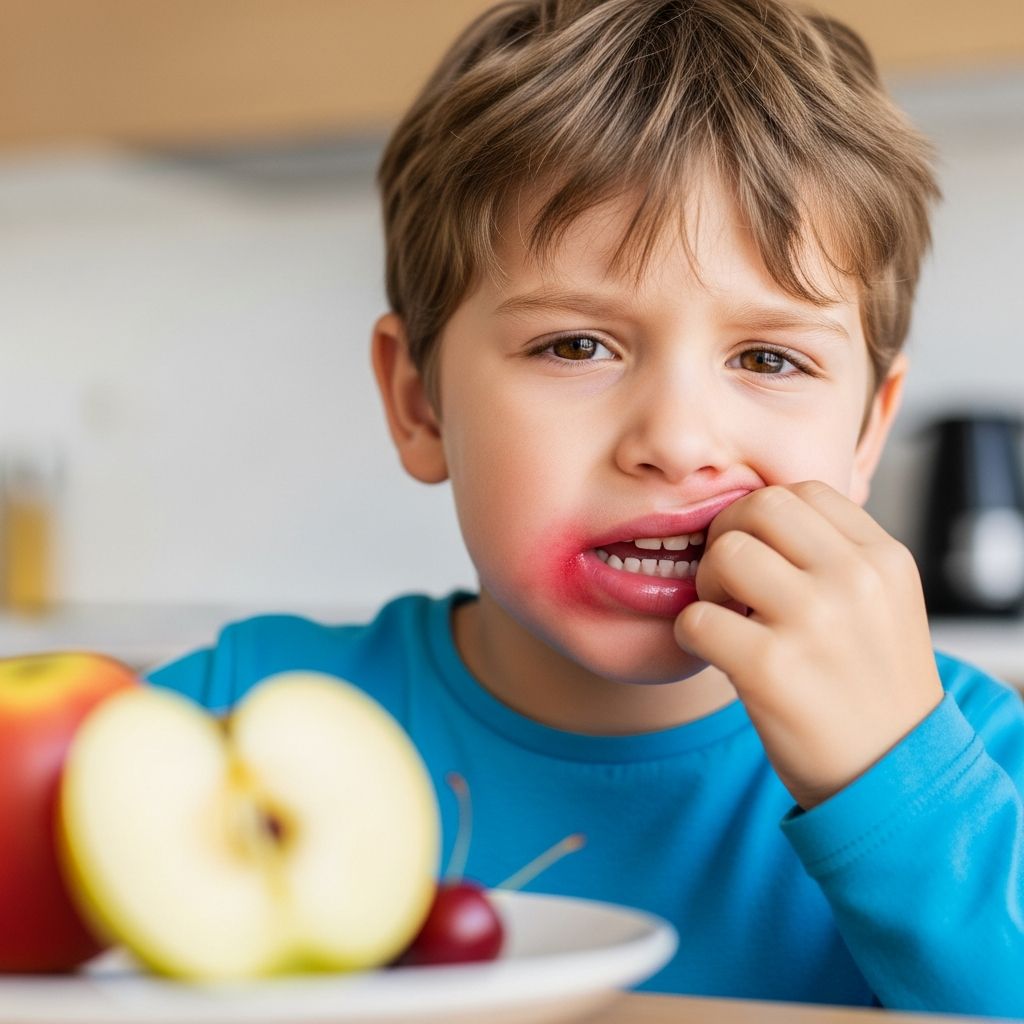
Oral allergy syndrome (OAS), sometimes called pollen-food allergy syndrome, affects children with pollen allergies who react to specific raw fruits, vegetables, or nuts due to protein similarities between pollen and these foods. This condition primarily causes mild itching or tingling in the mouth and throat but requires parental awareness to prevent discomfort and rule out severe allergies.
Understanding the Basics of OAS
OAS arises from cross-reactivity, where the immune system confuses harmless food proteins with pollen allergens it has sensitized to over time. Children with hay fever or seasonal allergies, particularly to birch, grass, or weed pollens, are most prone. Unlike true food allergies, OAS reactions stay localized because stomach acids break down the proteins before they spread.
This syndrome typically emerges in older children and teens who previously ate these foods without issue, as pollen exposure builds sensitivity. Parents might notice kids suddenly avoiding favorites like apples or peaches, mistaking pickiness for allergy symptoms.
Common Symptoms Parents Should Watch For
Symptoms appear within minutes of eating raw trigger foods and resolve quickly, often within 30 minutes. Key signs include:
- Itching, tingling, or burning sensation in the lips, tongue, roof of the mouth, or throat.
- Mild swelling of the lips, tongue, or gums.
- Scratchy or irritated throat.
- Occasional watery eyes or runny nose if pollen season coincides.
Symptoms intensify during peak pollen seasons—spring for trees, summer for grasses, fall for weeds. Importantly, cooked or processed versions of these foods rarely provoke reactions, offering safe alternatives.
Pollen-Food Cross-Reactivity: Matching Allergens to Triggers
Different pollens link to specific foods. Understanding these pairs helps parents anticipate issues. Here’s a breakdown:
| Pollen Type | Season | Common Trigger Foods |
|---|---|---|
| Birch Tree | Spring | Apples, pears, peaches, cherries, apricots, carrots, celery, almonds, hazelnuts, kiwi |
| Grass (Timothy/Orchard) | Summer | Tomatoes, melons (cantaloupe, watermelon, honeydew), oranges, peanuts |
| Weed (Ragweed/Mugwort) | Fall | Bananas, zucchini, cucumbers, melons, sunflower seeds |
This table, derived from clinical observations, shows up to 90% of birch-allergic kids react to stone fruits. Nuts like hazelnuts demand caution, as mild OAS-like symptoms might signal true allergy risks.
Why Children Are Vulnerable and How It Differs from True Allergies
Children with allergic rhinitis or asthma face higher OAS risk, with estimates suggesting over 60% of food allergies stem from such cross-reactions. Young kids may not articulate symptoms well, leading to underdiagnosis—parents often think they simply dislike textures.
Unlike IgE-mediated food allergies causing hives, vomiting, or anaphylaxis, OAS proteins are heat-labile, degrading with cooking. Only about 2% progress to severe reactions, but nut symptoms warrant immediate evaluation.
Diagnosis: Steps to Confirm OAS in Your Child
Diagnosis starts with a detailed history: pollen allergies plus mouth symptoms from raw foods. Allergists use:
- Skin prick tests: Fresh food extracts confirm cross-reactivity alongside pollen tests.
- Specific IgE blood tests: Measure antibodies to pollens and foods for a complete profile.
- Food challenge: Rarely needed, supervised eating of suspect foods.
Early diagnosis prevents unnecessary avoidance and guides management, especially if immunotherapy for pollen is considered.
Practical Management Strategies for Families
Most kids need no daily meds; focus on prevention:
- Avoid raw triggers: Especially during pollen season; peel skins where proteins concentrate.
- Cook or process foods: Baking apples into pie or steaming carrots eliminates reactions for most.
- Antihistamines: Quick-relief for mild symptoms; start pollen allergy treatments preemptively.
- Pollen control: Keep windows closed, use air filters, shower after outdoors.
Canned or jarred options work well seasonally. Immunotherapy for underlying pollen allergies may reduce OAS over time.
When to Seek Urgent Medical Help
Rarely, OAS signals broader risks. Contact an allergist if:
- Symptoms cause breathing difficulty or widespread swelling.
- Nuts provoke any reaction—could indicate anaphylaxis risk.
- Throat tightness worsens or persists.
Epinephrine auto-injectors are seldom needed but prescribed for high-risk cases. Always err on caution with new symptoms.
Nutrition Tips: Keeping Meals Safe and Enjoyable
Maintaining a balanced diet is crucial. Substitute raw fruits with:
- Baked or cooked versions: Apple sauce, roasted carrots.
- Low-risk alternatives: Berries (often safe), citrus (if not triggered).
- Year-round cans: Peaches in syrup, without raw exposure.
Consult a dietitian for pollen-season meal plans to ensure vitamins from fruits/veggies without discomfort.
FAQs for Parents on Oral Allergy Syndrome
Can OAS go away as my child grows?
Some outgrow pollen allergies, potentially resolving OAS, but many persist into adulthood. Regular allergist check-ins help track changes.
Is OAS dangerous for my child?
Typically mild, but <2% risk anaphylaxis, especially with nuts. Monitor closely.
Why does cooking fix OAS reactions?
Heat denatures the similar proteins, making them unrecognizable to the immune system.
Should I eliminate all fresh produce?
No—test tolerated items and use cooking/peeling to enjoy most safely.
Does pollen immunotherapy help OAS?
Yes, desensitizing to pollens often reduces food cross-reactions.
Long-Term Outlook and Family Support
With knowledge, OAS becomes manageable, letting kids thrive. Educate schools/daycares on symptoms and safe foods. Annual allergist visits ensure evolving needs are met, potentially incorporating new therapies.
Empower your child by explaining OAS simply, reducing anxiety around meals. Support groups and apps tracking pollen/foods aid daily life.
References
- What is Oral Allergy Syndrome? — National Jewish Health. 2023. https://www.nationaljewish.org/conditions/oral-allergy-syndrome-oas
- Oral Allergy Syndrome – Symptoms, Causes & Testing — Thermo Fisher Scientific. 2024. https://www.thermofisher.com/allergy/us/en/living-with-allergies/understanding-allergies/oral-allergy-syndrome-oas.html
- What is Oral Allergy Syndrome (OAS)? — Allergy Asthma Network. 2024. https://allergyasthmanetwork.org/health-a-z/oral-allergy-syndrome/
- Oral Allergy Syndrome (OAS): Symptoms & Treatment — Cleveland Clinic. 2023-10-20. https://my.clevelandclinic.org/health/diseases/23996-oral-allergy-syndrome
- Oral Allergy Syndrome (OAS) — American Academy of Allergy, Asthma & Immunology (AAAAI). 2024. https://www.aaaai.org/tools-for-the-public/conditions-library/allergies/oral-allergy-syndrome-(oas)
- ORAL ALLERGY SYNDROME (OAS) — Stanford Health Care. 2023. https://stanfordhealthcare.org/content/dam/SHC/clinics/menlo-medical-clinic/docs/Allergy/Oral%20Allergy%20Syndrome.pdf
- Oral allergy syndrome in children — PubMed Central (PMC), NIH. 2022-08-10. https://pmc.ncbi.nlm.nih.gov/articles/PMC9376504/