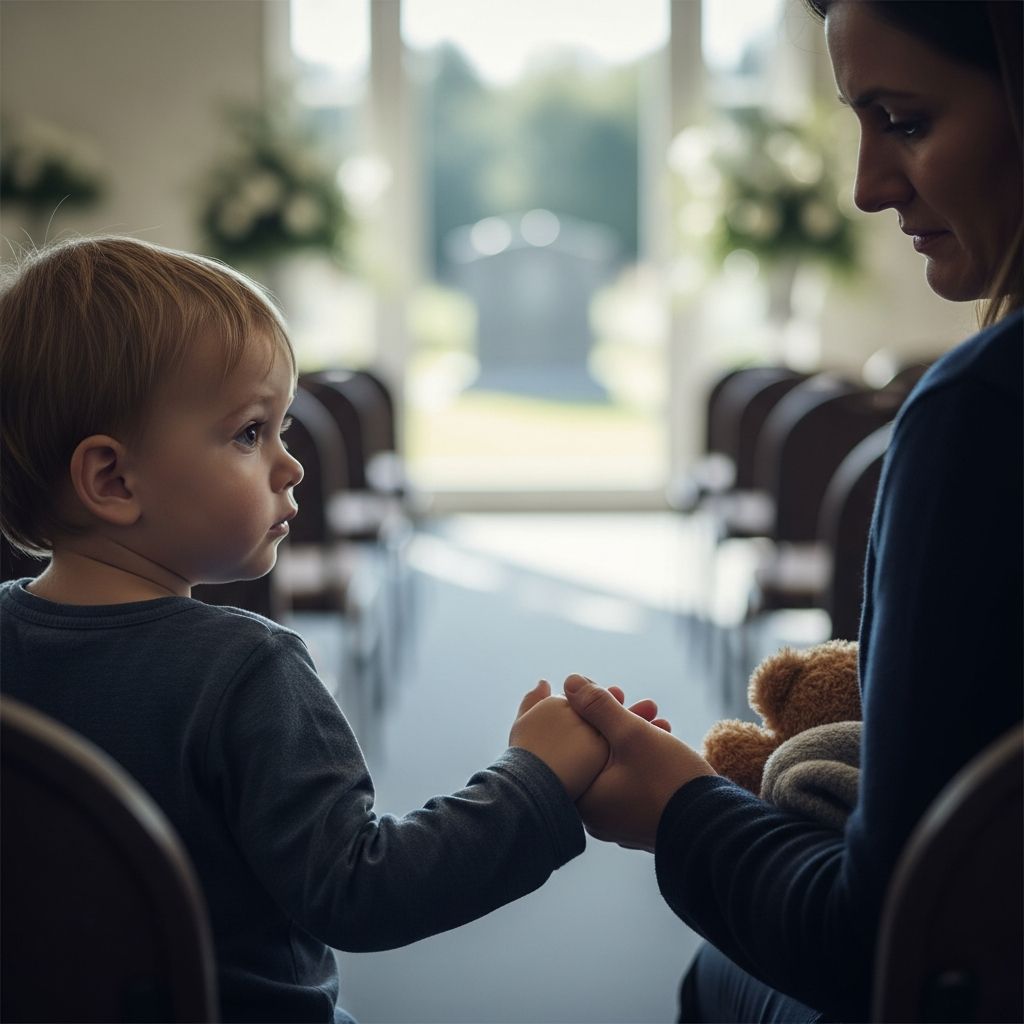
Few parenting dilemmas feel as emotionally loaded as deciding whether to bring a toddler to a funeral. You are juggling your own grief, the expectations of family, and the unpredictable needs of a very young child who may or may not understand what is happening around them. This guide offers an empathetic, practical framework to help you make choices that honor both your loved one and your child’s well-being.
Understanding What Toddlers Can Grasp About Death
Before deciding if your toddler should attend a funeral, it helps to consider where they are developmentally. Children under about three or four usually have a limited concept of time and permanence. They may notice that someone is “gone” but often do not understand that the absence is forever. Instead of seeing the funeral as a formal goodbye, they are more likely to experience it as a strange event full of grown-ups who are acting differently.
At this age, many children respond more to the emotional tone of the room than to the meaning of the ceremony. They may become clingy, restless, or surprisingly cheerful, simply mirroring the energy and support they receive from the adults they trust. This does not mean they are unaffected by the loss; it simply means they process it in short bursts, through play, questions, and everyday routines.
Key Questions to Ask Yourself Before Deciding
There is no single right answer about toddlers and funerals. Instead, think in terms of fit: What suits your child, your family culture, and the specific circumstances of this loss?
- How close was your child to the person who died? If the deceased was part of your child’s daily world, being present at a memorial ritual may feel more meaningful than if they were a distant relative or acquaintance.
- What is your child’s temperament? A flexible, easygoing toddler may tolerate a long, quiet service better than a highly sensitive or very active child who struggles with transitions and sitting still.
- What is your own emotional bandwidth? If you are deeply involved in the ceremony or overwhelmed by grief, you may have less capacity to tend to a little one’s needs during the service.
- What are the expectations of your family or community? Some cultures welcome children at funerals as symbols of continuity and hope, while others expect solemn silence and limited movement.
- Is there a trusted adult who can be “on duty” for your child? Having someone who can step out with your toddler if necessary can ease pressure on you and on the rest of the mourners.
Options Beyond “Yes” or “No”
Rather than a simple decision to bring your toddler or leave them home, consider nuanced possibilities that respect both your grief and your child’s needs.
| Option | What It Looks Like | Pros | Potential Drawbacks |
|---|---|---|---|
| Full participation | Your toddler attends the entire service and possibly the burial or reception. | Includes them in family rituals; offers chances for natural goodbyes; can be comforting for some children. | Long periods of quiet may lead to restlessness; you may miss parts of the service while tending to them. |
| Partial participation | Child attends for a short portion (e.g., beginning of service or outdoor burial), then leaves with a caregiver. | Allows them to be present but limits overwhelm; more flexible for naps and meals. | Transitions may be tricky; requires coordination with a caregiver and transportation. |
| Reception only | Toddler skips the formal service but comes to a more relaxed gathering afterward. | Less pressure for quiet; more play opportunities; still part of family remembrance. | They miss the ceremonial aspects and may not see why everyone is sad. |
| Home-based goodbye | Child stays home or with a sitter, with separate age-appropriate rituals created just for them. | Protects routine; allows focused care; reduces stress for parents during the service. | They are removed from the shared experience; may later feel left out if not included in any ritual. |
Preparing Your Toddler in Simple, Honest Terms
Whether or not your toddler attends the funeral, simple, clear language about death and the events around it is more helpful than silence or confusing metaphors. Young children think very concretely, so avoid phrases that might sound comforting to adults but can scare or confuse a child, such as “went to sleep” or “got lost.”
Focus on short, specific explanations. You can gently say that the person’s body stopped working and they cannot breathe, eat, or feel pain anymore. If your family has spiritual or religious beliefs about what happens after death, share those too, but separate them from the physical reality so your child can build an understandable picture.
Helpful Phrases to Use
- “You might see a lot of people crying and hugging. They are sad because they love Grandma and will miss her.”
- “The body will be in a special box called a casket. It looks like the person is sleeping, but they are not asleep. Their body has stopped working.”
- “Some people will pray or be very quiet. If you need a break, we can go for a little walk.”
Practical Planning: Clothing, Timing, and Essentials
Once you decide to include your toddler, logistical planning can make the day less stressful. Think of it as preparing for a long doctor’s appointment or ceremony, with extra emotional layers.
- Clothing: Choose comfortable, soft clothes in muted or darker colors if appropriate to your culture or family expectations. Avoid anything scratchy, tight, or brand new that might become a distraction.
- Timing: Look at your child’s usual schedule. If the service spans nap or mealtime, bring snacks, water, and a quiet comfort item. A well-timed stroller walk before the ceremony can also help release energy.
- Toddler survival kit: Pack diapers or pull-ups, wipes, extra clothes, a small blanket, a favorite stuffed animal or lovey, and one or two quiet activities like board books or soft toys.
- Exit strategy: Sit near an aisle or door so it is easy to step out if your child becomes restless, loud, or overwhelmed.
Managing Behavior With Grace and Realistic Expectations
Even the calmest toddler is unlikely to sit silently through an entire ceremony. Brief whispers, squirms, and occasional noises are normal. The goal is not perfect behavior but respectful presence combined with realistic expectations and flexible support.
If your child begins to cry, chatter loudly, or run around, that is your cue to step into a hallway or outdoor area for a break. Taking a fidgety toddler out is not a failure; it is an act of care for them and for other mourners. Short breaks can help everyone re-center before re-entering the space, or may signal that your child is done for the day.
Gentle Strategies During the Service
- Offer quiet commentary in a soft voice: “People are singing now; we are sitting and listening.”
- Let them sit on your lap and hold a program or hymn book as a “job.”
- Use touch for reassurance: a hand on their back, a snuggle, or holding hands can help them feel secure even if they do not understand the words being spoken.
Balancing Your Grief With Parenting Needs
One of the hardest parts of bringing a toddler to a funeral is the split between your need to grieve and your responsibility to parent. You may long to sit still, listen, cry, and fully absorb the ceremony, yet you find yourself walking the halls with a little one or quietly entertaining them in the back row.
Give yourself permission to grieve imperfectly. Your love for the person who died is not measured by how much of the service you witness. It may help to designate another adult—someone your child knows and trusts—to be their primary support during the service, so you can step in and out of direct care as needed. You can also create your own private ritual later, such as a visit to the grave alone or time with a memory box, to feel more fully present with your loss.
Creating Simple, Meaningful Rituals for Toddlers
Even if your child cannot grasp the full meaning of a funeral, small, concrete rituals can give them a sense of participation and connection. These gestures do not need to be elaborate to be powerful.
- Art as a goodbye: Invite your toddler to draw a picture or choose a sticker to place on a card. This can be placed near a photo display, on a memory table, or, if appropriate, tucked into a casket.
- Flowers or tokens: Your child can carry a single flower, small stone, or symbol that reminds them of the person (for example, a seashell for a grandparent who loved the beach) and place it somewhere special.
- Storytime remembrance: At home, read a favorite book that reminds you of the person or that you once read together, pausing to share a simple memory in language your child can understand.
- Lighting a candle (with help): In some traditions, lighting a candle can symbolize love that continues. Let your child watch or, if safe, help with your hand over theirs.
Talking About Big Feelings After the Funeral
The funeral itself is just one moment in your family’s experience of grief. Toddlers may react more in the days and weeks afterward, when routines feel different or when they sense adults are preoccupied and sad. Behavioral changes—clinginess, sleep disruptions, regressions in toileting, bursts of anger—may be signs that they are processing big feelings in the only ways they know how.
Keep explanations short and consistent. When your child asks the same question again and again (“Where is Grandpa?”), repetition is not defiance; it is how they try to understand something confusing and new. Offer simple answers, extra cuddles, and predictable routines to help them feel safe while everyone adjusts.
Ways to Support Your Toddler Afterward
- Stick to familiar bedtime and mealtime routines as much as possible.
- Offer lots of physical affection—hugs, lap time, and gentle touch can be grounding.
- Answer questions briefly, without adding more detail than they ask for.
- Normalize a range of emotions: “It’s okay to feel sad, mad, or to still want to play.”
Handling Comments and Expectations From Others
Family members and friends may have strong opinions about children at funerals. Some may feel comforted by the sight of a small child, while others may worry about noise or disruption. It can be helpful to decide ahead of time what you are comfortable with and prepare a few calm, respectful responses.
If someone questions your choice, you might briefly explain that you are balancing your child’s needs and the importance of family togetherness, or that you have arranged for a caregiver to step out with your toddler if needed. Remember that you are the expert on your child. It is acceptable to set boundaries, such as declining requests that your toddler view or touch the body if that does not feel right to you.
Common Concerns Parents Have
Many worries about toddlers at funerals are rooted in love and a desire to protect. Addressing these concerns directly can help you feel more confident in your decisions.
- “Will this traumatize my child?” In most cases, what shapes a child’s experience is not the funeral itself but how supported, prepared, and comforted they feel. Calm, caring adults and honest, age-appropriate explanations usually matter far more than the details of the ceremony.
- “What if they embarrass me?” It is normal to worry about disruption during such a solemn event. Having a clear exit plan and a supportive helper reduces pressure. Remember that most people understand that small children are unpredictable.
- “Will people think I do not care if I stay in the hallway with my toddler?” Your presence with your child is an expression of love too—for them and for the person you are honoring, who likely valued your role as a parent.
Frequently Asked Questions
What is an appropriate age for a child to attend a funeral?
There is no strict minimum age. Even infants and toddlers can be present, but the decision should be based on the child’s temperament, your capacity to care for them during the service, and the type of ceremony involved. The younger the child, the less likely they are to understand what is happening, but they may still benefit from being held close in a setting where the family is gathered.
Should I let my toddler see the body?
This is a deeply personal choice. If you consider it, prepare them carefully with simple, concrete descriptions of what they will see and how it may feel. Never force a child to approach, view, or touch the body. Offer the option and respect a “no,” while reassuring them that love does not depend on this gesture.
What if my child laughs or plays during the service?
Toddlers naturally move in and out of emotions quickly. A burst of laughter or a moment of play is not disrespectful; it is developmentally normal. You can gently redirect them if needed, but try not to shame or scold them for being a child in the midst of adult grief.
How do I explain why everyone is crying?
Use clear, simple words: “People are crying because they feel very sad. They love the person who died and will miss them.” If you cry in front of your child, you can add, “Grown-ups cry too when we are sad, and it is okay. You are safe.” This can actually teach healthy emotional expression rather than frightening them.
Is it okay to skip the funeral entirely and have our own ritual?
Yes. There are many valid ways to say goodbye. If the formal service would be overwhelming for you or your child, you can create a quieter, child-friendly ritual at home—lighting a candle, looking at photos, sharing a memory, or visiting a meaningful place. What matters most is the sense of connection and love, not the specific format.
Honoring Both the Departed and the Living
Inviting a toddler into the space of grief is not easy. Yet, when handled with openness, honesty, and flexibility, it can become a tender lesson in how families love each other across generations, even in sorrow. Whether your child attends the funeral, joins only a part of it, or participates in their own quiet ritual at home, you are guiding them through one of life’s hardest realities with your presence and care.
In the end, there is no perfect choice—only the best decision you can make with the information, support, and emotional energy you have. Trust yourself, lean on the people who can help, and remember that allowing room for both grief and small joys is not a contradiction. It is the very heart of family life, even in times of loss.