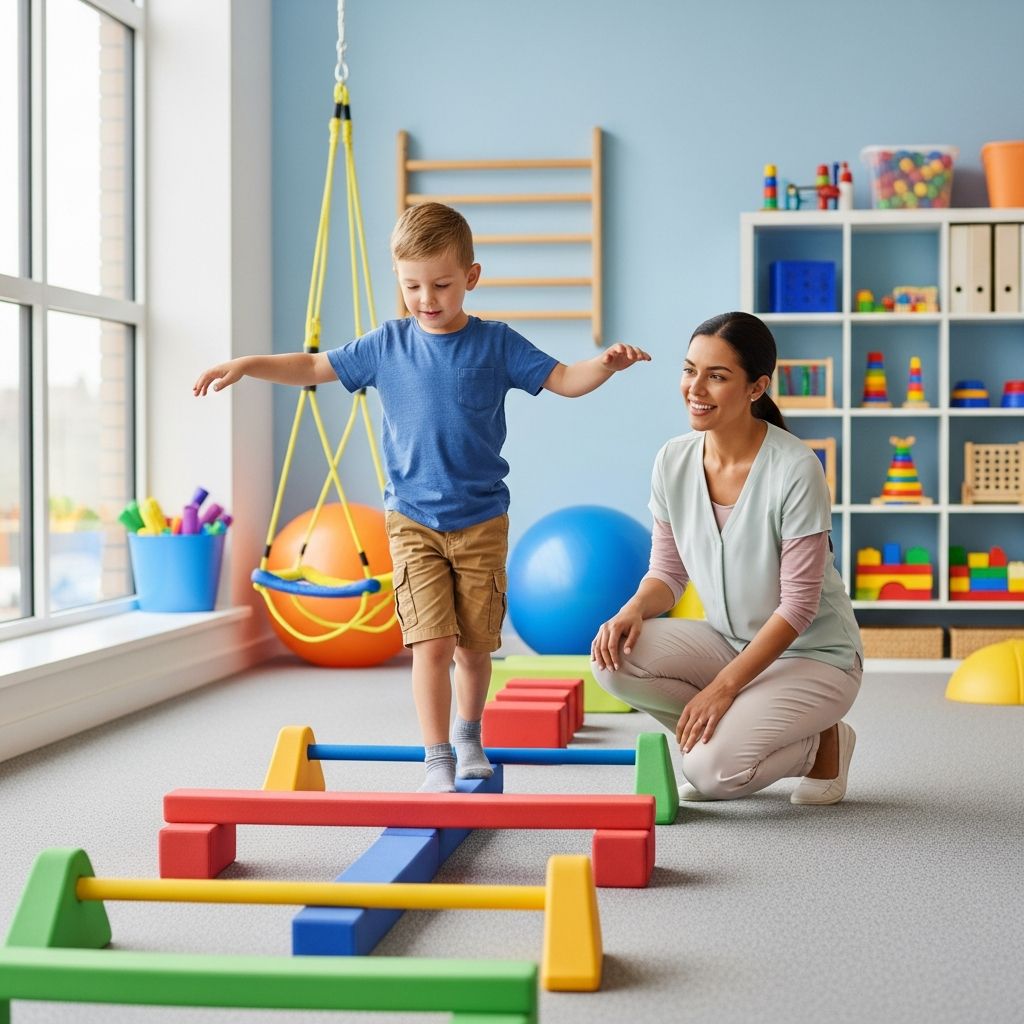
Occupational therapy for children focuses on helping kids gain the practical skills they need to participate in everyday life at home, at school, and in the community. It supports growth in areas like movement, self-care, learning, play, and emotional regulation so that children can feel more capable and confident in their daily routines.
What Does “Occupation” Mean for a Child?
For adults, the word “occupation” often means a job, but for children their main occupations are playing, learning, socializing, and taking care of basic daily needs. Pediatric occupational therapy (OT) is built around the idea that when kids can fully participate in these activities, they grow, learn, and develop more successfully.
A child’s occupations typically include:
- Self-care routines such as dressing, bathing, brushing teeth, and feeding themselves.
- School tasks like sitting at a desk, writing, using scissors, and organizing schoolwork.
- Play activities including building, drawing, pretend play, sports, and playground games.
- Social participation such as sharing, turn-taking, following rules, and joining group activities.
Core Goals of Pediatric Occupational Therapy
Occupational therapists work toward goals that are meaningful for each child and family, but several themes appear again and again. Understanding these goals helps parents make sense of why certain activities or recommendations are part of therapy.
- Increasing independence: Enabling children to complete age-appropriate tasks with less help from adults.
- Building functional skills: Strengthening the underlying motor, sensory, and cognitive abilities needed for daily activities.
- Supporting participation: Helping children join classroom activities, family routines, and peer play more easily.
- Boosting self-esteem: Creating successful experiences so children feel proud of what they can do.
Common Areas Occupational Therapy Can Help
Occupational therapy covers a wide range of skills, from how a child holds a pencil to how they handle frustration. Below are some of the most common areas addressed in pediatric OT, with practical examples to make them easy to recognize.
Fine Motor Skills
Fine motor skills involve the small muscles of the hands and fingers used for precise tasks. When these skills are weak or uncoordinated, everyday activities can feel frustrating or tiring for a child.
- Grasping and manipulating small objects such as buttons, coins, or beads.
- Using tools like pencils, crayons, markers, utensils, and scissors.
- Completing tasks like buttoning, zipping, tying shoes, or opening containers.
Occupational therapists may use playful tasks like stringing beads, building with blocks, tweezers games, and drawing activities to gradually build dexterity and hand strength.
Gross Motor and Coordination
Gross motor skills use larger muscle groups for whole-body movements, while coordination refers to how smoothly and efficiently these movements come together. Both are important for safe, confident movement and participation in play and sports.
- Balancing while standing in line, stepping off a curb, or climbing stairs.
- Running, jumping, hopping, skipping, or catching and throwing a ball.
- Coordinating both sides of the body, such as holding paper with one hand and cutting with the other.
Therapy might include obstacle courses, ball games, climbing, and other full-body activities that look like fun but are carefully chosen to challenge balance, strength, and coordination.
Sensory Processing and Regulation
Sensory processing describes how the brain receives and organizes information from the senses, including touch, movement, sound, sight, and more. When this system is over- or under-sensitive, everyday environments like classrooms, birthday parties, or grocery stores can feel overwhelming or under-stimulating.
- Children who cover their ears, avoid certain textures, or melt down in noisy or crowded spaces.
- Kids who constantly seek movement, crash into furniture, or have trouble sitting still.
- Children who seem unaware of bumps, bruises, or where their body is in space.
Occupational therapists may provide a “sensory diet,” which is a planned set of sensory activities throughout the day to help a child feel calmer, more focused, and better able to participate in routines.
Self-Care and Daily Routines
Self-care abilities help children participate in family life and feel more capable. When these skills do not develop on schedule, it can affect a child’s confidence and create stress for the whole household.
- Dressing skills like putting on shirts, pants, socks, shoes, or fasteners.
- Feeding skills, from using utensils and drinking from an open cup to trying new foods.
- Personal hygiene like washing hands, brushing teeth, combing hair, and toileting.
OTs often break these routines into small steps, teaching the child each part with visual supports, demonstrations, and plenty of encouragement.
School and Learning Skills
Many children are referred to occupational therapy because they are having trouble keeping up with school demands. These challenges can be related to motor skills, attention, organization, or a combination of factors.
- Handwriting legibility, spacing, letter formation, and writing endurance.
- Using classroom tools such as scissors, glue, rulers, and computer keyboards.
- Maintaining posture for seated work and shifting attention between tasks.
Occupational therapists can suggest modified writing tools, alternative seating, visual supports, or breaks built into the day to help children participate more successfully in classroom activities.
Social and Emotional Skills
Children need more than physical skills to thrive; they also need to manage emotions, understand social cues, and build relationships. OT often supports these areas through structured play and everyday problem-solving.
- Recognizing and communicating feelings such as frustration, excitement, or anxiety.
- Taking turns, sharing, and negotiating play ideas with peers.
- Following routines and coping with transitions and unexpected changes.
Through role-play, games, visual supports, and sensory regulation strategies, occupational therapists help kids practice social interactions in a safe, supportive setting.
Who Might Benefit from Occupational Therapy?
Occupational therapy is not limited to any single diagnosis. It supports children who have a wide variety of strengths and needs, and it can be appropriate whether a child has a formal diagnosis or simply struggles in daily routines.
- Children with developmental delays, learning differences, or motor coordination difficulties.
- Kids with conditions such as autism spectrum disorder, attention differences, or sensory processing challenges.
- Children recovering from illness, injury, or medical treatments that affect movement, stamina, or daily skills.
- Kids who are simply having trouble with tasks like handwriting, dressing, or managing emotions, even without a diagnosis.
If a child frequently avoids tasks, seems unusually frustrated, or falls behind peers in everyday activities, an OT evaluation can help clarify what is going on and suggest helpful next steps.
Signs Your Child Might Need an OT Evaluation
Parents often notice patterns long before anyone suggests therapy. Paying attention to specific signs can help you decide whether to ask your pediatrician or school about an occupational therapy referral.
- Persistent difficulty with buttons, zippers, shoelaces, or using utensils relative to peers.
- Very messy handwriting, unusual grip on tools, or fatigue during short writing tasks.
- Extreme reactions to textures, sounds, lights, or changes in routine.
- Frequent tripping, bumping into things, or appearing clumsy and uncoordinated.
- Trouble following multi-step instructions, staying seated, or focusing long enough to finish age-appropriate tasks.
- Intense frustration, meltdowns, or avoidance when faced with typical daily activities.
What to Expect During an OT Evaluation
An occupational therapy evaluation is designed to be child-friendly and informative rather than intimidating. The therapist gathers information from parents, teachers, and the child in order to understand both challenges and strengths.
- Parent and caregiver interview: Discussion of the child’s history, daily routines, concerns, and goals.
- Observation: Watching the child play, move, draw, write, or complete simple tasks in a natural setting.
- Standardized tests and checklists: Activities or questionnaires that compare the child’s abilities with typical expectations for their age.
- Functional tasks: Trying out everyday activities like cutting, dressing, or climbing to see how the child approaches them.
After the evaluation, the therapist discusses the results and suggests whether ongoing therapy, home strategies, school supports, or follow-up assessments would be most helpful.
Where Occupational Therapy Services May Take Place
Occupational therapy can be provided in several settings, each with its own advantages. The right option often depends on your child’s needs, age, and local resources.
| Setting | Typical Focus | Example Benefits |
|---|---|---|
| Clinic or private practice | Structured 1:1 sessions using specialized equipment and targeted activities. | Intensive skill-building for fine motor, sensory processing, or motor coordination. |
| School-based OT | Skills that affect participation in classroom routines, learning, and school access. | Support with handwriting, organization, attention, or adapting the classroom environment. |
| Home-based services | Daily routines within the natural family environment. | Improved follow-through on self-care routines and family-specific goals. |
| Community settings | Real-world situations such as playgrounds or community centers. | Practice of social, play, and safety skills in everyday environments. |
Inside a Typical OT Session
No two sessions look exactly alike, but most follow a gentle structure that balances fun with purposeful practice. Therapy targets a child’s goals through play, movement, and hands-on challenges.
- Warm-up activities: Simple movements or games that prepare the child’s body and attention for learning.
- Goal-focused tasks: Activities designed to strengthen specific skills, such as cutting, drawing, climbing, or sequencing routines.
- Sensory activities: Opportunities for movement, deep pressure, or tactile input to help the child stay regulated.
- Wrap-up and reflection: Brief review of what went well and how to carry new strategies into home or school.
Therapists often adjust activities on the spot, making tasks a bit easier or harder depending on how the child is responding that day.
How Parents and Caregivers Can Support Progress
Occupational therapy is most effective when it extends beyond the therapy room. Parents, caregivers, and teachers play a vital role in reinforcing skills and creating environments where children can succeed.
- Communicate regularly: Ask the therapist for updates, strategies, and explanations of new activities.
- Practice through play: Turn home tasks into games rather than extra “work.” For example, play pretend restaurant to practice utensil use or dress-up to practice fasteners.
- Break tasks into steps: Teach one piece at a time instead of expecting a child to master the whole routine at once.
- Use visual supports: Picture schedules, checklists, and simple diagrams can make routines more predictable and manageable.
- Celebrate small wins: Notice and praise effort, not just the final result, to build motivation and resilience.
Adaptive Tools and Environmental Changes
Sometimes a small change to the environment or equipment can make a big difference in a child’s independence. Occupational therapists are trained to identify and recommend tools that support participation.
- Built-up or differently shaped pencil and spoon grips to help with weak or unsteady hands.
- Chairs, cushions, or footrests that provide better posture and body support for seated tasks.
- Visual timers or charts that make time and expectations clearer.
- Modified clothing, such as elastic waists or Velcro fasteners, when fine motor demands are too high.
These adaptations are not meant to “baby” a child; instead, they remove barriers so the child can practice and succeed at important tasks more consistently.
Realistic Expectations and Progress Over Time
Occupational therapy is not a quick fix, but many families notice meaningful changes over weeks and months of consistent work. Progress may be gradual, and some periods can feel slower than others, especially when tasks become more complex.
- Some goals, like learning to use scissors, may be reached in a relatively short time.
- Other areas, such as sensory processing or emotional regulation, may require longer-term support and adjustment.
- Development is not always linear, and it is normal for children to show bursts of progress followed by plateaus.
Regular communication with the therapist helps families adjust goals as the child grows and new challenges or opportunities appear.
Frequently Asked Questions About Occupational Therapy for Kids
Is occupational therapy only for children with diagnosed conditions?
No. While many children in OT do have diagnoses such as autism spectrum disorder, developmental delays, or learning differences, others are referred simply because they struggle with everyday tasks like handwriting, dressing, or coping with sensory input. If a child’s challenges interfere with participation in daily routines, OT can be considered.
How long will my child need occupational therapy?
The length of therapy varies widely. Some children attend OT for a few months to focus on specific skills, while others may benefit from longer-term support that changes as they grow. The therapist regularly reviews goals and progress with families to decide whether to continue, adjust, or end services.
Can I be present during my child’s therapy sessions?
In many settings, yes. Some clinics encourage parent participation, while others balance time in the room with opportunities for the child to work independently. When parents cannot be present, therapists typically provide updates and home suggestions so caregivers stay involved in the process.
What is the difference between occupational therapy and physical therapy?
Both support movement and function, but occupational therapy focuses heavily on everyday activities, fine motor skills, sensory processing, and participation in routines. Physical therapy usually emphasizes strength, range of motion, and large-body movement patterns like walking or running. Many children benefit from both, depending on their needs.
How can I talk to my child about starting OT?
Explain occupational therapy in simple, positive terms, such as “a place where you get to practice new skills through games and activities so that things at home and school feel easier.” Emphasize that every person learns at a different pace and that therapy is there to help, not to judge.
Taking the Next Step
If you suspect that occupational therapy might help your child, start by talking with your pediatrician, teacher, or school support team. They can guide you through referrals, evaluations, and available services in your area. Remember that seeking help is a sign of support and advocacy, not a reflection of anything you have done wrong as a parent.
With the right combination of professional guidance, family involvement, and patient practice, many children make meaningful gains in skills, confidence, and independence through occupational therapy. Small steps over time can add up to big changes in how a child experiences everyday life.