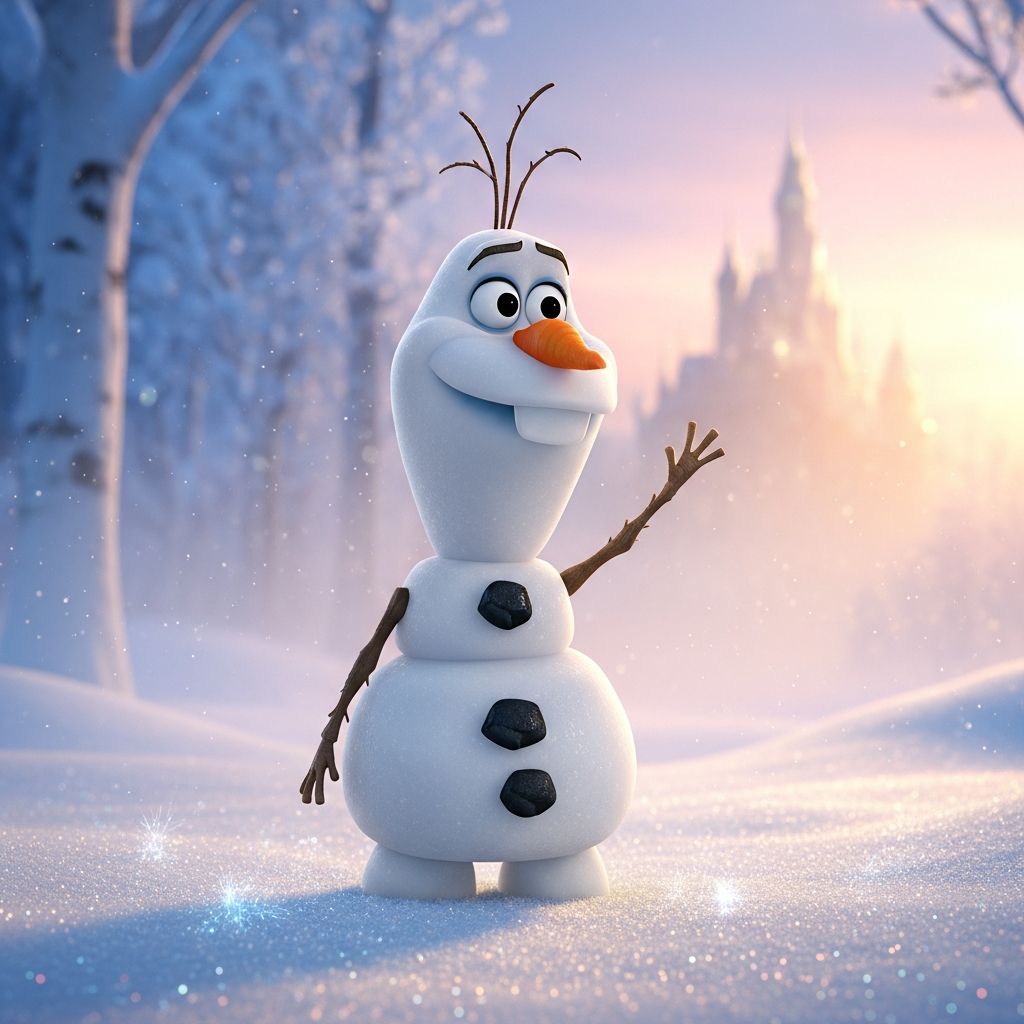
Once Upon a Snowman is a short Disney Plus film that finally answers a deceptively simple question: what happened to Olaf between the moment Elsa created him and his cheerful encounter with Anna in the first Frozen movie.
Clocking in at under ten minutes, it could have been throwaway filler, but instead it becomes a brisk, heartfelt glimpse into identity, memory, and what it means to figure out who you are in a world that was busy before you arrived.
Why This Tiny Short Matters
At first glance, Once Upon a Snowman looks like a simple add-on for Frozen completists: a quick adventure with a familiar comic relief character, designed to keep the franchise in circulation on Disney Plus.
Look closer, and the short quietly reframes Olaf from a walking snow gag into a character with a genuine emotional arc, even if that arc plays out in under eight minutes of screen time.
- It fills a narrative gap in the first Frozen without changing any existing plot points.
- It gives younger viewers a gentle, funny introduction to ideas about identity and self-discovery.
- It lets fans revisit iconic moments from a sideways angle, turning nostalgia into a playful puzzle.
Story Setup: A Snowman Wakes Up
The short begins in parallel with Elsa’s “Let It Go” moment from the original film, following the instant where one stray burst of magic takes shape as Olaf, fully alive but utterly clueless about who or what he is.
Instead of tracking Elsa’s journey to the ice palace, the camera stays with Olaf, letting viewers witness his first steps, his confusion at his own existence, and his immediate, innocent curiosity about the world around him.
A Side-Quest That Threads Through Frozen
One of the most playful choices the filmmakers make is to weave Olaf’s mini-adventure through the established timeline of Frozen, allowing brief glimpses of major scenes from new vantage points.
Off-screen lines of dialogue, doors closing just as Olaf enters, and familiar silhouettes in the distance invite fans to mentally stitch his path into the story they already know, turning continuity into a game for attentive viewers.
| Moment Type | What Viewers Recognize | How the Short Uses It |
|---|---|---|
| Iconic scenes | Key events from Frozen heard or glimpsed in the background. | Places Olaf just off-screen, suggesting he was always present but unseen. |
| Supporting locations | Returning to spots like Oaken’s Trading Post and Sauna. | Turns familiar settings into playgrounds for visual gags and Easter eggs. |
| Character cameos | Brief appearances or audio hints from main characters. | Maintains focus on Olaf while rewarding fans who know the original by heart. |
Olaf’s Identity Crisis, for Kids
Olaf’s first conscious moments are more existential than expected: he wonders who he is, why he exists, and what his place might be in a landscape he doesn’t recognize.
The short handles this introspection with a light touch, wrapping big questions in slapstick humor and wide-eyed enthusiasm so that even very young viewers can engage with the idea of figuring yourself out without feeling weighed down.
- Olaf experiments with his own body parts, literally pulling himself together in different ways.
- His obsession with finding the right nose becomes a stand-in for discovering what completes him.
- Moments of confusion are always softened by a joke, making self-doubt feel safe to explore.
Comedy Style: Fast, Physical, and Kid-Friendly
Because of the short runtime, Once Upon a Snowman leans heavily on quick visual gags, physical comedy, and snappy one-liners, compressing Olaf’s signature humor into a concentrated burst.
The result is a pace that rarely slows, making it ideal for younger attention spans while still slipping in enough clever references to keep adults and older fans amused on repeat viewings.
Visual World: Familiar, But Still Sparkling
The short reuses the icy, Nordic-inspired aesthetic of the original film, but it does more than just copy and paste, adjusting camera angles and staging to make old spaces feel newly discovered through Olaf’s naive eyes.
Snow textures, glistening ice, and warm interior lighting at locations like Oaken’s shop provide rich contrast, emphasizing how small and fragile Olaf appears against the massive, chilly world he has just entered.
Voice Work and Character Consistency
Josh Gad’s performance is central to making Olaf’s uncertainty feel charming instead of bleak, and here his delivery balances frantic energy with genuine vulnerability as the snowman tries to articulate feelings he doesn’t yet have words for.
Because Gad has voiced Olaf across multiple projects, his timing and tone help the short feel seamlessly connected to the larger franchise, despite its smaller stakes and narrower focus.
Short Runtime: Strength or Weakness?
With a total length under eight minutes, Once Upon a Snowman inevitably leaves some viewers wishing for a slightly longer journey, especially those expecting something closer to a traditional holiday special.
At the same time, the brevity forces the filmmakers to keep the story lean, avoiding filler and focusing only on moments that either deepen Olaf’s character or offer a fresh angle on familiar events.
- Pros: Easy to rewatch, low commitment, and ideal as a quick family break.
- Cons: Limited room for new characters or subplots, and minimal expansion of the wider Frozen mythology.
Family Viewing Value and Learning Opportunities
Beyond entertainment, the short can serve as a gentle tool for parents who want to talk about stories, side characters, and point of view with their kids, using Olaf’s perspective shift as an easy entry point.
Because the film overlaps so clearly with scenes kids already know, adults can use it to spark conversations about narrative structure, memory, and how different characters experience the same events differently.
- Ask children to spot which moments tie back to the original movie and describe what happens off-screen.
- Use Olaf’s questions about himself to open a talk about feelings, identity, or trying new things.
- Encourage kids to imagine similar side stories for their favorite background characters from other films.
Who Will Enjoy Once Upon a Snowman Most?
The short is best suited for families already invested in the Frozen universe, since much of its charm depends on recognizing visual callbacks and narrative overlaps.
For viewers who are only casually familiar with the franchise, it still works as a light, visually polished comedy, but it will feel more like a fun extra than an essential piece of storytelling.
| Audience | What They Get Out of It |
|---|---|
| Young Frozen fans | More time with Olaf, fast jokes, and easy rewatchability. |
| Parents and caregivers | A short, safe, conversation-friendly film for quick viewing sessions. |
| Animation enthusiasts | A chance to see how a short reuses and reframes big-budget visual assets. |
| Franchise completists | A missing puzzle piece in Olaf’s timeline that slots neatly into existing canon. |
Tips for Enjoying the Short to the Fullest
Because the story passes quickly, it rewards a bit of intentional viewing, especially for families using it as a springboard for discussion or a warm-up before revisiting the first feature.
A couple of small choices can turn eight minutes of content into a richer, more memorable experience.
- Watch once purely for fun, with no pause or commentary, so kids can simply enjoy the humor and visuals.
- On a second viewing, invite kids to point out which parts connect to scenes they remember from Frozen.
- If interest holds, follow up with a rewatch of the original feature to let children confirm what they spotted.
Frequently Asked Questions
Is Once Upon a Snowman required viewing to understand the Frozen movies?
No, the short is designed as an add-on, not a prerequisite; it fills in Olaf’s personal journey but does not change the main plot or introduce new events that are necessary to follow either feature film.
How long is the short, and is that enough time to tell a full story?
The film runs for just under eight minutes, which may feel brief, but within that span it establishes Olaf’s confusion, gives him a concrete goal (finding a nose), and connects his path to the scene where he meets Anna, forming a complete mini-arc.
Is it too scary or intense for very young children?
The tone stays light and comedic throughout, with no major threats or extended peril; Olaf’s worries revolve more around questions of identity and belonging than physical danger, making it suitable for most preschool-age viewers.
Does the short introduce any big new characters?
The focus stays tightly on Olaf, with only brief interactions in familiar locations like Oaken’s shop, so viewers should not expect new heroes or villains to join the franchise here.
Is it worth watching if you are not a huge Frozen fan?
For non-fans, the short plays like a well-produced, mildly absurd comedy sketch with strong animation and a likable lead, but its biggest pleasures come from recognizing callbacks, so it lands best with those who already care about Arendelle.
Final Thoughts on Olaf’s Tiny Epic
Once Upon a Snowman does not try to reinvent the Frozen universe; instead, it zooms in on a single overlooked moment and treats it with enough care, humor, and visual polish to justify its place in the franchise.
For families looking for a short, rewatchable piece of comfort viewing—and for anyone curious about how a side character can carry an entire story in under ten minutes—this snowman’s origin tale is a surprisingly warm choice for a cold, animated world.