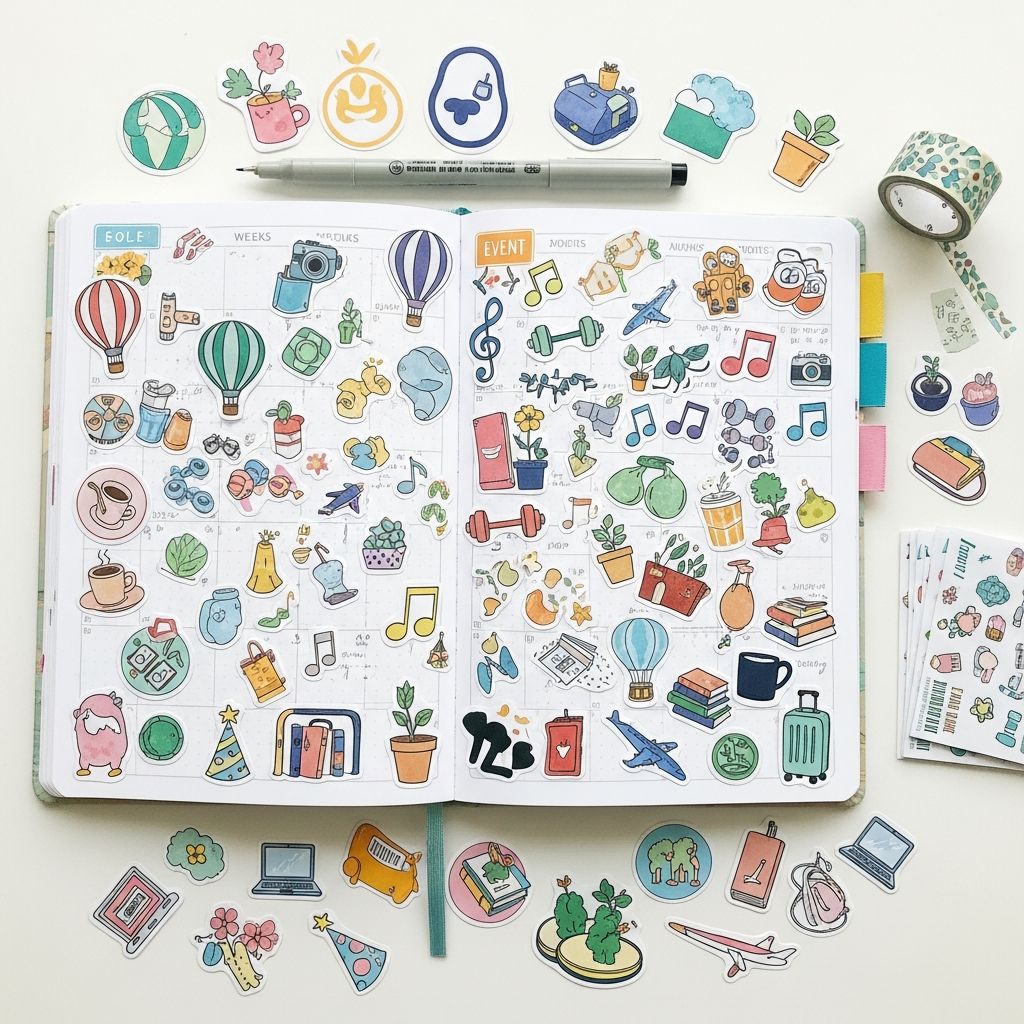
Calendars do more than tell you the date; they shape how your family experiences time. With the help of creative event stickers, a basic grid of boxes can turn into a colorful story of birthdays, sports, school projects, and small everyday joys.
This guide shows how to design an organized, playful calendar system using event stickers, symbols, and simple routines that work for real families.
Why Visual Calendars Work So Well
Humans process images faster than text, which makes visual calendars powerful for busy households and especially helpful for children or visual thinkers. A quick glance at a page full of icons can tell you far more than a tightly packed list of words.
- Stickers reduce mental load by letting you identify categories and priorities without rereading every note.
- Children who cannot yet read can still understand pictures for school, sports, or parties.
- Visual cues make it easier to remember what is coming up and to spot schedule conflicts.
Instead of relying on memory or scattered notes, a visual calendar becomes the single place where time, tasks, and family life meet.
Choosing the Right Home for Your Stickers
Before buying or designing event stickers, decide where they will live. The style of calendar you use shapes the size, quantity, and type of stickers that make sense.
- Wall calendars: Great for families who want a central command center in the kitchen, hallway, or mudroom.
- Paper planners: Ideal for individuals who carry their schedule to work, school, or errands.
- Desk pads: Helpful if you prefer a large writing surface at your workspace with room for notes and stickers.
As a rule of thumb, the smaller the calendar squares, the more you should rely on tiny symbols or color-coding rather than large decorative stickers.
Core Event Sticker Categories That Keep You Sane
Not every moment needs a sticker. Focusing on a few core categories prevents clutter and keeps the calendar easy to read. Start with categories that appear frequently in your life, then add extras only if you truly need them.
- Time-sensitive events: Appointments, practices, lessons, meetings, travel days.
- Household responsibilities: Chore days, trash and recycling, bill due dates, cleaning tasks.
- School and learning: Tests, projects, reading logs, library days, school events.
- Health and self-care: Doctor visits, exercise, medication reminders, mental breaks.
- Celebrations and memories: Birthdays, anniversaries, holidays, family nights, outings.
Once you have these core categories in mind, you can build a small but powerful sticker collection rather than a random drawer full of unused sheets.
Designing a Simple Sticker System
A sticker system works best when it is predictable. Each icon or color should mean the same thing every time it appears. This creates a visual language that every family member can understand.
Step-by-step setup
- Pick your colors: Assign one color to each person or to each category (for example, blue for school, green for home, red for appointments).
- Select icons: Use images that feel obvious: a book for reading, a ball for sports, a heart for family time, a dollar sign for bill payments.
- Create a legend: On the side or bottom of the calendar, draw a small key that explains what each color and sticker means.
- Test for a week: Use your system for one full week, then adjust if certain icons are confusing or if you are missing an important category.
When your legend matches what you repeatedly see on the page, everyone can scan and understand the month without reading long descriptions.
Examples of Useful Event Sticker Types
Below is an example table of sticker types and how they can be used. Adapt these ideas to your own routines, hobbies, and family traditions.
| Sticker Type | Visual Idea | Common Uses |
|---|---|---|
| Appointment | Clock or small calendar icon | Doctor visits, haircuts, meetings, parent–teacher conferences |
| School & Learning | Book, pencil, or graduation cap | Tests, homework due dates, reading times, tutoring sessions |
| Sports & Activities | Ball, shoe, or whistle | Practices, games, dance classes, music lessons |
| Home & Chores | House, broom, or trash can | Cleaning days, trash pickup, laundry reminders, yard work |
| Money & Bills | Dollar sign or small envelope | Paydays, bill due dates, budgeting check-ins |
| Health & Wellness | Heart, dumbbell, or pill icon | Workouts, medication reminders, therapy, checkups |
| Fun & Celebrations | Balloon, star, or cake | Birthdays, holidays, vacations, game nights, date nights |
Once you find a handful of icons that you love, you can repeat them month after month so your system grows more familiar over time.
Making Sticker Planning a Weekly Ritual
The magic of a decorated calendar is not just in how it looks but in how often you use it. A gentle weekly ritual keeps your system accurate, flexible, and fun.
Suggested weekly routine
- Choose a regular time, such as Sunday afternoon, for calendar check-ins.
- Gather the calendar, sticker sheets, pens, and any school newsletters or appointment cards.
- Fill in events for the coming week first, then add long-term items for later in the month.
- Invite children to place a few stickers for their own activities so they feel ownership.
Over time, this simple ritual helps everyone see what is coming and speak up about conflicts before they cause stress.
Kid-Friendly Ways to Use Event Stickers
Event stickers are especially powerful for children because they turn abstract time into something they can see and touch. With a little guidance, even young kids can start to build planning habits.
- Assign each child a unique color or character sticker they can look for on the calendar.
- Use picture stickers for tasks: a toothbrush for bedtime routine, a backpack for packing school bags, a plate for snack times.
- Let older children manage a small side calendar where they place stickers for homework, clubs, and social events.
When kids see their activities represented visually, they start to anticipate busy days and calm days, which gives them a sense of control and confidence.
Balancing Decoration and Function
It is easy to get carried away with decorative stickers and washi tape. While creativity is wonderful, a calendar still needs to function as a planning tool.
- Leave white space around important stickers so information does not get lost.
- Use large decorative stickers on empty days, not on the most crowded ones.
- Reserve the top or side margins for creative flourishes and keep the date squares mostly focused on information.
If you find yourself struggling to read your own notes, it is a sign to simplify and trim down the number of visuals on each page.
Adapting Stickers for Different Life Stages
Your sticker system does not have to stay the same forever. As your life seasons change, your calendar can evolve with new categories and icons.
Common life stage adjustments
- New parents: Add stickers for naps, feedings, and pediatric visits; use soft colors and simple icons.
- School-age families: Expand school, sports, homework, and carpool stickers.
- Teen households: Highlight work shifts, exams, driving practice, and college prep milestones.
- Adults without kids: Focus on travel, wellness, social events, and long-term projects.
Review your categories every few months and retire stickers that no longer fit your reality, making room for the ones that do.
DIY vs. Store-Bought Event Stickers
You do not need designer sticker packs to create a delightful calendar. Both handmade and store-bought options have advantages; the right choice depends on your budget, time, and creative comfort.
Pros of store-bought stickers
- Convenient and ready to use right away.
- Often come in coordinated sets with matching fonts and colors.
- Durable printing and adhesive that last for months.
Pros of DIY stickers
- Completely customized to your unique activities, nicknames, and routines.
- Budget-friendly if you already own paper, markers, or a home printer.
- Creative activity you can share with children or friends.
You can even mix both: buy a basic set of functional icons and supplement them with handmade stickers for special traditions or inside jokes.
Creating Your Own Custom Event Stickers
Designing your own event stickers is easier than it looks. Simple shapes and bold lines translate well at small sizes and are easy to recognize at a glance.
- Choose a format: Use blank label sheets, sticker paper for printers, or repositionable labels.
- Sketch simple icons: Draw everyday objects that match your categories: a tiny suitcase for travel, a piggy bank for savings, a paw print for pet care.
- Keep colors clear: Limit each sticker to one or two colors so the page does not become muddy.
- Test readability: Place a sample on your calendar and step back; if you can still recognize it, the design works.
If you enjoy digital tools, you can design icons on a computer, print them on sticker paper, and cut them by hand or with a cutting machine.
Using Event Stickers to Support Goals and Habits
Event stickers are not only for appointments; they can also reinforce habits and long-term goals. Visual markers make progress feel tangible and satisfying.
- Use a special sticker each time you exercise, meditate, or drink enough water.
- Mark reading nights, family dinners, or tech-free evenings to encourage connection.
- Create a mini reward rule, such as earning a treat or outing when a certain number of habit stickers appear in a month.
Over time, the calendar becomes a record of effort, not just outcomes, which can be motivating when working toward big changes.
Event Stickers for Shared Households
When multiple adults share a home—roommates, partners, or extended family—a calendar with event stickers can clarify expectations and reduce miscommunication.
- Assign each adult a distinctive color or shape for their individual plans.
- Use neutral stickers for shared responsibilities like cleaning, shopping, or pet care.
- Hold brief check-ins to update the calendar after new plans are made so everyone stays informed.
With time, the calendar becomes a neutral reference point: if it is not on the wall, it is not officially scheduled.
Storing and Organizing Your Sticker Collection
Even the best sticker system falls apart if you cannot find the right sheet when you need it. A simple storage method keeps your supplies ready for action.
- Use a small binder with plastic sleeves to sort sticker sheets by category.
- Keep a pencil pouch near the calendar filled with pens, a small ruler, and your most-used stickers.
- Once a season, toss sheets that are mostly empty or no longer match your current life stage.
An organized collection makes sticker sessions quick and enjoyable rather than a hunt through cluttered drawers.
Frequently Asked Questions
Do I need artistic skills to decorate my calendar with event stickers?
No artistic talent is required. Simple icons, basic shapes, and clear color-coding are far more important than elaborate artwork. The goal is readability and consistency rather than perfection.
How many different stickers should I start with?
Begin with 5 to 8 types that cover your most common events. You can always add more categories later, but starting small makes the system easier to learn and maintain.
What if my calendar gets too crowded?
If your calendar feels cluttered, reduce the number of decorative stickers and rely more on compact icons. You may also decide to keep only time-specific events on the calendar and move detailed task lists to a separate notebook.
Can digital calendars use this idea too?
Yes. Many digital calendar apps allow colored labels, icons, or emojis. You can apply the same logic—consistent colors and symbols for specific categories—so your digital schedule mirrors your physical one.
How do I keep children from over-decorating the calendar?
Give kids a designated space, such as a corner box or a separate mini calendar, where they can place extra decorative stickers. On the main calendar, set a simple rule: every sticker must represent a real event or task.
Bringing It All Together
When thoughtfully used, event stickers turn an ordinary calendar into a playful, powerful planning tool. With a clear legend, a few well-chosen categories, and a weekly check-in habit, your calendar becomes less about chaos and more about connection—capturing the daily rhythm of your life one tiny picture at a time.