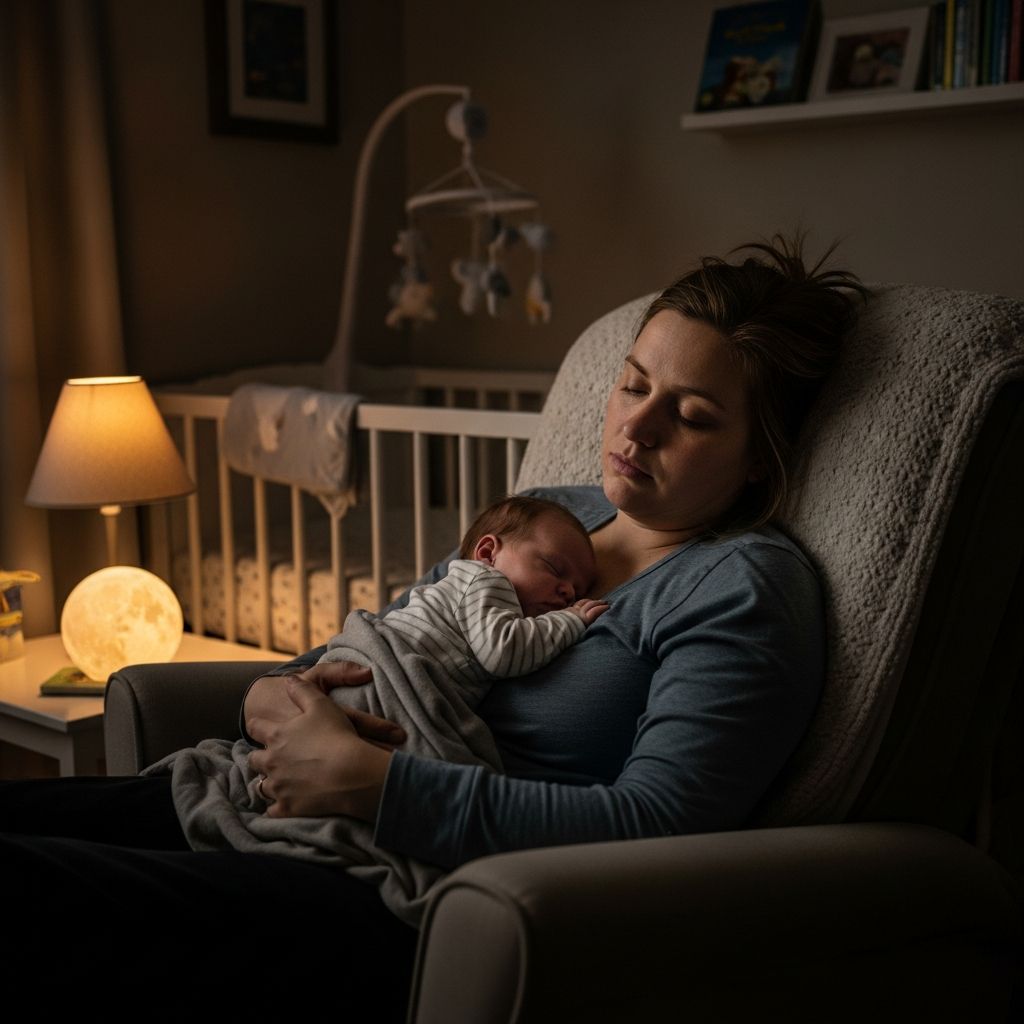
Newborns typically sleep 16-18 hours per day but in short bursts of no more than 3-4 hours, leading to frequent night wakings that exhaust parents. This guide explores the science behind these patterns, offers strategies to align your baby’s rhythms with day and night, and provides tools for parental resilience during this demanding phase.
Decoding the Unique World of Newborn Sleep
Newborn sleep starkly contrasts with adult patterns, appearing chaotic with random timing throughout the day and night. Infants average 16-18 hours of total sleep in the first two weeks, yet stretches rarely exceed 4 hours due to immature internal clocks not yet synced to the 24-hour cycle. This desynchronization stems from underdeveloped circadian rhythms, causing babies to wake frequently for feeds every 3-4 hours.
Externally, newborn sleep seems restless: fluttering eyelids, irregular breathing, twitches, and grunts characterize ‘active sleep,’ a REM-like state dominating over half their sleep time. Unlike adults who self-soothe after arousals, newborns signal caregivers vocally, amplifying disruptions. EEG studies reveal arousals every two minutes during active sleep, a rate of 32 per hour, essential for brain development but challenging for families.
The Science of Infant Sleep Cycles
Newborn sleep cycles last 50-55 minutes, far shorter than adult 90-minute cycles, with only about 20 minutes of quiet, deep sleep per cycle. Active sleep, vital for neural growth, predominates, explaining the physical movements that can jolt babies awake. This structure prioritizes development over long, uninterrupted rest—prolonged quiet sleep might even pose risks.
During the first year, total sleep needs range from 13-16 hours daily, split between day and night naps of 1-2 hours each. Babies don’t typically sleep 8 hours straight until around 3 months or 12-13 pounds, with only 57% achieving this by one year. Understanding these cycles helps parents set realistic expectations and avoid frustration.
| Sleep Aspect | Newborns | Adults |
|---|---|---|
| Cycle Length | 50-55 minutes | 90 minutes |
| Active/REM Proportion | >50% | 20-25% |
| Arousals per Hour (REM) | 32 | Far fewer |
| Max Sleep Stretch | 3-4 hours | 6-8+ hours |
This table highlights key differences, underscoring why newborn nights feel interminable.
Building Circadian Rhythms from Day One
Circadian alignment begins with environmental cues. Expose babies to natural light patterns: dim lights by 9 PM promote longer night sleep, while afternoon sunlight strengthens rhythms. Outdoor time boosts light exposure dramatically, aiding synchronization.
- Morning brightness: Open curtains or step outside to signal daytime.
- Evening calm: Avoid bright screens and overhead lights post-sunset.
- Consistent cues: Feed, play, and bathe in daylight; cluster cares quietly at night.
Studies confirm early routines at 3 months enhance sleep duration and curb problems. Simple rituals like rhythmic storytelling build predictability, even if comprehension is limited.
Safe Sleep Essentials Amid Frequent Wakings
Prioritize SIDS reduction: back sleeping in a bare crib, firm mattress, no soft bedding. Newborns wake at cycle ends every 1-2 hours for growth-fueled feeds—this is normal and necessary. Handle night wakings minimally: keep rooms dark, quiet, and cool to reinforce night as sleep time.
Breastfeeding or formula every 3-4 hours supports nutrition without overstimulating. Swaddling can extend quiet sleep phases safely until 2 months or rolling begins.
Parental Sleep Deprivation: Recognizing the Toll
New parents face fragmented sleep, with babies’ short cycles preventing deep rest. Maternal irregular patterns—late bedtimes or variability—correlate with reduced emotional availability at bedtime. Surveys of 464 families show persistent wakings through year two, impacting health.
Symptoms include irritability, impaired bonding, and negative interactions. Power through by prioritizing recovery: nap when baby naps, despite chores. Share loads with partners via ‘on/off’ nights—one handles all wakings while the other sleeps undisturbed.
Proven Strategies for Family-Wide Rest
Implement these evidence-based tactics:
- Day-night distinction: High daytime activity, low night stimulation.
- Cluster feeding: Front-load calories in evenings to space night feeds.
- White noise: Mimics womb sounds, masking arousals.
- Partner rotation: Alternate full nights of duty.
- Visitor boundaries: Limit pre-2-month guests to protect routines.
By 3 months, consistent bedtimes yield dividends: longer stretches and fewer issues. Track progress without pressure—every baby varies.
Maternal and Infant Sleep Interplay
Research tracks how parental habits influence infants. Earlier bedtimes and routines at 3 months predict better outcomes at 12-24 months. Disrupted maternal sleep fosters suboptimal parenting at bedtime, per observational studies.
For dual-parent homes, synchronize shifts: one rests fully while the other manages. Single parents: enlist safe help, nap strategically, and use baby-wearing for multitasking rest.
Long-Term Evolution of Baby Sleep
Sleep matures gradually. By 3-4 months, circadian cues integrate, enabling 5-6 hour stretches. Year one sees consolidation, though full nights remain elusive for many. Patience pairs with consistency—avoid lights/noise during feeds to hasten progress.
Monitor milestones: reduced active sleep, self-soothing emergence. If concerns arise (e.g., excessive wakings post-6 months), consult pediatrics to rule out reflux or allergies.
Frequently Asked Questions
When do babies sleep through the night?
Typically not until 3 months or 12-13 pounds; only 57% do by one year.
Is it safe to let newborns cry it out?
No—newborns lack self-soothing; respond promptly for secure attachment.
How much daytime light for circadian help?
Afternoon exposure, especially outdoors, strengthens night sleep.
Can I nap with my baby?
Safely on a firm surface, but prioritize solo crib sleeps for SIDS prevention.
What if wakings persist beyond 6 months?
Establish routines early; seek medical advice for underlying issues.
Empowering Your Family’s Restful Future
Embrace the temporary intensity—newborn wakings fuel growth while challenging families. Armed with science, create cues for rhythm development, safeguard sleep environments, and protect your well-being. Consistency transforms exhaustion into equilibrium, paving sustainable patterns for thriving.
References
- Newborn sleep patterns: A survival guide — Parenting Science. Accessed 2026. https://parentingscience.com/newborn-sleep/
- Infant Sleep Challenges and How to Prevent (or Overcome) Them — Rainbow Pediatrics. Accessed 2026. https://www.rainbowpeds.net/infant-sleep-challenges-and-how-to-prevent-or-overcome-them/
- Study: How mother and infant sleep patterns interact during the first two years of life — University of Illinois Urbana-Champaign ACES. 2023-10-12. https://aces.illinois.edu/news/study-how-mother-and-infant-sleep-patterns-interact-during-first-two-years-life
- Maternal Sleep Patterns and Parenting Quality during Infants’ First 6 Months — PMC (NCBI). 2020-03-11. https://pmc.ncbi.nlm.nih.gov/articles/PMC7102929/
- Understanding Sleep Deprivation and New Parenthood — Sleep Foundation. Accessed 2026. https://www.sleepfoundation.org/sleep-deprivation/parents
- Disrupted Sleep: Why 8 Hours of Sleep Feels Like 4 to Parents — Happiest Baby. Accessed 2026. https://www.happiestbaby.com/blogs/parents/disrupted-sleep
- Safe Sleep Tips for Sleep-Deprived Parents — American Academy of Pediatrics HealthyChildren.org. Accessed 2026. https://www.healthychildren.org/English/ages-stages/baby/sleep/Pages/safe-sleep-tips-for-sleep-deprived-parents.aspx