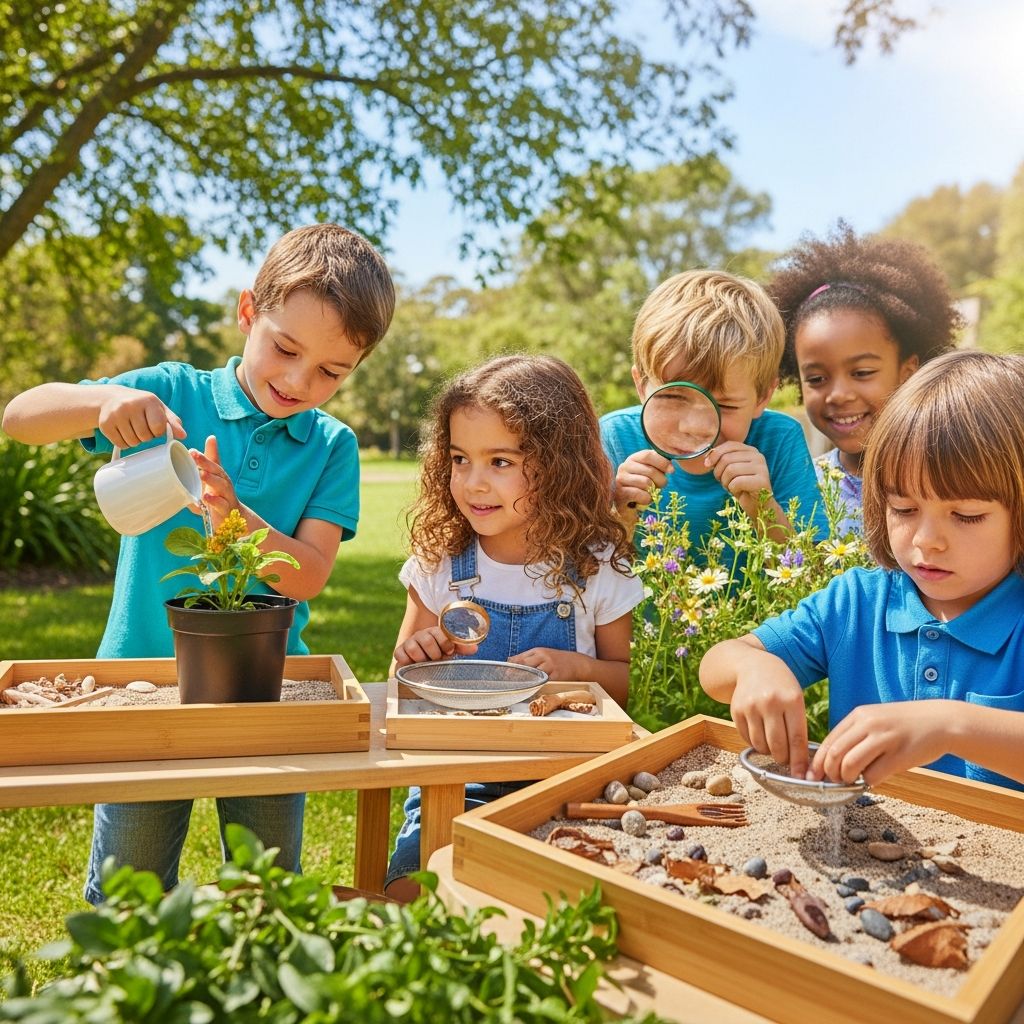
Summer offers a golden window for children to explore, grow, and thrive away from structured routines. Drawing from Montessori principles of child-led learning, independence, and respect for natural development, parents can create enriching experiences that turn idle moments into opportunities for discovery. These activities emphasize hands-on engagement, sensory stimulation, and practical skills, ensuring kids stay active both mentally and physically.
Embracing Child-Led Exploration Outdoors
Outdoor play aligns perfectly with Montessori’s focus on connecting children to their environment. Nature provides endless teachable moments, encouraging observation, classification, and respect for living things. Start by designating a safe backyard or park area as a child’s personal discovery zone, stocked with simple tools like baskets, magnifying glasses, and notebooks.
- Nature Collection Expeditions: Equip kids with small containers to gather leaves, rocks, or pinecones. Guide them to sort items by color, shape, or texture upon return, building categorization skills.
- Seasonal Plant Identification: Print simple charts of local flora and challenge children to match findings. This fosters botanical knowledge and patience.
- Outdoor Rhythm Games: Use sticks for drumming on logs or create leaf piles for jumping, promoting gross motor development and sensory feedback.
These pursuits not only combat boredom but also instill environmental stewardship, as children learn through direct interaction rather than passive instruction.
Indoor Practical Life Tasks for Skill Building
Montessori classrooms thrive on ‘practical life’ activities that mimic real-world tasks, scaled for small hands. Summer’s relaxed pace is ideal for integrating these into daily home life, teaching responsibility and fine motor control.
| Age Group | Activity | Skills Developed |
|---|---|---|
| Toddlers (2-3) | Pouring water between pitchers | Hand-eye coordination, concentration |
| Preschool (4-5) | Folding laundry with child-sized clips | Order, muscle control |
| Early Elementary (6+) | Meal prep like slicing soft fruits | Independence, safety awareness |
Prepare a low shelf with trays containing tools like serrated knives, cutting boards, and aprons. Rotate items weekly to spark sustained interest. Observe how children repeat tasks, refining movements instinctively—a hallmark of Montessori self-correction.
Sensory Adventures to Ignite Curiosity
Sensory experiences are cornerstones of Montessori education, helping children process the world through sight, sound, touch, smell, and taste. Summer’s abundance of natural materials makes this season prime for sensory setups.
- Elemental Play Bins: Fill trays with sand, water, herbs, or ice infused with fruit slices. Add scoops and funnels for free-form experimentation.
- Texture Treasure Hunts: Hide objects in fabric bags for blind identification, enhancing tactile vocabulary.
- Aromatic Herb Gardens: Plant mint, basil, and lavender in pots; let kids crush leaves to explore scents and pair with tasting simple infusions.
Such activities calm the nervous system while sharpening discrimination abilities, crucial for later academic success.
Creative Expression Through Art and Crafts
Art in Montessori isn’t about end products but the process of creation. Provide open-ended materials to encourage originality, using summer themes like sun, sea, or growth.
- Nature Imprint Collages: Press flowers or leaves onto paper with glue, creating evolving artworks.
- Watercolor Resist Techniques: Draw with crayons, then paint over with watercolors outdoors to observe color bleeding.
- Shell Sorting Mosaics: Collect beach treasures and arrange into patterns, practicing geometry intuitively.
Set up an ‘invitation to create’ station with washable supplies, allowing children to work at their pace without adult interference unless requested.
Family Bonding Through Shared Routines
Summer strengthens family ties via collaborative projects. Montessori views the home as an extended classroom, where adults model purposeful work.
- Plan weekly family cooks-outs with kid-led ingredient selection and chopping.
- Initiate a shared reading circle, alternating stories from nature-themed books.
- Organize group scavenger hunts incorporating math clues, like counting specific insects.
These rituals build community, communication, and a sense of belonging, countering isolation from screen time.
Age-Adapted Ideas for Every Child
Tailor activities to developmental stages for maximum engagement. Toddlers benefit from simple pouring and sorting; preschoolers tackle multi-step tasks; older kids dive into research-based projects like weather journaling.
For mixed-age families, pair siblings: older ones guide younger, embodying Montessori’s ‘planes of development’ where peers teach peers.
Overcoming Common Challenges
Parents often worry about mess or short attention spans. Embrace controlled chaos—use trays to contain spills and follow the child’s lead on duration. If interest wanes, gently introduce variations without pressure. Consistency in preparation yields independent play, freeing parents too.
Frequently Asked Questions (FAQs)
Q: How do I prepare a Montessori activity shelf?
A: Select 5-7 trays with one focused material each, placed at child height. Rotate bi-weekly based on usage and interests to prevent overwhelm.
Q: Are these activities suitable for rainy days?
A: Absolutely—adapt outdoors ideas indoors, like using a kiddie pool for water play or windows for ‘painting’ with water brushes.
Q: What if my child loses interest quickly?
A: Observe silently first; extend time by adding one new element. Montessori emphasizes intrinsic motivation over forced participation.
Q: Do I need special materials?
A: No—household and nature items suffice. Invest minimally in durable tools like wooden utensils for longevity.
Q: How does this support learning during summer slide?
A: Hands-on tasks reinforce math, language, and science subtly, maintaining skills without formal lessons.
Building Lasting Habits for Joyful Summers
Incorporate these into a loose weekly rhythm: mornings for outdoor ventures, afternoons for indoor calm, evenings for reflection. Track progress in a family journal to celebrate growth. Over time, children internalize self-entertainment, emerging from summer more confident and capable.
By prioritizing presence over perfection, parents cultivate resilient, curious minds ready for life’s adventures.
References
- American Academy of Pediatrics: Children and Media — American Academy of Pediatrics. 2023-10-24. https://www.aap.org/en/patient-care/media-and-children/
- The Absorbent Mind — Maria Montessori. 1949 (reprint 2020). https://www.montessori.org/wp-content/uploads/2020/07/The-Absorbent-Mind-Montessori.pdf
- Benefits of Nature Play for Children — National Institute for Early Education Research. 2024-03-15. https://nieer.org/research-reports/benefits-nature-play-children
- Montessori: The Science Behind the Genius — Angeline Stoll Lillard. 2017-03-01. https://oxford.universitypressscholarship.com/view/10.1093/acprof:oso/9780199828241.001.0001/acprof-9780199828241
- Play and Development in Early Childhood — U.S. Department of Health and Human Services. 2022-07-12. https://www.acf.hhs.gov/sites/default/files/documents/opre/play_dev_early_childhood_508.pdf