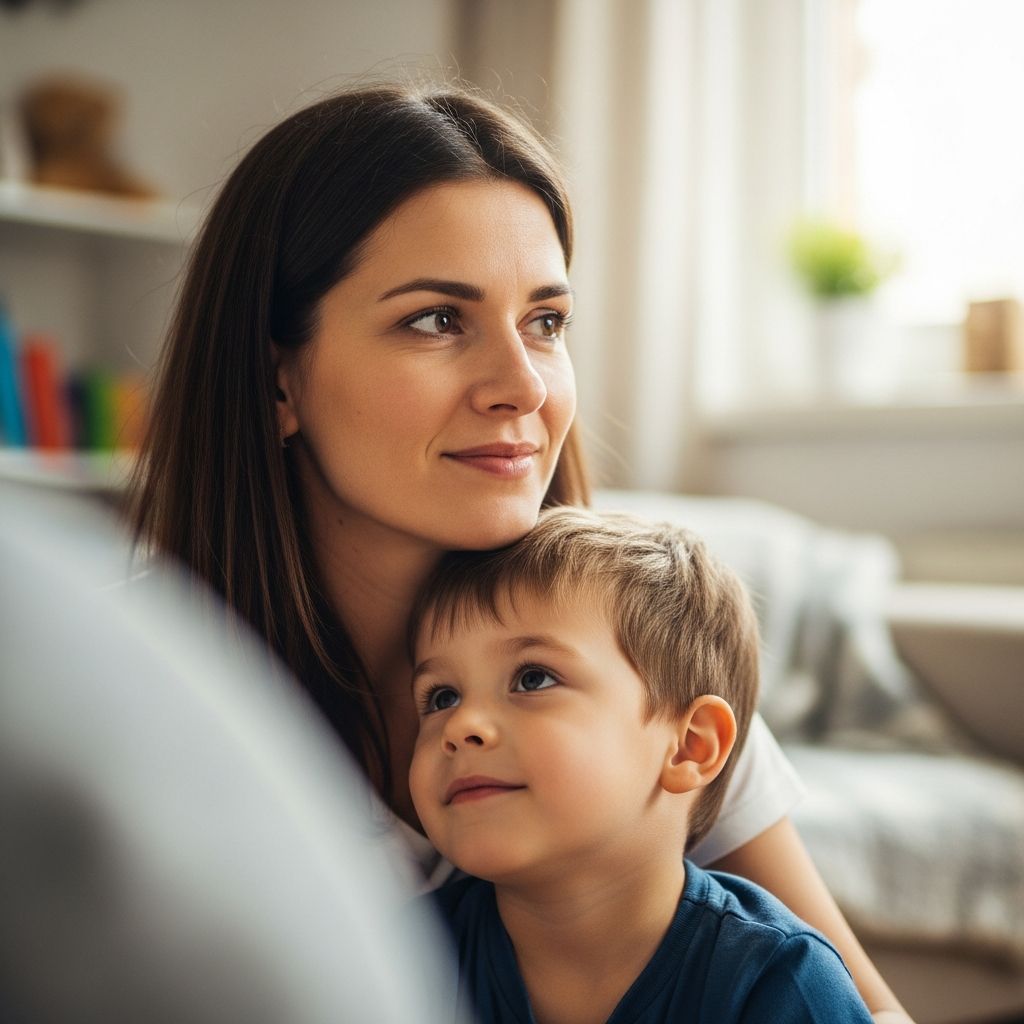
Mothers of sons often grapple with body image concerns that intensify through the daily realities of parenting, challenging the notion that these issues primarily affect moms of girls.
Unseen Pressures on Mothers Raising Sons
Parenting young boys brings unique physical and emotional demands that can exacerbate a mother’s self-perception of her body. Constant activity, from chasing toddlers to organizing playdates, leaves little time for personal self-care routines that once bolstered confidence. Many moms report feeling a disconnect between their pre-motherhood physique and their current form, heightened by societal expectations of postpartum recovery.
This phenomenon extends beyond aesthetics; it ties into broader identity shifts. Mothers describe moments of hesitation before mirrors, questioning if their changing shapes align with the energetic roles they play. Unlike the spotlight often shone on girls’ body concerns, these maternal struggles receive less attention, yet they profoundly shape family dynamics.
How Daily Parenting Shapes Maternal Self-View
The relentless pace of raising boys—wrestling matches, outdoor adventures, and endless energy—can lead to physical exhaustion that mirrors emotional fatigue around body image. Moms frequently share stories of skipping meals amid chaos or relying on quick, less nutritious snacks, which fuel cycles of guilt and dissatisfaction.
- Physical demands like lifting heavy children or constant movement alter body composition over time.
- Sleep deprivation from nighttime wake-ups impacts metabolism and mood, intensifying negative self-talk.
- Social comparisons arise during school pickups or playground interactions, where other parents appear more ‘put-together.’
These elements compound, creating a backdrop where body confidence wanes, often unnoticed by those outside the home.
Fathers’ Crucial Role in Family Body Perceptions
Research highlights fathers’ significant yet understudied influence on children’s body image, particularly daughters, but with implications for entire families. In a study involving 30 fathers, many recognized the value of fostering healthy self-views in their daughters but faced barriers like discomfort in discussions and conflating health with size. Fathers who praised skills and talents over appearance, and respected daughters’ self-expression, positively impacted perceptions.
This paternal approach extends to households with sons, modeling balanced attitudes that mothers can draw from. Dads avoiding body-critical comments create safer spaces for all family members to discuss health without judgment.
Bidirectional Influences in Parent-Child Dynamics
During stressors like the COVID-19 pandemic, body image dissatisfaction flowed both ways between parents and children, moderated by parental adaptation levels. In a study of 175 Canadian families, parents with low pandemic acceptance were more prone to negative mutual influences on body perceptions. Notably, mothers’ views of sons’ dissatisfaction predicted their own over time, underscoring child-driven effects.
Such findings reveal how children’s cues can mirror back to parents, amplifying familial vulnerabilities. Low adaptation heightened parent-driven effects, where parental dissatisfaction projected onto kids, especially in prolonged confinement scenarios.
Practical Strategies for Moms to Reclaim Confidence
Building resilience starts with intentional shifts. Mothers can prioritize movement that feels joyful, like family hikes, over punitive workouts. Mindful eating, focusing on nourishment for sustained energy with active boys, counters guilt-driven habits.
| Challenge | Strategy | Benefit |
|---|---|---|
| Postpartum body changes | Neutral clothing choices | Reduces daily scrutiny |
| Time scarcity | Micro self-care (5-min stretches) | Boosts immediate mood |
| Comparison traps | Curate positive social feeds | Fosters realistic benchmarks |
| Emotional eating | Journal prompts on hunger cues | Enhances body awareness |
These steps empower moms to model self-acceptance for sons, teaching boys to value strength and capability over superficial ideals.
Navigating Conversations Around Bodies at Home
Open dialogues demystify bodies, starting with age-appropriate facts about growth and function. Moms of boys can frame bodies as tools for adventure—strong legs for soccer, resilient arms for climbing—shifting focus from looks to utility.
Avoiding casual critiques is vital; offhand remarks about TV characters or others’ sizes imprint on young minds. Instead, redirect to non-appearance praises: “Your determination in that game was impressive!” This builds holistic esteem.
The Impact of Paternal Comments on Daughters
Dads’ words carry weight; excessive beauty focus or negative observations about others can skew daughters’ self-worth. Balance compliments across traits—intelligence, kindness, athleticism—to prevent over-reliance on appearance for validation. Fathers calling out fat-shaming humor in media normalizes body neutrality.
Stay-at-Home Parenting and Gender Dynamics
Stay-at-home dads challenge stereotypes, yet face biases that indirectly affect family body narratives. Their involvement in daily care provides diverse role models, showing boys varied expressions of strength and emotional attunement.
Long-Term Benefits of Family-Wide Body Positivity
Cultivating acceptance yields healthier outcomes. Sons learn respect for all bodies, preparing them for diverse relationships. Mothers regain agency, breaking guilt cycles. Research supports early interventions prevent lasting mental health issues.
Families adopting intuitive eating and size-inclusive views thrive, with resources like Health at Every Size guiding transitions.
Frequently Asked Questions
Do moms of boys experience more body image issues than moms of girls?
No definitive data singles them out, but unique physical demands and less societal focus amplify challenges for boymoms.
How can fathers positively influence body image?
Praise non-physical traits, avoid size comments, and engage in open health talks despite discomfort.
What role did the pandemic play in family body perceptions?
It intensified bidirectional dissatisfaction, especially with low parental adaptation.
Are stay-at-home dads effective at addressing body image?
Yes, their hands-on role counters biases and models balanced parenting.
What daily habits help moms build body confidence?
Incorporate joyful movement, mindful eating, and limit comparisons via curated inputs.
Building a Legacy of Self-Acceptance
Through consistent modeling, families forge resilient identities. Mothers of sons lead by embracing their evolving forms, inspiring boys to view bodies as allies in life’s pursuits. This collective effort disrupts generational patterns, prioritizing well-being over ideals.
References
- “It really presents a struggle for females, especially my little girl”: Exploring father’s experiences discussing body image with their young daughters — Ramseyer Winter et al., Body Image journal. 2020-01-01. https://showme.missouri.edu/2020/how-can-fathers-shape-their-daughters-body-image/
- Parent and child influence in body image dissatisfaction — PMC/NCBI. 2023-02-20. https://pmc.ncbi.nlm.nih.gov/articles/PMC9970923/
- The stigma over being a stay-at-home dad holds everyone back — Big Think. 2023-01-01. https://bigthink.com/the-learning-curve/stay-at-home-dad/
- 5 Things Fathers Can Do to Help Shape Their Daughters’ Body Image — MetroWest Nutrition. 2022-01-01. https://metrowestnutrition.com/5-things-fathers-can-do-to-help-shape-their-daughters-body-image/
- 5 Hurtful Things Dads Say About Their Daughters’ Bodies — All Pro Dad. 2021-01-01. https://allprodad.com/5-hurtful-things-dads-say-daughters-bodies/