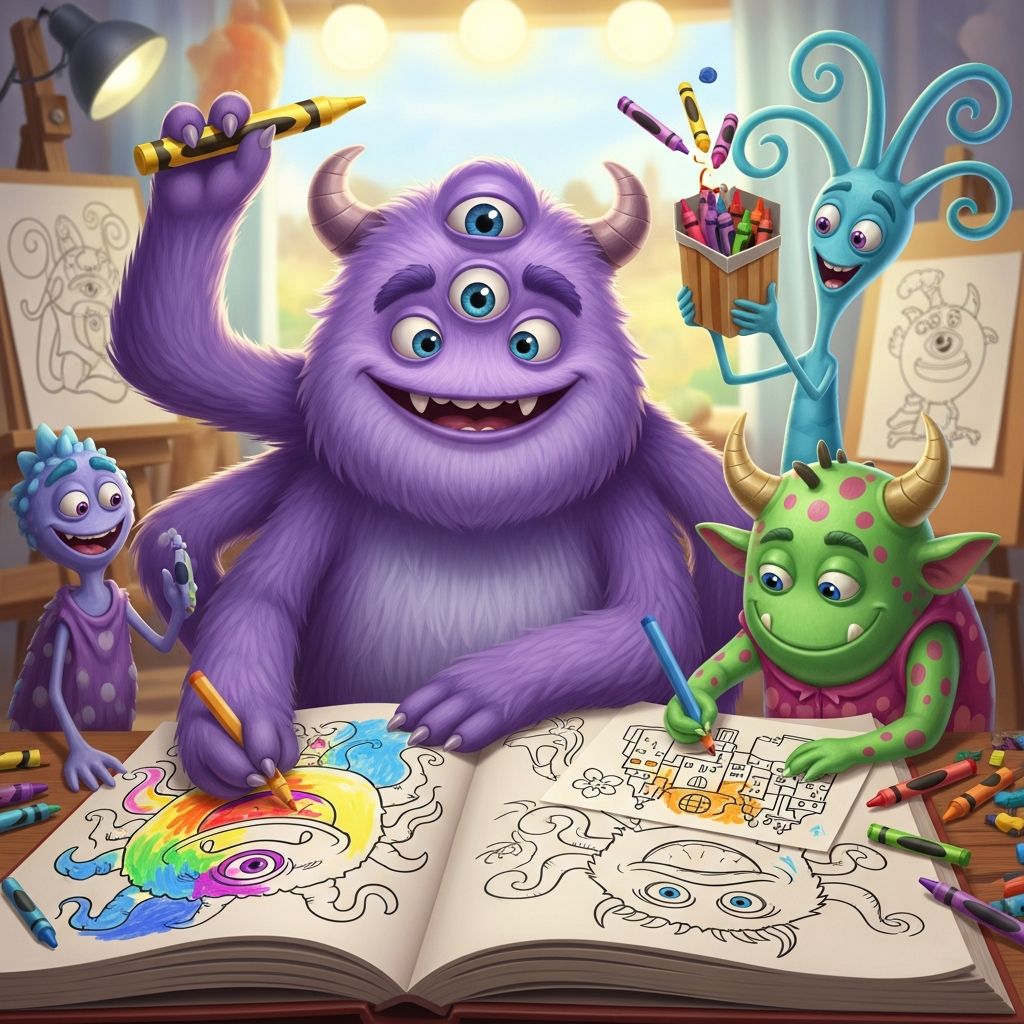
Monster coloring pages turn quirky, silly creatures into a powerful tool for your child’s creativity, confidence, and calm. Designed as friendly rather than frightening, these pages invite kids to explore big feelings, wild colors, and imaginative stories in a safe and playful way.
Why Monsters Make Great Coloring Companions
Monsters are wonderfully flexible characters: they can be goofy, shy, brave, sleepy, or excited, which gives children permission to explore all kinds of emotions and personalities without judgment. Because monsters are not tied to real-world rules, there is no such thing as a “wrong” way to color them.
This creative freedom is especially helpful for children who feel anxious about perfection or comparison. A purple monster with orange polka dots and rainbow teeth is just as valid as a calm green monster in pajamas, so every child can feel successful.
Key Benefits of Monster Coloring Pages
Monster coloring pages are fun, but they also support several areas of development. Below is a quick overview of the main benefits.
| Benefit Area | What Kids Practice | How Monsters Help |
|---|---|---|
| Creativity | Experimenting with colors, patterns, and designs | Monsters can look however a child imagines, encouraging bold choices. |
| Fine Motor Skills | Gripping crayons, staying in lines, small hand movements | Details like horns, spots, and teeth train hand-eye coordination. |
| Emotional Expression | Recognizing feelings, talking about worries, practicing calm | Monsters can “hold” big feelings for kids and make them less scary. |
| Focus & Patience | Completing tasks, slowing down, sustained attention | Finishing a page becomes a satisfying, screen-free goal. |
| Language & Storytelling | Using adjectives, building narratives, asking and answering questions | Each monster easily turns into a character in a made-up story. |
Monster Themes Kids Love
To keep coloring sessions fresh, use a variety of monster themes that match your child’s interests and age. Here are some playful ideas you can look for or sketch yourself.
- Friendly fuzzballs: Soft, round monsters with big eyes, fluffy fur, and gentle smiles are perfect for toddlers and preschoolers.
- Goofy athletes: Monsters on skateboards, scooters, or roller skates help active kids connect coloring with movement and sports.
- Kitchen monsters: Creatures stirring soup, baking cupcakes, or tasting funny snacks introduce simple cooking vocabulary.
- Party monsters: Confetti, balloons, and dancing monsters make great pages for birthdays or celebrations.
- Bedtime beasts: Cozy monsters in pajamas, holding stuffed animals or brushing teeth, support soothing night routines.
- Music monsters: Drummers, singers, or guitar-playing monsters are ideal for kids who love rhythm and song.
Age-Appropriate Monster Coloring Ideas
Different ages need different styles of monster pages. Adjust the level of detail, and the way you use the pages, to match where your child is developmentally.
Toddlers (1–3 Years)
At this age, big shapes and thick outlines are best, and the goal is exploration, not perfection. Keep sessions short and focused on fun, not staying inside the lines.
- Choose large, simple monsters with minimal tiny details.
- Offer chunky crayons or washable markers that are easy to grip.
- Talk about colors and body parts: “You colored the monster’s big eyes blue!”
- Ignore scribbles; celebrate effort and curiosity.
Preschoolers (3–5 Years)
Preschoolers enjoy silly details and are ready for early storytelling. Coloring can also support shape and number recognition at this stage.
- Look for monsters with identifiable features like spots, stripes, and horns.
- Count things together: “How many teeth does this monster have?”
- Invite simple stories: “Where does this monster live?”
- Encourage mixing colors or creating patterns on fur and tails.
Early Elementary (5–8 Years)
Children in this age range can handle more detailed scenes and may want to create full monster worlds. They are also ready for simple shading and design challenges.
- Provide pages with backgrounds: parks, bedrooms, classrooms, or space scenes.
- Challenge them to design clothing, accessories, or monster gadgets.
- Introduce colored pencils and fine-tip markers for detail work.
- Ask them to write a name or a sentence about their monster underneath the drawing.
Older Kids (8+ Years)
Older children may enjoy more complex, stylized monsters that feel closer to comic book or fantasy art. Coloring can become a soothing, nearly meditative activity.
- Offer intricate designs with scales, armor, or patterned wings.
- Introduce shading techniques like light and dark areas on the monster’s body.
- Encourage them to create a series of monsters that belong to the same “team” or world.
- Let them help younger siblings by designing simple monsters for them to color.
Creative Ways to Use Monster Coloring Pages
Monster pages are versatile and can be used far beyond a quick coloring break at the kitchen table. With a bit of imagination, they can anchor games, calm-down routines, and educational activities.
- Monster storybooks: Staple a few finished pages together and let your child narrate or dictate a story about their monster family.
- Emotion monsters: Draw or print monsters that show different expressions (happy, sad, worried, excited) and talk about times your child has felt the same way.
- Alphabet monsters: Create a monster for each letter of the alphabet (“A is for Antler Monster,” “B is for Bubble Monster”) to sneak in literacy practice.
- Math with monsters: Add simple problems to the page: “Color three horns green, then add two more. How many horns does your monster have now?”
- Calm-down corner: Keep a folder of monster pages and a small basket of crayons in a cozy spot where kids can go when they need a break.
Supplies That Make Monster Coloring Extra Fun
You do not need fancy tools, but a few thoughtful supplies can transform monster coloring into an even richer experience. Aim for a mix of washable, child-safe materials and a comfortable workspace.
- Crayons and markers: Washable crayons are great for younger kids; fine-tip markers work well for older children who enjoy detail.
- Colored pencils: Perfect for shading scales, fur, and tiny accessories like buttons or shoelaces.
- Gel pens or metallic markers: Use sparingly for highlights such as sparkly claws, shiny eyes, or glowing spots.
- Heavyweight paper: If you print pages yourself, choose thicker paper to prevent bleed-through and make finished monsters easier to display.
- Storage solutions: A simple binder, expanding file, or labeled box helps keep favorite monster pages accessible and organized.
Turning Monsters Into Learning Moments
Monster coloring pages can double as low-stress teaching tools when you gently weave learning into the fun. The key is to keep the atmosphere playful rather than turning every page into a worksheet.
- Vocabulary building: Introduce words like “spiky,” “fuzzy,” “slimy,” or “giggly” as your child colors different textures and expressions.
- Comparisons and categories: Ask questions such as “Which monster is taller?” or “Which monsters have wings?” to encourage early math and science thinking.
- Problem-solving: Present small challenges: “This monster is freezing; can you design a costume to keep it warm?”
- Social skills: Use groups of monsters to talk about sharing, taking turns, or including others in games.
Reducing Fear With Friendly Monsters
Some children feel nervous about traditional monster stories that focus on scary creatures hiding in dark places. Reframing monsters as silly, gentle characters helps reduce those fears.
- Choose designs that smile, dance, cook, or read books instead of threatening poses.
- Give monsters everyday worries kids can relate to, such as being afraid of the dark or nervous about school.
- Invite your child to draw a “helper monster” whose job is to protect them or keep watch by the bed at night.
- Create a “brave monster” page where your child colors the monster using colors that feel strong and safe.
Displaying and Reusing Finished Monster Art
What you do with colored pages matters more than many caregivers realize. Celebrating the artwork sends a clear message that effort and creativity are valuable.
- Home gallery wall: Dedicate a hallway, fridge door, or bulletin board as the “Monster Museum.” Rotate new pieces each week.
- Bookmarks and cards: Cut colored monsters into strips or shapes to create bookmarks, greeting cards, or gift tags.
- Story prompts: Store finished monsters in a box and pull one at random when you need a quick bedtime story idea.
- Learning tools: Laminate favorite monsters and use dry-erase markers to add speech bubbles or math problems over and over.
Simple Monster Coloring Rules for Low-Stress Fun
Setting a few gentle guidelines helps keep monster coloring relaxed and enjoyable for everyone. The goal is to encourage creativity and reduce pressure.
- Avoid correcting color choices; let children decide what looks “right.”
- Keep comparison out of the conversation by focusing on effort instead of neatness.
- Limit session length for younger children so they stop while they are still having fun.
- Offer choices: let the child pick which monster to color, which tools to use, and whether to add a background.
Monster Coloring FAQs
Are monster coloring pages appropriate for anxious kids?
Yes, as long as the monsters are drawn in a gentle, playful style. Look for round shapes, big friendly eyes, and everyday activities (like brushing teeth or eating snacks) instead of sharp claws and dark scenes. If a design seems even slightly unsettling, skip it and choose something more cheerful.
How long should a coloring session last?
For toddlers, five to ten minutes may be enough, while preschoolers often enjoy fifteen to twenty minutes if they are engaged. Older children may color for half an hour or more, especially if they are listening to music or an audiobook at the same time. End the session before your child becomes restless so the activity stays positive in their mind.
What if my child only scribbles on monster pages?
Scribbling is a normal and important stage of drawing and writing development. Instead of asking your child to slow down or stay in the lines, describe what you see: “You used lots of red on this monster’s tail,” or “Your monster looks very energetic today.” This approach builds confidence and keeps the door open for more detailed work later.
Can monster coloring really help with emotions?
Coloring provides a safe, low-pressure way for children to focus on something soothing while you talk about feelings. You can ask questions like “What mood is this monster in?” or “If this monster were worried, what color would you choose?” Many kids find it easier to talk about an imaginary creature’s feelings than their own at first.
How can I keep monster coloring eco-friendly?
Print only the pages you need, use both sides of the paper when possible, and encourage children to repurpose finished monsters as bookmarks, cards, or collages. When markers or crayons wear out, look for recycling programs or choose brands that offer refillable or recyclable options.
Making Monster Coloring a Meaningful Ritual
Monster coloring pages can easily become a comforting ritual in your home rather than a one-time craft. Whether you use them as a calm-down tool after school, a rainy-day backup plan, or a weekly family art night activity, they can bring laughter, connection, and a sense of safety.
By choosing friendly designs, celebrating your child’s choices, and weaving in small learning moments, you turn silly monsters into steady companions on your child’s creative journey.