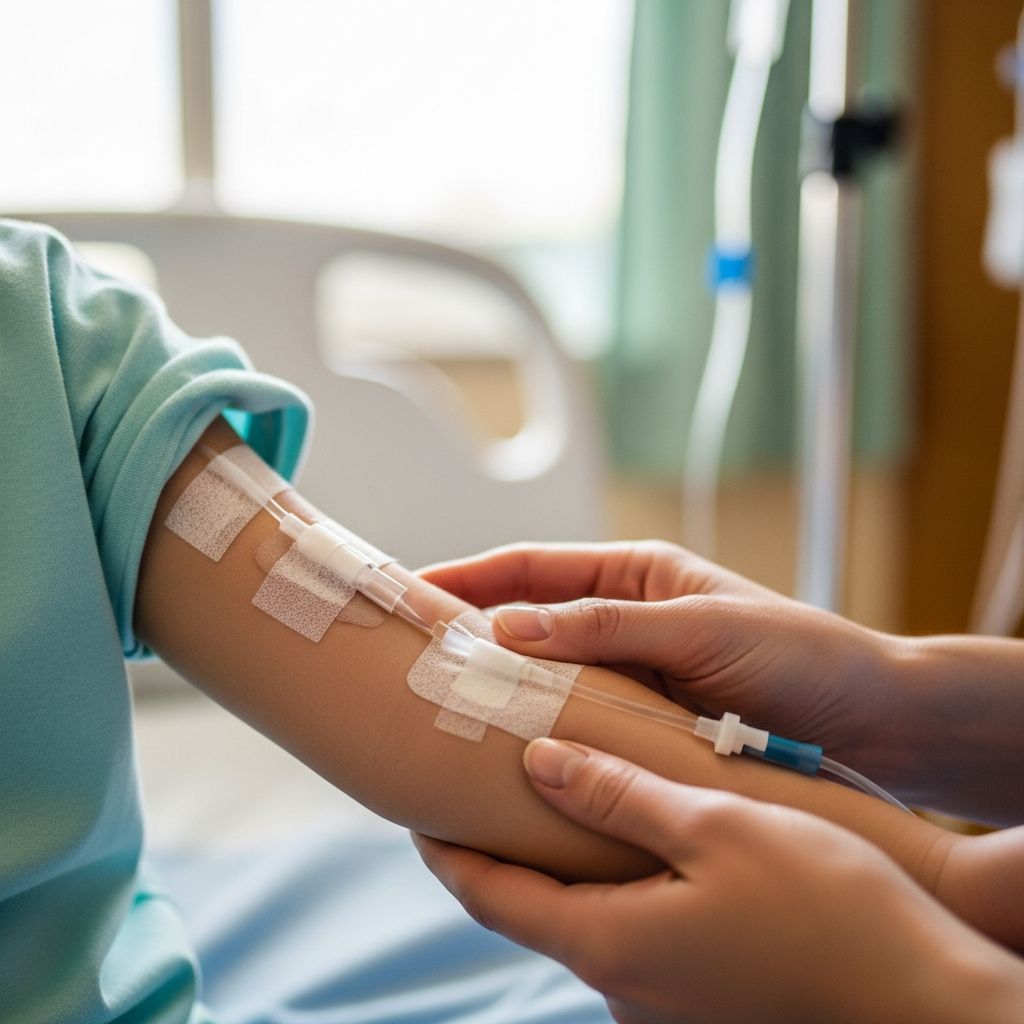
When a child needs medicines, fluids, or nutrition through a vein for more than a few days, doctors may recommend a PICC line (peripherally inserted central catheter). This guide explains, in parent-friendly language, what a PICC line is, why it is used, how it is placed, and how to keep your child safe and comfortable while they have one.
What Is a PICC Line?
A PICC line is a thin, flexible tube placed into a vein, usually in the upper arm, and gently guided through the vein until the tip rests in a large vein near the heart. Because the tip sits in one of the body’s biggest veins, it is considered a type of central venous catheter.
Key features of a PICC line include:
- Location: Inserted in a vein of the arm (less often the leg or neck in young children) and threaded to a large central vein that carries blood into the heart.
- Length: Much longer than a standard IV line because it travels from the arm to a central vein in the chest.
- Material: Soft, flexible plastic designed to bend with your child’s movements.
- Use: Can stay in for weeks to months and handle many kinds of treatments.
| Regular IV Line | PICC Line |
|---|---|
| Short catheter in a small vein near the skin | Long catheter that reaches a large central vein near the heart |
| Usually used for a few days | Designed for long-term use (weeks to about 3 months or more, if needed) |
| Often needs to be replaced when it fails or irritates the vein | Reduces the number of needle sticks and repeated IV placements |
| Limited types of medicines and fluids | Can deliver medicines that are strong or irritating to smaller veins |
Why Might a Child Need a PICC Line?
Doctors choose a PICC when they expect that a child will need frequent or long-term treatment through a vein. A PICC line is often used when:
- Treatment is needed for more than a few days, such as several weeks of IV antibiotics.
- Medicines are too strong or irritating for small, surface veins (for example, some chemotherapy drugs).
- The child has small or fragile veins that make repeated IV starts difficult or stressful.
- Blood tests are needed often and drawing from the PICC may lower needle sticks.
Typical uses of PICC lines include:
- IV antibiotics given for days or weeks (such as for serious infections)
- Chemotherapy and other cancer-related medicines
- IV fluids to keep a child hydrated
- Parenteral nutrition (IV nutrition) when a child cannot eat normally
- Blood transfusions and certain blood products
- Blood draws for lab tests
Who Decides on a PICC Line?
The choice to use a PICC line is made by the child’s main doctor, surgeon, or specialist, often together with a team experienced in IV access. They weigh the benefits and risks, your child’s diagnosis, and how long IV treatment is expected to last.
In many hospitals, PICCs are placed by:
- Interventional radiologists or vascular specialists
- Specially trained nurses or nurse practitioners
- Physician assistants with expertise in line placement
How Is a PICC Line Placed in a Child?
PICC placement is usually done in a treatment room, interventional radiology suite, or sometimes at the bedside, depending on the child’s age and health. Most children are awake, but the area is numbed; some children may also receive sedation to help them relax.
Before the Procedure
Before placing a PICC, the care team may:
- Review your child’s medical history and any medicines they are taking.
- Check blood tests, such as how well the blood clots and kidney function.
- Use ultrasound to look at the veins and choose the best one.
- Explain the procedure and ask for your consent.
Your child will be placed on monitors to track heart rate, breathing, and oxygen level during the procedure.
Step-by-Step Placement
While details vary by hospital, the process often follows these steps:
- Positioning: Your child lies on their back with the arm supported and slightly extended.
- Cleansing the skin: The skin on the arm is washed with an antiseptic solution to reduce infection risk.
- Local numbing: A numbing medicine is injected or applied to the skin so that the child should feel pressure but not sharp pain.
- Vein access: Using ultrasound guidance, the provider gently inserts a small needle into the chosen vein.
- Threading the catheter: The PICC line is carefully advanced through the vein until its tip reaches a large central vein near the heart.
- X-ray or imaging check: A chest X-ray or live X-ray (fluoroscopy) is used to confirm that the tip is in the correct position.
- Securing and dressing: The line is taped or secured to the arm and covered with a sterile, clear dressing.
The active insertion part typically takes less than an hour, and in many children much less. Most children feel minimal discomfort during and after placement, especially once the numbing medicine is working.
Living With a PICC Line: Day-to-Day Care
Once the PICC is in place, the goal is to keep it working well and to avoid infection or damage. Hospital staff will teach you how to care for the line at home and will provide written instructions.
Basic PICC Line Care Principles
Common elements of PICC care include:
- Keeping the area clean and dry: The dressing over the insertion site should stay clean, dry, and firmly attached.
- Regular flushing: Nurses or trained caregivers flush the line with sterile solution to keep it from clogging, according to your hospital’s protocol.
- Checking the site daily: Look for redness, swelling, drainage, or tenderness at the insertion site.
- Handling the caps safely: Anyone who connects or disconnects tubing must clean the caps and use sterile technique as instructed.
Bathing and Hygiene
Your team will guide you on how to bathe your child safely. Typical advice includes:
- Avoid soaking the PICC arm under water (no swimming or tub baths) unless your team specifically approves.
- Choose showers or sponge baths, keeping the dressing dry by covering it with a protective barrier.
- Do not remove or loosen the dressing yourself unless you have been trained to do so.
Activity and Play
Most children can be active while protecting the PICC line. In general:
- Everyday activities like walking, gentle play, and schoolwork are usually fine.
- Rough play, contact sports, and activities that might pull on the line (such as wrestling or climbing without supervision) are often restricted.
- Children can often return to school or daycare once the care team agrees and caregivers there know how to keep the line safe.
Benefits and Risks of a PICC Line
Potential Benefits
A PICC line can make long-term treatment safer and more comfortable for many children. Benefits include:
- Fewer needle sticks: Blood draws and medicines can often go through the PICC instead of repeated IVs.
- Longer use: Can stay in place for weeks or months when properly cared for.
- Better for certain medicines: Safely delivers treatments that require large veins.
- Flexible use: Some PICCs have more than one channel (lumen), allowing more than one medicine at a time.
Possible Risks and Complications
Like any medical device, a PICC line has risks. Your child’s team watches closely for complications and will teach you what to watch for at home. Common concerns include:
- Infection: Germs can enter at the skin, along the catheter, or through the hub. Good hand hygiene and careful dressing care are essential.
- Blockage or clotting: The line can become difficult to flush or draw from. Providers may use special medicines to clear a clot.
- Dislodgement or damage: The catheter can move out of position or break if pulled or kinked.
- Vein irritation or thrombosis: The vein can become irritated or develop a blood clot around the catheter.
- Mechanical issues: Leaks, cracks, or problems with the caps can happen and must be reported promptly.
When Should a PICC Line Be Removed?
A PICC line is removed when it is no longer needed or if it is causing a problem that cannot be solved while it remains in place.
Common reasons for removal include:
- The child has finished IV treatments.
- A different type of central line is needed.
- There is a confirmed infection of the line.
- The line is blocked, damaged, or has moved out of the correct position.
Removal is usually quick and done by a trained nurse or doctor. The child lies still while the dressing is removed and the catheter is gently pulled out. The site is then cleaned and covered with a new dressing while it heals.
Helping Your Child Cope Emotionally
Having a PICC line can be stressful or scary, especially for younger children. Parents can help by:
- Using simple, honest language to explain that the line helps them get better.
- Letting children ask questions and express fears.
- Involving them in small care tasks they can handle safely, such as choosing a sticker for the dressing cover (if allowed).
- Working with child life specialists or counselors to support coping and reduce anxiety.
Signs to Call the Care Team Immediately
Your child’s team will give you an emergency contact number and written instructions. In general, get medical help right away if you notice:
- Fever, chills, or your child seems suddenly unwell.
- Redness, warmth, swelling, or pain where the line enters the skin.
- Drainage (pus or blood) under or around the dressing.
- New swelling of the arm, neck, or face on the side of the PICC.
- Difficulty flushing the line or alarms from the IV pump that do not resolve.
- The line looks shorter or longer than usual, or has come out partway.
- Cracks, leaks, or breaks in the tubing or caps.
Frequently Asked Questions (FAQs)
How long can a child keep a PICC line?
A PICC is designed for intermediate to long-term use. In many children it stays in place for weeks to about three months, and sometimes longer if it continues to work well and remains free of infection, as guided by the care team.
Can my child go to school or daycare with a PICC?
Many children can attend school or daycare once they are medically stable and staff know basic precautions, such as avoiding rough play, protecting the PICC arm, and recognizing warning signs. Coordinate with your child’s doctor and the school nurse to create a clear care plan.
Will my child feel the catheter inside their body?
Children do not usually feel the catheter moving inside the vein. They may notice the dressing, tubing, or tape on their arm, especially at first. Mild soreness around the insertion site shortly after placement is common and often improves within a day or two.
Who changes the dressing and flushes the line at home?
In some families, home-care nurses visit to change dressings and manage flushes. In others, parents or caregivers are trained to do these tasks using sterile supplies and clear instructions from the hospital or home-care agency. Your team will tell you which plan is safest for your child.
Is it safe for my child to play sports with a PICC line?
Non-contact, low-impact activities may be allowed, but contact sports or any activity that risks pulling or hitting the PICC line are usually discouraged. Always ask your child’s doctor before starting or resuming sports.
Does a PICC line mean my child is very sick?
A PICC line does signal that your child needs significant medical treatment, but it is also a tool to make that treatment safer and more comfortable. Many children with PICC lines are well enough to walk, play, and attend school while receiving therapy.
References
- PICC Line (Peripherally Inserted Central Catheter) — Hospital for Special Surgery. 2022-06-10. https://www.hss.edu/health-library/conditions-and-treatments/picc-line
- Peripherally Inserted Central Catheter (PICC Line) — Cleveland Clinic. 2023-07-06. https://my.clevelandclinic.org/health/treatments/14983-peripherally-inserted-central-catheter-picc
- Peripherally Inserted Central Catheter (PICC Line) — Children’s Hospital of Philadelphia. 2022-03-15. https://www.chop.edu/treatments/peripherally-inserted-central-catheter-picc
- PICC Line for Chemotherapy — Macmillan Cancer Support. 2023-01-20. https://www.macmillan.org.uk/cancer-information-and-support/treatment/types-of-treatment/cancer-drug-treatments/picc-lines
- Peripherally Inserted Central Catheter (PICC) Line Placement — StatPearls/NCBI Bookshelf. 2023-08-14. https://www.ncbi.nlm.nih.gov/books/NBK573064/