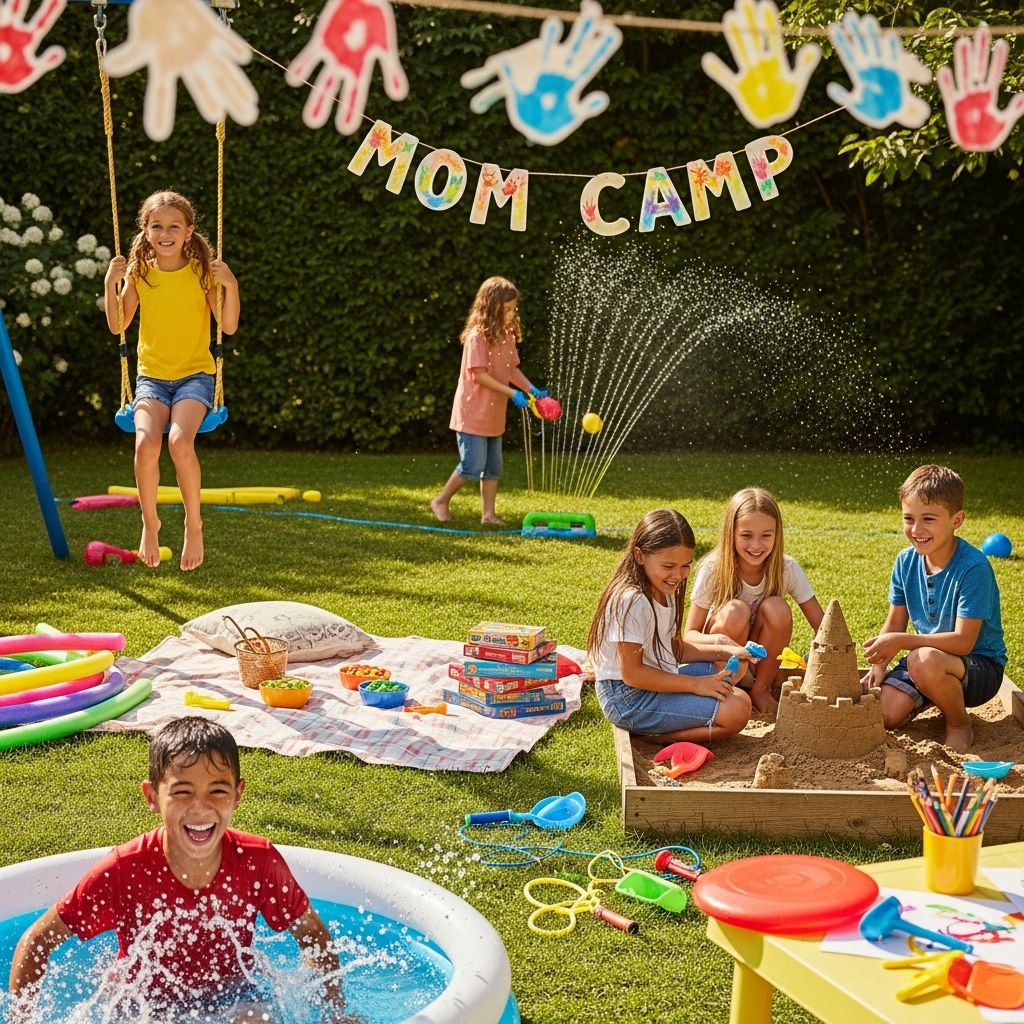
When school is out and kids start saying “I’m bored” on repeat, a simple, structured idea called Mom Camp can transform your home into a fun, activity-packed mini summer camp.
This guide walks through how to design a one-week Mom Camp schedule, complete with arts and crafts, field trips, outdoor games, evening family time, and ideas for adapting the plan any time of year.
What Is Mom Camp?
Mom Camp is a fast-paced, one-week schedule of planned activities for kids, led by a parent, that mimics the structure and excitement of a traditional summer camp.
The goal is to pack each day with fun blocks of time—meals, crafts, outings, outdoor play, and evening activities—so kids know what to expect and have less time to feel bored.
Why a Structured Week Helps
Many children, especially those who like predictability or who experience anxiety or autism spectrum traits, feel calmer and happier when they can see a clear order of events for the day.
Having a printed schedule they can carry, read, and even cross off as they go gives them a sense of control and satisfaction as each activity is completed.
- Reduces boredom and screen battles by filling the day with engaging activities.
- Helps kids anticipate what comes next, which lowers stress for those who thrive on routine.
- Encourages family bonding because adults participate alongside the kids.
How to Make Your Mom Camp Schedule
The foundation of Mom Camp is a simple daily schedule that covers a full day but is only shared with the kids one day at a time.
Planning the entire week in advance lets you balance home-based activities with outings while leaving room to adjust if weather or energy levels change.
Planning Strategy
Plan the full week on your own, but give children only that day’s schedule each morning so they are excited about what is coming without feeling overwhelmed.
Build in time blocks for meals, snacks, a quiet reading or nap time, a major outing, hands-on projects, outdoor play, and a screen-light evening activity.
Sample Daily Time Blocks
Every family’s routine is different, but a consistent pattern helps kids quickly understand the rhythm of Mom Camp days.
Below is an example of how you might organize a typical weekday during your Mom Camp.
| Time | Activity Block | Notes |
|---|---|---|
| 7:30–8:30 | Breakfast and morning checklist | Get dressed, brush teeth, review schedule. |
| 8:30–10:30 | Morning field trip / adventure | Plan big outing early to beat heat and crowds. |
| 10:30–12:00 | Free play & snack | Unstructured playtime at home or at destination. |
| 12:00–1:00 | Lunch | Include simple, kid-friendly meals or picnic. |
| 1:00–2:30 | Reading / nap / quiet time | Respect nap needs for younger children. |
| 2:30–4:00 | Arts and crafts projects | Indoor activities for hot afternoon hours. |
| 4:00–5:30 | Outside hour | Active games and outdoor challenges. |
| 5:30–7:00 | Dinner and clean-up | Include kids in simple tasks and table setting. |
| 7:00–8:30 | Evening family activity | Games, stories, backyard camping, or movie night. |
Arts and Crafts Projects
Arts and crafts work especially well in the afternoon when it is too hot to play outside, providing a calm, creative block that still feels special and summery.
Summer-themed projects give kids something tangible to keep or display, and they can double as decorations for a final Mom Camp celebration.
Summer-Themed Craft Ideas
- Seashell picture frame: Use glue to attach shells to a plain frame for a beachy keepsake; add a photo from one of your field trips.
- Sand art bottles: Layer different colors of sand in clear bottles or jars to create bright decorative pieces.
- Beach scene collage: Make an ocean or beach picture using crumpled tissue paper, sand, and cut-out shapes like umbrellas or flip-flops.
- Summer journal: Staple or bind blank pages and let kids draw or write about each day of Mom Camp.
Tips for Successful Craft Time
Prepare materials ahead of time and place them in labeled bins so kids can dive in quickly without waiting while supplies are gathered.
Cover work surfaces with old tablecloths or newspaper, keep cleaning wipes or cloths handy, and encourage kids to help with clean-up as part of the routine.
Adventures and Field Trips for Kids
The “big outing” each day becomes the highlight of Mom Camp, giving kids something to look forward to and breaking up the week with new places and experiences.
Scheduling adventures in the morning helps you avoid peak heat and crowds, and it is easier for kids to stay regulated and cooperative earlier in the day.
Field Trip Ideas
- Zoo: See animals, attend feedings, or follow a scavenger hunt to find specific species.
- Aquarium: Explore exhibits and talk about ocean habitats and conservation.
- State or county park: Go hiking, explore nature trails, or picnic by a lake.
- Public playground: Try a playground in a new neighborhood for a fresh challenge.
- Movies: Some theaters offer free or discounted summer movies on certain days.
- Museum: Choose a children’s, science, or history museum depending on your child’s interests.
- Pet store: Visit animals, talk about pet care, and practice gentle interactions.
- Fishing or crabbing: Spend time near the water learning basic outdoor skills if you have safe access.
Budget-Friendly Planning
If you already have memberships to attractions like the zoo, aquarium, or local museums, those locations make easy, low-cost choices for your Mom Camp schedule.
When you do not have memberships, check websites for free days, discounted admission, or seasonal promotions, and balance those trips with free options like parks and playgrounds.
Outside Hour Activities
After an indoor afternoon of crafts or quiet time, kids are usually ready to move, making an “outside hour” a key piece of the Mom Camp day.
Setting up new games, challenges, or play areas helps outdoor time feel special rather than just being told to “go play in the yard.”
Outdoor Play Ideas
- Obstacle course: Use cones, chalk, chairs, and toys to create a path and then let kids design their own version.
- Lawn games: Play croquet, bocce ball, or horseshoes if you have the equipment.
- Bike or scooter parade: Decorate bikes or scooters and ride around the neighborhood together.
- Hula hoop contest: Turn on music and see who can keep the hoop up longest or invent new tricks.
- Sidewalk chalk mural: Work together to draw a giant beach or ocean scene on the driveway or sidewalk.
Making Outdoor Time Engaging
Join your children in at least one of the outdoor games so they feel you are playing with them, not just supervising, which deepens connection and makes the activities more memorable.
Rotate activities during the week so each outside hour feels a little different and kids stay curious about what will be offered next.
Evening Family Activities
The evening block of Mom Camp focuses on technology-light or technology-free family time after dinner, when everyone can unwind together.
Stepping away from constant screens in the evening makes it easier for kids to settle for bedtime and gives space for simple, shared joys like conversation and laughter.
Screen-Light Family Fun Ideas
- Board games: Choose a few games that everyone can participate in, taking turns picking which game to play.
- Charades: Act out animals, movies, or silly scenes; kids can even invent their own categories.
- Card games: Teach simple classics such as Crazy Eights, Hearts, Spades, or Rummy, adjusting rules for younger players.
- Backyard tent night: Set up a tent, share stories, and look at the stars together if the weather allows.
- Movie night: Use this as a special exception to the no-electronics theme; add popcorn and optional candy for a home-theater feel.
Strengthening Family Bonds
Choosing activities that involve conversation, cooperation, and shared laughter turns the evening block into a daily ritual that kids will look forward to long after Mom Camp ends.
Keeping a simple rotation—board game night, storytelling night, backyard camping night, movie night—makes planning easier while still offering variety.
Mom Camp Beyond Summer
Although Mom Camp is designed as a summer boredom-buster, the same structure can be adapted for long weekends, winter breaks, or spring vacations when kids are home for several days in a row.
Shorter versions, such as a two- or three-day mini Mom Camp, still offer the benefits of planned fun and predictable routine during otherwise unstructured time.
Adapting for Different Seasons
- Winter: Swap water and outdoor heat-friendly activities for sledding, indoor obstacle courses, and hot chocolate crafts.
- Spring: Emphasize nature walks, gardening, and rainy-day art projects.
- Long weekends: Choose one field trip, one big craft, and one family game night and repeat a smaller version of the schedule.
Capturing Memories
During Mom Camp, taking photos, saving ticket stubs, and collecting small mementos makes it easy to assemble a simple scrapbook or digital photo book later.
Looking back through these memories together helps kids remember the fun and strengthens their sense of family connection and tradition.
Quick Reference Ideas Table
The table below summarizes core Mom Camp elements so you can plan a full week at a glance.
| Category | Examples | Key Purpose |
|---|---|---|
| Morning outing | Zoo, aquarium, park, playground, museum, movie, pet store, fishing. | Novel experience, physical movement, learning. |
| Afternoon crafts | Seashell frames, sand art bottles, beach collages, journals. | Creativity, fine motor skills, quiet focus. |
| Outside hour | Obstacle courses, lawn games, parades, chalk murals. | Active play, coordination, fresh air. |
| Evening fun | Board games, charades, card games, backyard tent, movie night. | Screen-light bonding, calm wind-down. |
| Anytime add-ons | Photos, journaling, scrapbooking. | Memory-making and reflection. |
FAQs About Mom Camp
How long should Mom Camp last?
The original concept centers on a single, high-energy week where many activities are deliberately packed into each day to create a camp-like feel.
However, families can repeat the model or run shorter versions during other school breaks to match their energy, budget, and schedules.
Is Mom Camp only for younger kids?
Mom Camp works especially well for elementary-age children, but older kids can still enjoy it if given more input into choosing activities and outings.
Adjusting plans—for example, selecting more advanced crafts, hiking trails, or complex games—helps keep tweens and teens engaged.
What if my child has anxiety or autism traits?
The predictable, written schedule used in Mom Camp can be particularly helpful for children with anxiety or autism spectrum traits because it lets them see and anticipate what is coming.
You can further support them by using visual schedules, previewing transitions, and allowing quiet breaks if a child feels overwhelmed.
Do I need to schedule every minute?
Mom Camp is designed to be busy, but it still benefits from blocks of flexible time such as free play or relaxed reading, which prevent everyone from burning out.
Think in terms of time blocks with a main focus rather than filling every minute with a tightly scripted task.
Can the ideas be mixed and matched?
All of the suggested activities—field trips, crafts, outdoor games, and evening events—can be swapped between days to fit your family’s needs and weather conditions.
The key is maintaining a recognizable structure while staying flexible with the specific choices inside each block.
By intentionally planning one week of Mom Camp with a clear schedule, varied activities, and room for fun, families can turn an ordinary stretch of summer into a set of memories that kids talk about for years.