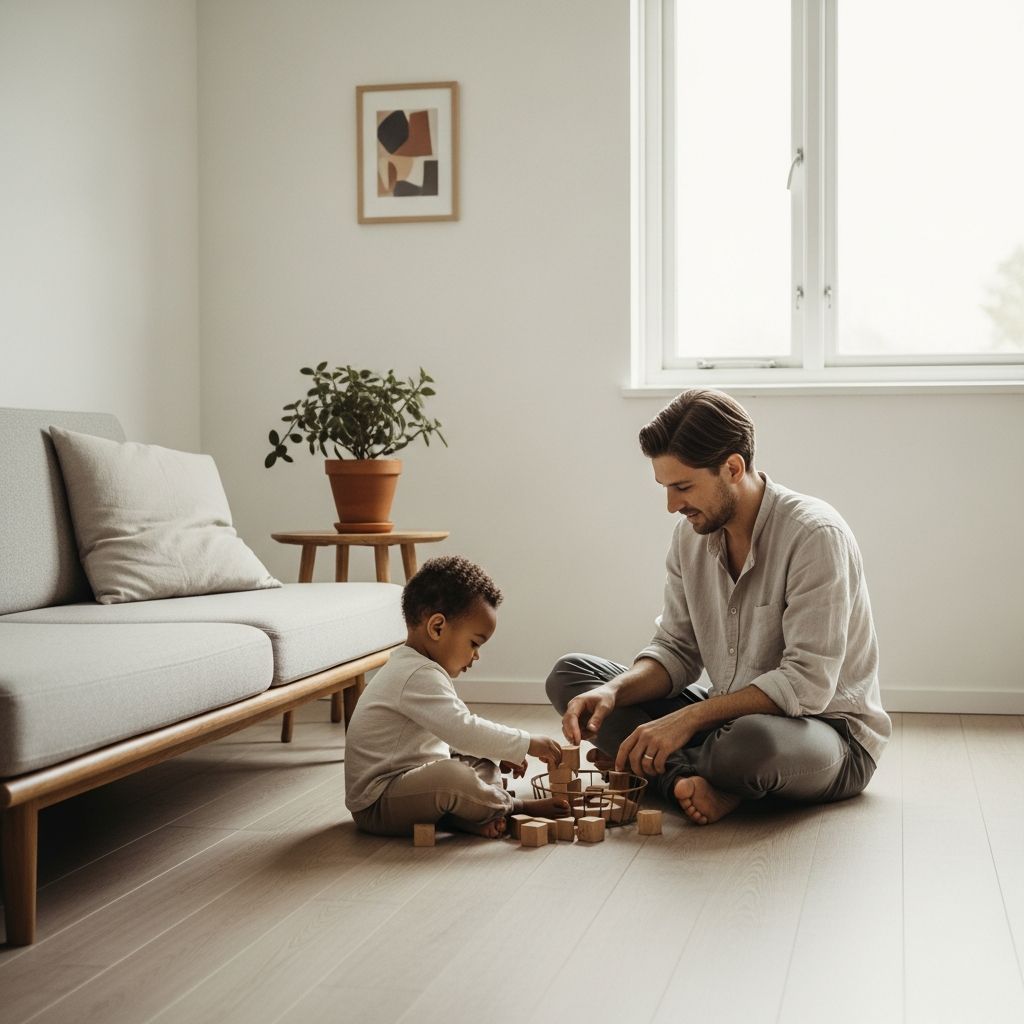
Parenting today often feels like an endless race: more activities, more toys, more expectations, more pressure. Minimalist parenting offers a different path—one where you deliberately choose less so your family can experience more calm, connection, and joy.
This guide will walk you through what minimalist parenting is, why it matters, and how to put it into practice in a realistic, non-extreme way—no perfect white walls or capsule wardrobes required.
What Minimalist Parenting Really Means
Minimalist parenting is an intentional approach to raising children that focuses on clearing away what is unnecessary—physical clutter, overscheduled calendars, and unrealistic expectations—so you can invest your energy in what truly matters to your family.
It is not about strict rules, deprivation, or doing everything “naturally.” Instead, it is about:
- Prioritizing experiences over possessions
- Reducing overwhelm for both parents and kids
- Choosing quality over quantity in toys, activities, and commitments
- Aligning your daily life with your values rather than outside pressure
Researchers describe minimalist-style parenting as emphasizing intentionality and experiences over material accumulation, and as a response to the consumerist pressure many families feel.
Why Less Can Lead to More Joy
A growing body of research suggests that reducing excess—especially in the home—can directly benefit mental health for both adults and children.
- Lower parental stress: A UCLA study of middle-class families found that mothers’ stress hormones rose when they dealt with household clutter, illustrating how physical excess translates into emotional strain.
- Calmer kids: Children in environments with fewer distractions tend to show better focus and less overstimulation, supporting emotional regulation and learning.
- More creativity: Psychologists have observed that when children have fewer, open-ended toys, they engage in deeper, more imaginative play and develop stronger problem-solving skills.
Minimalist parenting leverages these insights: by reducing clutter and busyness, you make space for rest, creativity, and genuine connection.
Common Myths About Minimalist Parenting
| Myth | Reality |
|---|---|
| “It means owning almost nothing.” | Minimalist parenting is about intentional ownership, not extreme minimalism. You keep what is useful, meaningful, and loved. |
| “My child will miss out on opportunities.” | The goal is not zero activities; it is choosing the ones that matter most and leaving space for free play and rest. |
| “It is only for wealthy or stay-at-home parents.” | Minimalist parenting is a mindset, not a budget level. Families of all incomes and schedules can simplify in ways that fit their realities. |
| “It is anti-achievement or lazy.” | It values sustainable growth over constant hustle. Research shows that overscheduling can contribute to anxiety and burnout in kids. |
Step 1: Clarify Your Family Values
Before you donate a single toy or cancel any lessons, pause and define what matters most to your family. Minimalist parenting works best when it is grounded in clear values.
Ask yourself and your partner:
- What do we want our children to remember most about their childhood?
- When does our home feel most peaceful and connected?
- What are the top three qualities we hope to nurture in our kids (for example, kindness, curiosity, resilience)?
- Which current commitments do not support those priorities?
Write down 3–5 guiding themes, such as:
- Unhurried time together
- Outdoor play and movement
- Reading and creativity
- Rest and emotional safety
These become your “filter” for decisions: if an object, activity, or expectation does not serve these values, it becomes a candidate for letting go.
Step 2: Simplify Your Home Environment
Physical clutter is one of the easiest—and most powerful—places to begin. Studies in environmental psychology show that cluttered spaces are linked to higher stress, poorer mood, and reduced ability to focus.
Decluttering With Kids in Mind
Focus first on areas that directly impact your daily stress:
- Toy zones: Too many toys can overwhelm children and shorten their attention span. Aim for fewer, more versatile items.
- Entryways: Clear, functional spots for shoes, backpacks, and coats reduce morning chaos.
- Surfaces: Keep at least one or two main surfaces clear (kitchen table, coffee table) to visually calm the space.
Practical Decluttering Tips
- Start with what is obviously unused: broken toys, outgrown clothes, duplicate items.
- Create a “trial separation” box: store questionable items out of sight for 30–60 days. If no one asks for them, they can likely go.
- Use simple limits: one bookshelf for toys in the living room, one bin for stuffed animals, a set number of outfits per child.
- Involve older kids by asking which items they truly love and which they are ready to pass on.
Research on children’s play suggests that when choice is manageable, kids engage longer and more creatively with what they have.
Choosing Toys That Support Minimalist Parenting
Look for open-ended, durable toys that invite imagination rather than passive entertainment:
- Blocks, building sets, and construction toys
- Art supplies and simple craft materials
- Pretend play props (dolls, vehicles, play kitchen items)
- Outdoor basics (balls, chalk, jump ropes)
- Books that match your child’s interests and reading level
Psychologists and educators often emphasize that open-ended play supports language development, problem-solving, and social skills by allowing children to create their own narratives and rules.
Step 3: Unclutter Your Family Schedule
Minimalist parenting also means reconsidering how you use time. Many families feel pressure to sign kids up for multiple activities, believing this will maximize opportunities. However, research on overscheduling indicates that too much structured activity can lead to stress and reduce time for family connection and rest.
Signs Your Schedule Is Overloaded
- Everyone feels rushed or exhausted most evenings.
- Meals are frequently eaten in the car.
- Your child rarely has time for unstructured play.
- Parents feel more like chauffeurs than companions.
Creating a Simpler Weekly Rhythm
Consider these adjustments:
- Limit extracurriculars: Choose one main activity per child at a time, especially in early and middle childhood.
- Protect blank space: Reserve at least one or two afternoons or evenings per week with no standing commitments.
- Batch errands: Combine trips and tasks into dedicated blocks instead of scattering them throughout the week.
- Introduce predictable rituals: For example, a weekly game night or a regular park visit provides structure without overscheduling.
Unstructured time supports emotional health and creativity; professional organizations such as the American Academy of Pediatrics have emphasized the importance of free play for social, cognitive, and self-regulation skills.
Step 4: Rethink Screens and Digital Clutter
Minimalist parenting is not necessarily anti-technology, but it is thoughtful about when and how screens are used. The American Academy of Pediatrics recommends setting consistent limits and encouraging high-quality content and shared viewing for younger children.
Strategies for More Intentional Screen Use
- Create tech-free zones (for example, bedrooms and the dinner table).
- Use screen time as a purposeful choice, not default background noise.
- Co-view or co-play when possible, especially with younger kids, to help them process what they see.
- Balance screen time with offline activities such as outdoor play, reading, and face-to-face interactions.
Research in child development consistently highlights that responsive, in-person interaction is crucial for young children’s language and social-emotional growth.
Step 5: Gentle Minimalism for Parents Themselves
Minimalist parenting is as much about your inner life as your outer environment. Many parents carry heavy loads of guilt, comparison, and perfectionism, all of which are intensified by social media and consumer culture.
Letting Go of “Perfect Parent” Pressure
- Unfollow comparison triggers: Curate your feeds to reduce exposure to unrealistic parenting ideals.
- Define “good enough” standards: Decide what is truly necessary (for example, basic hygiene, nutrition, and warmth) and what is optional (picture-perfect birthday parties, elaborate crafts).
- Share responsibilities: Where possible, divide tasks with partners or relatives, or simplify expectations if support is limited.
Protecting Your Own Energy
Chronic stress and lack of sleep can undermine your capacity to be present with your kids. Health organizations such as the CDC emphasize that adults need adequate sleep and stress management for their own well-being and for safe caregiving.
- Prioritize a realistic bedtime for yourself whenever possible.
- Say “no” more often to optional obligations that drain you.
- Incorporate tiny, consistent self-care habits (a short walk, a chapter of a book, a quiet cup of tea after bedtime).
Step 6: Money, Gifts, and Minimalist Mindsets
Minimalist parenting can support financial health by reducing impulsive purchases and focusing spending on what genuinely matters. Several studies link financial stress to higher rates of anxiety and conflict in families, suggesting that simplified consumption can indirectly support well-being.
Smart Spending With Kids
- Buy fewer but higher-quality items that last longer.
- Borrow or buy secondhand for short-lived phases (baby gear, certain toys).
- Redirect some “stuff” spending into experiences like museum passes or nature outings.
Handling Gifts From Relatives
You can uphold minimalist values without rejecting loved ones’ generosity:
- Suggest experience-based gifts: tickets, memberships, classes, or one-on-one outings.
- Offer a curated wish list with a few items your child truly needs or wants.
- Rotate or store some gifts, bringing them out gradually so kids are not overwhelmed.
Minimalism can also help children develop gratitude and a realistic sense of value; when new items don’t appear constantly, each gift feels more meaningful and less expected.
Step 7: Raising Kids Who Value “Enough”
One long-term aim of minimalist parenting is to help children grow into adults who are comfortable with “enough” rather than always chasing “more.” This mindset supports resilience, contentment, and even environmental responsibility.
Everyday Ways to Teach “Enough”
- Use simple language: “We have enough toys today; let’s enjoy what we already have.”
- Practice waiting: delay some purchases to help kids learn patience and differentiate between wants and needs.
- Include them in giving: involve children in choosing items to donate and discuss how this helps others.
- Model contentment: talk out loud about choosing not to buy something and feeling satisfied with what you own.
Studies in positive psychology highlight that gratitude and intrinsic motivation—doing things for personal meaning rather than external rewards—are linked to greater life satisfaction and mental health.
Starting Small: A Realistic Action Plan
You do not need to overhaul your entire life overnight. Choose one or two small changes and build from there.
7-Day Gentle Reset
- Day 1: Write your top three family values on a piece of paper and put it where you can see it.
- Day 2: Clear one surface (table, counter, or dresser) and keep it clear for the week.
- Day 3: Choose 10 items (toys, clothes, or décor) to donate or recycle.
- Day 4: Create one tech-free hour for the whole family.
- Day 5: Say no to one optional commitment or request.
- Day 6: Plan a simple, low-cost activity together (walk, library visit, board game).
- Day 7: Reflect: What felt lighter this week? What change do you want to keep?
Frequently Asked Questions (FAQs)
Will my child be bored if we embrace minimalist parenting?
Occasional boredom is not harmful; it is often the doorway to creativity. When children are not constantly entertained, they practice problem-solving, imagination, and self-directed play, which are important for healthy development.
How do I start if my partner is not interested in minimalism?
Begin with your own belongings and responsibilities, and make gentle, visible improvements—such as calmer mornings or easier cleanups. Share how these changes help you feel less stressed rather than pushing for big lifestyle shifts. Over time, many partners become more open when they see practical benefits.
Is minimalist parenting appropriate for children with special needs?
Yes, but it must be adapted. Some children rely on specific tools, routines, or sensory items. Minimalist parenting in this context means reducing unnecessary demands and clutter while protecting what supports your child’s regulation and learning. Consult your child’s therapists or specialists if you are unsure which items or activities are essential.
Does this mean we never buy new toys or clothes?
Not at all. Minimalist parenting encourages thoughtful purchasing. You still replace outgrown items, celebrate occasions, and sometimes buy just-for-fun things—but you do so within boundaries that respect your space, budget, and values.
How soon will I notice benefits from simplifying?
Many parents report feeling more at ease after even small changes—like clearing one room or reducing one weekly activity. Larger shifts, such as changing routines or family expectations, take more time and experimentation, but incremental progress can quickly make daily life feel lighter.
References
- Sleep and Sleep Disorders — Centers for Disease Control and Prevention. 2022-09-12. https://www.cdc.gov/sleep/about_sleep/index.html
- Minimalist Parenting — Term Definition — Sustainability Directory. 2023-05-10. https://lifestyle.sustainability-directory.com/term/minimalist-parenting/
- Media and Young Minds — American Academy of Pediatrics. 2016-11-01. https://publications.aap.org/pediatrics/article/138/5/e20162591/60620/Media-and-Young-Minds
- Life at Home in the Twenty-First Century: 32 Families Open Their Doors — Arnold, J. E. et al., UCLA Cotsen Institute of Archaeology Press. 2012-06-01. https://ioa.ucla.edu/press/life-at-home
- Financial Stress and Family Well-Being — American Psychological Association. 2014-02-04. https://www.apa.org/news/press/releases/stress/2013/financial-stress