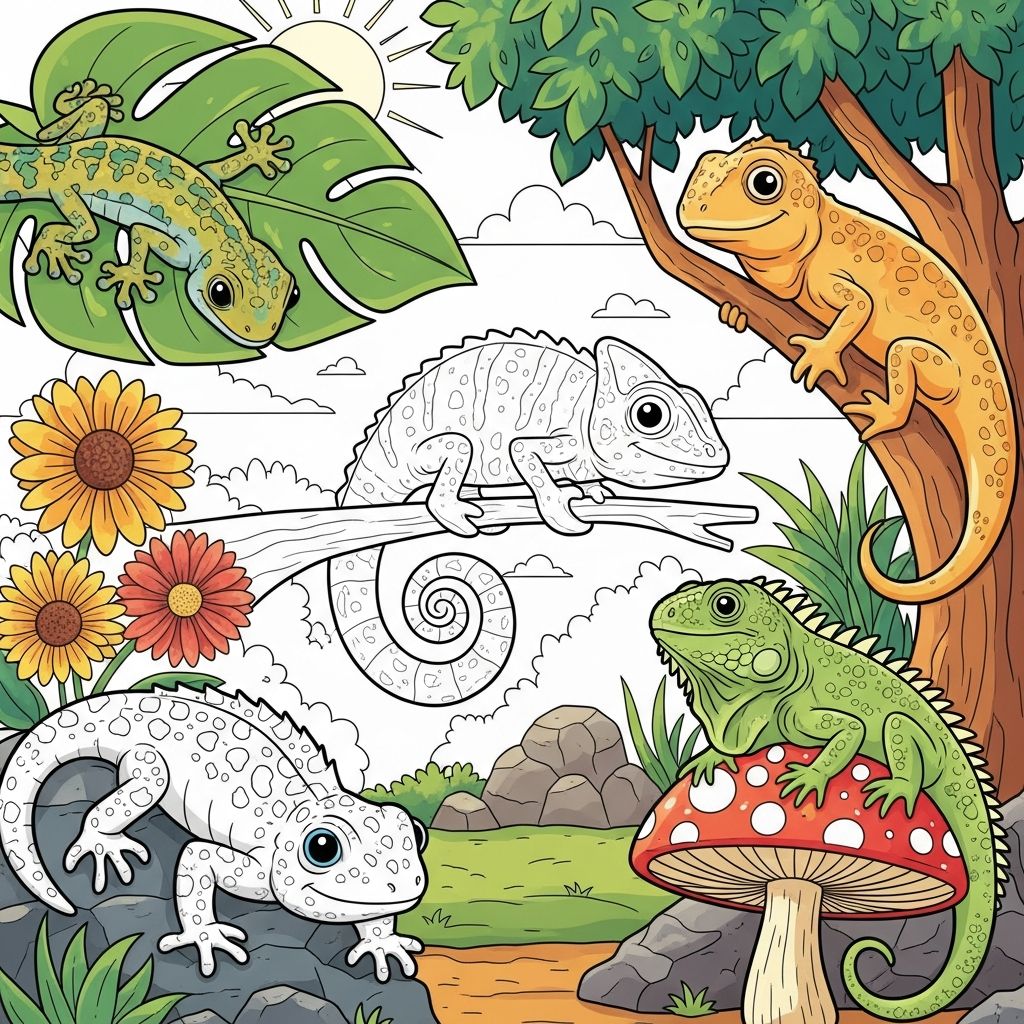
Lizard coloring pages are a simple, engaging way to introduce kids to the fascinating world of reptiles while giving them plenty of room to explore color, patterns, and imagination. These printables can support early learning, calm busy minds, and even spark a lifelong interest in animals and nature.
Instead of offering a single set of designs, this guide walks you through themes, ideas, and activity prompts you can use to create or choose lizard coloring pages that fit your child’s age, interests, and learning goals.
Why Lizard Coloring Pages Are Great for Kids
Lizards come in countless shapes, sizes, and colors, making them perfect subjects for creative coloring. From smooth geckos to spiky dragons, children can experiment with everything from realistic greens and browns to wild rainbows and metallic shades.
- They encourage fine motor skills as children practice controlled coloring within shapes.
- They introduce basic science concepts like habitats, camouflage, and body structure.
- They can be tailored to different ages, from large simple outlines to detailed, patterned scenes.
Designing Different Difficulty Levels
Not all coloring pages work for every age. Adjusting the level of detail helps keep kids interested and reduces frustration, whether you are creating pages yourself or selecting from existing printables.
- Toddler-friendly outlines: Large, simple lizard shapes with thick lines and minimal detail.
- Preschool pages: Add big spots, stripes, or simple backgrounds like rocks or leaves.
- Elementary designs: Include scales, patterns, and more complex scenes like desert dunes or rainforest vines.
- Older kids and adults: Try intricate, mandala-style lizard designs or realistic anatomical details.
Popular Lizard Themes Kids Love
Choosing a theme gives structure to your coloring pages and makes them feel like part of a bigger story or unit study. You can mix and match themes or build a whole printable pack around a single idea.
- Desert explorers: Lizards basking on rocks, under cacti, or near sandy dunes.
- Rainforest climbers: Geckos and chameleon-style lizards on branches surrounded by broad leaves.
- Backyard visitors: Simple scenes of small lizards near garden stones, fences, or flower pots.
- Fantasy dragons: Dragon-like lizards with wings, horns, and magical patterns.
- Camouflage challenge: Lizards partially hidden among leaves, tree bark, or rocks.
Lizard Coloring Page Ideas by Style
Beyond themes, you can also think in terms of artistic style. Different styles keep kids engaged and allow you to use the same animal concept in many fresh ways.
- Cartoon lizards: Big eyes, friendly smiles, and rounded shapes perfect for younger artists.
- Realistic outlines: More lifelike body shapes and proportion for older kids who enjoy detail.
- Patterned lizards: Bodies filled with swirls, zigzags, or geometric shapes for coloring pattern practice.
- Silhouette scenes: Solid lizard outlines against patterned or textured backgrounds.
- Mixed media prompts: Half-drawn lizards that invite children to complete the tail, add a habitat, or create a background.
Educational Elements to Add
Lizard coloring pages can be more than just a fun activity; they can double as simple learning tools. Light educational content around the image helps children connect art with knowledge.
- Labeling tasks: Include dotted lines and labels for head, tail, legs, and scales.
- Vocabulary boxes: Add simple words like “reptile,” “scales,” “habitat,” or “camouflage” for kids to trace.
- Mini facts: Short, kid-friendly facts in the corner of the page (e.g., “Some lizards can regrow their tails.”).
- Color-by-code: Assign numbers or letters to body parts and link them to specific colors.
Sample Activity Table: Using Lizard Printables
The table below shows practical ways to use lizard coloring pages in different settings. You can adapt these ideas to suit specific ages or topics.
| Setting | Activity Idea | Learning Focus |
|---|---|---|
| Home | Create a “reptile gallery” on the fridge or wall using completed pages. | Confidence, creativity, and family engagement. |
| Preschool | Use simple lizard outlines for color recognition (“Find all the green lizards.”). | Color identification and following directions. |
| Elementary classroom | Pair lizard coloring pages with a short lesson on desert or rainforest habitats. | Science vocabulary and reading comprehension. |
| Homeschool | Combine coloring with a notebooking page where kids write one fact about lizards. | Writing practice and information recall. |
| Therapeutic or calm corner | Offer detailed lizard patterns as a quiet, soothing activity. | Relaxation, focus, and emotional regulation. |
Combining Art Techniques with Lizard Pages
Coloring pages do not have to be limited to crayons. Introducing a variety of materials keeps the activity fresh and allows children to experiment with textures and effects.
- Crayons and colored pencils for everyday use and detail work.
- Markers for bold outlines and bright accents like tongues or spots.
- Watercolors or watercolor pencils on thicker paper for soft, blended backgrounds.
- Collage elements such as tissue paper leaves, sand glued on rocks, or scrap-paper scales.
Storytelling With Lizard Characters
Turning a coloring page into a story starter is a powerful way to build language skills. After coloring, invite children to imagine who the lizard is and what it might be doing.
- Ask questions: “Where is this lizard going?” “What does it eat?” “Is it daytime or nighttime?”
- Encourage kids to name their lizard and write a sentence or short story about it on the back.
- Create a series of pages that follow one lizard character through different adventures.
Seasonal and Holiday Lizard Pages
Lizard coloring sheets can also be themed for special times of year, which makes them an easy addition to seasonal lesson plans or holiday craft days. Reptiles are not just for summer; they can be fun all year long.
- Spring: Lizards waking up near blooming flowers and buzzing insects.
- Summer: Lizards sunning on warm rocks or near the beach.
- Autumn: Lizards among fallen leaves, blending in with oranges, reds, and browns.
- Winter: Cartoon-style lizards with scarves or hats in imaginative snowy scenes.
- Holidays: Lizard-shaped ornaments, costume lizards for dress-up, or fantasy “gift-delivering” lizards.
Tips for Printing and Storing Pages
A little planning makes lizard coloring pages easier to reuse and share. Organizing your printables also helps when you want to revisit a theme or use it with multiple children.
- Print on slightly heavier paper if using markers or watercolor to prevent bleeding.
- Keep a binder with plastic sleeves labeled by theme (desert, rainforest, fantasy, etc.).
- Store finished artwork in a portfolio or folder so kids can see their progress over time.
- Consider printing two copies of favorite designs so siblings can each color their own.
Encouraging Creativity Beyond Realistic Colors
While it can be fun to look at real lizard photos for inspiration, children should also feel free to ignore realism and explore bold, unexpected palettes. This kind of freedom helps them build confidence in their own artistic choices.
- Challenge kids to create a “rainbow lizard” or a “night sky lizard” inspired by stars and moonlight.
- Invite them to invent their own lizard species and describe what makes it special.
- Offer metallic or glitter pens for scales, spots, or magical accents.
Classroom Projects Using Lizard Coloring Pages
Teachers can use lizard printables as part of science units, literacy centers, or art projects. Because the pages are simple to prepare, they work well for early finishers or substitute plans too.
- Create a class mural by assembling many colored lizards on a large paper “habitat” backdrop.
- Assign each student a different style of lizard (desert, forest, fantasy) and compare the results.
- Use lizard pages in a station rotation with books, models, and simple fact cards.
Adapting Lizard Pages for Different Needs
Lizard coloring pages can be adjusted to support various learning needs and abilities. Small modifications can make the activity more accessible to all children in a group.
- Use extra-thick outlines and larger spaces for kids who struggle with fine motor control.
- Offer pre-colored examples for children who feel anxious about choosing colors.
- Provide adaptive tools like triangular crayons, grip aids, or larger markers.
- Pair coloring with verbal prompts for children developing language skills.
Turning Lizard Pages into Crafts
Once a lizard has been colored, it can become part of a hands-on craft. This extends the play value of each page and encourages kids to think in three dimensions.
- Cut out colored lizards and tape them to craft sticks to make simple puppets.
- Glue lizards onto construction paper scenes with leaves, stones, or drawn ponds.
- Create simple masks or crowns featuring lizard designs for pretend play.
- Use small colored lizards as homemade game pieces or story prompts.
Frequently Asked Questions (FAQs)
What age range is best for lizard coloring pages?
Lizard coloring pages can work for toddlers through adults, as long as you match the level of detail to the person coloring. Younger children benefit from bold, simple outlines, while older kids and grown-ups often enjoy intricate patterns and realistic features.
How can I make lizard coloring pages educational?
You can add labels, mini-facts, or vocabulary words right on the page, or pair the coloring activity with a short reading passage or video about reptiles. Asking kids to share one new thing they learned about lizards after coloring also reinforces understanding.
What supplies work best with reptile-themed pages?
Crayons and colored pencils are great for everyday use, while markers add bright accents and watercolors can create soft backgrounds. If you use wetter media, print on thicker paper to avoid tears and color bleed-through.
Can lizard coloring pages be used in a classroom?
Yes, they fit nicely into science units about animals, habitats, or adaptations, and they can also support art lessons on texture, pattern, and color. Group projects like class murals or habitat collages are especially effective in a school setting.
How do I keep kids interested in the same theme over time?
Vary the style, difficulty, and activity context rather than repeating the exact same type of page. Rotate between cartoon and realistic designs, change habitats, introduce storytelling prompts, and occasionally turn finished pages into simple crafts.
Simple HTML Structure for SEO Optimization
When publishing lizard coloring ideas online, using clear headings, descriptive text, and well-labeled sections helps both readers and search engines understand your page. Incorporate relevant phrases such as “lizard coloring pages,” “reptile printables,” and “coloring activities for kids” naturally within your content, and ensure images have meaningful alt text that describes each scene or design.