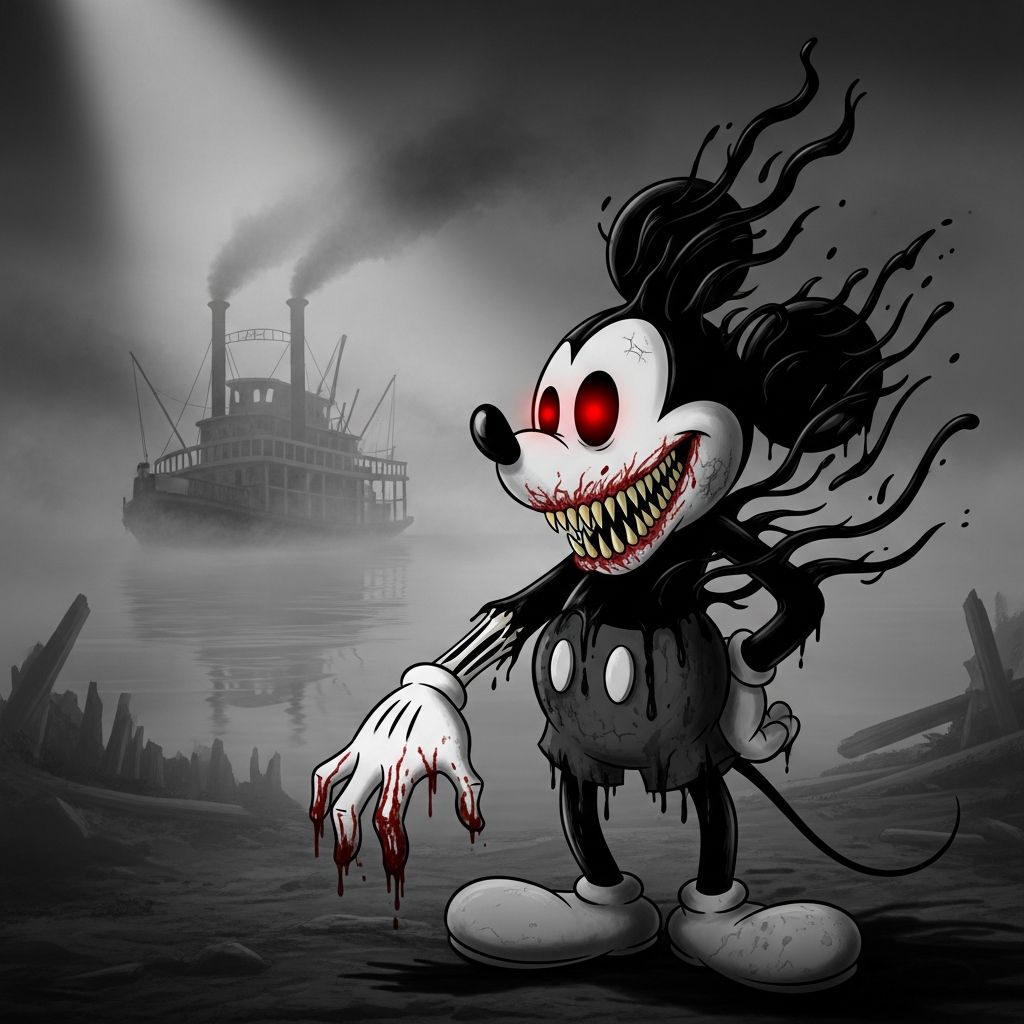
The earliest black-and-white version of Mickey Mouse, best known from the 1928 short “Steamboat Willie,” has now slipped into the public domain, and that change is already reshaping online culture in strange ways. Freed from Disney’s exclusive control, that primitive, whistling riverboat captain is being reimagined in horror films, disturbing games, and edgy viral content aimed squarely at teens and adults rather than children.
For parents, this new era raises an urgent question: how do you protect kids from nightmare-fuel versions of a character they’ve always associated with safety and fun? This article breaks down what is happening, why horror creators love the Steamboat Willie aesthetic, and what practical steps you can take to keep your child’s entertainment actually child-friendly.
From Whistling Mouse to Public Property
For nearly a century, Disney held tight control over Mickey Mouse, turning him from a simple, rubber-hose cartoon sailor into one of the most recognizable corporate mascots in the world. Now that the original 1928 film has entered the public domain, other creators can legally reuse that early version of Mickey and his boat — but only that early version, not the modern Mickey seen in parks, merchandise, and current cartoons.
Public domain status means anyone can download, remix, redraw, and republish the original black-and-white cartoon without asking permission or paying licensing fees. That freedom opens the door to sincere homages, experimental art projects, and, predictably, a flood of ironic, creepy, and deliberately shocking reinterpretations.
Why Public Domain Characters Attract Horror Creators
Public domain properties are a gold mine for horror creators because they combine two powerful ingredients: instant recognition and zero licensing cost. Horror thrives on subverting the familiar, and there is nothing more familiar to most kids and parents than the smiling face of Mickey Mouse.
When a character long associated with innocence suddenly appears with jagged teeth, hollow eyes, and a sinister grin, the clash between memory and reality becomes the scare. Steamboat Willie’s jerky animation, grainy texture, and high-contrast black-and-white palette already feel ghostly to modern audiences, making it an ideal visual base for creepypasta, found-footage horror, and psychological thrillers.
The New Wave of Creepy Mickey Content
As the public domain floodgates open, early examples of “evil Steamboat Willie” content are popping up in several formats. Some are low-budget short films on video platforms, while others are full-length indie horror features or downloadable games marketed to thrill-seeking teens.
- Horror movies: Independent filmmakers are crafting slasher-style stories, supernatural thrillers, and metafictional movies where a cartoon mouse emerges from old film reels to stalk modern viewers.
- Video games: Creepy platformers, survival horror titles, and fan-made experiences feature a distorted Steamboat Willie chasing players through abandoned studios, broken boats, or glitchy animation cells.
- Viral shorts and memes: Quick, punchy clips remix the original cartoon with distorted audio, jump scares, and gore, shared widely on social platforms frequented by tweens and teens.
Much of this content is explicitly tagged for mature audiences, but recommendation algorithms and misleading thumbnails can still funnel disturbing material toward younger viewers who are just searching for “Mickey Mouse” or “Steamboat Willie.”
How This Mickey Differs From Disney’s Current Mouse
Legally and visually, the public domain Steamboat Willie Mickey is not the same as the modern corporate mascot plastered on backpacks and birthday cakes. Creators are only free to use the specific look and scenes of that 1928 cartoon — the sailor hat, the steamboat, the simple eyes, and the rubber-hose limbs.
| Aspect | Steamboat Willie Era | Modern Disney Era |
|---|---|---|
| Visual style | Black-and-white, simple shapes, rubber-hose limbs | Full color, polished design, detailed facial expressions |
| Legal status | Specific 1928 short now in the public domain | Later versions still copyrighted and protected |
| Common associations | Vintage cartoon, historical curiosity, retro aesthetic | Theme parks, children’s TV, mass-market merchandise |
| Frequent uses | Remixes, art projects, horror parodies, experimental shorts | Official Disney branding, licensed media, family entertainment |
| Emotional tone | Quirky, slightly eerie to modern eyes, nostalgic | Bright, safe, upbeat, carefully controlled |
This split creates confusion: kids see a black-and-white character that clearly resembles Mickey and assume the content is safe, while parents may not realize that the video or game is completely unaffiliated with Disney and aimed at older audiences.
Why Kids Are Especially Vulnerable to Creepy Mickey Content
Young children rarely distinguish between licensed and unlicensed versions of characters; to them, a cartoon mouse with round ears is just “Mickey,” regardless of which studio released the material. As a result, they may click on thumbnails featuring a slightly off-model Mickey without expecting anything frightening, only to be confronted with blood, screaming, or distorted animation.
Algorithms amplify the risk by recommending related videos or games once a child watches any clip involving Mickey or Steamboat Willie. Even if you carefully curate streaming libraries and game purchases, a single unsupervised search on a shared device can expose kids to a darker world of fan-made horror and parody.
Warning Signs Parents Should Watch For
Because creepy reinterpretations often rely on tricking viewers, parents need to become savvy about visual cues that signal a video or game isn’t what it appears to be.
- Titles with horror buzzwords: Words like “EXE,” “cursed,” “haunted,” “backrooms,” “nightmare,” or “lost episode” are red flags that the content is meant to be scary.
- Distorted thumbnails: Off-color eyes, unnatural smiles, heavy shadows, glitch effects, or fake VHS filters often indicate horror or creepypasta content.
- Age ratings and tags: Teen or mature ratings on storefronts and hashtags like #horror, #creepy, or #analoghorror should always be taken seriously.
- Unfamiliar channels or developers: If you do not recognize the studio, publisher, or channel and the logo lacks the official Disney branding, assume it is not a kid-safe Mickey product.
Practical Strategies to Keep Kids Safe
While it is impossible to remove all creepy content from the internet, parents can significantly reduce the risk of younger children stumbling into disturbing Steamboat Willie horror.
Lock Down Devices and Accounts
- Use child profiles: Set up dedicated kids’ profiles on streaming services and consoles, locked with PINs so children cannot easily switch to unrestricted accounts.
- Enable parental controls: Turn on age-restriction settings on video platforms, app stores, and gaming devices, and err on the side of more restrictive limits for young children.
- Limit search and browsing: For kids under 10, consider disabling open search bars on shared devices where possible and bookmarking trusted channels or apps instead.
Curate Instead of Relying on Recommendations
- Create approved playlists: Build playlists of verified, age-appropriate Mickey or Disney content and encourage kids to choose from those, rather than exploring on their own.
- Stick to official apps: Use official Disney-branded apps and streaming hubs for younger children, as these are more tightly curated than open platforms.
- Preview new content: Watch new shows or games yourself, even briefly, before adding them to your family’s routine, especially if they feature familiar characters in unfamiliar styles.
Talk Openly About Scary Media
- Explain that not every Mickey is “real” Mickey: In simple language, tell kids that some people make pretend videos where characters act mean or scary, and those are not made by the same people who make their favorite shows.
- Teach kids to pause and ask: Encourage children to stop watching and come find you if anything feels too scary or “wrong,” even if it stars a familiar character.
- Normalize turning it off: Reinforce that it is always okay to stop a video or game that makes them uncomfortable, no matter how curious they are about what happens next.
The Artistic Upside: Not All Remixes Are Bad
Public domain freedoms are not inherently negative; they also empower artists, educators, and small studios to experiment with classic characters in inventive and thoughtful ways. Some creators will use Steamboat Willie to explore film history, comment on corporate control of culture, or celebrate the evolution of animation in clever, kid-friendly formats.
As children grow into teens and young adults, those more mature reinterpretations can spark meaningful conversations about media literacy, ownership, and how images gain and lose power over time. The key is matching the tone and complexity of each reinterpretation to the viewer’s age and emotional readiness, rather than assuming anything featuring a cartoon mouse is automatically safe.
What This Means for the Future of Family Entertainment
Steamboat Willie’s transition into the public domain is a preview of what will happen as more iconic characters eventually follow the same path. The line between “official” and “fan-made” will blur further, and parents will need stronger media literacy skills than previous generations ever required.
Families that adapt early — by learning to scrutinize thumbnails, understanding ratings, and discussing the difference between corporate mascots and public domain remixes — will be better prepared for the next wave of cultural shifts. In that sense, the creepy, glitchy Mickey haunting horror games today may be teaching tomorrow’s parents and kids how to navigate a much more chaotic entertainment landscape.
Quick Checklist: Steamboat Willie Safety Tips
- Use kids’ profiles with strict age settings on all major platforms.
- Favor official Disney apps and channels for younger children.
- Look for horror-related words and visual glitches in titles and thumbnails.
- Preview new Mickey- or Steamboat Willie-themed content before approving it.
- Talk to kids about the difference between “real” Mickey and fan-made or scary versions.
- Encourage kids to tell you immediately if a video or game feels too scary.
FAQs About Steamboat Willie, Public Domain, and Horror Content
Is Disney making these Steamboat Willie horror movies and games?
No. The creepy reinterpretations of Steamboat Willie circulating online are overwhelmingly made by independent creators who are taking advantage of the character’s new public domain status. They are not official Disney projects, even if they closely resemble the classic Mickey design.
Can anyone really use the Steamboat Willie version of Mickey now?
In general, yes — the original 1928 film is in the public domain, which means its specific visuals and audio can be reused without paying licensing fees. However, later versions of Mickey and many related logos and trademarks are still protected, and only the earliest depiction is free to copy and transform.
Why are so many of these projects horror-themed instead of kid-friendly?
Horror creators love subverting familiar childhood icons because it creates instant emotional impact. Turning a beloved character into something sinister is an easy way to shock older audiences and generate buzz, which is why the first big wave of public domain Mickey content skews creepy rather than wholesome.
How can I tell if a Mickey video or game is safe for my young child?
Check the platform’s rating, scan the title and description for horror-related wording, and look closely at the thumbnail for signs of distortion or gore. When in doubt, search for the title along with the word “review” and skim parent-focused or family-gaming discussions before letting your child watch or play.
Should I ban all Steamboat Willie content entirely?
A total ban is not necessary for most families, especially if parents are willing to preview content and choose age-appropriate options. Instead, focus on building habits: using kids’ profiles, sticking to reputable sources, and having ongoing conversations about what your child sees online so they feel comfortable coming to you with questions or fears.