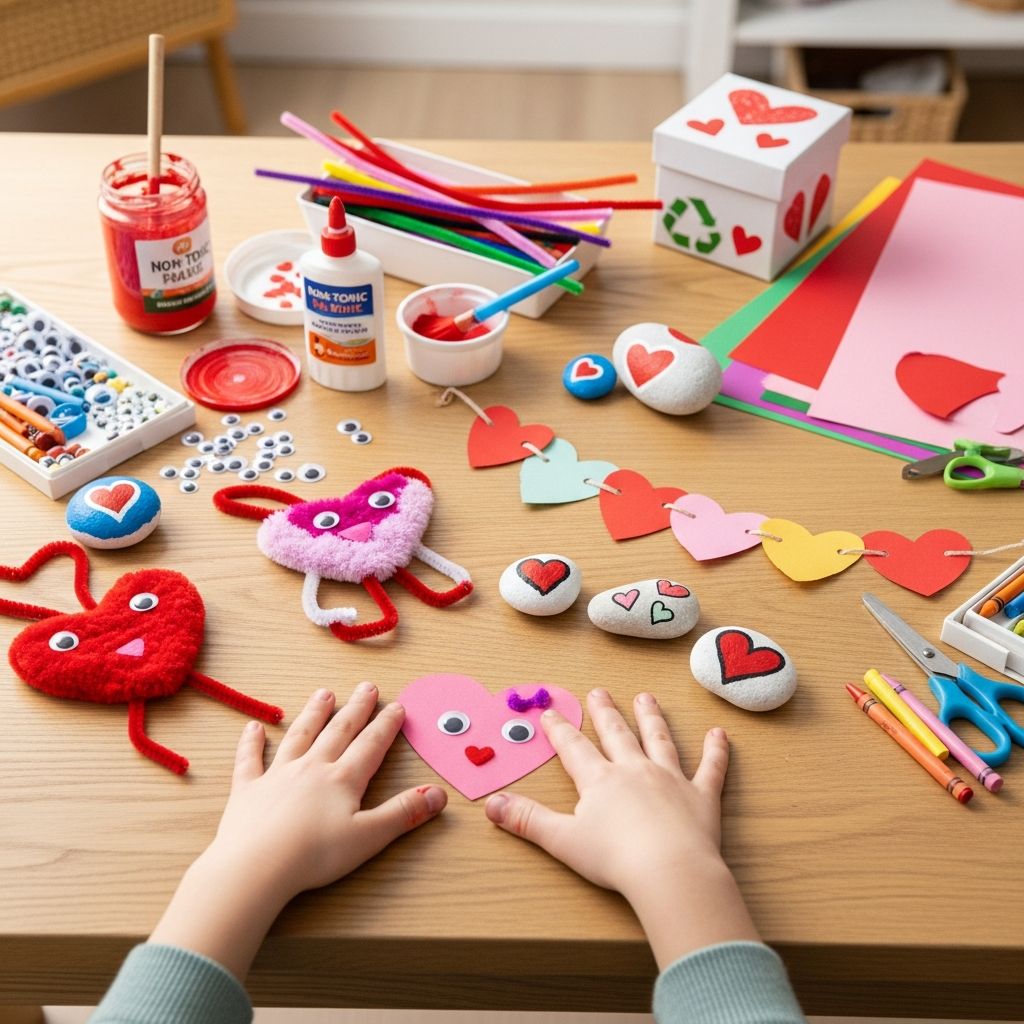
Valentine’s Day is a perfect excuse to slow down, pull out the craft bin, and let kids create something from the heart. The best projects for this holiday are the ones that are simple enough for children to do mostly on their own, use basic supplies you probably already have, and don’t require hours of cleanup.
Hands-on art and craft activities support fine motor skills, hand–eye coordination, and early creative thinking, especially for toddlers and preschoolers. With that in mind, the ideas below are designed to be age-flexible, easy to adapt, and realistic for busy families and classrooms.
Getting Ready: Smart Setup for Stress-Free Crafting
A little preparation can turn Valentine crafting from chaotic to calm. Before you introduce any project, take five minutes to set the scene.
- Cover the workspace with an old tablecloth, newspaper, or a large trash bag cut open.
- Pre-portion supplies in small bowls or trays: glue, stickers, tissue scraps, buttons, beads, etc.
- Choose age-appropriate tools like safety scissors, glue sticks instead of liquid glue, and washable paints or markers.
- Offer limited colors (for example, just red, pink, and white) so kids are less overwhelmed and the results still look cohesive.
- Model once, then step back so children can experiment and make the project their own.
Quick-Start Craft Ideas by Age
| Age Group | Craft Type | Main Skills Practiced |
|---|---|---|
| Toddlers (1–3) | Sensory hearts, simple sticking and stamping | Fine motor, sensory exploration |
| Preschool (3–5) | Collages, paper crafts, basic weaving | Cutting, gluing, early planning |
| Early elementary (5–8) | Paper chains, mobiles, simple sewing | Sequential steps, patience, coordination |
| Older kids (8+) | Layered art, keepsakes, simple gifts | Design, measuring, problem-solving |
1. No-Scissors Toddler Hearts
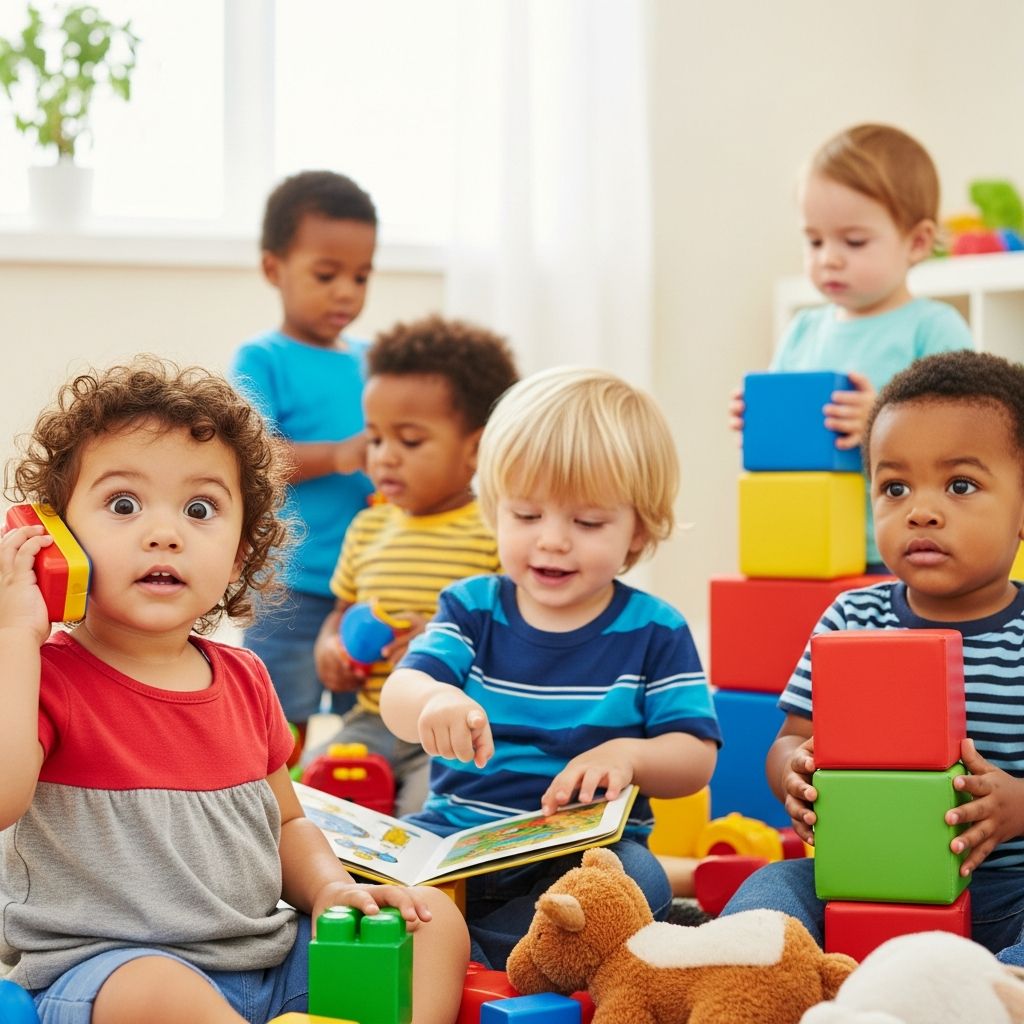
For the youngest crafters, focus on projects where they can explore textures and colors without needing sharp tools.
Sticky Shape Heart Board
Create an upright activity that doubles as seasonal decor.
- Cut a large heart from cardboard.
- Cover the front with clear contact paper, sticky side out.
- Provide pre-cut tissue paper squares, foam hearts, and bits of yarn.
- Invite toddlers to press items onto the sticky surface in any arrangement they like.
This kind of open-ended sticking lets toddlers practice grasping and releasing small items, a key fine-motor milestone.
Finger-Painted Love Dots
- Draw a few big hearts on cardstock.
- Offer shallow plates with washable paint thinned slightly with water.
- Show how to tap fingertips into paint and then onto the hearts to make dot patterns.
When dry, you can write messages inside and use them as simple valentines.
2. Preschool-Friendly Paper Hearts
Preschoolers are ready for more intentional projects: cutting along lines, making choices about color, and arranging pieces into patterns.
Torn-Paper Mosaic Hearts
Tearing requires strength and coordination in the small hand muscles and is a great pre-writing activity.
- Fold colored paper and draw half a heart along the fold for kids to cut out (or pre-cut for beginners).
- Provide a stack of scrap paper in Valentine colors.
- Show how to tear small pieces and glue them closely together to fill the heart.
- Mount finished hearts on contrasting paper for an instant gallery.
Peekaboo Window Cards
- Fold a piece of cardstock into a card.
- Adult or older sibling cuts a simple heart window out of the front.
- Kids tape tissue paper, colored cellophane, or patterned paper behind the opening.
- They decorate around the window with crayons, stickers, or stamps.
These make charming classroom valentines and can be adapted for any message inside.
3. Easy Decorations Kids Can Hang Themselves
Hanging decor gives children a sense of ownership over the holiday environment. They see their work displayed and get to revisit it all season long.
Heart Spiral Mobiles
- Have kids draw a large spiral on cardstock (like a snail shell).
- Cut along the line until you reach the center.
- Let kids glue or tape paper hearts, pom-poms, or lightweight shapes along the spiral.
- Punch a hole in the center and tie on yarn or ribbon for hanging.
When suspended, the spiral drapes downward and twirls gently in the air.
Doorway Heart Streamers
- Cut multiple strips of paper or ribbon in varying lengths.
- Kids glue or tape pre-cut hearts along each strip.
- Attach all strips to a long piece of tape or a strip of cardstock.
- Secure above a doorway or along a mantel.
For very young kids, use stickers instead of glue to keep things simple.
4. Kid-Made Keepsakes to Treasure
Valentine’s crafts can double as keepsakes that capture a specific moment in your child’s development, such as the size of their hands or the way they write their name.
Handprint Heart Art
- Draw or trace a large heart on sturdy paper or canvas.
- Paint one hand, press onto one side of the heart; repeat with the other hand to form a rough heart shape where palms meet.
- Write the date and child’s name along the bottom.
Washable, non-toxic paints are recommended for children’s skin; look for products labeled as such and follow instructions on the packaging.
Memory Jar of Kind Words
- Have your child decorate a clean jar with paper hearts, ribbon, or paint pens.
- Cut small slips of paper and help them write short compliments or kind wishes for family and friends.
- Fold and place the notes in the jar.
This project invites children to think about empathy and prosocial behavior, which can support social-emotional development.
5. Classroom-Friendly Valentine Projects
To work well in a classroom, a craft should use inexpensive materials, be easy to set up in stations, and produce finished pieces that can go home the same day.
All-Class Heart Collage Poster
- Cover a large poster board or piece of butcher paper with a lightly penciled heart shape.
- Give each student a small area along the outline to fill with drawings, words, or collage materials.
- Optionally, assign different sections to represent friendship, kindness, gratitude, or fun.
Hang the completed collage in the hallway as a group project that celebrates the whole class community.
Simple Paper Chain of Compliments
- Cut strips of colored paper.
- Ask each child to write a positive word or phrase about a classmate or about friendship.
- Loop and staple or tape each strip into a chain.
- Decorate the room with the finished chain.
Reading the chain together can spark age-appropriate discussions of kindness and inclusion.
6. Upcycled Valentine Crafts from Everyday Items
You do not need specialty supplies to create memorable holiday art. Many wonderful Valentine projects can be made from items already in your home or recycling bin.
Cardboard Mailbox for Valentine Notes
- Repurpose a small cardboard box (such as a cereal or tissue box).
- Cut a mail slot; cover the box with paper or paint.
- Kids add hearts, drawings, or stickers.
- Use it as a family “mailbox” for valentines and kind notes during February.
Patterned Heart Stamps
- Save cardboard tubes from paper towels or toilet paper.
- Gently press one side inward to form a heart shape, securing with tape or a rubber band.
- Dip one end in paint and stamp onto paper to create repeating heart patterns.
Stamping supports hand strength and control while giving impressive results with very little effort for the child.
7. Low-Prep Valentine Cards Kids Can Personalize
Handmade valentines do not have to be elaborate. Simple card bases plus a table of embellishments give kids plenty of room to design independently.
Mix-and-Match Valentine Station
Set up a “card bar” with options so children can assemble many cards in one sitting.
- Pre-fold small card blanks or cut cardstock rectangles.
- Supply trays of washi tape, stickers, heart cutouts, doilies, and scrap paper.
- Offer a cup of markers or crayons for writing names and short messages.
- Encourage each child to choose a few supplies per card rather than everything at once.
“Reasons I Like You” List Cards
- Print or handwrite a simple prompt at the top: “3 things I like about you.”
- Kids decorate the border with hearts or doodles.
- They fill in the list for a friend, sibling, or grown-up.
This transforms standard valentines into meaningful notes and also supports early writing practice for school-age children.
8. Practical Tips for Safe, Positive Crafting
Keeping kids safe and supported during crafts is just as important as the creative outcome.
- Choose non-toxic materials meant for children. Look for art supplies that meet safety standards such as ASTM D-4236.
- Supervise closely when using small items (buttons, beads, sequins) with children under three, due to choking risk.
- Teach cleanup as part of the activity by turning it into a game—who can put the most hearts back in the bin?
- Emphasize effort over perfection. Praise risk-taking and creativity instead of how “neat” something looks.
- Allow sensory alternatives (like using a brush instead of fingers) for kids who are sensitive to messy textures.
Frequently Asked Questions (FAQs)
How early can children start doing Valentine’s Day crafts?
Even toddlers around 12–18 months can enjoy simple, supervised activities like sticking paper onto contact paper or making handprints, as long as materials are safe and non-toxic.
What are the best Valentine crafts for kids with short attention spans?
Choose projects that can be finished in under 10 minutes, like stamping hearts, decorating pre-cut shapes with stickers, or making a single quick card. You can offer a second short activity rather than one long one.
How can I adapt these crafts for a classroom with different ages?
Keep the basic project the same but vary the challenge level—for example, younger children use pre-cut shapes while older kids design and cut their own, add written messages, or create patterns.
What if I don’t have many craft supplies at home?
Focus on upcycled materials like cardboard, paper bags, magazines, and leftover wrapping paper. With scissors, glue, and something to color with, you can create a wide variety of Valentine hearts, chains, and collages.
How do I handle the mess from paint and glitter?
Use washable paint, cover your work area, and keep a damp cloth nearby. Consider substituting glitter with glitter glue or metallic crayons to reduce loose sparkles around your home.
References
- Literature Review of Art Education in Preschool — Los Angeles County Office of Education. 2019-01-01. https://www.lacoe.edu/docs/default-source/head-start-docs/preschool-art-literature-review.pdf
- Developmentally Appropriate Practice in Early Childhood Programs Serving Children from Birth Through Age 8 (Position Statement) — National Association for the Education of Young Children (NAEYC). 2020-04-01. https://www.naeyc.org/resources/position-statements/dap
- Social and Emotional Learning (SEL) and Academics: A Meta-Analysis — Collaborative for Academic, Social, and Emotional Learning (CASEL). 2023-06-15. https://casel.org/research/
- Art Materials and Supplies — U.S. Consumer Product Safety Commission. 2022-02-10. https://www.cpsc.gov/Safety-Education/Safety-Education-Centers/Art-Materials