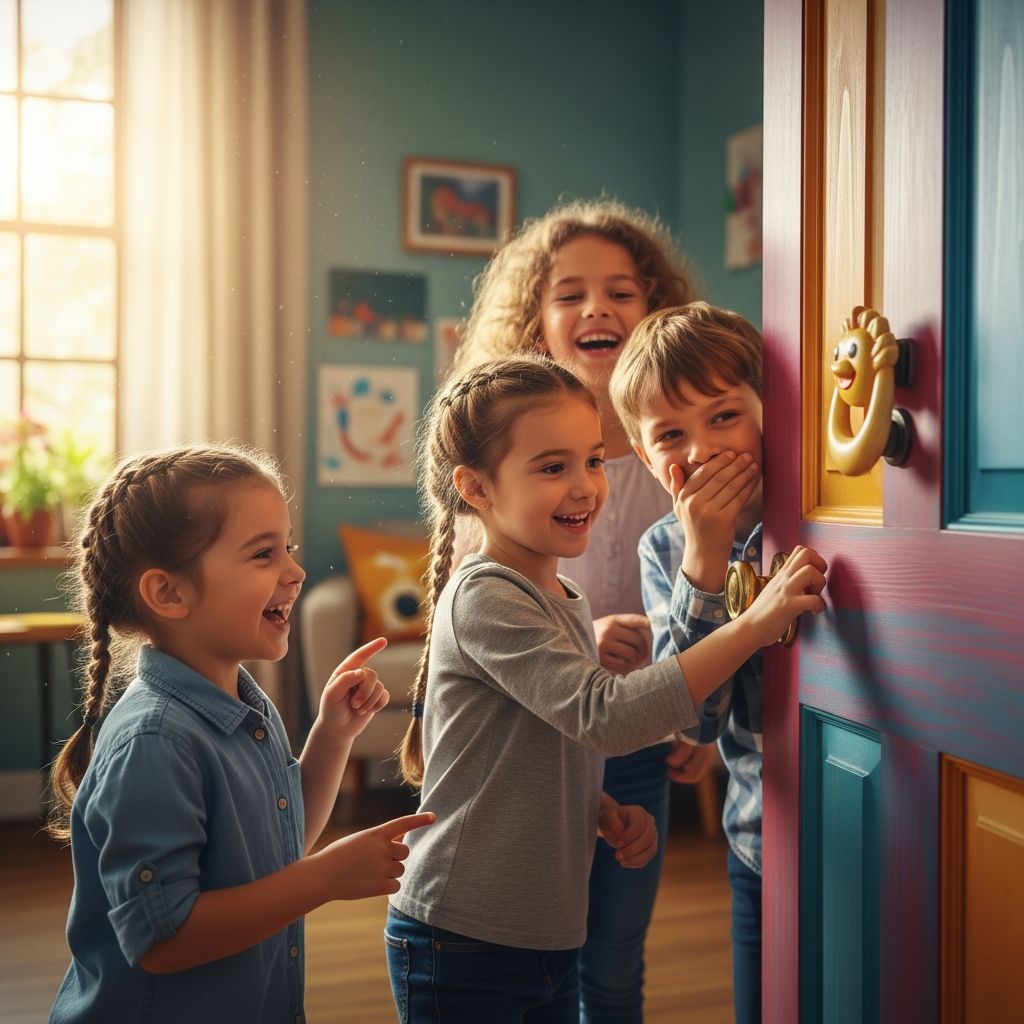
Knock-knock jokes are one of the simplest ways to turn an ordinary moment into a burst of laughter, especially for young children learning to play with language and timing. This guide explores how to use these classic call-and-response jokes to build connection, encourage creativity, and keep kids entertained in a healthy, screen-light way.
Why Kids Love Knock-Knock Jokes
Children gravitate toward knock-knock jokes because they follow a predictable pattern that feels safe, yet each punchline still offers a delightful surprise. The repetition of the format lets kids anticipate what comes next, giving them a sense of control and mastery over the joke-telling process.
These jokes also fit perfectly with a child’s natural curiosity and love of wordplay. When kids discover that a single word can have two meanings, or that a silly sound can make everyone laugh, they start to see language as a playground rather than just a set of rules. That sense of playfulness builds confidence and invites them to participate in family conversations.
How Knock-Knock Jokes Help Kids Learn
Beyond the giggles, knock-knock jokes quietly support important developmental skills. Every time a child delivers a joke, they practice memory, sequencing, and the social rhythm of back-and-forth conversation.
They also encounter early lessons in:
- Vocabulary: Jokes introduce new words, names, and phrases in a fun, low-pressure context.
- Homophones and puns: Kids start to recognize that words can sound alike or carry double meanings, which strengthens phonological awareness.
- Social cues: Waiting for the right moment to say “Who’s there?” or deliver a punchline teaches turn-taking and timing.
Anatomy of a Kid-Friendly Knock-Knock Joke
Understanding the bones of a knock-knock joke makes it easier for adults and kids to make up their own material. At its core, each joke is a miniature story with a clear setup and payoff.
Here is the typical flow:
- The teller says, “Knock, knock.”
- The listener responds, “Who’s there?”
- The teller gives a name or word.
- The listener repeats it with “who?”
- The teller delivers a punchline that twists the original word into a different meaning or silly phrase.
Once children grasp this pattern, they can start substituting their own names, favorite foods, animals, or toys into the structure and experiment with what gets the biggest laugh.
Types of Knock-Knock Jokes Kids Enjoy
Not all knock-knock jokes are created equal, and different ages appreciate different kinds of humor. Young children usually prefer jokes built around everyday words and clear, simple punchlines, while older kids enjoy more complex puns and multi-step wordplay.
| Style | Typical Age Appeal | What Makes It Fun |
|---|---|---|
| Simple name or object jokes | Preschool to early elementary | Easy to remember; punchlines are concrete and visual. |
| Food and animal puns | Early to middle elementary | Connects to familiar favorites like snacks and pets. |
| Wordplay and homophone jokes | Middle elementary and up | Kids enjoy the mental “aha!” when the word meaning flips. |
| Running gags and themed sets | All ages, with variation | Repeating a pattern with small changes builds anticipation. |
The key is matching the joke to the child’s developmental stage. If a punchline depends on a word or cultural reference your child has never heard, the humor will fall flat, not because the joke is bad, but because it lives just beyond their current understanding.
Creating a Family Knock-Knock Routine
Turning knock-knock jokes into a regular family ritual can make everyday transitions smoother and more fun. Instead of letting boredom take over in the car, at the dinner table, or during a long wait, you can invite your child to be the designated “joke captain.”
Here are a few practical ideas:
- Morning doorway show: Start the day with one knock-knock joke at the bedroom or bathroom door before school.
- Car ride comedy club: Assign each family member a turn to tell a joke at every red light.
- Bedtime giggle break: Use a quick knock-knock exchange to lighten the mood after teeth brushing but before stories.
- Celebration tradition: Let the birthday child invent a new knock-knock joke every year to share with guests.
Tips for Adults Telling Jokes to Kids
Adults often underestimate how much performance matters. A simple joke can become hilarious if it is delivered with the right pacing, expression, and sense of play. Children watch adult faces closely, so your enthusiasm is contagious.
When telling knock-knock jokes to kids:
- Pause briefly before each punchline to build suspense.
- Use facial expressions and gestures that match the joke’s mood.
- Repeat a favorite joke on different days so kids master the pattern and can eventually take over.
- Be willing to laugh even when the joke lands awkwardly; encouragement keeps kids experimenting.
Helping Kids Invent Their Own Knock-Knock Jokes
One of the most rewarding parts of knock-knock humor is watching your child move from repeating jokes to creating original ones. This shift signals growing confidence with words and storytelling. The goal is not to produce perfect comedy, but to create a supportive space for trial and error.
To guide your child’s creativity, you can:
- Start with a favorite topic, like dinosaurs, ice cream, or sports, and brainstorm words connected to it.
- Experiment with names that sound like common phrases, then try to twist the phrase into a punchline.
- Write down your child’s best attempts in a special “family joke book” so they feel proud of their ideas.
- Offer gentle feedback by asking, “What if we changed this word?” instead of saying the joke “doesn’t work.”
Keeping Jokes Kind and Age-Appropriate
As children explore humor, it is important to set clear boundaries about what counts as kind, inclusive fun. Knock-knock jokes should never rely on making fun of someone’s body, background, or abilities, and should avoid topics that feel scary or confusing.
You can guide your child by:
- Explaining that the best jokes make everyone laugh, not just the teller.
- Steering them away from bathroom humor at shared meals or public events, while still acknowledging their curiosity.
- Encouraging them to test new jokes with you first so you can help adjust wording if needed.
- Modeling how to apologize if a joke accidentally hurts someone’s feelings.
Using Knock-Knock Jokes in Everyday Parenting
Beyond pure entertainment, knock-knock jokes can become a playful tool in your parenting toolkit. Humor reduces tension, defuses minor conflicts, and sometimes achieves cooperation faster than a lecture. Children are often more receptive to a silly line than to another reminder.
Here are a few ways to weave jokes into daily routines:
- Transition helper: Use a quick joke to mark the switch from playtime to clean-up or from screen time to homework.
- Emotion reset: After a tantrum or disagreement, a familiar knock-knock exchange can signal that it’s safe to reconnect.
- Shy-child support: Encourage a hesitant child to tell a favorite joke when meeting new people as an easy icebreaker.
- Travel sanity saver: Keep a mental list of jokes for long lines, airport waits, and traffic jams.
Simple Frameworks to Spark New Jokes
When kids get stuck for ideas, having a few “fill-in-the-blank” formats can help them invent fresh material without pressure. Instead of trying to create a joke from scratch, they plug in names, foods, or animals they already love.
Try these adaptable prompts with your child:
- The name flip: Start with a person’s name that sounds like a common word or phrase, then twist it into a silly sentence.
- The food mash-up: Choose a snack or meal, say it as the “who’s there?” name, and build a punchline around eating, cooking, or tasting.
- The animal adventure: Use any animal as the visitor at the door, and imagine what outrageous thing that animal might say or do.
- The mixed-up object: Pick a household object, like a lamp or shoe, and pretend it can talk about its job.
Organizing Knock-Knock Jokes for Easy Use
Creating a simple system for collecting and revisiting knock-knock jokes helps keep the fun going over time. Children enjoy returning to familiar favorites, and organized jokes make it easy to adapt the routine as they grow older.
Consider these storage ideas:
- Keep a small notebook labeled “Family Joke Collection” in a common area.
- Write each new joke on an index card and store them in a box divided by theme, such as animals, food, or seasons.
- Create a digital note or shared document where older kids can type their contributions and add fun emojis or doodles.
- Let children decorate the cover or the divider tabs so they feel ownership of the collection.
Frequently Asked Questions About Knock-Knock Jokes for Kids
Are knock-knock jokes appropriate for very young children?
Yes, as long as the language is simple and the content is gentle, many toddlers and preschoolers enjoy the rhythm of the call-and-response even before they fully grasp the punchline. For very young kids, focus on repetition and familiar words, and accept that half the fun is simply shouting, “Who’s there?” together.
What if my child tells the same joke repeatedly?
Repetition is a normal and healthy part of learning. When kids repeat a favorite knock-knock joke, they are practicing memory, timing, and the social dance of conversation. You can gently introduce new jokes, but there is no harm in hearing the same one many times.
How can I handle jokes that rely on bathroom humor?
Many children pass through a phase where anything even slightly gross feels hilarious. You can acknowledge that this kind of humor exists while still setting boundaries about when and where it is acceptable. For example, you might allow sillier jokes during outside play but keep family meals and public places reserved for cleaner punchlines.
Can knock-knock jokes help shy kids socialize?
Yes, a simple, practiced knock-knock joke can serve as a social bridge for a child who feels uncomfortable starting conversations. Knowing they have a reliable script to fall back on can reduce anxiety and give them an easy way to participate in group laughter.
Do I need to be naturally funny to teach my child jokes?
No comedy background is required. Children care far more about your engagement than your timing. If you are willing to be a little silly, listen attentively, and laugh along, your child will absorb the message that humor is welcome, and that alone is enough to seed a lifelong appreciation for playful language.
Bringing More Laughter Into Everyday Life
Knock-knock jokes may seem small, but they can act as anchors of warmth in a child’s memory. A particular joke often becomes linked with a bedtime routine, a car ride with a grandparent, or a cozy rainy afternoon indoors. Over time, those tiny moments of shared laughter form a powerful emotional thread that strengthens family bonds.
By treating humor as a regular part of conversation rather than an occasional treat, you invite your child to be both an audience and a performer. That invitation tells them their voice matters, their creativity is welcome, and there is always room at the figurative door for one more giggle.