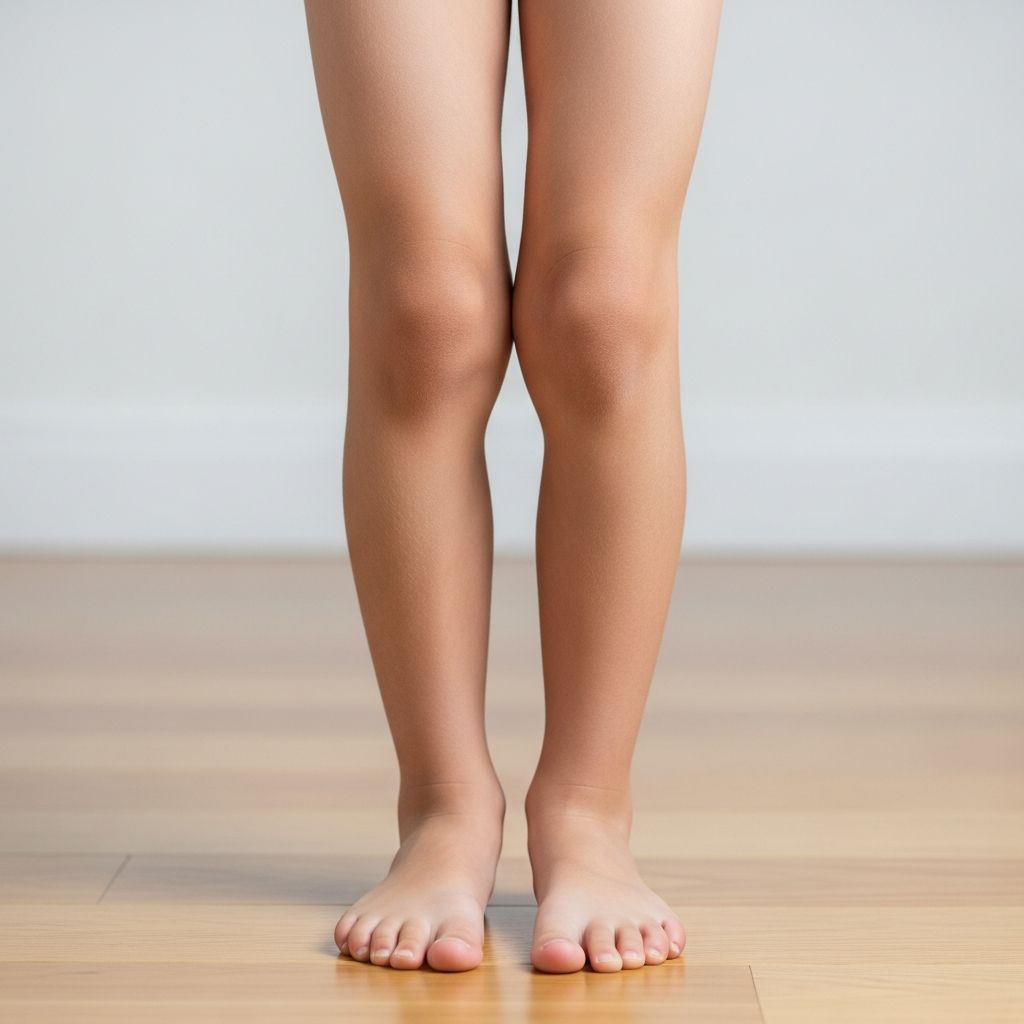
Many parents first notice knock knees when their child’s knees touch but their ankles stay apart. This inward angling of the legs, called genu valgum, is very common in growing children and is usually part of normal development. At the same time, persistent or severe knock knees can occasionally signal an underlying bone or growth problem that needs medical care.
This guide explains what knock knees are, when they are normal, possible causes, how doctors evaluate them, and the treatment choices available if your child needs help.
What Are Knock Knees?
Knock knees describe a leg alignment where the knees angle inward toward each other. When a child with knock knees stands with the knees gently touching, there is a visible gap between the ankles. The medical term for this pattern is genu valgum.
- Appearance: knees tilt inward; ankles do not meet when knees are together.
- Side most often affected: usually both legs, though one-sided knock knees can occur, especially after injury.
- Age group: most common in young children and often improves on its own with growth.
In many cases, knock knees do not cause pain or limit play. The main concern for families is often how the legs look. Doctors, however, also pay attention to how the knees, hips, and feet carry weight, because long-term misalignment can affect joint health.
Normal Leg Alignment Changes with Growth
Healthy children naturally pass through a series of leg shapes as they grow. Professional guidelines describe a typical timeline for alignment changes:
| Approximate Age | Common Leg Alignment | What Parents Often See |
|---|---|---|
| Birth to 18–24 months | Mild bowlegs (genu varum) | Lower legs curve outward; ankles closer than knees |
| 2–4 years | Physiologic knock knees | Knees inclined inward; ankles apart |
| 4–7 years | Gradual straightening | Legs become more aligned, less inward tilt |
| After ~7–8 years | Adult-like alignment | Knees and ankles can both touch when standing straight |
When knock knees appear in this expected age range and slowly improve, doctors often call them physiologic knock knees, meaning they are a normal part of growth and do not need treatment.
When Knock Knees May Be a Problem
Sometimes genu valgum falls outside of the usual pattern and requires closer evaluation. Specialists worry more when:
- The knock knees are very severe or obviously worsening over time.
- The problem is mainly on one side instead of both legs.
- The child is older than about 7–8 years and still has marked knock knees.
- The child has pain, limping, or trouble running and playing.
- There are signs of an underlying condition such as rickets, bone infection, or a growth plate injury.
These features do not mean something is seriously wrong, but they are good reasons to have your child seen by a pediatrician or pediatric orthopedic specialist.
Common Causes of Knock Knees
Most young children with knock knees have no disease – their bones are simply growing through a normal stage. In a smaller number of cases, genu valgum has a specific cause. Known contributors include:
1. Normal Development
For many children, knock knees are simply a temporary phase that helps them balance as they learn to walk and run. As the muscles strengthen and the skeleton matures, the legs tend to straighten without any treatment.
2. Bone Growth Problems (Rickets and Nutritional Issues)
Rickets is a condition where growing bones become soft or weak, often due to a lack of vitamin D or calcium. When the bones around the knees are affected, the knees can angle inward or outward.
- Rickets is far less common in countries where children routinely receive vitamin D, but it still appears, especially in children with limited sun exposure or restrictive diets.
- Treatment often includes vitamin D and calcium supplements and, when needed, orthopedic care to correct the bone alignment.
3. Previous Injury or Infection
Damage to the growth plate – the area of developing bone near the ends of long bones – can cause one side of a bone to grow differently than the other. This may result from:
- A fracture (broken bone) involving the growth plate around the knee.
- A serious bone infection (osteomyelitis) in the leg.
When just one leg is affected, the result can be one-sided knock knees, which are more likely to need treatment than symmetrical, developmental genu valgum.
4. Skeletal Dysplasias and Genetic Conditions
Certain rare conditions that alter the structure or growth of bones (called skeletal dysplasias) can include genu valgum as one feature. These conditions are typically diagnosed and monitored by specialists, and knock knees are managed as part of a broader care plan.
5. Overweight and Obesity
Excess weight can place additional stress on a child’s knees and may influence how the legs grow and align. In children who are already slightly knock-kneed due to normal development, obesity can make the angling more pronounced or longer-lasting.
6. Bone Tumors or Other Local Problems
In rare cases, a tumor affecting a leg bone near the knee can disturb normal growth and lead to angulation of the knee inward. Such conditions usually have other signs as well, such as pain, swelling, or a visible mass.
Signs and Symptoms to Watch For
Many children with knock knees feel perfectly well and run, jump, and play like their peers. Still, some may develop symptoms related to how their legs carry weight. Parents commonly report:
- Appearance of the legs
- Knees closer together than ankles while standing.
- A visible gap between the ankles when the knees touch.
- Feet that point outward when walking.
- Movement concerns
- An unusual walking pattern or a waddle.
- Occasional tripping or clumsiness during running.
- Difficulty keeping up with peers in sports or active play.
- Pain or stiffness
- Knee, hip, ankle, or foot discomfort after activity.
- Stiff joints or soreness in the legs.
Persistent pain, limping, or difficulty performing usual activities suggests that the alignment may be stressing the joints more than expected and deserves a medical check.
How Doctors Evaluate Knock Knees
Evaluation usually begins with a thorough history and a careful physical exam. Many children do not need any tests beyond this, especially when the pattern clearly matches normal developmental knock knees.
Medical History
Your child’s clinician may ask about:
- When you first noticed the knock knees and whether they are changing.
- Any pain, limping, or difficulty with physical activities.
- Past injuries or fractures involving the legs or knees.
- Previous infections, especially bone infections.
- Diet, vitamin D intake, and time spent outdoors.
- Family history of bone or growth disorders.
Physical Examination
During the exam, the doctor will observe your child standing, walking, and sometimes running. They often assess:
- How far the knees angle inward and the distance between the ankles.
- Whether both legs are affected equally.
- Hip and ankle motion and overall muscle strength.
- Leg length to check for differences between the two sides.
Imaging and Additional Tests
Extra tests are not always necessary. They may be recommended when the child is older, the deformity is pronounced, or it appears to be getting worse. Possible studies include:
- X-rays: show the angle of the bones and the condition of growth plates.
- Blood tests: may be ordered if rickets or other metabolic bone disease is suspected (for example, to measure vitamin D, calcium, and related markers).
Treatment Options for Knock Knees
Treatment is tailored to the child’s age, the cause of the knock knees, the severity of the deformity, and the presence of symptoms such as pain or limping. Many children need only observation and reassurance, while a smaller group benefits from active treatment.
1. Observation and Reassurance
For typical developmental knock knees in young children, the primary approach is watchful waiting:
- Regular check-ups to ensure that the alignment gradually improves over time.
- Encouragement of normal play and physical activity.
- Monitoring for new symptoms such as pain or worsening gait.
Large pediatric centers emphasize that most children will grow out of genu valgum by early adolescence without any braces or surgery.
2. Treating Underlying Conditions
When knock knees are linked to another medical problem, that condition is treated first. Examples include:
- Rickets: vitamin D and calcium supplements, and guidance on diet and safe sun exposure.
- Metabolic bone disorders: medications or nutritional therapy supervised by specialists.
- Infection: antibiotics and sometimes surgery to clear infected bone tissue.
Addressing the root cause can prevent further worsening of the deformity and sometimes allows partial improvement in alignment.
3. Braces, Orthotics, and Night Splints
Supportive devices may be suggested in selected cases, particularly in older children or when there is mild deformity that does not appear to be correcting on its own:
- Braces or splints: applied at night or for part of the day to gently influence bone growth and leg alignment.
- Orthotic shoe inserts: used when there are leg length differences or foot problems that contribute to knee strain.
Not every child with knock knees benefits from bracing; in many developmental cases, braces do not change the natural course of improvement. Decisions are made on an individual basis.
4. Physical Therapy and Exercises
While exercises cannot directly change bone shape, they can strengthen the muscles that support the knees and help improve movement patterns. For older children and adults, structured physical therapy may include:
- Strengthening of hip and thigh muscles.
- Stretching muscles that are tight and affecting alignment.
- Training in balanced walking and running techniques.
Improved muscle function can reduce discomfort and make daily activities easier, even if the appearance of the legs changes only slightly.
5. Guided Growth Surgery
In a growing child with significant genu valgum that is unlikely to correct naturally, surgeons may use guided growth techniques. This is a minimally invasive procedure that works with the child’s remaining growth:
- Small metal plates or screws are placed on one side of the growth plate around the knee.
- Slowing growth on that side allows the other side of the bone to catch up, gradually straightening the leg over months to years.
- Once alignment is acceptable, the hardware is usually removed.
Because guided growth relies on open growth plates, it is used only in children who still have substantial growth remaining.
6. Osteotomy (Bone Realignment Surgery)
For teenagers who are nearly finished growing or for adults with long-standing knock knees and symptoms, doctors may recommend an osteotomy – a precise surgical cut and repositioning of the bone to improve alignment:
- The surgeon cuts the femur (thighbone) or tibia (shinbone) near the knee.
- The bone is angled into a straighter position.
- Plates, screws, or other devices hold the bone in place while it heals.
Correcting the alignment can improve walking mechanics, relieve pain, and reduce uneven wear on the knee joint in the long term.
Home Care and Everyday Tips for Parents
Even when no active treatment is needed, parents can support healthy bone development and joint comfort with simple steps.
- Encourage regular activity: running, jumping, and playground play help build strong muscles and bones.
- Support a balanced diet: include sources of calcium (such as dairy, fortified alternatives, or leafy greens) and vitamin D (fortified foods, fatty fish, or supplements if recommended).
- Promote a healthy weight: working with your child’s clinician to manage weight can reduce extra stress on the knees.
- Choose supportive footwear: well-fitting shoes with good support may improve comfort and stability.
- Follow up as advised: attend scheduled check-ups so your doctor can monitor alignment over time.
When to Seek Medical Advice
Contact your child’s doctor or a pediatric orthopedic specialist if you notice any of the following:
- Knock knees that appear before age 2 or start suddenly.
- Significant knock knees that do not improve after about age 7–8.
- A clear difference between the two legs.
- Ongoing knee, leg, or hip pain.
- Limping, frequent tripping, or avoidance of physical activity.
- History of leg fracture, bone infection, or conditions like rickets.
Early evaluation can identify those relatively few children who will benefit from treatment, while reassuring many families that their child’s legs are following a normal growth pattern.
Frequently Asked Questions (FAQs)
Are knock knees always abnormal?
No. Mild to moderate knock knees are a normal stage of growth in many children between about 2 and 6 years old and usually improve on their own as the child grows taller.
Can knock knees cause arthritis later in life?
In adults with significant, untreated genu valgum, the uneven loading across the knee joint can contribute to localized joint wear and an increased risk of arthritis over time. When necessary, correcting the alignment can help protect the joint.
Do all children with knock knees need braces?
No. Most children with developmental knock knees do not need braces or other devices, only observation. Braces or orthotics are reserved for selected cases, typically when the deformity is more pronounced, persistent, or associated with an underlying problem.
Will exercise alone straighten my child’s legs?
Exercise cannot change the shape of bones directly, but strengthening and stretching the muscles around the hips and knees can improve movement patterns and reduce discomfort, especially in older children and adults.
Is surgery common for knock knees?
Surgery is only needed in a minority of children – generally those with severe, persistent deformity, a known underlying condition, or significant symptoms. Guided growth and osteotomy are among the most frequently used procedures when surgery is indicated.
References
- Knock Knee: Causes, Symptoms, Diagnosis and Treatment — Hospital for Special Surgery. 2023-05-01. https://www.hss.edu/health-library/conditions-and-treatments/list/knock-knee
- Knock-knees (genu valgum): Treatment, causes, and exercises — Medical News Today. 2018-09-26. https://www.medicalnewstoday.com/articles/319894
- Knock Knees/Genu Valgum — Kansas City Bone & Joint Clinic. 2021-07-15. https://www.kcbj.com/knock-knees-orthopedic-musculoskeletal-care-overland-park-kansas-city/
- Genu Valgum / Knock Knees — Shriners Children’s. 2022-11-10. https://www.shrinerschildrens.org/en/pediatric-care/genu-valgum
- Knock Knees — Penn Medicine. 2022-03-30. https://www.pennmedicine.org/conditions/knock-knees
- Knock Knees (Genu Valgum) — Nemours KidsHealth. 2023-04-18. https://kidshealth.org/en/parents/knock-knees.html
- Knock Knees — Boston Children’s Hospital. 2021-09-05. https://www.childrenshospital.org/conditions/knock-knees