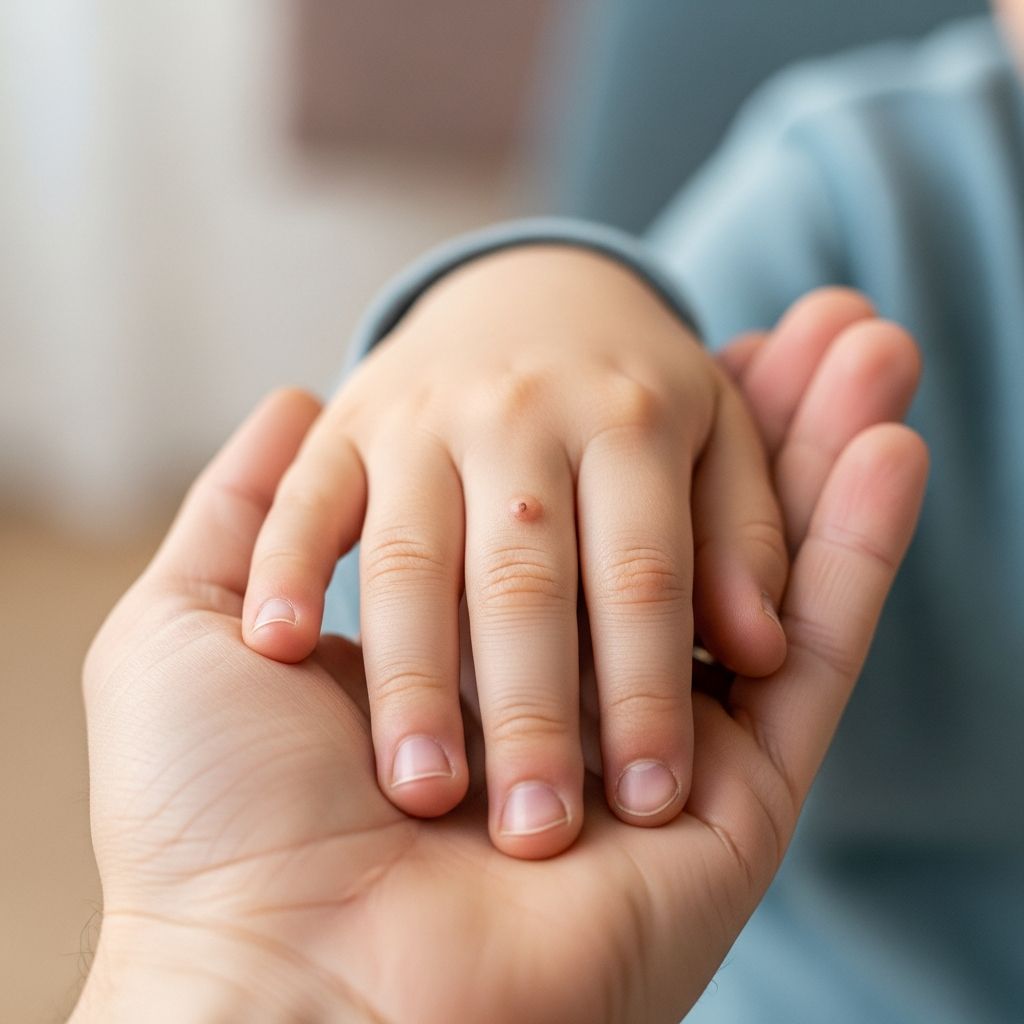
Warts are very common in childhood and can be surprising or even alarming when they first appear, but they are usually harmless and manageable with the right information and care. This guide explains what warts are, why kids get them, which treatments are useful, and how parents can reduce the chance of warts spreading in the family.
What Exactly Is a Wart?
A wart is a small, noncancerous growth on the skin caused by certain types of human papillomavirus (HPV) that infect the top layer of the skin. The virus triggers extra growth of skin cells, creating a firm bump that may feel rough, smooth, or flat depending on the type and location.
Although HPV is well known for sexually transmitted infections, the types that cause common skin warts in children are different from those linked to serious genital infections. Warts that kids get on their hands, feet, or face are usually caused by strains that are considered low risk and mainly cause cosmetic or minor comfort issues.
- Warts can occur on almost any area of skin, but are most common on fingers, hands, knees, and feet.
- They are contagious and can spread by skin-to-skin contact or by sharing contaminated objects or surfaces.
- Most warts eventually go away on their own, though this may take many months or even a few years.
Why Children Are More Likely to Get Warts
Children encounter new viruses all the time, and their immune systems are still building familiarity and long-term defenses. Because of this, kids are more likely than adults to develop visible warts after contact with HPV, especially if their skin is frequently damp, scraped, or bitten.
Everyday habits and environments also make warts more likely in children. Activities like playing barefoot in changing rooms, sharing sports gear, or biting fingernails create more openings in the skin and more opportunities for HPV to take hold.
- Scratches, hangnails, and small cuts give the virus a pathway to enter the skin.
- Warm, moist environments such as locker rooms, pools, and communal showers favor HPV survival on surfaces.
- Children who bite nails, pick at cuticles, or pick at existing warts are at higher risk of new warts nearby.
Common Types of Warts Seen in Kids
Not all warts look the same. Understanding the main types helps parents describe them accurately to a health professional and choose sensible home care.
| Type | Typical Location | Appearance | Discomfort Level |
|---|---|---|---|
| Common warts | Fingers, hands, knees, around nails | Firm bump, rough or grainy surface, may have tiny dark dots | Usually painless, may snag on clothing or be tender if hit |
| Plantar warts | Soles of the feet, often weight-bearing areas | Flat or slightly sunken, hard edges, may have black dots and thick skin on top | Can hurt when walking, running, or jumping |
| Flat warts | Face, backs of hands, legs | Small, smooth, flat-topped bumps, often many at once | Typically not painful, more of a cosmetic concern |
| Periungual warts | Around fingernails and toenails | Thickened, uneven skin that can distort nail growth over time | May be tender, can make nail care difficult |
| Filiform warts | Face, especially around mouth, nose, or eyes | Long, thin, fingerlike or spiky projections from the skin | Usually not painful but can be irritating or embarrassing |
Genital warts, which appear in the genital or anal region, are caused by different HPV types and require prompt medical evaluation to consider all possible causes and appropriate management. Any wart in the genital area of a child should always be discussed with a qualified health professional.
How Warts Spread Between People
HPV particles that cause warts live in the outer layers of the skin. When a wart is present, the virus can be shed into the surrounding environment and may infect another person’s skin through direct or indirect contact. The virus is not spread through the bloodstream, but by skin contact and contaminated surfaces.
Transmission often occurs in simple, everyday ways, which is why warts can be so common in school-age children and siblings who share spaces and belongings. Fortunately, simple hygiene and protective habits can significantly reduce the chance of spread.
- Direct contact: touching someone else’s wart, or a child touching their own wart and then another part of their body.
- Shared objects: using the same towels, nail clippers, socks, or shoes as someone who has warts.
- Shared surfaces: walking barefoot on pool decks, shower floors, or locker room tiles that may harbor the virus.
When to See a Health Professional
Most simple warts on the hands or feet can be safely monitored at home, but there are clear situations in which medical advice is important. Early professional guidance prevents unnecessary discomfort and helps rule out other skin conditions that may look similar to warts.
- The wart is painful, bleeds often, or interferes with walking, writing, or sports.
- The growth changes color, grows rapidly, has an irregular border, or looks unusual for a wart.
- Multiple warts are spreading quickly, or home treatments used as directed have not helped over several months.
- Your child has diabetes, a known immune problem, or is on medicines that weaken the immune system.
- The wart appears on the face, in the genital area, or under the nails.
Health professionals can confirm the diagnosis by examining the skin, and in rare cases may remove a small sample for lab analysis if the appearance is atypical. Most of the time, no special testing is needed and treatment decisions are based on symptoms, location, and the child’s age and comfort level.
Home Care Options for Mild Warts
For otherwise healthy children with small, uncomplicated warts, many families try non-prescription options first. These treatments are most effective when used patiently and consistently, since warts often shrink slowly over weeks or months.
Always read product labels carefully and follow instructions for age limits and application techniques. If you are unsure whether a treatment is appropriate for your child, especially on the face or sensitive skin, seek medical advice before starting.
Common Non-Prescription Approaches
- Salicylic acid preparations: Available as liquids, gels, pads, or plasters; they gradually dissolve the thickened wart tissue. The area is usually soaked, gently filed with a disposable emery board, then the medicine is applied and covered as directed.
- Protective padding: Cushioned pads or donut-shaped inserts can relieve pressure on plantar warts, making walking and sports more comfortable while waiting for the wart to shrink or be treated.
- Watchful waiting: Because many warts disappear spontaneously, some families choose to simply protect the area with a bandage and wait, especially if the wart is small and not painful.
Never attempt to cut, burn, or dig out a wart at home. This can cause pain, infection, scarring, and even help the virus spread further. Avoid using strong acids, home-made freezing kits on the face, or any treatment on broken or irritated skin without medical guidance.
Medical Treatments Performed in Clinics
When home care is not successful or a wart is particularly bothersome, a health professional may offer stronger treatments. The choice of method depends on your child’s age, pain tolerance, medical history, and where the wart is located.
Common In-Office Treatments
- Cryotherapy: The wart is frozen with a very cold substance (often liquid nitrogen). This damages infected tissue so the body can gradually clear it. Treatments usually need to be repeated every few weeks.
- Prescription topical medicines: Stronger peeling agents or creams that stimulate the immune system may be applied in the clinic or at home as instructed.
- Curettage or minor surgical removal: In some cases, the wart can be scraped or cut away after numbing the area. This method can be helpful for selected warts but may leave a small scar.
- Other therapies: Injections, laser therapy, or immune-modulating treatments may be used in stubborn or extensive cases, typically guided by a dermatologist.
Even with professional treatment, it is possible for warts to return, either in the same spot or nearby. This does not necessarily mean anything is wrong with your child’s immune system; it simply reflects how persistent HPV can be and how long it may take the body to fully control it.
Preventing Warts and Limiting Their Spread
There is no guaranteed way to avoid every wart, but simple habits can dramatically lower the risk of both getting new warts and passing existing ones to others. These strategies are most effective when they become part of daily routines for the whole family.
Hygiene and Lifestyle Tips
- Encourage frequent handwashing with soap and water, especially after touching any wart.
- Teach kids not to pick at warts, hangnails, or scabs, and to avoid biting nails or cuticles.
- Use clean, personal towels and washcloths; avoid sharing nail clippers, pumice stones, and razors.
- Have children wear flip-flops or water shoes in communal showers, pool decks, and locker rooms.
- Keep feet as dry as possible: change sweaty socks promptly and choose breathable footwear.
- Cover existing warts with a bandage or dressing during sports or close contact activities.
Parents can support younger children by trimming nails regularly, applying bandages when needed, and gently reminding them not to scratch or pick the affected area. Consistency is more important than perfection; even partial adherence to these steps can help.
Helping Your Child Cope Emotionally
While warts are medically minor in most cases, they can feel like a big deal to a child who is self-conscious about appearance or frustrated by repeated treatments. Taking time to address their feelings can make the experience much easier for everyone.
- Reassure your child that warts are common and do not mean they are “dirty” or did something wrong.
- Use age-appropriate language to explain that the wart is caused by a germ in the skin and that treatments help the body slowly get rid of it.
- Offer choices where possible (for example, which bandage to use, or which day to apply treatment) to give a sense of control.
- Inform teachers or coaches discreetly if a wart or treatment might affect participation in activities that involve pressure on the area.
For adolescents, who may feel especially sensitive about appearance, discussing concerns privately and involving them in treatment decisions may reduce embarrassment and improve cooperation with longer treatment plans.
Practical Do’s and Don’ts for Parents
- Do confirm with a health professional if you are unsure the growth is truly a wart.
- Do follow instructions precisely for any over-the-counter or prescription wart medications.
- Do protect painful plantar warts with padding while awaiting treatment or natural resolution.
- Don’t try to cut or burn off warts at home, or use sharp tools to dig out the center.
- Don’t treat warts on the face, genitals, or severely irritated skin without medical guidance.
- Don’t ignore warts that are rapidly changing, spreading aggressively, or causing significant pain.
FAQs About Warts in Kids
Are warts dangerous?
In most healthy children, common skin warts are harmless and do not turn into cancer. The main concerns are discomfort, appearance, and the possibility of spreading to new areas or people. Rarely, if a skin growth does not look like a typical wart or behaves unusually, a health professional may suggest additional evaluation.
How long do warts last?
Warts can disappear quickly or linger for a long time. Some vanish in a few months as the child’s immune system recognizes and attacks the virus, while others may persist for a year or more without treatment. Even after successful therapy, new warts can appear if HPV remains on the skin or in the environment.
Can my child go to school or sports with a wart?
In most cases, yes. Warts do not usually require staying home from school or skipping activities. Covering the wart with a bandage or athletic tape, not sharing personal items, and following hygiene measures are usually sufficient to reduce the risk of spread during regular contact.
Is every bump on my child’s skin a wart?
No. Many skin conditions in children can look similar to warts, including calluses, corns, molluscum contagiosum, and other benign or inflammatory lesions. If the bump changes quickly, looks unusual, or you are uncertain about the diagnosis, a medical visit is the safest way to clarify what it is and how it should be managed.
Can diet or vitamins cure warts?
A balanced diet and adequate sleep support a healthy immune system, which in turn helps the body handle many infections, including the viruses that cause warts. However, no specific food, supplement, or vitamin has been proven to reliably cure warts on its own. Treatments typically focus on directly removing or irritating the wart so the immune system targets the area.
Should siblings be kept apart if one has warts?
Complete separation is not practical or necessary for most families. Instead, focus on simple precautions such as not sharing towels, socks, or personal grooming tools, encouraging handwashing, and covering visible warts. Siblings can continue to play together while these common-sense measures are in place.
Key Takeaways for Busy Parents
- Warts are common, generally harmless skin growths in children caused by certain HPV types.
- They spread mainly through direct contact and shared surfaces, especially when skin is cut, damp, or picked.
- Many warts clear on their own, but there are effective home and medical treatments if they are painful or bothersome.
- Good hygiene, protective footwear in public areas, and discouraging picking or nail-biting help reduce spread.
- Any wart that looks unusual, changes quickly, or appears on the face or genitals should be checked by a health professional.
With a calm, informed approach and a bit of patience, most families find that warts eventually become just another small chapter in a child’s health history rather than a major concern.